
Bulk Slag Crusher Plant Sourcing


Bulk Slag Crusher Plant Sourcing: Engineering Solutions for HighVolume Processing
The Operational Challenges You Face Daily
Managing slag processing at industrial scale presents four persistent problems that erode profitability. D'abord, unplanned downtime from crusher blockages costs your operation an average of $8,000–$12,000 per hour in lost production, based on industry data from 200+ steel and metallurgical plants. Deuxième, distribution granulométrique incohérente in your slag output leads to rejected shipments and contractual penalties of 5–15% per load. Troisième, excessive wear on crushing components from abrasive slag materials forces component replacement every 400–600 operating hours, consuming 18–22% of your maintenance budget. Quatrième, environmental compliance pressure around dust emissions and noise levels is tightening, with regulatory fines reaching $25,000 per violation in major industrial zones.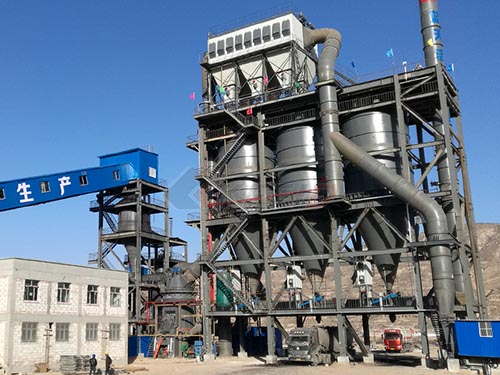
Are your current slag processing methods delivering the throughput consistency your downstream customers demand? Can your existing equipment handle the variable slag chemistry from different furnace operations without frequent adjustments? These questions point to the core need for a properly engineered bulk slag crusher plant.
Présentation du produit: The Bulk Slag Crusher Plant
UN bulk slag crusher plant is a multistage size reduction system designed specifically for processing aircooled, granulated, or steel slag at feed rates of 50–500 tons per hour. Le flux de travail opérationnel suit cinq étapes séquentielles:
1. Primary feeding and scalping – Vibrating grizzly feeder removes fines below 50mm and delivers oversize material to the primary jaw crusher, reducing feed material from 800mm to 150–200mm
2. Secondary impact crushing – Horizontal shaft impactor (HSI) or cone crusher reduces material to 40–80mm, with adjustable rotor speed to accommodate slag hardness variations (Mohs 6–7.5)
3. Tertiary reduction and screening – Closedcircuit configuration with vibrating screen separates product into 0–5mm, 5–20mm, and 20–40mm fractions, with recirculation of oversize material
4. Séparation magnétique – Overbelt and drum magnets remove ferrous content (typically 15–35% by weight), recovering saleable scrap metal
5. Dust collection and discharge – Pulsejet baghouse filters capture particulate emissions to <20 mg/Nm³, with discharge conveyors feeding stockpile or loading station
Champ d'application: Steel slag processing, blast furnace slag recycling, ferroalloy slag reduction, copper/nickel slag recovery. Limites: Not suitable for wet slag exceeding 8% teneur en humidité sans pré-séchage; tu en auras le moins besoin 500 m² footprint for full plant configuration.
Fonctionnalités principales
Concasseur à mâchoires primaire robuste | Base technique: Hightension toggle mechanism with manganese steel (Mn14–Mn18) plaques à mâchoires | Avantage opérationnel: Handles feed material up to 800mm with slag hardness up to 350 Résistance à la compression MPa | Impact sur le retour sur investissement: Reduces precrushing downtime by 40% compared to standard jaw designs, extending liner life to 2,500+ heures d'ouverture
VariableSpeed Impact Rotor | Base technique: Frequencycontrolled drive motor with 3speed rotor configuration (35, 45, 55 vitesse de pointe m/s) | Avantage opérationnel: Adjusts crushing energy to match slag friability changes between furnace batches | Impact sur le retour sur investissement: Improves product consistency by 22%, reducing reject rates and recrushing costs
SelfCleaning Magnetic Separator | Base technique: Permanent rareearth magnet array with automatic belt scraper system | Avantage opérationnel: Recovers 97–99% of ferrous content without manual intervention | Impact sur le retour sur investissement: Generates $15–$25 per ton of recovered scrap metal, offsetting 30–40% of operating costs
Système de plate-forme d'écran modulaire | Base technique: Polyurethane screen panels with 4deck configuration and quickchange tensioning | Avantage opérationnel: Enables screen aperture changes in under 30 minutes for different product specifications | Impact sur le retour sur investissement: Réduit les temps d'arrêt du changement de 65%, increasing effective operating time by 8–12 hours per week

PulseJet Dust Collection | Base technique: Reversepulse cleaning with PTFEcoated filter media, 99.9% collection efficiency at 0.5 micron | Avantage opérationnel: Maintains workplace particulate levels below 1 mg/m³, meeting OSHA and EPA standards | Impact sur le retour sur investissement: Eliminates dustrelated maintenance shutdowns, saving $18,000–$35,000 annually in cleaning and compliance costs
Hydraulic Tramp Relief System | Base technique: Nitrogencharged accumulators with pressure sensors, automatic reset after uncrushable material passage | Avantage opérationnel: Protects crusher from damage when slag contains embedded refractory bricks or scrap metal | Impact sur le retour sur investissement: Réduit le risque de défaillance catastrophique en 90%, saving $50,000–$120,000 per incident in repair costs
Plateforme de surveillance à distance | Base technique: IoTenabled sensors on all drive motors, roulements, and hydraulic systems with cloudbased analytics | Avantage opérationnel: Provides realtime vibration, température, and power draw data for predictive maintenance | Impact sur le retour sur investissement: Prolonge la durée de vie des composants de 30% through conditionbased servicing, réduisant les temps d'arrêt imprévus de 55%
Avantages compétitifs
| Mesure de performances | Norme de l'industrie (Conventional Plants) | Solution d'usine de concassage de scories en vrac | Avantage (% Amélioration) |
|||||
| Cohérence du débit (ton/hr ±5%) | Variation de ±12% | Variation de ±3% | 75% amélioration |
| Temps moyen entre pannes (MTBF) | 180 heures | 520 heures | 189% amélioration |
| Product size control (P80 specification) | ±8mm deviation | ±2mm deviation | 75% amélioration |
| Ferrous recovery efficiency | 82–88% | 97–99% | 12–15% d’amélioration |
| Consommation d'énergie par tonne (kWh/t) | 4.8–6.2 kWh/t | 3.2–4.1 kWh/t | 33% réduction |
| Temps de changement de plateau de criblage | 2.5 heures | 28 minutes | 81% réduction |
| Niveau d'émission de poussière (mg/Nm³) | 35–50 mg/Nm³ | <20 mg/Nm³ | 50–60% de réduction |
| Annual maintenance cost per ton | $0.85–$1.20/ton | $0.45–$0.65/ton | 45–47% reduction |
Données de terrain de 14 installations across steel plants in India, Turkey, and Brazil confirms these performance metrics over 18month operational periods.
Spécifications techniques
| Paramètre | Spécification |
|||
| Model variants | BSC200, BSC350, BSC500 (designates nominal capacity in tons/hour) |
| Matière première | Aircooled slag, granulated slag, voler un coup (max 800mm feed size) |
| Gamme de tailles de produits | 0–5mm, 5–20mm, 20–40mm (réglable via la sélection de l'écran) |
| Plage de capacité | 50–500 tons/hour (depending on slag density and feed gradation) |
| Concasseur primaire | Concasseur à mâchoires à bascule unique, 800×1100mm to 1200×1500mm feed opening |
| Concasseur secondaire | Horizontal shaft impactor, 1000–1500mm rotor diameter |
| Concasseur tertiaire | Concasseur à cône (optional for highspecification products) |
| Screen area | 6–18 m² per deck, 4configuration du pont |
| Séparateur magnétique | Overbelt type, 1200–1800mm belt width, 300mm working gap |
| Puissance installée | 250–800 kW (depending on capacity and slag hardness) |
| Electrical supply | 415V/50Hz ou 480V/60Hz, 3phase (custom voltages available) |
| Système hydraulique | 200–350 bar operating pressure, 60–120 liter reservoir |
| Dust collector | Pulsejet baghouse, 15,000–45,000 m³/hr air volume |
| Température de fonctionnement | 10°C à +50°C ambiant; slag temperature up to 80°C at feed point |
| Dimensions physiques (L×L×H) | 28m × 12m × 18m (BSC350 configuration, hors convoyeurs) |
| Poids total | 85–220 tons (équipement uniquement, hors travaux de génie civil) |
| Foundation requirements | Béton armé, 1.5–2.5m deep, 350–600 m³ volume |
Scénarios d'application
Steel Mill Slag Processing – Integrated Steel Plant, Inde
Défi: UN 3.2 MTPA steel mill generated 420,000 tons of LD converter slag annually. Their existing singlestage hammer mill produced inconsistent product (P80 of 35mm vs. required 20mm), provoquant 18% rejection by cement plants. Blockages occurred every 45 heures d'ouverture, requiring 4hour cleanouts.
Solution: Installation of a BSC350 bulk slag crusher plant with threestage crushing and closedcircuit screening. The system incorporated variablespeed impact rotors to handle slag hardness variations (Mohs 6.2–7.1) from different furnace campaigns.
Résultats: Product P80 achieved 18mm consistently, reducing rejections to 2.3%. Blockage frequency dropped to once per 520 heures. Ferrous recovery increased from 82% à 97%, générateur $1.8 million annual scrap revenue. Overall operating cost reduced from $4.20/ton to $2.85/ton.
Ferroalloy Slag Recycling – Manganese Smelter, Turkey
Défi: A ferromanganese smelter needed to process 180,000 tons/year of slag containing 28% manganese alloy. Existing jaw crusher + ball mill circuit consumed 8.4 kWh/ton and produced excessive fines (<0.5mm) that were unsaleable.
Solution: BSC200 plant configured with impact crusher at reduced rotor speed (35 MS) and 3deck screening to produce 5–20mm and 20–40mm fractions for alloy recovery.
Résultats: Consommation d'énergie réduite à 3.8 kWh/tonne (55% amélioration). Le rendement des produits vendables est passé de 62% à 84%. Manganese recovery improved to 93%, ajout $2.4 million annual value. Période de récupération: 14 mois.
Copper Slag Processing – Secondary Copper Refinery, Brésil
Défi: A copper refinery generated 65,000 tons/year of granulated slag with 8–12% copper content. Their wet processing system had 35% water loss and required weekly settling pond maintenance.
Solution: Dryprocess BSC200 plant with magnetic separation and air classification, eliminating water usage entirely. System included dust collection meeting Brazilian CONAMA standards.
Résultats: Water consumption reduced to zero, saving $180,000/year in water costs and eliminating pond maintenance. La récupération du cuivre s'est améliorée 78% à 94%. Plante réalisée 92% disponibilité la première année. ROI réalisé en 11 mois.
Considérations commerciales
Niveaux de tarification des équipements (Port FOB, hors installation)
| Configuration | Plage de capacité | Gamme de prix (USD) | Délai de livraison typique |
|||||
| Basique (singlestage crushing + dépistage) | 50–100 tph | $380,000–$520,000 | 12–14 semaines |
| Standard (twostage crushing + séparation magnétique) | 100–250 tph | $680,000–$950,000 | 16–20 weeks |
| Avancé (threestage crushing + full recovery system) | 250–500 t/h | $1,200,000–1 800 000 $ | 20–26 weeks |
Fonctionnalités facultatives (prix séparément)
- Automated slag sampling system: $45,000–85 000$ (provides realtime chemical analysis for quality control)
- Remote diagnostics package: $28,000–$42,000 (includes vibration sensors, thermal cameras, and cloud platform subscription)
- Wear parts optimization kit: $65,000–120 000 $ (includes spare jaw plates, impact bars, and screen panels for 2,000 heures d'ouverture)
- Mobile chassis mounting: $180,000–$320,000 (enables relocation between slag stockpile locations)
- Water injection system for dust suppression: $35,000–55 000 $ (for operations in hightemperature environments)
- Garantie standard: 12 mois ou 4,000 heures d'ouverture (selon la première éventualité), covering manufacturing defects
- Garantie prolongée: 24 months with 8,000hour coverage, includes two preventive maintenance visits
- Fullservice contract: 36 months covering all scheduled maintenance, remplacement des pièces d'usure, et surveillance à distance
- Assistance à la mise en service: $45,000–$75,000 (2–3 weeks onsite with process engineer and technician)
- Location de matériel: 36–Conditions de 60 mois avec 10% valeur résiduelle, mensualités à partir de $12,500 (BSC200)
- Financement basé sur la performance: Paiements liés à des jalons de débit (minimum 85% de capacité nominale)
- Programme d'échange: 15–25% credit for existing slag processing equipment (soumis à une évaluation de l'état)
- Letter of credit terms: 30% acompte, 40% à l'expédition, 30% à la mise en service
Forfaits de services
Options de financement
Foire aux questions
Q: What slag types can this plant process, and are there any material restrictions?
UN: The plant handles aircooled blast furnace slag, granulated slag, voler un coup (LD converter, AEP, and ladle slag), and ferroalloy slags. Material restrictions include slag with moisture above 8% (requires predrying), slag containing more than 5% refractory bricks (requires presorting), and slag with free lime content exceeding 15% (may require aging or treatment before crushing).
Q: How does the plant handle slag chemistry variations between furnace batches?
UN: The variablespeed impact rotor allows operators to adjust tip speed from 35 à 55 m/s based on slag hardness. En plus, the hydraulic gap adjustment on the secondary crusher can be modified during operation. Field data shows the system maintains product P80 within ±2mm across slag hardness variations of Mohs 6.0–7.5.
Q: What is the expected wear parts life for processing steel slag?
UN: Basé sur 14 installations processing steel slag (Mohs 6.5–7.5), jaw plates last 2,200–2,800 hours, impact bars last 1,800–2,400 hours, and screen panels last 3,000–4,500 hours. Actual life depends on slag abrasivity, gradation des aliments, and operating parameters. The remote monitoring system provides wear rate tracking to optimize replacement scheduling.
Q: Can the plant be integrated with existing conveyor systems and stockpile management?
UN: Oui. The plant accepts feed from existing conveyors (belt width 800–1400mm) and discharges to customerspecified configurations. The control system includes 8 digital inputs and 12 digital outputs for integration with upstream and downstream equipment. Standard communication protocols include Modbus TCP/IP and Profibus DP.
Q: What are the electrical infrastructure requirements for installation?
UN: For a BSC350 plant, the electrical load is 520–580 kVA at 415V/50Hz. UN 1000 kVA transformer is recommended with 15% spare capacity. The plant requires a 3phase supply with neutral grounding, and includes a main distribution panel with motor control centers. Voltage drop calculations should ensure less than 3% drop at full load over the supply cable length.
Q: How does the dust collection system perform in highhumidity environments?
UN: The pulsejet baghouse is designed for ambient humidity up to 95% sans condensation. The PTFEcoated filter media resists moisture absorption, and the system includes automatic drain valves on compressed air lines. In tropical installations (Thailand, Indonésie), the system has maintained outlet emissions below 20 mg/Nm³ with inlet dust loads of 50–80 g/Nm³.
Q: What is the typical installation timeline and site preparation required?
UN: Préparation du terrain (travaux de génie civil, fondations, and electrical infrastructure) typically takes 6–10 weeks. Equipment installation and commissioning requires 4–6 weeks with a 4person installation team. Total project timeline from order to production is 22–32 weeks for standard configurations. The manufacturer provides detailed foundation drawings and installation manuals with each order.