
Brochure des usines de machines de fabrication de briques
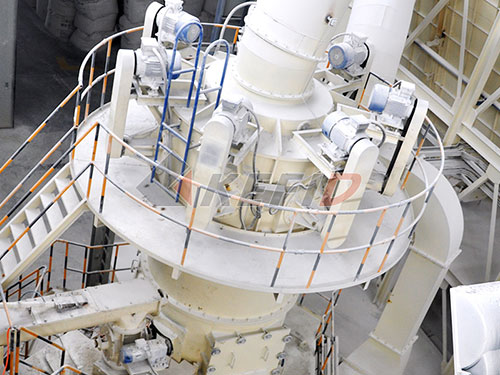

1. OUVERTURE ENTRAÎNÉE PAR POINT DE DOULEUR
Are inconsistent brick quality and high production costs eroding your plant’s profitability? Commercial brick manufacturing faces persistent challenges that directly impact the bottom line. Manual material handling and inconsistent mixing lead to waste rates of 812%, while unplanned downtime from equipment wear can halt production for days, coûtant des milliers de dollars en perte de revenus par heure. Are you struggling with laborintensive processes that limit output scalability, or facing energy costs that consume over 30% de votre budget opérationnel? The core challenge is finding a reliable, automated brick making machine that delivers uniform product quality at a predictable, lower cost per unit. This content addresses how modern brick making machines factories are engineered to resolve these exact operational and financial pressures.
2. APERÇU DU PRODUIT
This document details our line of fully automatic stationary brick making machines, engineered for highvolume commercial production. These systems integrate raw material processing, precision mixing, highpressure compaction, and automated handling into a continuous workflow.
Flux de travail opérationnel:
1. Alimentation automatisée & Traitement par lots: Preprocessed raw materials (argile, cendres volantes, ciment) are conveyed and batched by weight for consistent mix ratios.
2. Intensive Mixing & Conditionnement: A doubleshaft mixer ensures homogeneous moisture distribution and material plasticity.
3. Compactage haute pression: A hydraulic or mechanical press applies programmable tonnage to form bricks with precise density and dimensional stability.
4. Palettisation automatique & Manutention: Finished bricks are ejected, stacked on pallets, and transferred to the curing area via conveyor systems.
Champ d'application: Ideal for largescale production of solid, creux, pavage, and interlocking bricks using clay, cendres volantes, or concrete mixes.
Limites: Not designed for artisanal or very lowvolume batch production. Requires stable electrical supply and prepared raw material of specified granulometry.
3. CARACTÉRISTIQUES PRINCIPALES
Système de contrôle PLC centralisé | Base technique: Automate programmable industriel avec IHM à écran tactile | Avantage opérationnel: Your operators can monitor all parameters—pressure, temps de cycle, moisture—from one station and switch product profiles instantly | Impact sur le retour sur investissement: Réduit le temps de configuration jusqu'à 70% and minimizes human errorrelated waste
Isostatic Compression Technology | Base technique: Hydraulic pressure applied uniformly from multiple axes during the compaction cycle | Avantage opérationnel: Produces bricks with consistent density throughout their structure, eliminating weak points | Impact sur le retour sur investissement: Improves product strength by an average of 25%, reducing breakage in handling and transport
Hardened Alloy Wear Parts | Base technique: Mould liners, augers, and mixer blades fabricated from chromium carbide overlay or similar hardfacing materials | Avantage opérationnel: Critical components withstand abrasive materials far longer than standard steel | Impact sur le retour sur investissement: Prolonge les intervalles d'entretien de 300%, lowering spare parts costs and associated downtime
Entraînement à fréquence variable (VFD) Intégration | Base technique: VFDs on main motors for the mixer, compressor, et convoyeurs | Avantage opérationnel: Allows soft starting and precise speed control matched to material flow requirements | Impact sur le retour sur investissement: Cuts energy consumption by 1822% par rapport aux entraînements à vitesse fixe
QuickChange Mould System | Base technique: Standardized mould clamping design with guided alignment pins | Avantage opérationnel: Your crew can change brick size or profile in under 30 minutes sans outils spécialisés | Impact sur le retour sur investissement: Increases plant flexibility for multiproduct orders, maximiser l'utilisation des actifs
Integrated Moisture Control Loop | Base technique: Realtime moisture sensor feedback linked to water injection valves in the mixer | Avantage opérationnel: Maintains mix plasticity within a ±0.5% tolerance band automatically | Impact sur le retour sur investissement: Ensures batchtobatch consistency, reducing curing defects and rejects by approximately 15%
4. AVANTAGES CONCURRENTIELS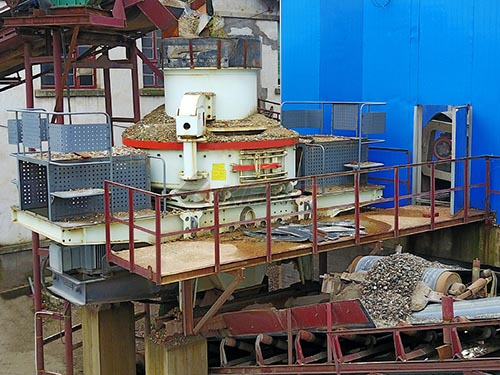
| Mesure de performances | Norme de l'industrie | Notre solution de machine de fabrication de briques | Avantage (% amélioration) |
|||||
| Cycle Time per Standard Brick | 2225 secondes | 1820 secondes | ~20% faster |
| Mix Homogeneity (Variation de densité) | ±5% | ±2% | 60% plus cohérent |
| Consommation d'énergie (kWh per 1000 briques) | 4550 kWh | 3638 kWh | Jusqu'à 24% inférieur |
| Temps moyen entre les pannes (MTBF) | ~400 heures de fonctionnement |>1200 heures d'ouverture |>200% augmenter |
| Exigence de main d'œuvre (Operators per line) | 34 | 12 | ~50% de réduction |
5. SPÉCIFICATIONS TECHNIQUES
Capacité de production: Configurable à partir de 12,000 à 36,000 briques standard par quart de 8 heures.
Exigences d'alimentation: Main press motor from 45 kW à 110 kW; total connected load between 90 kW et 220 kW selon configuration (3phase, 380V/50 Hz ou comme spécifié).
Spécifications matérielles: Accepts raw material with particle size ≤5mm; moisture content range of 8%15%.
Dimensions physiques: Production line footprint from 12m(L) x 4m(W) x 3.5m(H) to 25m(L) x 6m(W) x 4m(H).
Plage de fonctionnement environnementale: Température ambiante: +5°C à +40°C; humidité relative jusqu'à 80%; requires dustcontrolled environment.
6. SCÉNARIOS D'APPLICATION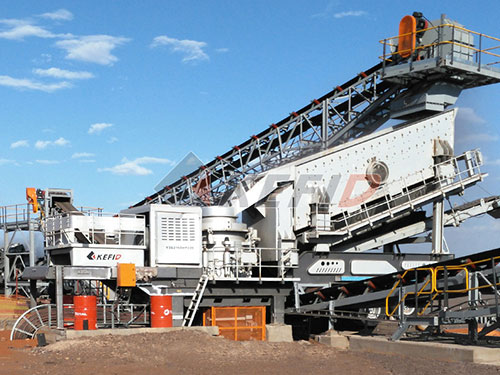
Agrandissement de l'usine de briques de cendres volantes
Défi: A regional plant using semiautomatic presses faced high labor costs (12 persons/line), inconsistent strength ratings (712 N/mm²), and inability to meet a new large contract's volume demands.
Solution: Installation of two fully automatic brick making machines with central PLC control and isostatic compression.
Résultats: Output increased by 140% with only a 4person crew per line. Average brick compressive strength stabilized at >14 N/mm². The project achieved payback in under 22 months through labor savings and reduced rejection fees.
Modernisation d’un fabricant de briques en terre cuite
Défi: An established clay brick factory struggled with excessive mould wear (replacement every 6 semaines), high energy costs from outdated motors,and seasonal variability in product quality.
Solution:: Retrofitting a new brick making machine featuring hardened alloy wear parts,VFD sur tous les principaux disques,and the integrated moisture control loop.
Résultats:: Mould life extended to over 24 weeks.Energy consumption per brick fell by 21%. The moisture control system nullified seasonal variation,cutting firing kiln rejects by an estimated 11%.
7. CONSIDÉRATIONS COMMERCIALES
Niveaux de tarification: Entrylevel semiautomatic lines start at approximately $85,. Fully automatic standardcapacity lines (15,/shift)range from $150,to $220,. Highcapacity custom systems (30,/shift+)are priced on project scope.
Fonctionnalités facultatives: Robotic palletizing arms,automated raw material silo systems,advanced data logging/OEE tracking software,special wear packages for highly abrasive soils.
Forfaits de services: Tiered annual maintenance contracts include priority parts dispatch,scheduled technician visits,and remote diagnostics support.Extended warranties upto five years are available for critical subsystems.
Options de financement:: We partner with industrial equipment financiersto offer leasetoown agreements,operational leaseswith buyout options,and term loans tailoredto typicalbrick plant cash flow cycles.
8.FAQ
1.Q:What levelof site preparationis requiredfor yourbrick making machines?
UN:A level reinforced concrete foundationis mandatory.Detailed foundation drawingsand load specifications are providedfor your civil contractor.Adequate raw material storageand handling space adjacentto the lineis also required.
2.Q::Can this machine produce different brick sizesand profiles?
UN::Yeswithin its designed range.The quickchange mould system allowsfor rapid format switching.Maximum mould dimensionsand fill depth are specifiedper modelto ensure proper compaction force.
3.Q::How does this equipment impact our overall labor costs?
UN::Field data showsa reductionin direct operating laborby approximately50%dueto automationof batchingpressingand palletizing.Labor is reallocatedto supervisionquality controland maintenance tasks.
4.Q::Whatis the expected payback periodon this capital investment?
UN::For operations producingovermillion bricks annuallypayback periods typically rangefrom18to30 months.This is derivedfrom combined savingsin laborenergywaste reductionand increased output capacity.
5.Q::Are your machines compatiblewith our existing mixersor conveyors?
UN::Integrationis often possible.Our engineering team will review your current layoutand equipment specificationsto design appropriate interface pointsfor material transferand control synchronization.
6.Q:Whatis your supply lead timeand installation support?
UN::Standard model lead times are14weeks upon order confirmation.Our package includes supervised installationby our techniciansmachine commissioningand comprehensive operator trainingon site.
7.Q:What commercial termsdo you offer?
UN::Standard terms involveadown paymentupon contract signingprogress payments tiedto major manufacturing milestonesand a balance duepriorto shipment.Flexible terms can be discussedbased on order valueand customer history