
Wholesale Slag Crusher Plant ODM Manufacturer

1. PAINPOINT DRIVEN OPENING
Managing slag, a highvolume, abrasive byproduct, presents distinct operational and financial challenges. Are you experiencing:
Excessive Downtime & High Wear Costs: Frequent liner changes and component failure in standard crushers due to slag’s extreme abrasiveness, leading to unscheduled maintenance stops and high parts expenditure.
Inefficient Material Flow & Bridging: Slag’s irregular size and composition cause persistent clogging and bridging in hoppers and crusher cavities, requiring manual intervention and reducing system throughput.
Inconsistent Final Product Quality: Difficulty achieving a uniform, specgrade aggregate from variable feed material, resulting in product that fails to meet market specifications or downstream processing requirements.
High Operational & Safety Overheads: Reliance on multiple handling stages or primary crushing with mobile units before secondary processing, increasing fuel, labor costs, and onsite safety risks.
If these issues are impacting your bottom line through lost production time and elevated costperton metrics, the specification of a dedicated Wholesale Slag Crusher Plant is a critical operational decision.
2. PRODUCT OVERVIEW
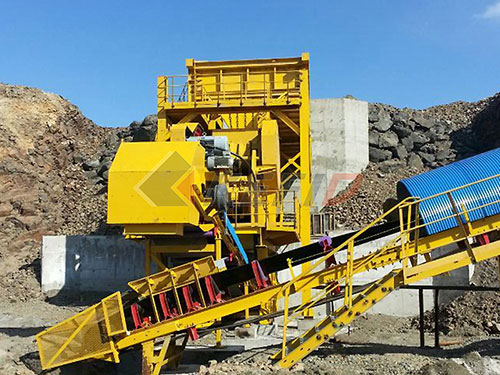
A Wholesale Slag Crusher Plant is a stationary or semistationary material reduction system engineered specifically for the volume processing of metallurgical slag (blast furnace, steel furnace) into valuable aggregate. It is designed not as a generalpurpose unit but as an integrated solution for hightonnage, highabrasion applications.
Operational Workflow:
1. Primary Receiving & PreScreening: Runofpile slag is fed via loader into a robust receiving hopper, often with a grizzly section to bypass fines.
2. Primary Size Reduction: A heavyduty jaw crusher or impact breaker performs the initial crushing to reduce large slabs and lumps.
3. Secondary Crushing & Shaping: The core of the plant—a highinertia cone crusher or specialized impactor—further reduces material and shapes the aggregate for cubicity.
4. Sizing & Stockpiling: Crushed material is conveyed to screening decks for precise classification into commercial product sizes (e.g., 40mm, 20mm, 10mm), with oversize recirculated.
Application Scope: Processing blast furnace (BFS) and steel slag (SS) into construction aggregate for road base, cement additive (GBFS), rail ballast, and fill material.
Key Limitations: Not designed for primary rock mining operations or for processing materials with very high moisture content without preconditioning; feed size is constrained by primary crusher opening.
3. CORE FEATURES
HeavyDuty Rotor & Crushing Chamber | Technical Basis: High rotational inertia design | Operational Benefit: Maintains consistent crushing force through variable feed, preventing stall on tough chunks | ROI Impact: Sustained throughput protects revenue targets; reduces energy spikes
AbrasionResistant Liner System | Technical Basis: Interchangeable liners cast from chromium carbide alloy steel | Operational Benefit: Liner service life extended by 4060% compared to standard manganese steel in slag duty | ROI Impact: Direct reduction in consumables cost per ton; fewer changeouts increase plant availability
Hydraulic Adjustment & Clearing | Technical Basis: Integrated hydraulic cylinders for CSS adjustment and chamber clearing | Operational Benefit: Operators can adjust product size or clear blockages in minutes without entering the crusher | ROI Impact: Minimizes downtime for adjustments; enhances operator safety
Integrated Metal Separation | Technical Basis: Overbelt magnet system positioned postprimary crushing | Operational Benefit: Actively removes tramp metal (rebar, buckles) from the crushing circuit before secondary stage | ROI Impact: Protects downstream conveyors and crushers from catastrophic damage; increases final product purity
Centralized Greasing & Monitoring | Technical Basis: Automated lubrication system with flow sensors to all major bearings | Operational Benefit: Ensures optimal bearing lubrication under high dust load conditions without manual intervention | ROI Impact: Extends critical bearing life; prevents costly failures due to lubrication neglect
Modular Plant Design | Technical Basis: Bolttogether subassemblies for crushers, screens, and conveyors | Operational Benefit: Reduces civil works cost and accelerates onsite erection time by up to 30% | ROI Impact: Lower capital installation cost; faster commissioning leads to quicker production start
4. COMPETITIVE ADVANTAGES
| Performance Metric | Industry Standard (GeneralPurpose Plant) | Wholesale Slag Crusher Plant Solution | Advantage (% improvement) |
|||||
| Liner Wear Life | Standard Manganese Steel | Chromium Carbide Alloy System | +50% |
| System Availability | ~85%, frequent stops for clearing/liner checks | ~93%, designed for continuous abrasive duty | +8 percentage points |
| Power Consumption per Ton | Higher due to inefficiency with abrasive material | Optimized chamber geometry & drive inertia |15% |
| Final Product Cubicity | Variable; often flaky due to improper compression | Consistent high cubicity (>85%) via specialized crushing action | Improved market value |
| Tramp Metal Damage Events | Common; requires shutdowns | Rare; removed proactively by integrated separation |90% frequency |
5. TECHNICAL SPECIFICATIONS
Capacity Range: Configurable from 50 TPH to over 400 TPH of processed slag aggregate.
Power Requirements: Primary plant motor power from 90 kW to 315 kW depending on configuration; total connected load includes conveyors and screens.
Material Specifications: Primary structure fabricated from S355JR steel; wear components in AR400 or equivalent abrasionresistant plate; crusher liners in proprietary highchrome alloy.
Physical Dimensions (Typical Setup): Footprint approximately 35m (L) x 22m (W) x 12m (H). Modular design allows adaptation to site constraints.
Environmental Operating Range: Designed for ambient temperatures from 20°C to +45°C. Dust suppression spray systems are standard at transfer points.
6. APPLICATION SCENARIOS
Steel Mill Slag Processing Yard Challenge:
A major steel producer was landfilling aged slag piles while purchasing natural aggregate externally. Their existing mobile crushers suffered excessive wear and low yield on the hard, variable slag.
Solution:
Implementation of a turnkey Wholesale Slag Crusher Plant featuring a primary jaw crusher and secondary cone crusher with integrated metal recovery.
Results:
The plant achieved a consistent production of 180 TPH of certified aggregate. Landfill costs were eliminated, and the new product line generated revenue within 18 months of commissioning.
Independent Aggregate Producer Challenge:
A contractor processing purchased slag faced high operational costs due to constant component replacement on their refurbished generalpurpose crusher and poor product shape limiting sales price.
Solution:
Replacement with a dedicated slag crushing plant centered on a highinertia horizontal shaft impactor designed for abrasion.
Results:
Field data shows consumable wear part costs reduced by an estimated 35%. The improved cubicity of the output allowed the product to be sold at a premium as a highquality drainage layer material.
7. COMMERCIAL CONSIDERATIONS
Pricing Tiers: Capital cost scales with capacity and robustness.
Base Configuration: Core crushing module with basic discharge conveyor.
Standard Production Plant: Includes primary feeder, crushing stages, screening tower, metal separation,and stockpile conveyors.
Turnkey System: Full electrical control house,dust suppression system,and commissioning support.
Optional Features: Automated wear monitoring systems,telescopic stacker conveyors,washing modules for dust reduction,and advanced process control software.
Service Packages: Extended warranty plans,customized spare parts kits based on your projected throughput,and remote diagnostic support agreements are available.
Financing Options: Flexible commercial leasing structures,tailored to match projected cash flow from the plant's output,and project financing can be discussed based on project scale.
8. FAQ
1. Can this plant handle both blast furnace slagand steel slag?
Yes.The plant design accountsfor variationsin hardnessand abrasiveness.Materialspecific liner profilesand crushing chamber configurationsare selected during engineering basedon your primary feed material analysis.
2. What levelof foundationworkis required?
The modular design reducesthe needfor extensive concreteworks comparedto pouredinplace systems.Detailed foundation drawingsare providedfor local preparationof adequatecrusherandscreenpiersandconveyorfootings.
3.How does this impactour existingfrontend loadingand haulageoperations?
The plantis designedto interfacewith standardwheel loadersand dump trucks.A properly sizedreceivinghopperwithgrizzly minimizes spillageand optimizes loader cycle times.Efficient layout planning minimizes internal haul distances.
4.What arethe lead timesfor sucha plant?
Lead timesvaryby complexity.For standarddesigns within our catalog,fabricationtypically requires1624 weeksfrom orderconfirmationto exworks readiness.Erectionand commissioningonsite requirean additional35 weeksdependingon scope.
5.What trainingis providedfor our operationsand maintenance staff?
Comprehensive trainingis includedas partof commissioning.This coverssafe daily operation,routine maintenance procedures,and basic troubleshooting.Training manualsare providedin both digitaland physical formats