
White Label Slag Crusher Plant Contract Manufacturer

1. PAINPOINT DRIVEN OPENING
Managing slag byproduct is a persistent operational bottleneck with direct cost implications. Are you facing these challenges?
High Disposal Costs & Liability: Landfill fees for untreated slag are escalating, and regulatory scrutiny on storage is increasing, creating both financial and environmental liability.
Inefficient Material Recovery: Valuable metallic content trapped within slag represents lost revenue and undermines raw material efficiency.
Downstream Processing Issues: Inconsistent, oversized slag material jams conveyors, damages equipment, and creates bottlenecks in your material handling circuit.
Multiple Equipment Dependency: Relying on separate, nonintegrated units for primary crushing, screening, and metal separation drives up capital costs and complicates maintenance.
Contractual Inflexibility: Sourcing a standard crusher often means adapting your process to the machine, not the other way around.
What if your slag handling could be transformed from a cost center into a controlled recovery operation? The solution lies in a purposeengineered system designed for this specific duty.
2. PRODUCT OVERVIEW
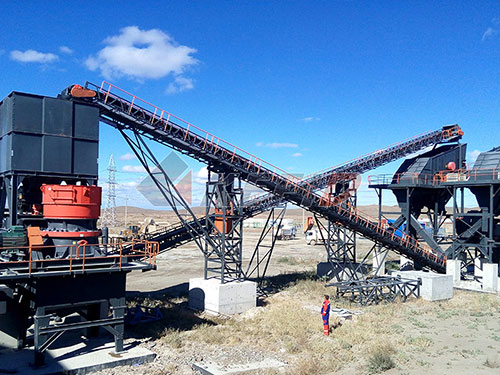
A White Label Slag Crusher Plant is a complete, turnkey processing system manufactured under contract to your specifications and branded for your company. It is engineered to reduce slag from furnaces, ladles, or stockpiles into a precisely graded aggregate while maximizing ferrous metal recovery.
Operational Workflow:
1. Feed & PreScreening: Slag is fed via loader or conveyor; an initial grizzly screen removes fine fractions to bypass the crusher, increasing throughput.
2. Primary Size Reduction: A robust crusher (typically jaw or impactor) reduces large slag lumps to a manageable size, liberating embedded metal.
3. Metal Separation & Recovery: Liberated metal is extracted via overhead magnetic separators positioned over discharge conveyors.
4. Final Sizing & Stockpiling: Crushed material passes through a vibrating screen to ensure product specification; sized aggregate is conveyed to stockpiles.
Application Scope: Ideal for steel mills, foundries, metal smelters, and recycling facilities processing blast furnace (BF) slag, steel furnace slag, or nonferrous slags with recoverable metal content.
Limitations: Not designed for primary rock mining or extremely abrasive natural aggregates without specific configuration. Feed size and hardness parameters must be defined during engineering.
3. CORE FEATURES
HeavyDuty Crusher Design | Technical Basis: Highchrome wear parts & reinforced rotor/body | Operational Benefit: Withstands extreme abrasion and occasional tramp metal with reduced wear rates | ROI Impact: Extends component service life by 3050%, lowering costpertonne for wear parts
Integrated Magnetic Separation Circuit | Technical Basis: Selfcleaning crossbelt magnets at strategic discharge points | Operational Benefit: Automatically extracts liberated ferrous metal continuously without manual intervention | ROI Impact: Recovers 95%+ of free metal, converting waste to direct revenue stream
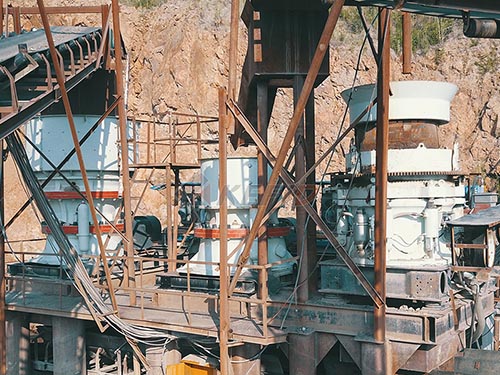
PLCBased Control System | Technical Basis: Centralized automation with fault diagnostics and process interlocks | Operational Benefit: Enables singleoperator control of the entire plant; prevents jams and equipment damage | ROI Impact: Reduces labor requirements and minimizes unplanned downtime due to operational errors
Modular Skid/Base Frame Construction | Technical Basis: Preassembled structural modules with integrated walkways and ladders | Operational Benefit: Significantly reduces site installation time and civil work costs | ROI Impact: Cuts installation time by up to 40%, accelerating timetooperational status
Dust Suppression System | Technical Basis: Strategically placed nozzles creating a micronlevel water curtain | Operational Benefit: Effectively controls dust at feed and transfer points, ensuring EPA compliance | ROI Impact: Eliminates potential regulatory fines and creates a safer operator environment
Customizable Output Grading | Technical Basis: Interchangeable screen meshes in a highfrequency vibrating screen | Operational Benefit: Produce multiple aggregate specifications (e.g., 20mm, 40mm) from the same feed stock | ROI Impact: Allows product diversification to meet different market demands or internal use cases.
4. COMPETITIVE ADVANTAGES
| Performance Metric | Industry Standard (Generic Crusher Plant) | White Label Slag Crusher Plant Solution | Advantage |
| : | : | : | : |
| Metal Recovery Rate (%)| 7080% (dependent on manual picking) | 95%+ (via integrated magnetic separation) | +1525% |
| Wear Part Lifetime (Hours) | ~500600 (standard manganese steel) | ~800900 (highchrome alloys) | +4050% |
| Installation & Commissioning Time (Weeks) | 68 weeks (field assembly required) | 34 weeks (modular skid design) | 50% |
| System Uptime (%)| ~85% (multiple component sources)| >92% (engineered compatibility) |>7% improvement |
| Total Cost of Ownership (5Year Estimate)| Higher (frequent part changes, lower recovery)| Lower (optimized wear life, high recovery)| Significant reduction |
5. TECHNICAL SPECIFICATIONS
Capacity Range: Configurable from 10 TPH to over 150 TPH.
Feed Size Maximum: Up to 800mm lump slag.
Power Requirements: Plant total dependent on configuration; typical range 150kW 450kW. Designed for 415V/3Phase/50Hz or clientspecified supply.
Crusher Core Options: Heavyduty jaw crusher (for high compression strength slag) or impact crusher with hydraulic assist (for better shaping & liberation).
Material Specifications: Crusher liners in AR400 or higher; chutes and wear plates in minimum 10mm abrasionresistant steel; structural frames in IS2062.
Physical Dimensions: Modular design variable; example for a 50 TPH plant footprint approx. 20m L x 8m W x 7m H.
Environmental Operating Range: Designed for ambient temperatures from 10°C to +45°C; dust protection standard to IP55.
6. APPLICATION SCENARIOS
Integrated Steel Plant – Blast Furnace Slag
Challenge: A major mill faced rising landfill costs for BF slag and needed to create saleable aggregate for cement production while recovering residual iron.
Solution: Implementation of a configured white label plant with heavyduty jaw crusher and twostage magnetic separation.
Results: Achieved consistent 25mm aggregate product meeting SCM specifications; recovered over 8 tonnes of metallics per day for recycling back into BOF; landfill diversion reached 98%.
Ferroalloy Smelter – Silicomanganese Slag
Challenge: Abrasive SiMn slag was causing excessive wear on generic crushing equipment (<200 hours on hammers), creating high operating costs and unreliable supply of construction filler material.
Solution: Deployment of an impact crusherbased white label plant featuring specialized tungsten carbide tipped wear components.
Results: Wear part lifetime increased to over 650 hours; plant availability exceeded 90%; produced filler material met road subbase specifications consistently.
7. COMMERCIAL CONSIDERATIONS
White label manufacturing provides significant commercial flexibility:
Pricing Tiers: Based on capacity and complexity – Basic Crushing Circuit → Crushing + Screening Module → Full Circuit with Metal Recovery & Automation.
Optional Features / Upgrades: Dust encapsulation systems vs. suppression; advanced metal detectors; automated lubrication systems; remote monitoring telematics.
Service Packages: Tiered offerings from basic documentation packs to comprehensive annual maintenance contracts with guaranteed response times and spare part holding agreements.
Financing Options: Through partner institutions – available as outright purchase, leasetoown agreements tailored to cash flow cycles typical in metallurgical industries.
8. FAQ
1. Q1 Can this plant be integrated with our existing material handling equipment?
Yes. As contract manufacturers we engineer transfer heights conveyor widths drive capacities control signals interfaces etc specifically match your upstream feeding downstream stacking systems
2 Q2 What is the expected operational impact on our current manpower?
Field data shows these automated plants typically require one trained operator per shift plus routine maintenance crew attention reducing reliance multiple manual laborers sorting feeding
3 Q3 How does the white label model affect lead time compared buying standard OEM model?
The contractual manufacturing process often reduces lead time because production scheduled dedicated slot based your approved drawings avoiding queue standard model production lines Engineering phase however remains critical path
4 Q4 Are performance guarantees provided?
Yes performance guarantees covering throughput final product grading metal recovery rate are stipulated contract based agreed feed characteristics These validated during factory acceptance testing FAT site commissioning
5 Q5 What are the key commercial terms regarding payment intellectual property?
Standard terms involve staged payments linked design approval manufacturing milestones shipment Typically all design drawings IP related your specific configuration remain your property manufacturer retains rights base engineering designs