
White Label Sand Gravel Mining Processing Plant
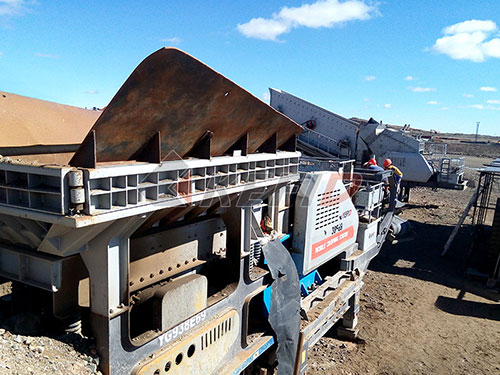

1. PAINPOINT DRIVEN OPENING
Managing a sand and gravel operation means contending with constant pressure on margins and predictability. Are you facing these persistent challenges?
Inconsistent Feed Material: Variable clay content, moisture, and feed size lead to unpredictable processing rates, product quality issues, and increased wear on downstream equipment.
High Water & Energy Consumption: Traditional washing and classification methods are often inefficient, resulting in excessive water usage that requires costly settling ponds and high power draw per ton of processed material.
Excessive Downtime for Maintenance: Frequent bearing failures, screen cloth changes, and pump blockages from abrasive materials stop your production line, directly impacting your bottom line.
Product Specification Inflexibility: Market demands shift, but your plant struggles to efficiently produce different sand gradations or effectively separate deleterious materials without major reconfiguration.
Space & Environmental Constraints: Expanding your settling pond footprint or managing slurry runoff is increasingly difficult due to regulatory and land availability pressures.
What if your processing plant could adapt to variable feed, drastically cut resource consumption, and maintain throughput with less unscheduled maintenance?
2. PRODUCT OVERVIEW: White Label Sand & Gravel Processing Plant
This white label modular processing plant is a fully integrated system designed for the primary washing, classification, dewatering, and stockpiling of sand and gravel aggregates. Engineered for midtohigh volume producers (150600 TPH typical range), it provides a configurable alternative to custombuilt installations.
Operational Workflow:
1. Feed & PreScreening: Runofquarry material is introduced via a feed hopper with a vibrating grizzly to scalp oversize rock before primary washing.
2. Primary Washing & Attrition: Material enters a log washer or rotary scrubber (configurable) to break down clay nodules and disperse contaminants.
3. Size Classification & Dewatering: Screw classifiers or cyclones separate sand fractions by size; specialized dewatering screens produce dripfree, conveyable sand products.
4. Water Management & Recirculation: Slurry is sent to a compact fines recovery system; clarified water is recirculated, minimizing fresh water makeup requirements.
Application Scope & Limitations:
Scope: Ideal for alluvial deposits, glacial till, river run material, and crushed stone sands requiring washing. Effective for producing concrete sand, masonry sand, gravel chips, and specialty sands.
Limitations: Not designed for hard rock primary crushing or metallic mineral recovery. Maximum feed size is limited by the configured primary screen (typically 46 inches). Highly cemented or conglomerate feeds may require precrushing.
3. CORE FEATURES
Modular Skid Design | Technical Basis: Preassembled structural steel skids with integrated wiring/plumbing | Operational Benefit: Reduces onsite installation time by up to 60% versus stickbuilt plants; allows for future reconfiguration or relocation | ROI Impact: Faster commissioning generates revenue sooner; protects capital investment against site depletion.
HighEfficiency Cyclone Cluster | Technical Basis: Bank of smalldiameter polyurethane cyclones for precise hydraulic classification | Operational Benefit: Delivers superior silt cutpoint control compared to single large cyclones or settling tanks; requires less floor space | ROI Impact: Consistent production of inspec sand improves product value; reduced footprint lowers site preparation costs.
PLCBased Process Control | Technical Basis: Centralized programmable logic controller with HMI touchscreen interface | Operational Benefit: Operators can monitor pump amps, tank levels, and adjust feed rates from a single station for optimal balance | ROI Impact: Maximizes consistent throughput; reduces operator error leading to lower waste and energy use per ton.
AbrasionResistant Liner System | Technical Basis: Bolton wear liners of AR400 steel or urethane in highimpact zones | Operational Benefit: Protects structural components; liners are replaceable without welding or major cutting | ROI Impact: Extends structural life of the plant by years; reduces maintenance duration from days to hours.
ClosedLoop Water System | Technical Basis: Integrated thickener/clarifier tank with flocculent dosing system | Operational Benefit: Recovers up to 90% of process water for immediate reuse; drastically reduces settling pond volume needs | ROI Impact: Cuts fresh water procurement costs by over 80%; minimizes environmental liability and land use.
Variable Frequency Drive (VFD) Critical Motors | Technical Basis: VFDs installed on feed conveyor, slurry pumps, and classifier motors | Operational Benefit: Allows softstarting to reduce mechanical stress and electrical demand charges; enables finetuning of pump flow without valve adjustments | ROI Impact: Lowers peak power demand fees; extends motor and drive component life.
4. COMPETITIVE ADVANTAGES
| Performance Metric | Industry Standard (Traditional Plant) | White Label Solution Advantage |
| : | : | : |
| Fresh Water Consumption per Ton | ~100150 gallons/ton (open loop) / ~50 gallons/ton (basic pond recycle) / ~1015 gallons/ton / Up to 85% reduction |
| OnSite Installation & Commissioning Time| 812 weeks / 35 weeks / ~60% faster |
| Product Grade Consistency (Sand Fines Content) ±2% spec variation common / ±0.5% spec variation achievable / Improved control by >60% |
| Wear Component Changeout Time (Primary Screen Deck) Full shift (68 hours) / Half shift or less (24 hours) / Downtime reduced ~50% |
5. TECHNICAL SPECIFICATIONS
Design Capacity Range: Configurable from 150 to 600 tons per hour (TPH) of raw feed material.
Power Requirements: Total connected load between 400HP 900HP depending on configuration; main supply typically 480VAC, 3phase.
Material Specifications: Structural steel ASTM A36; wear surfaces in chutes, launders, and hoppers lined with minimum AR400 steel or equivalent polyurethane.
Physical Dimensions (Typical Modular Footprint): Primary wash module approx. 40' L x 16' W x 22' H; classification/dewatering module approx. 50' L x 14' W x 28' H.
Environmental Operating Range: Designed for ambient temperatures from 20°C to +45°C (4°F to 113°F). Dust suppression sprays standard at transfer points.
6. APPLICATION SCENARIOS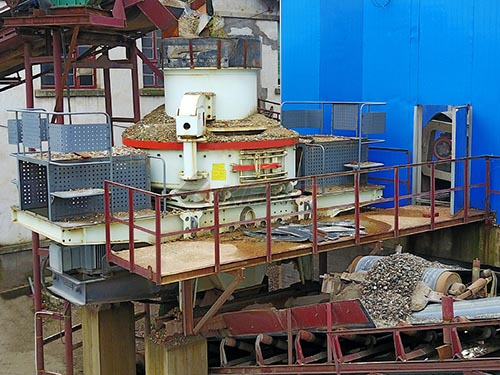
Concrete Aggregate Producer in Arid Region
Challenge A producer faced strict water usage quotas from municipal sources and high costs for truckedin water. Their existing system lost significant water to evaporation in large settling ponds.
Solution Implementation of this white label plant featuring the closedloop water system with an automated flocculent dosing unit.
Results Fresh water consumption reduced from approximately 125 gallons/ton to under 12 gallons/ton. The system paid for its premium through water cost savings alone within an estimated twoyear period.
Alluvial Gravel Pit Expanding Product Line
Challenge The pit historically sold only coarse aggregate but identified strong market demand for concrete sand. Their existing equipment could not efficiently separate fine sand from silt.
Solution Integration of a cyclone cluster and dewatering screen module into their existing circuit via the plant's modular design.
Results The operation added two new inspec sand products without disrupting core gravel production. Fines content was consistently maintained below the required limit (<7%), allowing entry into the readymix concrete market.
7. COMMERCIAL CONSIDERATIONS
Pricing Tiers: Solutions are priced based on configured capacity:
Tier I (150250 TPH): Entrylevel configuration focusing on core washing/dewatering.
Tier II (250450 TPH): Most common configuration including advanced controls and full fines management.
Tier III (450600 TPH): Highvolume systems with redundancy on critical pumps and advanced telemetry options.
Optional Features: Attrition scrubber cell for tough clays,
Automated product sampling systems,
Remote monitoring telematics package,
Additional spare parts packages tailored to expected wear items.
Service Packages: Available service agreements range from basic preventive maintenance inspections through comprehensive partsandlabor coverage with guaranteed response times.
Financing Options: Equipment financing can be arranged through partner institutions,
typically offering terms from
36
84 months,
as well as leasetoown structures that may preserve working capital lines
8.FAQ
Q How do I know if my site's raw feed material is suitable?
A We provide a detailed feedstock evaluation questionnaire covering gradation,
clay type/content,
and moisture
Laboratory testing of your samples is strongly recommended prior final configuration
Q What level of operator training is required?
A The PLC control system simplifies operation
Comprehensive training for your shift supervisors
and operators is included during commissioning
Q Can this plant integrate with my existing crushing circuit?
A Yes
The modular design allows it be fed directly from your secondary/tertiary crusher discharge
Key interface points like feed conveyor dimensions
and surge capacity are engineered during the design phase
Q What are the typical ongoing operational costs?
A Primary costs are power
wear liners/media,
and flocculent polymer where used
Field data indicates operational cost range between $0 .75$1 .25 per ton processed depending local utility rates
Q What is the expected delivery timeline after order?
A For standard configurations,
delivery typically occurs within
16
20 weeks from finalized engineering drawings;
expedited options may be available
Q Are performance guarantees offered?
A Yes
Performance guarantees covering throughput capacity,
product specification adherence,
and specific resource consumption e g ,
water/power per ton are provided as part contract based final system design