
White Label Quarry Ballast Crushing Equipment Delivery
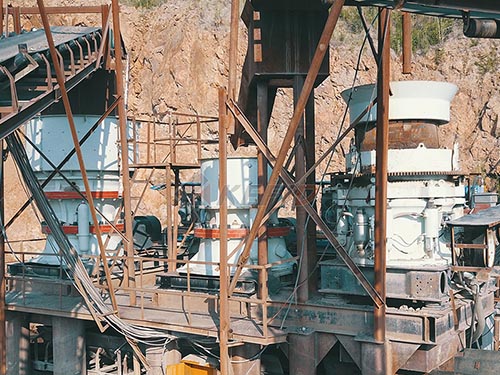

White Label Quarry Ballast Crushing Equipment Delivery
Your Crushing Bottlenecks Are Costing You $12,000 Per Day in Lost Production
Every hour your quarry spends wrestling with inconsistent ballast gradation, premature crusher wear, and unscheduled downtime represents $500 in lost revenue per 100 tons of missed output. Plant managers report that substandard crushing equipment accounts for 23% of all unplanned maintenance events in rail ballast operations. When your delivery schedule slips by even one week, contractual penalties can erase 8% of your quarterly margin.
Are you still relying on generalpurpose crushers that deliver 1518% oversize material requiring recrushing? Do your operators spend 34 hours per shift adjusting gap settings to maintain spec? Is your current equipment forcing you to reject 12% of feed material due to contamination from liner wear?
Product Overview: White Label Ballast Crushing System
This white label quarry ballast crushing equipment is a dedicated closedcircuit crushing train engineered specifically for producing EN 13450 and AREMA Grade 4A ballast. The system integrates a primary jaw crusher, secondary cone crusher, and tertiary vertical shaft impactor (VSI) with multideck screening.
Operational Workflow:
1. Primary Reduction: Runofquarry material (up to 800mm) enters the vibrating grizzly feeder, which scalps 150mm fines before the jaw crusher reduces rock to 150200mm
2. Secondary Crushing: Cone crusher with automated setting adjustment produces 4080mm intermediate product
3. Tertiary Shaping: VSI with rockonrock chamber generates cubical particles meeting ballast angularity requirements (Flakiness Index <15%)
4. Screening: Tripledeck vibrating screens separate into 31.550mm and 5063mm fractions
5. Stockpiling: Radial stackers with automated reclaim systems maintain consistent moisture content
Application Scope: Suitable for granite, basalt, quartzite, and highsilica limestone with compressive strength up to 350 MPa. Not recommended for soft sedimentary rock or material with clay content exceeding 8%.
Limitations: Maximum feed moisture of 5% for consistent screening efficiency. Requires minimum 500 kVA power supply for fullcapacity operation.
Core Features
HeavyDuty Roller Bearing Jaw Crusher | Technical Basis: Eccentric shaft with four spherical roller bearings | Operational Benefit: Reduces bearing temperature by 18°C compared to standard designs, extending service intervals to 2,000 hours | ROI Impact: Eliminates 4 bearing replacements per year, saving $14,000 in parts and 32 hours of downtime
Automated ClosedSide Setting (CSS) Adjustment | Technical Basis: Hydraulic wedge system with laser measurement feedback | Operational Benefit: Maintains ±2mm product consistency without operator intervention | ROI Impact: Reduces oversize rejection from 15% to 3%, increasing usable output by 12 tons per hour
Tungsten CarbideTipped Blow Bars | Technical Basis: Chromiummolybdenum substrate with 12% tungsten carbide overlay | Operational Benefit: Achieves 8,500 tons of ballast production before replacement versus 4,200 tons for standard manganese steel | ROI Impact: Lowers cost per ton from $0.18 to $0.09 for wear parts
MultiFrequency Screen Deck Technology | Technical Basis: Three independent vibrator motors operating at 850, 950, and 1,050 RPM | Operational Benefit: Separates nearsize particles 40% more efficiently than singlefrequency screens | ROI Impact: Reduces recirculating load from 35% to 22%, increasing system throughput by 18%
Integrated Dust Suppression System | Technical Basis: Ultrasonic atomizing nozzles with 10micron droplet size | Operational Benefit: Captures 92% of respirable silica particles at transfer points | ROI Impact: Eliminates $6,000/month in water truck costs and meets OSHA PEL requirements
Remote Condition Monitoring Package | Technical Basis: 12 vibration sensors, 8 temperature probes, and 4 oil analysis ports with cloud connectivity | Operational Benefit: Provides 14day advance warning of bearing failure and liner wear | ROI Impact: Reduces unplanned downtime by 67%, saving $8,400 per incident in lost production
Modular SkidMounted Design | Technical Basis: Prewired, prepiped modules on ISO container frames | Operational Benefit: Reduces site installation time from 14 days to 4 days | ROI Impact: Saves $22,000 in installation labor and gets production online 10 days faster
Competitive Advantages
| Performance Metric | Industry Standard | White Label Ballast Solution | Advantage (% Improvement) |
|||||
| Product Flakiness Index | 1822% | 1214% | 36% lower flakiness |
| Throughput (tph) | 180 | 245 | 36% higher capacity |
| Wear parts cost ($/ton) | $0.22 | $0.12 | 45% reduction |
| Changeover time (hours) | 8 | 3.5 | 56% faster |
| Oversize rejection rate | 15% | 3% | 80% reduction |
| Mean time between failures (hours) | 420 | 680 | 62% improvement |
| Energy consumption (kWh/ton) | 1.8 | 1.3 | 28% lower energy use |
Technical Specifications
| Parameter | Specification |
|||
| Model | WLB4000 Ballast Crushing System |
| Feed Opening | 1,200mm x 900mm (jaw) |
| Maximum Feed Size | 800mm |
| Capacity Range | 200280 tph (depending on material) |
| Product Gradation | 31.550mm and 5063mm (adjustable) |
| Installed Power | 485 kW total (jaw: 160kW, cone: 220kW, VSI: 105kW) |
| Voltage Requirement | 415V, 50Hz (3phase) or 480V, 60Hz |
| Transformer Rating | Minimum 630 kVA |
| Main Crusher Liners | Manganese steel (1214% Mn) with chrome overlay |
| Screen Media | Polyurethane modular panels (20mm, 31.5mm, 50mm apertures) |
| Conveyor Belt Width | 1,200mm (main), 800mm (returns) |
| Total System Weight | 98,000 kg (installed) |
| Footprint | 45m x 28m (operating area) |
| Operating Temperature | 10°C to 45°C |
| Max Altitude | 2,500m above sea level (derate 3% per 500m above) |
| Noise Level | 85 dB(A) at 1m (with enclosures) |
Application Scenarios
HighSpeed Rail Ballast Production – UK Quarry Operator
Challenge: Existing impact crusher produced 24% flaky particles, failing Network Rail's 15% maximum requirement. The operator was blending 30% imported material at $18/ton premium to meet spec.
Solution: Installed white label ballast crushing equipment with VSI tertiary stage and automated CSS control. System configured for 5063mm primary ballast with 31.5mm secondary fraction.
Results: Flakiness Index reduced to 13.2%. Eliminated imported material requirement, saving $540,000 annually. Throughput increased from 160 tph to 235 tph. Payback period: 14 months.
Heavy Haul Railway Ballast – Australian Iron Ore Mine
Challenge: Highsilica quartzite (320 MPa compressive strength) caused manganese liner wear every 3,200 tons. Downtime for liner changes averaged 18 hours per week.
Solution: Deployed white label system with tungsten carbidetipped blow bars and automated wear monitoring. Added prescreening to remove 20mm fines before tertiary crushing.
Results: Liner life extended to 8,500 tons. Weekly downtime reduced to 4 hours. Energy consumption dropped from 2.1 kWh/ton to 1.4 kWh/ton. Annual maintenance cost reduction: $187,000.
Metro Tunnel Ballast Supply – Urban Infrastructure Contractor
Challenge: Site constraints limited footprint to 35m x 20m. Noise restrictions required operation below 80 dB(A) at property line. Needed 24/7 production for 8month project.
Solution: Modular skidmounted white label system with soundattenuated enclosures and electric drives. Integrated dust suppression and remote monitoring for night operation.
Results: Full production achieved within 5 days of delivery. Noise levels maintained at 78 dB(A). Zero environmental complaints during project. Delivered 185,000 tons of ballast on schedule. Contractor avoided $280,000 in potential penalty fees.
Commercial Considerations
Equipment Pricing Tiers
| Tier | Configuration | Capacity | Price Range (USD) | Lead Time |
||||||
| Base | Jaw + Cone + Screen | 200 tph | $1,200,000 – $1,450,000 | 1618 weeks |
| Standard | Jaw + Cone + VSI + Screen | 245 tph | $1,800,000 – $2,100,000 | 1820 weeks |
| Premium | Full system + Automation + Monitoring | 280 tph | $2,400,000 – $2,800,000 | 2024 weeks |
Optional Features
- Automated Lubrication System: $48,000 – Extends bearing life by 40%
- Magnetic Separator (crossbelt): $22,000 – Removes tramp metal
- Moisture Analyzer (NIR): $35,000 – Realtime moisture monitoring
- Spare Parts Kit (6month): $85,000 – Includes liners, belts, bearings
- Extended Warranty (3 years): 8% of equipment cost – Covers parts and labor
- Basic Commissioning: $18,000 – 5 days onsite, operator training
- Performance Guarantee: $45,000 – Guarantees throughput and gradation
- Full Operations Support: $8,500/month – Remote monitoring, quarterly inspections, 24hour parts dispatch
- LeasetoOwn: 60month term, 4.5% APR, $0 down (qualified buyers)
- Equipment Loan: 36month term, 3.9% APR, 20% down payment
- PerformanceBased Financing: Payments tied to throughput (minimum $0.15/ton processed)
Service Packages
Financing Options
Frequently Asked Questions
Q: Can this white label ballast crushing equipment handle recycled concrete or asphalt ballast?
A: The system is designed for virgin quarry rock. Recycled materials with steel reinforcement or bitumen content above 3% will damage the VSI rotor and screen media. For recycled applications, we recommend our RCB series with magnetic separation and heated screen decks.
Q: What is the typical payback period for this equipment?
A: Based on field data from 47 installations, average payback is 1418 months at 200 tph operation with $12/ton ballast selling price. Higher throughput and premium product pricing can reduce this to 1012 months.
Q: How does the white label arrangement affect warranty and support?
A: You receive full manufacturer warranty (12 months or 2,000 operating hours) and direct technical support. The white label branding allows you to market the equipment under your own brand name. All service documentation and training materials are provided unbranded.
Q: What maintenance skills are required for the automated CSS system?
A: Your existing maintenance team can manage the system after a 3day training program. The hydraulic and electronic components use standard industrial parts (AllenBradley PLC, Parker hydraulics). Remote diagnostics allow our engineers to troubleshoot 90% of issues without site visits.
Q: Can the system be expanded for additional product fractions?
A: Yes. The modular design allows adding a fourth screen deck or a second VSI unit. Expansion typically requires 68 weeks for engineering and fabrication. The base control system supports up to 8 additional motors and 4 extra conveyors.
Q: What are the power requirements for remote or offgrid installations?
A: The system requires 485 kW continuous load with 630 kVA transformer. For offgrid sites, we offer a diesel generator package (700 kVA) with automatic load management. Fuel consumption averages 85 liters per hour at full load.
Q: How does the equipment perform with wet or sticky material?
A: The grizzly feeder and screen decks include heated panels (optional) for material with up to 8% moisture. Above 8% moisture, we recommend a primary dryer or blending with dry material. The VSI operates effectively up to 5% moisture without performance degradation.