
White Label 500 Tph Gold Mining Washing Plant Testing


1. PAINPOINT DRIVEN OPENING
Are you scaling your alluvial or eluvial gold operation and hitting consistent bottlenecks? Managing a 500 TPH feed rate presents distinct challenges that directly impact your bottom line. Common operational hurdles include:
Inconsistent Recovery with High Volumes: Standard scrubber and screen setups can struggle with variable clay content at this scale, leading to goldbearing fines bypassing the recovery circuit.
Excessive Downtime for Maintenance: Poorly designed trommels and feed systems require frequent stoppages for unclogging and component wear replacement, costing hundreds of production hours annually.
High Operational Water & Power Demand: Inefficient pump systems and plant layout can inflate your most variable costs, eroding profit margins on every ton processed.
Difficulty in Achieving SteadyState Operation: Balancing feed, washing, screening, and slurry density across a large plant is complex, often resulting in suboptimal performance and manual intervention.
Is your current setup delivering the predictable, lowcost perton recovery required for project bankability? This is where purposebuilt, thoroughly tested industrial equipment makes the critical difference.
2. PRODUCT OVERVIEW: WHITE LABEL 500 TPH GOLD MINING WASHING PLANT
This is a complete, modular washing and preconcentration system engineered for highvolume placer and weathered hard rock deposits. It is designed to accept runofmine material up to 500 tonnes per hour, preparing it for efficient downstream gravity or leaching recovery.
Operational Workflow:
1. Primary Feed & Scrubbing: ROM material is fed into a robust scrubbing module, aggressively breaking down clay agglomerates and cemented matrices to liberate gold.
2. Primary Size Classification: A highcapacity trommel screen separates material into oversize (>10mm, typically waste), midsize (210mm), and undersize (<2mm) fractions.
3. Secondary Concentration & Dewatering: The undersize slurry is routed to primary concentration units (e.g., sluices, jigs), while midsize material can be further screened or concentrated. Efficient dewatering screens recover process water.
Application Scope & Limitations:
Ideal For: Largescale alluvial gold projects, eluvial deposits with clay content, riverine operations, and tailings reprocessing with high feed rates.
Limitations: Not suitable for primary hard rock crushing or milling. Optimal performance requires controlled feed size distribution (typically <250mm). Water supply must meet the designed flow rate for the target capacity.
3. CORE FEATURES
HeavyDuty Scrubbing Module | Technical Basis: Hightorque dual shaft design with replaceable wear paddles | Operational Benefit: Effectively processes heavy claybound feed without shaft stall or bogging; allows continuous operation in difficult materials | ROI Impact: Reduces prewashing time and eliminates need for separate clay processing plants, lowering capital outlay.
Optimized Trommel Screen Design | Technical Basis: Variable pitch drum with internally staged screen panels (punch plate to polyurethane) | Operational Benefit: Prescreens large rocks early; provides longer effective screening time for fines; reduces plugging | ROI Impact: Increases screening efficiency by an estimated 1520%, directly boosting recoverable gold reporting to concentration units.
Centralized Slurry Distribution Manifold | Technical Basis: Engineered launder system with adjustable splitter gates and monitoring points | Operational Benefit: Enables precise control of slurry flow and density to multiple downstream concentrators | ROI Impact: Ensures even feed to recovery units, maximizing overall plant recovery rate from variable feedstock.
Modular SkidMounted Construction | Technical Basis: Units preassembled on heavyduty structural skids with integrated walkways and plumbing | Operational Benefit: Dramatically reduces field installation time and civil works cost; simplifies relocation | ROI Impact: Can cut plant commissioning timeline by up to 40%, accelerating timetoproduction.
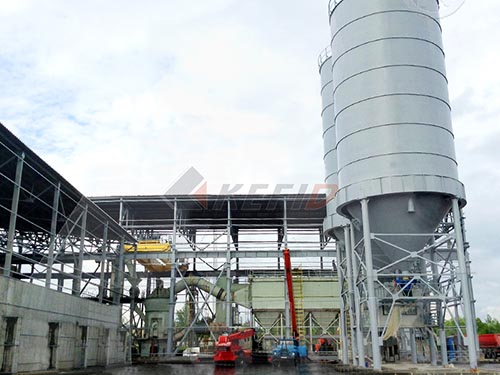
LowPressure HighVolume Pump System | Technical Basis: Specially configured centrifugal pumps with wearresistant liners | Operational Benefit: Delivers required water volume at lower pressure heads, reducing energy consumption and liner wear rates | ROI Impact: Lowers ongoing power costs by an estimated 812% compared to standard highpressure systems.
Integrated Instrumentation Package | Technical Basis: Flow meters, density gauges, and pressure sensors at key circuit points | Operational Benefit: Provides operators with realtime data to make informed adjustments for optimal performance | ROI Impact: Facilitates datadriven process control, stabilizing recovery efficiency and reducing operator error.
4. COMPETITIVE ADVANTAGES
| Performance Metric | Industry Standard (500 TPH Class) | White Label 500 TPH Solution | Advantage (% Improvement) |
| : | : | : | : |
| Clay Processing Capability| Requires frequent stops for cleaning/declogging| Continuous operation in up to 35% clay content feed| ~30% less downtime for maintenance |
| Screening Efficiency (sub2mm)| ~85% efficiency due to blinding/overloading| Consistent >92% efficiency via staged design| ~8% more fines reporting correctly |
| Water Circulation Rate| Often requires fresh water topup of 2025%| Closedcircuit design reduces topup to ~1215%| ~40% reduction in fresh water demand |
| OnSite Installation Time| 812 weeks for bolted assembly| 46 weeks for skid connection & commissioning| ~50% faster deployment |
| Specific Power Consumption| ~0.85 1.0 kWh per ton processed| ~0.75 0.82 kWh per ton processed| ~10% lower energy cost per ton |
5. TECHNICAL SPECIFICATIONS
Nominal Capacity: 500 tonnes per hour (dry feed)
Max Feed Size: 250mm
Power Requirement: Total installed power approximately 650 kW (plant dependent on configuration)
Water Requirement: Circuit designed for 2,500 3,000 m³/day recirculation; fresh water topup approx. 350450 m³/day.
Material Specifications:
Scrubbing Chamber & Trommel Drum: AR400 AbrasionResistant Steel
Screen Panels: Modular polyurethane panels on undersize section
Launders & Slurry Lines: Hardox® or equivalent wear steel
Physical Dimensions (Modular): Typical footprint of main wash plant module is 28m (L) x 9m (W) x 7m (H).
Environmental Operating Range:
Ambient Temperature Range: 20°C to +50°C
Altitude Up To: 3,000 meters above sea level
6. APPLICATION SCENARIOS
West African Alluvial Gold Project Challenge: Highly variable lateritic clay content caused constant blinding of screening surfaces in existing plant, reducing effective capacity below 300 TPH,with significant gold loss in fines. Solution: Deployment of the White Label 500 TPH Gold Mining Washing Plant, focusing on its heavyduty scrubbing module and optimized trommel. Results: Achieved consistent 480 TPH throughput;recovery of fine gold (<1mm) improved by an estimated 22%;plant availability increased from 75%to >90%.
South American Tailings Reprocessing Challenge: Lowgrade historical tailings required highvolume processing at minimal cost per ton. Existing equipment had high water consumption,and permitting limited fresh water use. Solution: Installation of the washing plant configured with enhanced water recirculation cyclonesand lowpressure pumps. Results: Met target of 500 TPH throughput while staying within strict water permit limits;power costs reduced by $0.08per ton processed comparedto previous feasibility estimates.
7. COMMERCIAL CONSIDERATIONS
The White Label 500 TPH Gold Mining Washing Plant is offered as a capital asset solution focused on longterm operational savings.
Pricing Tiers:
1. Base Plant Package: Includes core scrubbing,screening,and slurry distribution modules.Priced as a turnkey unit FOB factory.
2. Enhanced Recovery Package: Base plant plus integrated primary gravity concentration units(e.g.,sluices,jigs).
3. Full Circuit Package: Includes secondary concentration,tailing dewatering,and complete control system.
Optional Features:
Advanced PLC control systemwith SCADA interface
Onboard diesel power generation module
Spare parts starter kit(critical wear components)
Service Packages:
Commissioning & Operator Training(standard)
Annual Performance Audit& Optimization Review
Planned Maintenance Contractswith guaranteed response times
Financing Options Available Through Partners:
Equipment leasing structures
Project financing linkage
Rentaltoown agreementsfor initial project phases
8. FAQ
Q1:What upstream equipment is neededto feed this washing plant?
A:A frontend loader or excavator feeding a surge hopperwith apron feederis typical.The plant itself requires controlled feeding but does not include primary excavation or haulage equipment.
Q2:What downstream equipment typically pairs with this system?
A:The washedand concentrated heavy mineral concentrate(HMC)from this plant usually reports totailored gravity circuits(e.g.,centrifugal concentrators,tables)or direct intensive cyanidation unitsdependingon gold liberation size.
Q3:What are the critical operational factorsfor maintaining rated capacity?
A:The two key factors are consistent controlof feed size (adherenceto <250mm)and managementof overall moisture/claycontentin the ROMfeed.Material outside these parameterscan be managedbut may requireoperational adjustments.
Q4:What does "White Label" meanin this context?
A:"White Label" signifies thatthe equipmentis manufacturedto our exacting specificationsand quality controlsbut can be brandedaccordingto clientor dealer requirements.It offers OEMperformancewithoutthe premiumbrand cost.
Q5:What proofof performanceis availableprior topurchase?
A.We provide detailed test reportsfrom our pilotplant facilitybasedon customerprovided bulk samples.Fullscale componentperformance dataand referencesfrom existing installationsare also availableunder confidentialityagreement.
Q6:What is the expected lead timefrom orderto commissioning?
A.For a standard configuration,lead timeis approximately1822 weeksexworks,followedby sitespecific installationand commissioningduration.This timeframe can vary basedon final configurationand site readiness.
Q7:What arethe keywear partsand their expectedlifecycle?
A.Primarywear items include scrubbingpaddle tips,trommel screen panels,and slurry pump liners.Lifecycle varieswith feedstock abrasivenessbut typically rangesfrom1,200to2,000operating hoursfor critical componentsbasedon field datafrom similarmaterials.