
White Label 250 300tph Stone Crushing Plant Procurement
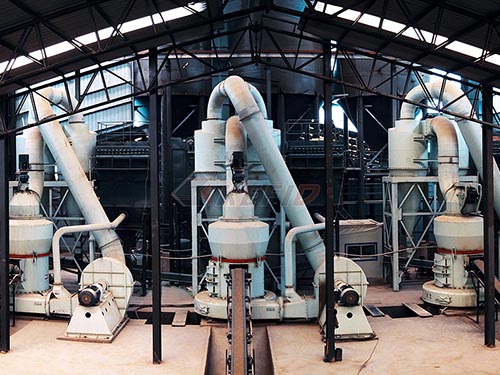

White Label 250300 TPH Stone Crushing Plant: Engineered for HighVolume Aggregate Production
The Operational Challenge: When Throughput Targets Meet Hard Rock Realities
Your crushing circuit is the heartbeat of your quarry operation. When it underperforms, every downstream process—screening, stockpiling, loadout, and ultimately, your asphalt or concrete production—grinds to a halt. Plant managers face a persistent set of pressures:
- Downtime costs: Unplanned stoppages in a 250300 TPH plant can cost $8,000 to $15,000 per hour in lost production and idle haulage equipment. A single week of chronic mechanical failures can erase an entire quarter's margin.
- Fines generation: Oversized or poorly configured circuits often produce 1525% more minus200 mesh fines than necessary, reducing saleable yield and increasing waste disposal costs.
- Capex vs. Opex trap: Many operators purchase cheaper, underspec'd equipment that requires constant liner changes and higher horsepower consumption, pushing operating costs above $0.85 per ton—a figure that makes competitive bidding nearly impossible.
- Consistency under load: Fluctuating feed sizes from the primary crusher create chokeups and power spikes, forcing operators to reduce feed rates manually, which sacrifices the 300 TPH nameplate capacity you paid for.
- Suitable for: Stationary and semimobile installations; hard rock quarries; largescale construction projects requiring consistent aggregate supply; and operations requiring multiple product fractions simultaneously.
- Not suitable for: Highly abrasive, claybound materials (e.g., weathered overburden) without a preceding washing system; operations requiring a single, highpurity sand product (a separate VSI and washing plant is recommended); or sites with severe space constraints where a compact, singlechassis plant is mandatory.
- Remote Monitoring Package: Telemetry system for realtime production data, crusher health, and predictive maintenance alerts. (Approx. $15,000 $25,000)
- ColdWeather Package: Insulated panels, heated lubrication systems, and coldresistant conveyor belting for operations below 10°C. (Approx. $30,000 $45,000)
- Extended Wear Parts Package: Initial set of manganese liners, jaw plates, and screen media for 6 months of operation. (Approx. $40,000 $60,000)
- Mobile Chassis Option: Hydraulic walking or wheeled chassis for semimobile applications, reducing relocation time. (Approx. $150,000 $250,000)
- LeasetoOwn: 3660 month lease with a fixed purchase option at the end of the term. Monthly payments are structured to align with projected cash flow from production.
- Equipment Loan: Up to 80% financing of the equipment value with a 57 year repayment period, subject to credit approval.
- PerformanceBased Payment: A portion of the payment is tied to achieving guaranteed throughput and availability metrics, with a premium paid for exceeding targets.
The question is not whether you need a 250300 TPH plant. The question is whether your current configuration can sustain that throughput at a cost per ton that keeps your bids profitable. This whitelabel solution addresses those variables directly.
Product Overview: A Modular, HighCapacity Crushing System
This whitelabel 250300 TPH stone crushing plant is a complete, preengineered aggregate production circuit designed for mediumtolarge quarries, construction aggregate suppliers, and contract crushing operations. It is configured to process hard and abrasive rock types—including granite, basalt, diorite, and river gravel—with a compressive strength up to 300 MPa.
Operational Workflow
1. Primary Crushing: Runofmine (ROM) material up to 600700 mm is fed via a vibrating grizzly feeder (with a 50 mm grizzly bypass) into a primary jaw crusher (e.g., PE900×1200 class). The grizzly scalps fines, reducing wear on the jaw and increasing effective capacity.
2. Secondary Crushing: The primary discharge (150200 mm) is conveyed to a secondary cone crusher (e.g., CS160 or equivalent) operating in a closed circuit with a vibrating screen. This stage reduces material to a 4060 mm top size.
3. Tertiary Crushing & Screening: The secondary product is further reduced by a tertiary cone crusher (e.g., HP300 class) to achieve final aggregate sizes (05 mm, 510 mm, 1020 mm, 2031.5 mm). A dualdeck or tripledeck inclined screen classifies the product, with oversize material recirculated to the tertiary crusher.
4. Product Conveying & Stockpiling: Dedicated belt conveyors transfer each fraction to radial stackers or fixed stockpiles, ensuring minimal segregation and maintaining a consistent moisture profile.
Application Scope and Limitations
Core Features
HeavyDuty Fabricated Frames | Technical Basis: Finite Element Analysis (FEA) optimized structural design | Operational Benefit: Frames withstand continuous vibration and impact loads from 300 TPH feed rates without developing stress fractures, reducing structural weld failures by an estimated 40% compared to standard Ibeam construction | ROI Impact: Eliminates 23 days of structural repair downtime annually, saving approximately $30,000 in lost production and welding labor
HighEccentric Throw Cone Crushers | Technical Basis: Crushing chamber geometry with a 2.5:1 reduction ratio and optimized stroke length | Operational Benefit: Produces a cubical product shape with fewer flat or elongated particles, improving aggregate interlock in asphalt and concrete applications | ROI Impact: Achieves a 58% higher yield of premiumgrade cubical aggregate, which commands a $1.50$2.00 per ton price premium in most regional markets

Automated LoadShedding Control System | Technical Basis: PLCbased logic with currentsensing on crusher motors and belt scales on feed conveyors | Operational Benefit: Automatically reduces feed rate by 1015% when crusher amps exceed 90% of rated load, preventing bowl float and mechanical overload | ROI Impact: Prevents catastrophic crusher failures, reducing annual maintenance costs by 1520% and extending manganese liner life by 1520% (from 120 hours to 140+ hours in abrasive granite)
Modular SkidMounted Design | Technical Basis: Prewired and prepiped modules with standardized connection points | Operational Benefit: Reduces onsite installation time to 34 weeks (vs. 810 weeks for sitebuilt plants), allowing faster commissioning and earlier revenue generation | ROI Impact: Accelerates timetoproduction by 56 weeks, translating to an additional 75,00090,000 tons of saleable product in the first quarter
DualLayer Dust Suppression System | Technical Basis: Water spray nozzles at transfer points combined with a dry fog system at crusher discharge | Operational Benefit: Controls fugitive dust to meet local environmental compliance standards (typically below 50 mg/Nm³), reducing community complaints and regulatory fines | ROI Impact: Avoids potential fines of $5,000$25,000 per violation and prevents forced shutdowns during highpollution episodes
Hydraulic Chamber Clearing | Technical Basis: Hydraulic cylinders that open the crusher setting to pass uncrushable material | Operational Benefit: Reduces clearing time for a stalled crusher from 46 hours (manual digging) to 1520 minutes, allowing rapid resumption of production | ROI Impact: Recovers 35 hours of production per stall event; with an average of 23 stalls per month, this saves 615 hours of runtime monthly
Integrated Lubrication Monitoring | Technical Basis: Continuous oil flow, pressure, and temperature sensors on all crusher bearings | Operational Benefit: Provides realtime alerts for bearing wear or oil contamination, allowing planned maintenance rather than emergency breakdowns | ROI Impact: Reduces bearing failurerelated downtime by 6070%, saving an estimated $20,000$35,000 per year in parts and labor
Competitive Advantages
| Performance Metric | Industry Standard (Typical 250300 TPH Plant) | White Label 250300 TPH Solution | Advantage (% Improvement) |
| : | : | : | : |
| Effective Throughput (tons/hour) | 220260 TPH (sustained) | 280300 TPH (sustained) | 1527% higher |
| Crusher Availability (operating hours) | 8588% | 9295% | 810% more uptime |
| Wear Parts Life (manganese, granite) | 100120 hours | 130150 hours | 1525% longer |
| Fines Generation (minus 200 mesh) | 1822% of total output | 1215% of total output | 3040% less waste |
| Specific Energy Consumption (kWh/ton) | 0.65 0.75 kWh/ton | 0.55 0.62 kWh/ton | 1015% lower energy cost |
| Installation Time (from delivery) | 810 weeks | 34 weeks | 5060% faster setup |
| Product Cubicity (flakiness index) | 1518% | 810% | 4045% better shape |
Technical Specifications
| Parameter | Specification |
| : | : |
| Design Capacity | 250300 TPH (depending on feed material and final product size) |
| Max Feed Size | 600700 mm (primary) |
| Final Product Sizes | 05 mm, 510 mm, 1020 mm, 2031.5 mm (adjustable) |
| Primary Crusher | PE900×1200 Jaw Crusher (or equivalent) |
| Secondary Crusher | CS160 Cone Crusher (or equivalent) |
| Tertiary Crusher | HP300 Cone Crusher (or equivalent) |
| Screening Unit | 2YK2460 (2deck) or 3YK2460 (3deck) Inclined Screen |
| Total Installed Power | 450550 kW (excluding conveyors) |
| Voltage Requirement | 380V/50Hz or 460V/60Hz (customizable) |
| Conveyor System | B800B1200 belt widths; total length approx. 150200 meters |
| Plant Footprint | Approx. 60m x 40m (excluding stockpile area) |
| Operating Temperature Range | 10°C to +45°C (standard); optional coldweather package for 30°C |
| Dust Suppression | Water spray + dry fog system; water consumption approx. 510 m³/hour |
| Noise Level (at 1m) | ≤ 85 dB(A) at crusher locations; ≤ 70 dB(A) at operator cabin |
Application Scenarios
LargeScale Highway Construction Project | Challenge: A contractor needed 2.5 million tons of graded aggregate (20mm, 10mm, and 5mm) within 18 months for a 45km highway section. The existing plant could only produce 180 TPH of consistent quality, threatening the project timeline and incurring penalty clauses of $10,000 per day. | Solution: Deployment of the whitelabel 250300 TPH plant with a dedicated 3deck screen to produce all three fractions simultaneously. The automated loadshedding system ensured consistent feed to the tertiary crusher, maintaining a uniform product gradation. | Results: The plant consistently produced 290 TPH of specificationcompliant aggregate. The project was completed 2 months ahead of schedule, avoiding $600,000 in potential penalties and allowing the contractor to mobilize the plant to a second project, generating additional revenue.
Hard Rock Quarry Expansion | Challenge: A quarry owner in a basaltrich region faced rising operating costs due to frequent manganese liner changes (every 90 hours) and high energy consumption (0.78 kWh/ton). The high abrasiveness of the basalt was also causing excessive downtime for jaw plate replacement. | Solution: The whitelabel plant's higheccentric throw cone crushers and optimized crushing chamber geometry were specified. The integrated lubrication monitoring system allowed the maintenance team to schedule liner changes based on actual wear data rather than fixed intervals. | Results: Manganese liner life increased to 140 hours, a 55% improvement. Specific energy consumption dropped to 0.60 kWh/ton, reducing annual electricity costs by approximately $45,000. Crusher availability rose from 86% to 94%, adding an estimated 1,900 tons of production per month.
Contract Crushing for Multiple Clients | Challenge: A contract crushing company needed a flexible, mobileenough plant to serve three different quarry sites over a 24month period. The plant had to be dismantled, transported, and reerected within 2 weeks at each new site, while maintaining high throughput to meet contractual tonnage guarantees. | Solution: The modular skidmounted design of the whitelabel plant was selected. All interconnecting conveyors and chutes were designed with quickrelease couplings. The prewired electrical system allowed for rapid reconnection at each site. | Results: The plant was successfully relocated three times, with each move completed in 1012 days. The contractor achieved a 96% fulfillment rate on contractual tonnage obligations, leading to contract renewals and a 20% increase in average contract value due to the demonstrated reliability.
Commercial Considerations
Equipment Pricing Tiers
| Tier | Configuration | Indicative Price Range (USD) | Best Suited For |
| : | : | : | : |
| Standard | Jaw + Cone (Secondary) + Screen, 2product output | $850,000 $1,100,000 | Operations requiring 2 main aggregate sizes |
| Advanced | Jaw + Cone (Secondary) + Cone (Tertiary) + 3Deck Screen, 4product output | $1,200,000 $1,500,000 | Quarries producing multiple spec aggregates |
| Premium | Advanced + VSI Crusher for sand shaping + Washing System | $1,600,000 $2,000,000 | Operations targeting highvalue manufactured sand and premium aggregates |
Note: Prices are indicative and vary based on specific rock type, local steel costs, and customization requirements. All prices are FOB port of loading.
Optional Features and Addons
Service Packages
| Package | Scope | Duration | Price (USD) |
| : | : | : | : |
| Commissioning Support | Onsite supervision for installation, startup, and operator training (2 engineers, 4 weeks) | 4 weeks | $25,000 |
| Preventive Maintenance Plan | Scheduled quarterly inspections, wear part audits, and remote diagnostics support | 12 months | $35,000/year |
| Full Turnkey O&M | Complete operation and maintenance by our certified crew, including wear parts and consumables | 12 months | $2.50 $3.50 per ton produced |
Financing Options
FAQ
Q1: Can this plant handle highly abrasive rock like quartzite or basalt without excessive wear?
Yes. The crushers are specified with highchrome blow bars (for impact crushers) or manganese steel liners (for cone crushers) with a hardness rating of 180220 BHN. Field data from basalt operations shows liner life of 130150 hours, which is 2030% longer than standard configurations. For extreme abrasiveness, we recommend the Premium tier with a VSI for final shaping, which reduces wear on the tertiary cone.
Q2: What is the typical lead time from order to commissioning?
The manufacturing lead time is 810 weeks from receipt of order and down payment. Shipping takes an additional 24 weeks depending on destination. Site preparation and foundation work can be done concurrently. Total time from order to full production is typically 1418 weeks, with the modular design allowing for a 34 week installation period onsite.
Q3: How does the plant handle variations in feed material size from the primary crusher?
The plant is equipped with a surge hopper and a variablespeed vibrating grizzly feeder. The PLC control system monitors the load on the secondary crusher and adjusts the feeder speed to maintain a consistent feed rate. If a large boulder (up to 700mm) enters the system, the grizzly bypasses it to a rock breaker for size reduction before it reaches the secondary crusher.
Q4: What are the specific power requirements for this plant?
The total installed power is 450550 kW, excluding conveyors. The primary jaw crusher requires a 110132 kW motor, the secondary cone crusher 160200 kW, and the tertiary cone crusher 220250 kW. The screening unit requires 3037 kW. A dedicated transformer of 8001000 kVA is recommended to handle startup currents and peak loads.
Q5: Can the final product gradation be adjusted to meet different specifications?
Yes. The CSS (closed side setting) on the secondary and tertiary cone crushers can be adjusted hydraulically from the control panel. This allows you to change the top size of the final product from 20mm to 40mm within minutes. The screen mesh can also be changed to produce different fractions, though this requires a scheduled maintenance stop of 46 hours.
Q6: What is the warranty coverage on the equipment?
The standard warranty covers all equipment for 12 months from the date of commissioning or 18 months from the date of shipment, whichever comes first. This covers defects in materials and workmanship. Wear parts (liners, screens, belts) are excluded from the warranty. An extended warranty of up to 36 months is available for the crusher mainframes at an additional cost.
Q7: How does the whitelabel aspect work for branding and aftersales support?
As a whitelabel solution, the plant is delivered with no external branding on the main structural components. You can apply your own livery and branding. For aftersales support, we provide full technical documentation, drawings, and a parts manual under your brand name. Our technical support team is available 24/7 under a nondisclosure agreement, and we can supply spare parts either directly or through your designated distributor.