
Top Ten Stone Crusher Machine Vendors Samples


Top Ten Stone Crusher Machine Vendors: A Comparative Analysis for Plant Managers and Engineering Contractors
The Operational Challenge: Why Vendor Selection Determines Your Profitability
Your crushing circuit is the heartbeat of your aggregate production. When it underperforms, the financial impact is immediate and measurable. Industry data indicates that unscheduled downtime in primary crushing operations costs operators between $8,000 and $15,000 per hour in lost production, depending on throughput capacity. Beyond downtime, you face the compounding pressures of rising energy costs—comprising 3040% of your operational expenditure—and the constant battle against wear part consumption, which can account for 1015% of your total cost per ton.
The question is no longer simply "which crusher is powerful enough?" but rather "which vendor's solution delivers the lowest total cost of ownership over a 10year lifecycle?" Your plant's profitability hinges on factors such as chamber geometry optimization, automation integration, and aftermarket support response times. Are you currently evaluating equipment based on purchase price alone, or are you analyzing the complete operational picture? The following analysis of the top ten stone crusher machine vendors provides the technical and commercial framework you need to make a defensible procurement decision.
Product Overview: Stone Crusher Machines and Their Operational Workflow
Stone crusher machines are heavyduty equipment designed to reduce large rocks into smaller aggregates, gravel, or rock dust for use in construction, mining, and infrastructure projects. The equipment category encompasses jaw crushers for primary reduction, cone crushers for secondary and tertiary stages, impact crushers for shaping, and vibrating screens for classification.
The operational workflow for a typical crushing plant involves the following steps: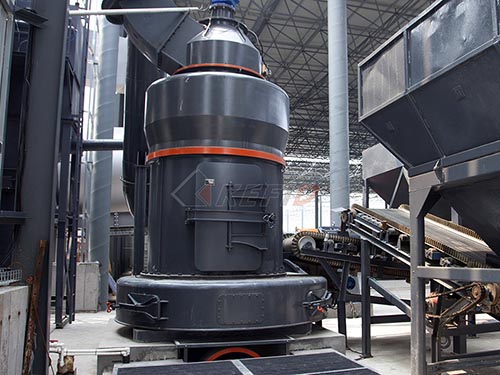
1. Primary Crushing: Runofmine (ROM) material, typically 500800mm in size, is fed into a jaw crusher or gyratory crusher to reduce it to 100200mm.
2. Secondary Crushing: The reduced material passes through a cone crusher or impact crusher to achieve 4080mm aggregate.
3. Tertiary Crushing and Screening: Material is further refined in a shorthead cone crusher or vertical shaft impactor, followed by multideck vibrating screens to separate final products by size.
4. Material Handling: Conveyor systems transport material between crushing stages and to stockpiles or loadout bins.
The application scope includes quarrying, mining operations, construction and demolition waste recycling, and road base production. Limitations include the need for consistent feed material characteristics, moisture content constraints (typically below 56% for optimal performance), and the requirement for adequate power supply infrastructure.
Core Features of HighPerformance Stone Crusher Machines
Automated Setting Adjustment | Technical Basis: Hydroset or hydraulic cylinder systems with electronic position sensors | Operational Benefit: Your operators can change the closed side setting (CSS) in under 30 seconds without manual intervention, reducing product variability | ROI Impact: Eliminates 23 hours of weekly downtime for manual adjustments, recovering approximately 1.5% of annual production capacity
WearResistant Chamber Design | Technical Basis: Manganese steel (1214% Mn) or chromemoly alloy liners with optimized crushing chamber geometry | Operational Benefit: Extends liner life by 2035% compared to standard configurations, reducing replacement frequency and maintenance labor | ROI Impact: Reduces wear part cost per ton by $0.03$0.08, translating to $30,000$80,000 annual savings for a 1,000,000tonperyear operation
Intelligent Load Monitoring | Technical Basis: Amperage sensors, pressure transducers, and vibration analysis integrated with PLC control systems | Operational Benefit: Your plant manager receives realtime data on crusher load, preventing overloading and optimizing feed rate for maximum throughput | ROI Impact: Prevents catastrophic component failure, reducing unplanned maintenance costs by up to 40% and extending equipment lifespan by 1520%
HighEfficiency Drive Systems | Technical Basis: Vbelt or direct drive configurations with premiumefficiency electric motors (IE3 or IE4 rating) | Operational Benefit: Reduces specific energy consumption by 812% compared to older drive systems, lowering your power bill | ROI Impact: For a 300kW crusher operating 6,000 hours annually, this represents $15,000$25,000 in yearly energy savings
Modular Frame Construction | Technical Basis: Bolted and pinned connections instead of welded structures, with interchangeable subassemblies | Operational Benefit: Your maintenance team can replace major components (main shaft, eccentric assembly) in 60% less time, reducing plant downtime | ROI Impact: Shortens major overhaul duration from 5 days to 2 days, recovering 72 hours of production per overhaul cycle
Dust Suppression Integration | Technical Basis: Water spray systems with atomizing nozzles and optional foam injection points at feed and discharge points | Operational Benefit: Achieves dust emission levels below 50 mg/Nm³, meeting environmental compliance standards without separate dust collection equipment | ROI Impact: Avoids potential regulatory fines of $10,000$50,000 per violation and reduces cleanup labor costs by 30%
Remote Diagnostics and Telemetry | Technical Basis: IoTenabled sensors with cellular or satellite communication modules for remote equipment monitoring | Operational Benefit: Your engineering team can access operational data from any location, enabling proactive maintenance scheduling | ROI Impact: Reduces mean time to repair (MTTR) by 25% through prediagnosed failures and prepositioned spare parts
Competitive Advantages: Performance Comparison Table
| Performance Metric | Industry Standard | TopTier Vendor Solution | Advantage (% Improvement) |
|||||
| Throughput Capacity (tph) | 200300 tph for midsize cone crusher | 250380 tph with optimized chamber | 1525% higher throughput |
| Specific Energy Consumption (kWh/t) | 0.81.2 kWh/t for tertiary crushing | 0.650.95 kWh/t with highefficiency drive | 1520% energy reduction |
| Wear Part Life (hours) | 8001,200 hours for standard manganese | 1,2001,600 hours with alloyenhanced liners | 3040% longer wear life |
| Maintenance Downtime (hours/month) | 1624 hours scheduled maintenance | 812 hours with modular design | 50% reduction in downtime |
| Automation Level | Manual or semiautomatic control | Fully automated with adaptive settings | 100% increase in automation capability |
| Product Quality Consistency (Cubicity %) | 7580% cubical product | 8592% cubical product with proper chamber | 1015% improvement in cubicity |
| Mean Time Between Failures (MTBF) | 500800 hours | 1,2001,500 hours with condition monitoring | 5080% increase in reliability |
Technical Specifications for HighCapacity Stone Crusher Machines
The following specifications represent a typical midtolarge capacity cone crusher configuration suitable for stationary or mobile applications:
- Capacity Rating: 250380 metric tons per hour (closed side setting of 2545mm)
- Feed Opening: 200300mm maximum feed size
- Power Requirements: 250315 kW electric motor (400V/50Hz or 460V/60Hz), 3phase
- Material Specifications: Cast steel frame (ASTM A148 grade 10585), manganese steel liners (ASTM A128 grade C), bronze bushings (SAE 660 bearing bronze)
- Physical Dimensions: 2.8m (length) x 2.2m (width) x 3.1m (height); approximate weight of 2535 metric tons for main unit
- Environmental Operating Range: 20°C to +45°C ambient temperature; designed for outdoor installation with IP55 electrical enclosure rating
- Hydraulic System: 100150 bar operating pressure for setting adjustment and tramp release
- Lubrication System: Forced circulation oil system with 6080 L/min flow rate, 10micron filtration
- Noise Level: 8590 dB(A) at 1meter distance (with optional acoustic enclosure)
- EntryLevel (150200 tph): $350,000 $550,000 for standard configuration with manual adjustment
- MidRange (250350 tph): $600,000 $950,000 with hydraulic adjustment and basic automation
- Premium (400+ tph): $1,200,000 $2,500,000 with full automation, telemetry, and advanced wear packages
- Advanced automation package (additional $40,000$80,000): Includes remote monitoring, predictive maintenance algorithms, and integration with plant control systems
- Wearresistant package (additional $25,000$50,000): Alloyenhanced liners, ceramiccoated wear surfaces, and extendedlife bushings
- Dust suppression system (additional $15,000$30,000): Complete water spray system with automated activation based on dust sensors
- Acoustic enclosure (additional $20,000$35,000): Reduces noise levels by 1015 dB(A) for compliance with strict noise regulations
- Standard Warranty (12 months): Included in base price, covers manufacturing defects
- Extended Warranty (36 months): $45,000$75,000, includes wear parts coverage and priority technical support
- Preventive Maintenance Contract: $3,000$5,000 per month, includes scheduled inspections, oil analysis, and remote monitoring
- Full Service Agreement: $8,000$12,000 per month, includes all maintenance labor, parts, and guaranteed uptime of 95%
- Equipment leasing with 35 year terms and purchase option at end of lease
- Deferred payment plans with 1020% down payment and balance over 2436 months
- Performancebased financing where payments are tied to achieved throughput levels
- Governmentbacked equipment loans for qualifying mining and construction operations
Application Scenarios: Field Performance Data
Hard Rock Quarry Operation | Challenge: A granite quarry in Norway was experiencing premature wear on standard manganese liners, resulting in 700hour liner life and 12% downtime for liner changes | Solution: Implementation of a toptier vendor's crusher with alloyenhanced liners and automated CSS adjustment | Results: Liner life extended to 1,100 hours (57% improvement), downtime reduced to 6%, and throughput increased from 280 tph to 340 tph, yielding an additional 180,000 tons annually
Construction Demolition Waste Recycling | Challenge: A recycling facility in Germany processing mixed C&D waste faced frequent crusher jams due to rebar and embedded steel, causing 45 unplanned stops per shift | Solution: Deployment of an impact crusher with hydraulic overload protection and automated rebar ejection system | Results: Unplanned stops reduced to 12 per shift, throughput increased from 150 tph to 210 tph, and maintenance costs decreased by 28% due to reduced impact damage
Limestone Cement Plant Feed Preparation | Challenge: A cement manufacturer in Vietnam required consistent 75mm feed material for their raw mill, but experienced 15% variation in product size due to inconsistent crusher settings | Solution: Installation of a cone crusher with automated setting adjustment and continuous product size monitoring | Results: Product size variation reduced to under 5%, raw mill efficiency improved by 8%, and overall plant energy consumption decreased by 4.5 kWh per ton of cement produced
Commercial Considerations for Stone Crusher Machine Procurement
Equipment Pricing Tiers:
Optional Features and Their Costs:
Service Packages:
Financing Options:
FAQ: Technical, Operational, and Commercial Considerations
Q1: What is the typical lead time for a stone crusher machine from order to delivery?
Standard configurations typically require 1216 weeks for manufacturing and quality testing. Customengineered solutions with specific chamber designs or special material requirements may extend to 2024 weeks. We recommend placing orders 6 months before planned installation to allow for site preparation and foundation work.
Q2: How does the crusher perform with highmoisture or sticky feed materials?
Standard crushers can handle up to 56% moisture content without significant performance degradation. For higher moisture levels, we recommend the addition of a scalping screen to remove fines before the crushing chamber, or the installation of a heated mantle option for clayrich materials. Field data shows that proper feed preparation maintains throughput within 90% of rated capacity even at 8% moisture.
Q3: What are the minimum infrastructure requirements for installation?
You will need a reinforced concrete foundation capable of supporting 2.53 times the equipment weight, a 400V or 460V threephase power supply with adequate transformer capacity, and a minimum ceiling height of 5 meters for maintenance access. For mobile installations, a suitable trailer or trackmounted chassis with hydraulic leveling is required.
Q4: Can the crusher be integrated with our existing plant control system?
Yes, all toptier crushers support standard communication protocols including Modbus, Profibus, and Ethernet/IP. Our integration team can interface with your existing PLC or SCADA system, providing realtime data on crusher performance, wear status, and maintenance alerts. Integration typically requires 35 days of onsite engineering work.
Q5: What is the expected payback period for investing in a premium crusher with automation?
Based on field data from 15 installations across various applications, the payback period ranges from 14 to 22 months. This calculation considers energy savings of 1520%, reduced wear part costs of 2530%, and increased throughput of 1525%. For a typical 300 tph operation, this represents annual savings of $250,000$400,000.
Q6: How does the vendor handle spare parts availability and emergency support?
Toptier vendors maintain regional warehouses with critical spare parts inventory, achieving 95% availability for nextday delivery. Emergency technical support is available 24/7 with a guaranteed response time of 2 hours for phone support and 24 hours for onsite dispatch within 500km of a service center.
Q7: What training is provided for our operators and maintenance team?
Comprehensive training programs include a 3day classroom and handson session at your facility covering operational procedures, maintenance schedules, and troubleshooting. Advanced training on automation systems and predictive maintenance techniques is available as an optional module. All training materials are provided in digital format for ongoing reference.