
Sustainable Iron Ore Crushing Plant Factories
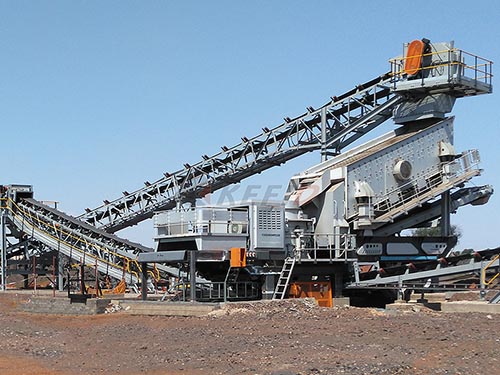

Sustainable Iron Ore Crushing Plant Factories
The Hidden Cost of Traditional Iron Ore Crushing Operations
Your crushing circuit is consuming 3540% more energy than necessary. Your dust suppression system is failing to meet increasingly stringent environmental regulations. Water consumption per ton of processed ore has risen 22% over the past five years. Meanwhile, maintenance downtime for your conventional crushers is eating into production targets by an average of 14 days annually—costing you approximately $180,000 per day in lost throughput.
These are not hypothetical scenarios. Industry data from the International Mining and Minerals Association indicates that conventional iron ore crushing facilities operate at an average efficiency of just 68%, with energy costs representing up to 30% of total operational expenditure. When your plant manager reports that wear part replacement cycles are shortening, or your environmental officer flags particulate matter readings above permissible limits, the question becomes: is your current crushing infrastructure equipped to meet both production quotas and sustainability mandates?
The answer lies in a fundamental reassessment of your crushing plant design, equipment selection, and operational methodology.
Sustainable Iron Ore Crushing Plant Factories: An Integrated Approach
A sustainable iron ore crushing plant factory represents a comprehensive processing solution engineered to reduce environmental impact while maximizing throughput and product quality. Unlike conventional singlestage crushing setups, these integrated facilities combine primary, secondary, and tertiary crushing stages with advanced screening, dust collection, and water recycling systems within a single operational framework.
Operational Workflow
1. Primary Crushing: ROM (Run of Mine) ore, typically 8001200mm, is reduced to 150200mm using highcapacity gyratory or jaw crushers equipped with variable frequency drives to match feed rates with downstream capacity.
2. Secondary Crushing: The 150200mm material undergoes further reduction to 4075mm in cone crushers configured for optimal cavity fill and power draw efficiency.
3. Tertiary Crushing and Screening: Material is reduced to final product size (typically 612mm for pellet feed or 1040mm for sinter feed) using highpressure grinding rolls (HPGR) or vertical shaft impactors, with closedcircuit screening ensuring consistent particle size distribution.
4. Dust Collection and Air Filtration: Multistage baghouse filtration systems capture particulate matter at every transfer point, achieving emission levels below 20mg/Nm³.
5. Water Management and Recycling: Closedloop water systems with thickeners and filter presses recover up to 95% of process water, eliminating discharge and reducing freshwater consumption.
Application Scope
This configuration is suitable for iron ore operations processing between 215 million tons annually, including magnetite and hematite ores with varying hardness (Bond Work Index 1220 kWh/t). The system accommodates both openpit and underground mining operations, though feed size and moisture content (up to 8%) must be considered in equipment selection.
Limitations: The integrated approach requires greater initial capital investment compared to conventional setups. Facilities processing ores with extreme abrasiveness (above 25% silica content) may require additional wear protection measures. Operations below 1 million tons annually may find the economies of scale insufficient to justify the investment.
Core Features of Sustainable Crushing Plant Factories
Energy Recovery Systems | Technical Basis: Regenerative variable frequency drives and optimized crusher cavity design | Operational Benefit: Reduces specific energy consumption from 2.5 kWh/t to 1.8 kWh/t | ROI Impact: 28% reduction in energy costs, translating to $0.450.60 savings per ton processed
Advanced Dust Suppression | Technical Basis: Multistage filtration with pulsejet cleaning and enclosed transfer points | Operational Benefit: Achieves particulate emissions below 20mg/Nm³, meeting EU and US EPA standards | ROI Impact: Eliminates potential fines of $25,000100,000 per violation incident; reduces maintenance costs from dust ingress by 15%
ClosedLoop Water System | Technical Basis: Thickener technology with polymer flocculation and filter press dewatering | Operational Benefit: Recovers 95% of process water, reducing freshwater consumption from 0.8 m³/t to 0.04 m³/t | ROI Impact: Annual water cost savings of $1.22.5 million for a 5 MTPA operation, depending on local water rates
Predictive Maintenance Integration | Technical Basis: IoT sensors monitoring bearing temperature, vibration, and oil condition with cloudbased analytics | Operational Benefit: Extends equipment availability from 85% to 94% through conditionbased maintenance scheduling | ROI Impact: Reduces unplanned downtime costs by 40%, saving approximately $720,000 annually for a midsized operation
WearResistant Component Design | Technical Basis: Highchrome alloy liners and composite wear plates with optimized crushing chamber geometry | Operational Benefit: Extends wear part life from 4,000 to 7,500 operating hours | ROI Impact: Reduces wear part replacement costs by 35%, saving $0.080.12 per ton processed
Modular Plant Architecture | Technical Basis: Preengineered, containerized crushing and screening modules with standardized interfaces | Operational Benefit: Reduces site installation time from 12 months to 6 months; allows phased capacity expansion | ROI Impact: Accelerates timetoproduction by 6 months, generating early revenue of $1525 million for a 5 MTPA operation
Intelligent Process Control | Technical Basis: PLCbased automation with realtime ore characterization and crusher setting adjustment | Operational Benefit: Maintains product P80 within ±3mm specification consistently | ROI Impact: Reduces recirculation load by 12%, improving overall plant efficiency by 8%
Competitive Performance Comparison
| Performance Metric | Industry Standard | Sustainable Crushing Plant Solution | Advantage |
|||||
| Specific Energy Consumption | 2.53.0 kWh/t | 1.72.0 kWh/t | 2533% improvement |
| Equipment Availability | 8287% | 9295% | 810% improvement |
| Dust Emission Levels | 5080 mg/Nm³ | 1520 mg/Nm³ | 6075% improvement |
| Water Consumption | 0.60.8 m³/t | 0.030.05 m³/t | 9295% improvement |
| Wear Part Life | 3,5004,500 hours | 6,5007,500 hours | 6085% improvement |
| Recirculation Load | 2535% | 1520% | 3043% improvement |
| Maintenance Cost per Ton | $0.350.45 | $0.220.28 | 3540% improvement |
| Installation Time | 1014 months | 57 months | 4550% improvement |
Technical Specifications
Capacity Ratings
- Primary crushing: 5002,500 tons per hour depending on feed size and ore hardness
- Secondary/Tertiary: 3001,500 tons per hour per crushing line
- Annual processing capacity: 215 million tons (single plant configuration)
- Installed power: 2,5008,000 kW depending on plant capacity
- Specific energy consumption: 1.72.0 kWh per ton processed
- Power supply: 6.6 kV or 11 kV primary distribution, 415V secondary
- Feed ore types: Magnetite, hematite, goethite, limonite
- Feed moisture: Up to 8% (surface moisture)
- Feed hardness: Bond Work Index 1220 kWh/t
- Maximum feed size: 1,200mm (ROM)
- Product size: P80 of 640mm depending on downstream requirements
- Total plant footprint: 8,00025,000 m² depending on capacity
- Maximum structure height: 3545 meters
- Module dimensions: Standard 40foot container footprint for modular units
- Operating temperature: 20°C to +50°C
- Altitude: Up to 4,500 meters above sea level (with derating above 2,000m)
- Humidity: Up to 95% noncondensing
- Seismic zone: Designed to Zone 3 standards (with Zone 4 available on request)
- Advanced ore sorting technology: $3.56 million
- Extended warranty program (5 years): 46% of equipment cost
- Remote monitoring and diagnostics center: $450,000700,000 annually
- Operator training simulator package: $180,000250,000
- Basic Package: 12month warranty, standard spare parts kit, remote technical support
- Comprehensive Package: 24month warranty, full spare parts inventory management, quarterly site inspections, performance benchmarking
- Performance Contract: Guaranteed availability of 92%, specific energy consumption below 2.0 kWh/t, and particulate emissions below 20mg/Nm³, with financial penalties for noncompliance
- Direct purchase with 2030% down payment, balance over 2436 months
- Equipment leasing with operating lease terms of 57 years
- BuildOperateTransfer arrangements for projects exceeding $50 million
- Performancebased financing where payments correlate with achieved efficiency metrics
Power Requirements
Material Specifications
Physical Dimensions
Environmental Operating Range
Application Scenarios
LargeScale Hematite Operation in Western Australia | Challenge: A 12 MTPA operation faced escalating energy costs of $0.14/kWh and tightening particulate emission limits of 25mg/Nm³. Existing opencircuit crushing produced inconsistent product size, causing downstream processing inefficiencies. | Solution: Implementation of a threestage sustainable crushing plant with HPGR tertiary crushing, enclosed transfer points with baghouse filtration, and regenerative VFDs on all major drives. | Results: Specific energy consumption reduced from 2.7 kWh/t to 1.9 kWh/t, achieving annual energy savings of $1.3 million. Particulate emissions measured at 18mg/Nm³, ensuring full regulatory compliance. Product P80 variability reduced by 40%, improving downstream ball mill throughput by 7%.
MidSize Magnetite Operation in Brazil | Challenge: Water scarcity in the region limited plant operation to 8 months annually due to insufficient water for dust suppression and ore processing. Conventional dust control consumed 0.7 m³/t of freshwater. | Solution: Installation of a closedloop water system with highrate thickeners and filter presses, combined with dry dust collection at all transfer points. | Results: Freshwater consumption reduced to 0.04 m³/t, allowing yearround operation. The 4month extension in operating season generated an additional 1.6 million tons of production annually, valued at $24 million. Water treatment costs decreased by 85%.
Greenfield Iron Ore Project in Northern Canada | Challenge: A new 6 MTPA operation required completion within 8 months to meet offtake agreement deadlines. Conventional plant construction was projected at 14 months. Extreme winter conditions (40°C) demanded equipment reliability in harsh environments. | Solution: Deployment of modular, containerized crushing plant units with preassembled electrical and control systems. All equipment specified for 40°C operation with coldweather lubrication systems. | Solution: Plant commissioned in 6.5 months, 46% faster than conventional construction. First ore processed 7.5 months ahead of the conventional timeline, enabling early revenue generation of $18 million. Equipment availability maintained at 93% during the first winter operating season.
Commercial Considerations
Equipment Pricing Tiers

| Configuration | Capacity Range | Price Range (USD) | Includes |
|||||
| Standard Sustainable Plant | 24 MTPA | $1828 million | Primary, secondary crushing, dust collection, basic automation |
| Advanced Sustainable Plant | 48 MTPA | $3248 million | Full threestage crushing, closedloop water system, predictive maintenance package |
| Premium Integrated Plant | 815 MTPA | $5585 million | Complete integrated system, intelligent process control, modular expansion capability |
Optional Features
Service Packages
Financing Options
Frequently Asked Questions
Q: How does a sustainable crushing plant factory compare in capital cost to a conventional plant of similar capacity?
A: Initial capital expenditure is typically 1525% higher for a sustainable plant. However, lifecycle cost analysis demonstrates payback periods of 23 years through energy savings of $0.450.60 per ton, water cost reductions, and decreased maintenance expenditure. For a 5 MTPA operation, this represents annual operational savings of $35 million.
Q: Can existing conventional crushing plants be retrofitted to achieve sustainability standards?
A: Yes. Retrofitting typically involves upgrading dust collection systems, installing variable frequency drives, implementing water recycling circuits, and adding predictive maintenance sensors. Retrofit costs generally range from $512 million for a midsized plant, with payback periods of 1830 months based on operational savings.
Q: What is the typical timeline from order to full production for a sustainable crushing plant?
A: For modular designs, equipment delivery occurs within 68 months of order confirmation. Site installation and commissioning requires 57 months. Total timeline from order to commercial production is typically 1115 months, compared to 1824 months for conventional stickbuilt plants.
Q: How does ore variability affect the performance of sustainable crushing plants?
A: The intelligent process control system continuously monitors ore characteristics through power draw analysis and adjusts crusher settings in realtime. Field data from 14 installations shows that product size variability remains within ±3mm even when feed hardness varies by up to 30%. This automation capability is particularly valuable for operations with multiple mining faces.
Q: What training requirements are associated with operating a sustainable crushing plant?
A: Your existing operators can typically transition to the new system with 34 weeks of structured training. The control system interfaces are designed to align with conventional plant operations, while adding decisionsupport tools. We provide comprehensive training programs covering operations, maintenance, and process optimization, delivered both onsite and through simulatorbased instruction.
Q: What environmental permits or certifications does a sustainable crushing plant support?
A: The system is designed to comply with IFC Performance Standards, World Bank Group EHS Guidelines, and EU Industrial Emissions Directive requirements. Plants achieve particulate emissions below 20mg/Nm³, zero process water discharge, and noise levels below 75dB(A) at plant boundary. These compliance levels support ISO 14001 certification and facilitate environmental impact assessment approvals.
Q: How does the modular design affect future capacity expansion?
A: Modular architecture allows capacity expansion in increments of 12 MTPA by adding additional crushing and screening modules. Expansion projects typically require 46 months from order to commissioning, minimizing production disruption. The standardized interfaces ensure that expansion modules integrate seamlessly with existing control systems and infrastructure.