
Sustainable Gyratory Crusher Exporter
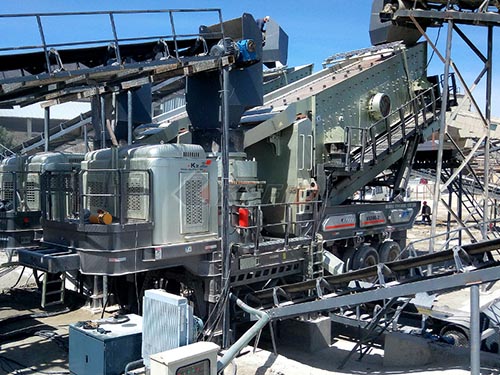

Sustainable Gyratory Crusher Exporter: Engineering Efficiency for Modern Mineral Processing
The Operational Challenge: When Throughput Meets Sustainability Mandates
Your primary crushing circuit is the gateway to your entire operation—and it is likely underperforming in ways that cost you more than you realize. Industry data indicates that inefficient primary crushing can reduce overall plant throughput by 15–20%, while unplanned downtime in this stage accounts for up to 30% of total maintenance expenditure. Add to this the mounting pressure from regulatory bodies and stakeholders to reduce energy consumption per ton and lower Scope 1 and Scope 2 emissions, and you face a dual challenge: maintaining or increasing output while meeting increasingly stringent environmental compliance standards.
Are you currently balancing aging equipment against rising energy costs? Is your maintenance team spending excessive hours on wear part replacement that could be redirected to preventive care? Are you concerned that your current crusher's design limits your ability to adapt to changing feed conditions or stricter product specifications? These are not hypothetical concerns—they are the daily realities of plant managers and engineering contractors responsible for bottomline performance and longterm asset strategy.
Product Overview: The Sustainable Gyratory Crusher
The sustainable gyratory crusher is a primary crushing solution engineered for highcapacity operations (typically 1,500 to 12,000 metric tons per hour) that require continuous, reliable performance with minimized environmental footprint. Unlike traditional jaw crushers or older gyratory models, this equipment integrates advanced metallurgy, optimized chamber geometry, and energyefficient drive systems to deliver superior reduction ratios (up to 8:1) with lower specific energy consumption.
Operational Workflow
1. Feed Introduction: Runofmine (ROM) material, typically 800–1,500 mm in size, is fed into the top of the crusher via a grizzly feeder or direct truck dump.
2. Crushing Action: The mainshaft assembly, suspended from a spider, gyrates eccentrically within a stationary concave. Material is continuously crushed and reduced as it descends through the crushing chamber.
3. Product Discharge: Reduced material (typically 150–300 mm) exits through the bottom of the crushing chamber onto a discharge conveyor.
4. Hydraulic Adjustment: The crusher's closed side setting (CSS) can be adjusted remotely via hydraulic cylinders, allowing operators to optimize product size without manual intervention.
5. Automated Monitoring: Integrated sensors track mainshaft position, power draw, and lubrication conditions, feeding data to the plant's control system for realtime optimization.
Application Scope
This equipment is best suited for largescale mining operations (copper, gold, iron ore), aggregate quarries with high production demands, and industrial mineral processing facilities. It is not recommended for smallscale operations (under 500 tph) or applications requiring frequent relocation, where a mobile jaw crusher may be more appropriate.
Core Features
HighEfficiency Crushing Chamber | Technical Basis: Curved concaves and optimized eccentric throw | Operational Benefit: Reduces material hangups and ensures consistent product size distribution | ROI Impact: 5–8% increase in throughput without additional energy consumption
EnergySaving Drive System | Technical Basis: Lowloss bearing design and optimized mainshaft geometry | Operational Benefit: Lower power draw per ton of material processed | ROI Impact: 10–15% reduction in specific energy consumption (kWh/t), directly lowering operational costs
Advanced Wear Materials | Technical Basis: Highchrome alloy and manganese steel composites with enhanced hardness profiles | Operational Benefit: Extended wear life of concaves and mantles, reducing replacement frequency | ROI Impact: 20–30% reduction in annual wear parts expenditure
Hydraulic Adjustment System | Technical Basis: Independent hydraulic cylinders for CSS adjustment and tramp release | Operational Benefit: Quick setting changes (under 5 minutes) and automatic clearing of uncrushable material | ROI Impact: Eliminates 2–4 hours of downtime per week compared to manual adjustment methods

Integrated Lubrication System | Technical Basis: Forced oil circulation with filtration and cooling | Operational Benefit: Consistent bearing and gearbox protection, even under heavy load conditions | ROI Impact: Extends component life by 15–20%, reducing capital replacement costs
Dust Containment Design | Technical Basis: Enclosed feed hopper and positive pressure dust collection points | Operational Benefit: Reduced fugitive dust emissions, supporting environmental compliance | ROI Impact: Avoids potential fines and reduces cleanup labor costs
AutomationReady Interface | Technical Basis: Compatible with standard PLC and SCADA systems via Modbus or Profibus protocols | Operational Benefit: Enables remote monitoring and integration with plantwide optimization software | ROI Impact: 3–5% improvement in overall equipment effectiveness (OEE) through datadriven decision making
Competitive Advantages
| Performance Metric | Industry Standard (Conventional Gyratory) | Sustainable Gyratory Crusher Solution | Advantage (% Improvement) |
|||||
| Specific Energy Consumption (kWh/t) | 0.35–0.45 | 0.28–0.35 | 15–20% reduction |
| Availability (operating hours / total hours) | 85–90% | 92–95% | 5–8% improvement |
| Wear Parts Life (concave set, hours) | 8,000–12,000 | 10,000–15,000 | 20–25% extension |
| CSS Adjustment Time (minutes) | 20–30 | 3–5 | 80–85% faster |
| Maintenance ManHours per 1,000 Hours Operation | 40–60 | 25–35 | 30–40% reduction |
| Dust Emission Levels (mg/m³) | 50–75 | 20–30 | 50–60% reduction |
Technical Specifications
| Parameter | Specification |
|||
| Capacity Range | 1,500 – 12,000 metric tons per hour |
| Feed Opening | 1,200 – 1,800 mm |
| Product Size (CSS 150–250 mm) | 150 – 300 mm |
| Motor Power | 400 – 1,200 kW |
| Main Shaft Speed | 120 – 180 RPM |
| Weight (Complete Assembly) | 120 – 450 metric tons |
| Dimensions (L × W × H) | 5.5 × 4.2 × 8.5 m to 9.0 × 6.5 × 12.0 m |
| Operating Temperature Range | 20°C to +50°C (with coldweather package available) |
| Lubrication System Capacity | 400 – 2,000 liters |
| Hydraulic System Pressure | 180 – 250 bar |
Application Scenarios
LargeScale Copper Mine (Chile) | Challenge: The operation faced declining throughput due to harder ore zones, resulting in increased energy costs and frequent concave changes (every 9,000 hours). | Solution: Implementation of a sustainable gyratory crusher with highchrome wear materials and optimized chamber geometry. | Results: Throughput increased by 12% (from 4,200 to 4,700 tph), specific energy consumption decreased by 18%, and wear part life extended to 12,500 hours—generating annual savings of $1.2 million in energy and maintenance costs.
Aggregate Producer (Norway) | Challenge: Strict environmental regulations required dust emissions below 30 mg/m³, while production targets demanded 2,500 tph output. | Solution: Deployment of the sustainable gyratory crusher with integrated dust containment and energyefficient drive system. | Results: Achieved dust emissions of 22 mg/m³, meeting compliance standards without additional filtration equipment. Energy consumption dropped by 15%, and the plant achieved a 94% availability rate in the first year of operation.
Iron Ore Operation (Australia) | Challenge: Remote location required minimal onsite maintenance and maximum equipment reliability to avoid costly production stoppages. | Solution: Sustainable gyratory crusher equipped with automationready interface and remote monitoring capabilities. | Results: Unplanned downtime reduced by 40% through predictive maintenance alerts. The operation achieved 95% availability, and maintenance manhours decreased by 35%, allowing the site to operate with a smaller maintenance crew.
Commercial Considerations
Pricing Tiers
| Tier | Configuration | Estimated Price Range (USD) |
||||
| Standard | Base crusher with manual CSS adjustment, standard wear materials | $2.5M – $4.0M |
| Advanced | Hydraulic adjustment, enhanced wear materials, basic automation interface | $3.5M – $5.5M |
| Premium | Full automation package, premium wear materials, integrated dust control, extended warranty | $4.5M – $7.0M |
Optional Features

- Coldweather package (heaters, special seals) for operations below 20°C
- Custom feed chute designs for specific material characteristics
- Extended warranty packages (up to 5 years or 20,000 operating hours)
- Onsite commissioning support and operator training programs
- Preventive Maintenance Program: Scheduled inspections and parts replacement at defined intervals (typically $150,000–$250,000 per year)
- Performance Monitoring Service: Remote data analysis and monthly performance reports ($60,000–$100,000 per year)
- Full Maintenance Agreement: Includes all labor, parts, and monitoring for a fixed annual fee ($400,000–$700,000 per year)
- Equipment Leasing: 3–7 year terms with fixed or variable rates, preserving working capital
- PerformanceBased Contracts: Payment tied to throughput or availability metrics, aligning vendor incentives with your operational goals
- TradeIn Programs: Credit for your existing crusher equipment, reducing upfront capital requirements
Service Packages
Financing Options
FAQ
Q: How does the sustainable gyratory crusher compare to a jaw crusher for primary crushing?
A: For capacities above 1,500 tph, the gyratory crusher offers lower specific energy consumption (15–20% less) and a more consistent product size distribution. However, a jaw crusher may be more costeffective for smaller operations or where the crusher needs to be relocated frequently.
Q: What is the typical lead time for delivery and installation?
A: Standard lead time is 8–12 months from order confirmation to delivery. Installation typically requires 6–10 weeks onsite, depending on foundation preparation and crane availability. We recommend initiating foundation design discussions early to avoid delays.
Q: Can the crusher handle sticky or highmoisture materials?
A: The chamber geometry and mainshaft speed can be adjusted to handle materials with up to 8% moisture content. For higher moisture levels, we recommend installing a grizzly feeder with spacings appropriate to your feed size to remove fines before they enter the crusher.
Q: What is the expected lifespan of the main components?
A: With proper maintenance, the main frame and mainshaft assembly are designed for a 30–40 year service life. Concaves and mantles typically last 10,000–15,000 hours depending on feed abrasiveness. Bearings and seals generally require replacement every 20,000–25,000 hours.
Q: How does the automation system integrate with our existing plant control?
A: The crusher's control system supports Modbus TCP, Profibus DP, and Ethernet/IP protocols, allowing straightforward integration with most major PLC platforms (Siemens, AllenBradley, Schneider). Our engineers will work with your team to map data points and configure alarm parameters during commissioning.
Q: What training do you provide for maintenance and operating staff?
A: We offer a comprehensive training program covering mechanical maintenance, hydraulic system troubleshooting, and operational optimization. This includes 2 weeks of onsite training during commissioning and 5 days of advanced training at our facility. Additional training sessions can be arranged at your request.
Q: What is the warranty coverage and what does it exclude?
A: The standard warranty covers 24 months or 8,000 operating hours, whichever comes first, for defects in materials and workmanship. Wear parts (concaves, mantles, liners) are excluded from warranty coverage. Extended warranty options are available for up to 5 years, covering major components including the mainshaft, eccentric assembly, and main frame.
Q: How does this crusher contribute to our sustainability reporting?
A: The reduced specific energy consumption (kWh/t) directly lowers your Scope 2 emissions. Additionally, the extended wear part life reduces the frequency of parts manufacturing and transportation, contributing to lower Scope 3 emissions. We can provide documentation of these reductions to support your ESG reporting requirements.