
Stone Quarry Crushing Plant Sourcing Agent Datasheet

1. PAINPOINT DRIVEN OPENING
Managing a stone quarry crushing plant involves constant pressure to balance output, cost, and reliability. Common operational challenges include:
Unscheduled Downtime: Bearing failures or component wear in primary crushers can halt the entire production line for 2448 hours, costing thousands in lost revenue per hour.
Inconsistent Product Gradation: Fluctuations in feed size and hardness lead to offspec aggregate, resulting in product rejection, recrushing, and wasted energy.
High Operational Costs: Excessive power draw from inefficient crushing chambers and frequent manual adjustments for wear compensation directly erode profit margins.
Dust and Noise Compliance: Failure to meet stringent environmental regulations risks fines, operational shutdowns, and community opposition.
Are you seeking a crushing plant solution that directly addresses these issues through engineered reliability, process control, and measurable operational efficiency?
2. PRODUCT OVERVIEW
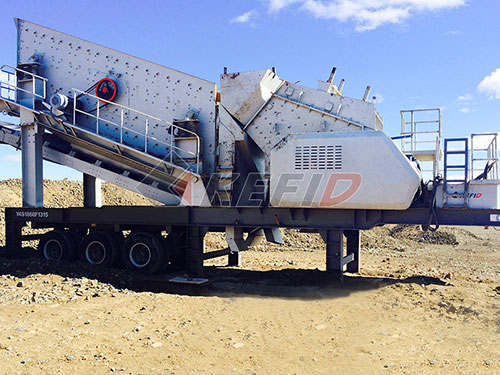
A modern stationary stone quarry crushing plant is an integrated system designed for highvolume primary, secondary, and tertiary reduction of blasted rock into specified aggregate sizes. The operational workflow typically involves:
1. Primary Crushing: Dump feed is reduced by a jaw or gyratory crusher.
2. Secondary/Tertiary Crushing: Cone or impact crushers further process material for precise gradation.
3. Screening & Sorting: Vibrating screens separate crushed stone into finished product sizes.
4. Material Handling: Conveyor networks transport material between stages and to stockpiles.
Application scope includes the production of aggregates for construction, road base, rail ballast, and concrete/asphalt plants. Key limitations are initial capital investment and the requirement for stable, longterm quarry reserves to justify a fixed installation.
3. CORE FEATURES
Advanced Chamber Geometry | Technical Basis: Optimized nip angle and crushing cavity profile | Operational Benefit: Promotes interparticle crushing for a finer, more cubical product with less wear on liners | ROI Impact: Reduces recirculating load by up to 15%, lowering energy costs and increasing net throughput.
Automated Wear Compensation | Technical Basis: Hydraulic adjustment systems with PLC control | Operational Benefit: Maintains consistent crusher discharge setting without manual intervention as wear occurs | ROI Impact: Sustains product specification over longer periods, reducing waste and labor for adjustments.
Centralized Process Control (CPC) System | Technical Basis: Integrated PLC/SCADA with realtime sensor data (power draw, pressure, level) | Operational Benefit: Allows operators to monitor and optimize the entire plant from a single station | ROI Impact: Field data shows a 510% increase in overall plant efficiency through coordinated load management.
HeavyDuty Fabrication & Component Access | Technical Basis: Fabricated steel frames with stressrelieved welds and strategic service platforms | Operational Benefit: Enhances structural integrity under cyclic loading and simplifies maintenance tasks | ROI Impact: Extends service life of major structures and reduces maintenance downtime by an average of 30%.
Integrated Dust Suppression System | Technical Basis: Labyrinth seals at transfer points combined with targeted waterspray or fog systems | Operational Benefit: Effectively controls respirable dust at primary crusher discharge and conveyor transfers | ROI Impact: Mitigates regulatory compliance risk and reduces housekeeping labor.

4. COMPETITIVE ADVANTAGES
| Performance Metric | Industry Standard | Our Stone Quarry Crushing Plant Solution | Advantage (% improvement) |
| : | : | : | : |
| Availability (Uptime) | 8590% (planned & unplanned) |> 94% target availability| +510% |
| Power Consumption (kWh/ton) Varies by rock type| Baseline from older plant designs |> Optimized drives & chamber design| Reduction of 812% |
| Liner Life (Million Tons) Primary Jaw/Concave| Dependent on abrasiveness |> Premium alloy steel & geometry| Increase of 1525% |
| Product Cubicity (%) Advanced crushing chambers| Improvement to >75% |
5. TECHNICAL SPECIFICATIONS
Design Capacity: Configurable from 200 to over 1,500 tons per hour (TPH), based on feed size (0800mm) and required product gradation.
Primary Crusher Options: Jaw Crusher (Feed size up to 1200mm) or Gyratory Crusher (for higher capacity >800 TPH).
Power Requirements: Total connected load typically ranges from 400 kW for compact plants to over 2 MW for largescale installations; supplied at 400V/690V or medium voltage.
Key Material Specifications: Crusher frames constructed from S355JR steel; liners use Mn18Cr2 or equivalent highabrasion steel; conveyor idlers feature C3/C4 sealed bearings.
Physical Dimensions: Plant footprint is projectspecific; modular designs facilitate layout optimization within existing quarry space constraints.
Environmental Operating Range: Designed for ambient temperatures from 20°C to +45°C; dust emission control designed to meet EU/EPA standards (<10 mg/Nm³ at boundary).
6. APPLICATION SCENARIOS
Granite Quarry Expansion Project
Challenge: An existing quarry needed to double output but faced space constraints and needed stricter control over chip quality for asphalt production.
Solution: Implementation of a compact threestage stone quarry crushing plant featuring a primary jaw crusher, secondary cone crusher with automated settings, and a tertiary vertical shaft impactor for shaping.
Results: Achieved target throughput of 650 TPH within a limited footprint. Product cubicity improved from 58% to 78%, meeting premium asphalt mix specifications without additional processing.
Limestone Aggregate Production for Road Base
Challenge: High silica content was causing accelerated wear in secondary crushers, leading to frequent downtime every 68 weeks for liner changes.
Solution: Installation of a new secondary cone crusher specifically configured with advanced chamber geometry and premium abrasionresistant liners.
Results: Liner life extended to an average of 14 weeks between changes. This reduced annual planned downtime by approximately 120 hours, translating directly into higher availability and lower consumable costs per ton.
7. COMMERCIAL CONSIDERATIONS
Stone quarry crushing plants are capital investments offered in tiered configurations:
Standard Configuration Tier: Includes primary crusher module, basic secondary stage(s), standard conveyors/screens/electrics. Focuses on core functionality at an entry price point.
Optimized Performance Tier (Most Common): Adds automated control systems (CPC), premium wear components on critical units enhanced dust suppression design extended warranty packages
Turnkey Project Tier: Full engineering design civil works foundation design erection commissioning supervision
Optional features include advanced metal detection tramp iron relief systems automated lubrication stations remote monitoring via telematics
Service packages range from basic preventive maintenance plans comprehensive multiyear service agreements including parts supply Financing options including equipment leasing project financing solutions are available subject
FAQ
1. How do I determine the correct capacity rating my stone quarry crushing plant?
Plant sizing requires analysis your annual production targets maximum feed size from blasting required final product gradations A detailed review your geological reports is the first step toward accurate specification
2 What are the lead times typical delivery installation?
For standard configured plants lead time manufacturing typically ranges months following order approval Installation commissioning require additional weeks depending site readiness complexity
3 Can this equipment integrate existing conveyors screening decks?
Yes engineering team can assess compatibility your existing infrastructure Modular design allows integration key new components like primary secondary crushers into current material flow
4 What kind operator training provided?
Comprehensive training conducted during commissioning covers safe operation routine maintenance procedures basic troubleshooting Training materials technical documentation provided digital formats
5 Are spare parts readily available?
Critical spare parts common wear items held regional distribution centers Parts support includes guaranteed availability lists specific models ensure minimum stock levels highwear components
6 What expected energy consumption per ton crushed?
Specific consumption varies significantly rock hardness final product size For typical granite application producing mm aggregate wellconfigured modern plant can achieve range kWh per metric ton processed
7 Do you offer performance guarantees?
Yes performance guarantees covering rated throughput power consumption key product specifications established during project engineering phase These backed contractual terms