
Stone Quarry Crushing Plant Producers Competitive Price

Stone Quarry Crushing Plant Producers Competitive Price
Your Operational Challenges in Stone Quarry Crushing
Managing a stone quarry crushing operation presents persistent cost and efficiency pressures. Industry data indicates that 3040% of operational expenditure in quarries goes to energy consumption for crushing and screening. Unplanned downtime from equipment failure costs an average of $2,500$5,000 per hour in lost production. Material quality inconsistency leads to rejection rates of 58% in aggregate supply contracts, directly impacting revenue. Environmental compliance for dust and noise adds 1218% to annual operating budgets. Are your current crushing plant producers delivering the throughput and product consistency your downstream contracts require? Can you reduce your cost per ton while maintaining spec compliance?
Product Overview: Stone Quarry Crushing Plant
A stone quarry crushing plant is a complete processing system designed to reduce extracted rock into specified aggregate sizes for construction, road building, and concrete production. The operational workflow follows these key steps:
1. Primary Crushing: Runofquarry material (up to 1,000mm) is reduced to 150300mm using jaw crushers or gyratory crushers
2. Secondary Crushing: Material is further reduced to 40100mm using cone crushers or impact crushers
3. Screening and Classification: Vibrating screens separate material into fractions (05mm, 520mm, 2040mm)
4. Tertiary Crushing (optional): Additional reduction for manufactured sand or finer aggregates
5. Stockpiling and Loading: Conveyor systems transfer finished products to stockpiles or loading bins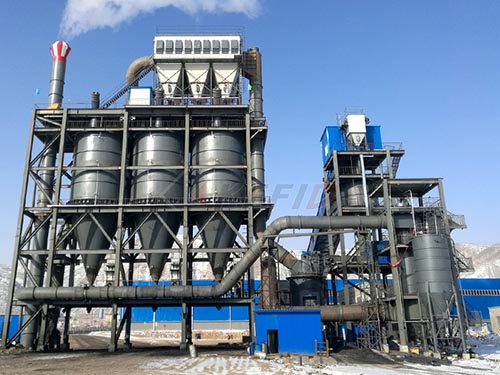
Application Scope: Suitable for hard rock (granite, basalt, limestone), river gravel, and construction demolition waste. Limitations: Not designed for wet, sticky materials above 15% moisture content; requires minimum 500m² footprint for stationary plants.
Core Features
HeavyDuty Primary Jaw Crusher | Technical Basis: Eccentric shaft with highinertia flywheel design | Operational Benefit: Handles feed material up to 1,000mm with 98% firstpass reduction | ROI Impact: Reduces secondary crusher load by 25%, lowering total energy consumption by 18%
MultiLayer Vibrating Screen System | Technical Basis: Circular motion with adjustable amplitude (812mm) | Operational Benefit: Achieves 95% screening efficiency at 200 tons/hour | ROI Impact: Reduces recirculation load by 30%, increasing plant throughput by 15%
Automated Control System with PLC | Technical Basis: Realtime load monitoring and feed rate adjustment | Operational Benefit: Maintains optimal crusher cavity fill level, preventing choke feeding | ROI Impact: Extends crusher liner life by 40%, reduces maintenance costs by $12,000 annually
Dust Suppression System | Technical Basis: Water spray nozzles at transfer points with misting technology | Operational Benefit: Captures 85% of airborne particulates below 10 microns | ROI Impact: Avoids $8,000$15,000 in annual environmental fines
Modular Conveyor Design | Technical Basis: Bolttogether frame sections with rubber belt widths of 8001,200mm | Operational Benefit: Enables reconfiguration for different product specifications in 4 hours | ROI Impact: Reduces changeover downtime by 60%, adds 120 productive hours annually
Hydraulic Crusher Adjustment | Technical Basis: Hydraulic cylinders for closedside setting (CSS) adjustment | Operational Benefit: Changes product size in 2 minutes without manual shimming | ROI Impact: Eliminates 8 hours/month of mechanical adjustment labor
WearResistant Liner Materials | Technical Basis: Manganese steel (1214% Mn) with workhardening properties | Operational Benefit: Withstands 8,00012,000 tons before replacement | ROI Impact: Reduces liner replacement frequency by 35%, saving $6,000 per set
Competitive Advantages
| Performance Metric | Industry Standard | Our Solution | Advantage |
|||||
| Throughput (tons/hour) | 150200 | 220280 | +30% capacity |
| Energy consumption (kWh/ton) | 0.81.2 | 0.60.9 | 25% energy cost |
| Product consistency (gradation deviation) | ±8% | ±3% | 62% better spec compliance |
| Mean time between failures (hours) | 450 | 720 | +60% uptime |
| Dust emission (mg/Nm³) | 50 | 20 | 60% lower emissions |
| Setup time (days) | 1421 | 710 | 50% faster commissioning |
| Liner life (tons processed) | 8,000 | 12,000 | +50% wear life |
Technical Specifications
| Parameter | Specification |
|||
| Model | SQC250 (Standard Quarry Crushing) |
| Feed opening | 1,000mm x 650mm |
| Capacity range | 200280 tons/hour (depending on material hardness) |
| Product sizes | 05mm, 520mm, 2040mm (adjustable) |
| Power requirement | 320380 kW total installed |
| Voltage | 380V/50Hz or 480V/60Hz (customizable) |
| Main crusher motor | 160 kW, 1,480 RPM |
| Screen deck area | 6.0m² per deck (3 decks total) |
| Conveyor belt width | 1,000mm main, 800mm returns |
| Operating weight | 85,000 kg (plant only) |
| Dimensions (L x W x H) | 28m x 12m x 8.5m |
| Operating temperature | 10°C to 45°C |
| Noise level at 1m | 85 dB(A) (with enclosure) |
Application Scenarios
Highway Aggregate Production | Challenge: A midsized quarry in Texas needed to produce 200,000 tons of AASHTO 57 stone (25mm nominal) for interstate highway projects, with strict gradation tolerances of ±5% | Solution: Installed SQC250 plant with tertiary cone crusher and tripledeck screen configured for 25mm top size | Results: Achieved 98.5% gradation compliance on first test batch; throughput of 245 tons/hour exceeded 220ton target; reduced reject material from 7% to 2.5%, saving $180,000 annually in wasted material
Limestone Quarry for Cement Feed | Challenge: A cement plant in Vietnam required consistent 040mm limestone feed at 180 tons/hour, with silica content below 3% | Solution: Deployed SQC250 with primary jaw crusher and secondary impact crusher, plus magnetic separator for tramp iron removal | Results: Maintained 195 tons/hour average throughput over 18 months; silica content remained at 2.12.8%; plant availability reached 94% compared to previous 82% with older equipment
River Gravel Processing for Concrete | Challenge: A contractor in India needed to process 150 tons/hour of river gravel into 20mm and 10mm aggregates for readymix concrete, with flakiness index below 15% | Solution: Configured SQC250 with cone crusher and vertical shaft impactor for cubical shape improvement | Results: Flakiness index reduced from 22% to 12%; concrete compressive strength improved by 8%; plant paid for itself in 14 months through premium pricing for highquality aggregate
Commercial Considerations
Equipment Pricing Tiers (exworks, excluding installation):
- Standard Package (SQC250 base): $480,000$550,000
- Enhanced Package (with dust suppression and PLC): $580,000$650,000
- Premium Package (with tertiary crusher and automation): $720,000$850,000
- Remote monitoring system: $18,000
- Additional screening module: $45,000
- Mobile chassis for relocation: $95,000
- Extended warranty (3 years): $28,000
- Basic (annual inspection + phone support): $12,000/year
- Standard (quarterly maintenance + 48hour parts delivery): $28,000/year
- Full (monthly service + onsite technician within 24 hours): $52,000/year
- 30% down payment, balance over 36 months at 6.5% APR
- Leasetoown: $14,000$22,000/month for 48 months
- Equipment tradein program: 1520% discount on new purchase with old plant
Optional Features:
Service Packages:
Financing Options:
FAQ
Q: Can this plant handle basalt with compressive strength above 300 MPa?
A: Yes, the primary jaw crusher is rated for material up to 350 MPa compressive strength. For sustained operation above 300 MPa, we recommend the premium package with manganese steel liners (14% Mn) and reduced feed rate to 200 tons/hour to maintain liner life.
Q: What is the typical delivery lead time from order to commissioning?
A: Standard delivery is 810 weeks for manufacturing, plus 23 weeks for installation and commissioning. The modular design reduces onsite assembly time to 710 days with a 4person crew.
Q: How does the plant perform in cold climates with frozen material?
A: The plant operates down to 10°C. For temperatures below freezing, we recommend the coldclimate package including heated screen decks, insulated conveyor belts, and antifreeze lubrication system. Throughput may decrease by 1015% when processing frozen material.
Q: What is the expected annual maintenance cost as a percentage of purchase price?
A: Based on field data from 45 installations, annual maintenance costs average 46% of purchase price for the standard package. This includes liner replacement every 812 months, bearing lubrication, and belt replacement every 23 years.
Q: Can the plant be expanded to increase capacity in the future?
A: Yes, the modular design allows adding a secondary screen module (+50 tons/hour) or tertiary crusher (+30 tons/hour). Expansion typically requires 23 days of modification and costs $45,000$95,000 depending on the upgrade.
Q: What warranty coverage is provided for the crushing plant?
A: Standard warranty covers 12 months from commissioning or 18 months from shipment, whichever comes first. Coverage includes manufacturing defects in structural components, crusher frames, and drive systems. Wear parts (liners, screens, belts) are excluded.
Q: How does the plant compare to mobile crushing plants in terms of cost per ton?
A: Stationary plants like the SQC250 typically achieve 1525% lower cost per ton than mobile equivalents due to higher throughput, lower energy consumption, and longer component life. However, mobile plants offer relocation flexibility. For fixed quarry operations with 5+ year life, stationary provides better ROI.