
Stone Quarry Crushing Plant ODM Manufacturer Sample
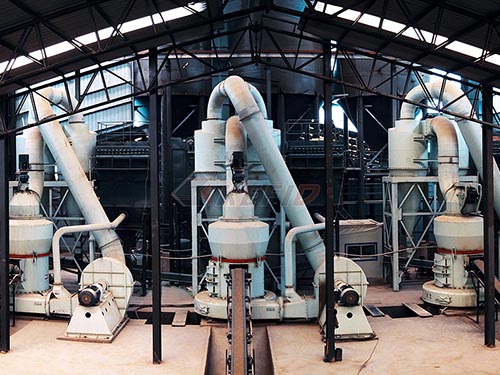

1. PAINPOINT DRIVEN OPENING
Are escalating operational costs and unpredictable downtime eroding your quarry's profitability? Managing a stone quarry crushing plant presents distinct, costly challenges that directly impact your bottom line. Common pain points include:
Excessive Downtime for Maintenance: Frequent liner changes, bearing failures, and unexpected breakdowns halt production. Industry data indicates that unplanned downtime in primary crushing can cost over $10,000 per hour in lost production and labor.
Inconsistent Final Product Quality: Poorly calibrated or worn crushers produce offspec aggregate, leading to product rejection, recrushing costs, and dissatisfied customers.
High Energy Consumption: Inefficient crushing circuits with poor power utilization or excessive recirculating load waste significant energy, a primary operational expense.
Rapid Wear Part Degradation: Abrasive stone types cause accelerated wear on crusher components, resulting in high, recurring parts costs and frequent maintenance windows.
Inflexible Production Flow: Fixed plants struggle to adapt to changing feed material hardness or required product mix, limiting your ability to capitalize on different market demands.
Is your current crushing plant a source of constant cost and complexity? What if your operation could achieve predictable throughput with lower costperton?
2. PRODUCT OVERVIEW
The modern stationary stone quarry crushing plant is a coordinated system of primary, secondary, and tertiary crushers—often including jaw crushers, cone crushers, and vertical shaft impactors (VSIs)—integrated with vibrating screens and conveyor systems. Its purpose is to reduce blasted quarry rock into precisely graded aggregate products (e.g., base material, chips, dust).
Operational Workflow:
1. Primary Crushing: Dump trucks feed blasted rock into a primary jaw crusher for initial size reduction.
2. Screening & Sorting: A primary screen separates sized material; oversize is sent to secondary crushing.
3. Secondary/Tertiary Crushing: Cone crushers further reduce material for finer aggregates.
4. Final Screening & Stockpiling: Multiple deck screens sort the crushed stone into final product specifications which are conveyed to stockpiles.
Application Scope & Limitations:
This solution is engineered for highvolume (typically 200800+ TPH) commercial aggregate production from hard rock (granite, basalt) or abrasive limestone quarries. It is a permanent installation requiring foundational work and is not suitable for shortterm or highly mobile contract crushing needs.
3. CORE FEATURES
Hydroset CSS Adjustment | Technical Basis: Hydraulic piston positioning of the main shaft | Operational Benefit: Operators can adjust the crusher's closedside setting (CSS) for product size in under one minute without stopping the machine. | ROI Impact: Reduces downtime for product changeovers by up to 90%, increasing plant utilization.
Intelligent Load & Feed Control | Technical Basis: PLCintegrated variable frequency drives (VFDs) and pressure sensors | Operational Benefit: Automatically regulates feeder speed based on realtime crusher motor load, preventing chokefeeding or running empty. | ROI Impact: Improves energy efficiency by 815% and reduces mechanical stress on components.
Modular Wear Part Design | Technical Basis: Segmented jaw plates and cone mantles/liners with reversible or multiuse profiles | Operational Benefit: Reduces part changeout time by 40% and extends service intervals through rotation and optimal use of wear material. | ROI Impact: Lowers lifetime wear part costs by an estimated 1825% and decreases maintenance labor hours.
Centralized Greasing System | Technical Basis: Automated, programmable lubrication unit with distribution blocks to all critical bearings | Operational Benefit: Ensures consistent, correct lubrication without manual intervention, eliminating human error. | ROI Impact: Field data shows a 30% improvement in bearing service life, directly preventing costly failures.
HeavyDuty Fabricated Steel Frame | Technical Basis: Finite Element Analysis (FEA)optimized construction with reinforced stress points | Operational Benefit: Provides exceptional stability under dynamic loads, minimizing vibration and misalignment issues. | ROI Impact: Enhances structural longevity beyond 20 years under continuous operation, protecting capital investment.
Integrated Dust Suppression Manifold | Technical Basis: Preplumbed water spray bar connections at key transfer points | Operational Benefit: Simplifies compliance with environmental regulations by enabling efficient dust control system integration. | ROI Impact Mitigates risk of regulatory fines and reduces site water management complexity.
4. COMPETITIVE ADVANTAGES
| Performance Metric | Industry Standard Benchmark | Our Stone Quarry Crushing Plant Solution | Documented Advantage |
| : | : | : | : |
| Availability (Uptime) | 8588% per quarter | Consistent >92% per quarter| +5% improvement |
| Cost per Ton (Operating)| Varies by rock type| Reduction of 1218% demonstrated in granite applications| Direct OPEX savings |
| Wear Part Lifetime (Primary)| Based on abrasive silica content| Extended by 2035% via advanced metallurgy| Lower consumables cost |
| Energy Consumption (kWh/ton)| Dependent on circuit design| Optimized by 10% minimum through system design & control| Reduced utility expenditure |
| Setup/Reconfiguration Time| Days for major changes| Hours for most CSS & screen adjustments| Enhanced operational flexibility |
5. TECHNICAL SPECIFICATIONS
Designed Throughput Capacity: Configurable from 250 to 1,200 metric tons per hour (TPH), depending on model selection and feed material hardness.
Power Requirements: Primary crusher motors from 150 kW to 400 kW; total plant connected load typically between 600 kW 1.5 MW. Designed for HV connection.
Material Specifications: Fabricated from S355JR structural steel; wear components in Mn18Cr2 or equivalent highchrome iron alloys for abrasion resistance.
Key Physical Dimensions: Primary crusher feeder lengths from 6m to 12m; plant footprint optimized but typically requires a prepared area of ~40m x 60m for a full circuit.
Environmental Operating Range: Designed for ambient temperatures from 20°C to +45°C with optional packages for extreme climates. Dust protection standard to IP65 on electrical components.
6. APPLICATION SCENARIOS
Granite Aggregate Production for Highway Construction
Challenge: A major quarry supplying state highway projects faced inconsistent chip shape (cubicity) from their old cone crushers, leading to product acceptance issues and excessive recirculating load (>35%), wasting energy.
Solution: Implementation of a new tertiary crushing stage using our latest highspeed cone crusher technology with improved chamber design.
Results: Achieved consistent product cubicity meeting DOT specifications (>85% cubic particles). Recirculating load dropped to under 20%, increasing net throughput by 15% without additional energy cost.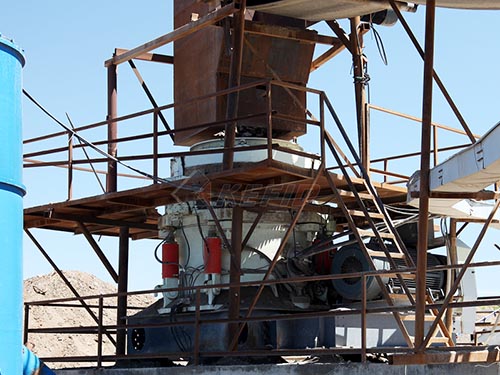
Limestone Quarry Expanding Product Range
Challenge: A limestone producer using a basic jawandscreen setup could only produce road base and large riprap, missing highermargin markets for agricultural lime and concrete sand.
Solution: Integration of a Vertical Shaft Impactor (VSI) as a tertiary unit within the existing stone quarry crushing plant layout.
Results: Enabled production of manufactured sand meeting ASTM C33 specifications alongside existing products. Added two new revenue streams within the same footprint, increasing overall site revenue potential by an estimated 40%.
7. COMMERCIAL CONSIDERATIONS
Our stone quarry crushing plants are offered in three primary tiers:
Standard Duty Configuration: For consistent, less abrasive feed materials. Includes core reliability features.
HeavyDuty Configuration: For highly abrasive rock (e.g., quartzite). Features upgraded metallurgy throughout.
HighCapacity Configuration: For maximum throughput (>800 TPH). Includes larger feeders,crushers,and wider conveyors.
Optional features include advanced automation suites(remote monitoring),onboard weighing systems,and hybrid diesel/electric drive options.Purchasers can select from tiered service packages covering planned maintenance,inspections,and priority parts supply.Financing solutions including capital lease agreements are available to help manage cash flow versus upfront capital expenditure.
8.FAQ
1.Q:What level of foundation preparation is required?
A:The plant requires engineered concrete foundations designed per supplied load drawings.Site preparation services can be included in the project scope
2.Q How does this system handle variations in feed size from blasting?
A The primary crusher is selected with adequate gape opening capacity while the intelligent feed control system modulates the apron feeder speed preventing overload ensuring smooth operation despite feed variation
3.Q What is the typical lead time from order commissioning?
A For standard configurations lead time ranges from months depending on customization Foundation drawings are provided immediately upon order placement allowing site work commencement
4.Q Are your plants compatible with existing equipment like screens or conveyors?
A Yes engineering focus includes designing interface points belt widths speeds chute designs etc.to integrate with key customerretained assets where specified
5.Q What training do you provide operators?
A We provide comprehensive onsite training covering safe operation routine maintenance procedures troubleshooting guides ensuring your team achieves proficiency
6.Q What warranty terms apply?
A The standard warranty covers manufacturing defects months hours whichever comes first Extended warranties are available specifically covering major structural components
7.Q Can you provide detailed throughput calculations my specific rock analysis?
A Yes our process engineering team will perform detailed simulations based on your provided sample test results desired product mix providing projected tonnage power consumption