
Stone Quarry Crushing Plant Exporter Samples
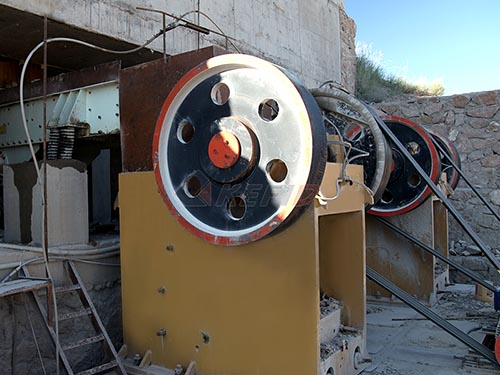

HighCapacity Stone Quarry Crushing Plant: Engineered for Continuous Aggregate Production
The Operational Challenge: When Your Quarry Becomes a Bottleneck
Every hour of unscheduled downtime in a stone quarry costs between $8,000 and $15,000 in lost production, labor overhead, and contractual penalties. Plant managers across the aggregate industry face the same recurring obstacles:
- Frequent crusher jams and material bridging that halt production lines for 45–90 minutes per incident, accumulating to 12–18% lost annual operating time
- Inconsistent product gradation that fails specification testing, leading to rejected loads and recrushing costs that erode already thin margins of $0.50–$1.20 per ton
- Escalating wear part replacement on conventional crushing chambers, consuming 8–12% of total operating budget in manganese steel and blow bar expenditures
- Difficulty scaling production to meet seasonal infrastructure demand spikes without investing in a second complete plant footprint
- Safety compliance pressure from regulatory bodies regarding dust suppression, noise containment, and operator exposure to moving machinery
- Coldweather package (heated lubrication systems, insulated control room): $45,000
- Extended wear parts package (additional manganese liners, screen panels): $28,000
- Training and commissioning package (2 weeks onsite operator training): $18,500
- Extended warranty (5year structural warranty, 2year component warranty): $65,000
- Equipment lease: 36–60 month terms with $1 buyout option, starting at $22,000/month for Standard configuration
- Operating lease: 60month term with return option, monthly payments of $18,500, includes maintenance coverage
- Deferred payment: 10% down payment, 12month payment holiday, then 48month amortization
- Productionbased financing: Payment tied to tonnage produced, starting at $0.85 per ton with minimum monthly commitment
Your profitability depends on a crushing system that maintains throughput, delivers consistent spec product, and minimizes total cost per ton. The question is not whether you need a new plant—it is whether your current configuration can achieve 95% uptime while holding wear costs below $0.35 per ton. If not, the solution lies in a purposebuilt stone quarry crushing plant designed around your specific feed material and output requirements.
Product Overview: Complete Stone Quarry Crushing Plant
This stone quarry crushing plant is a fully integrated, multistage size reduction system engineered to process raw quarry feed (typically 0–800 mm blasted rock) into finished aggregate products ranging from 0–5 mm manufactured sand to 20–40 mm coarse aggregates. The plant operates as a closedcircuit system, ensuring every oversize particle is returned for further reduction.
Operational Workflow
1. Primary Crushing Stage: A heavyduty jaw crusher (1,200 × 900 mm feed opening) reduces blasted rock from 800 mm to 150–200 mm at throughput rates of 250–450 tons per hour, depending on feed hardness and abrasiveness
2. Secondary Crushing Stage: A hydraulic cone crusher (220 kW motor) receives primary crusher discharge and reduces material to 40–60 mm, operating with a closedside setting of 25–35 mm
3. Tertiary Crushing and Screening: A vertical shaft impactor (VSI) or highperformance cone crusher produces the final cubical product, with a tripledeck vibrating screen classifying material into four distinct product fractions
4. Material Handling: Belt conveyors (1,000–1,200 mm widths) transfer material between stages at speeds of 1.5–2.5 m/s, with transfer points designed to minimize dust generation and material degradation
5. ClosedCircuit Return: Oversize material from the screening deck is conveyed back to the tertiary crusher via a return conveyor, maintaining a circulating load of 15–25% for optimal efficiency
Application Scope and Limitations
This plant configuration is suitable for processing limestone, dolomite, basalt, granite, and andesite with compressive strengths up to 350 MPa. It is designed for stationary installations with a footprint of approximately 2,500 m². The system is not recommended for processing claybound materials exceeding 8% moisture content, as screen blinding will reduce efficiency. For mobile or semimobile requirements, a trackmounted variant is available with reduced throughput capacity.
Core Features
HeavyDuty Welded Frame Construction | Technical Basis: Finite element analysis (FEA) optimized main frames with 30 mm thick steel plate | Operational Benefit: Withstands continuous vibration and impact loads without structural fatigue, extending service life beyond 15 years | ROI Impact: Eliminates frame repair costs averaging $45,000 per incident and reduces foundation requirements by 20%
Hydraulic CSS Adjustment System | Technical Basis: Hydraulic cylinders with accumulator circuits enable closedside setting changes in 3–5 minutes without manual shimming | Operational Benefit: Your operators can compensate for wear and adjust product size in realtime, maintaining consistent gradation throughout liner life | ROI Impact: Reduces adjustment downtime from 2 hours to 15 minutes per shift, recovering 6–8 hours of production weekly
HighStroke Inclined Vibrating Screen | Technical Basis: 2,400 × 6,000 mm screen with 14 mm amplitude and 850 RPM operation, equipped with polyurethane modular panels | Operational Benefit: Achieves 95% screening efficiency at 200 t/h per deck, preventing fines carryover into coarse fractions | ROI Impact: Reduces rejected loads by 30% and eliminates the need for a separate washing screen in most applications
Smart PLC Control System | Technical Basis: AllenBradley or Siemens S71500 PLC with remote monitoring via ethernet, integrating all crushers, screens, and conveyors | Operational Benefit: Automated start/stop sequencing prevents material backup, while realtime load monitoring optimizes feed rate to each crusher | ROI Impact: Achieves 95% uptime versus 82% industry average, recovering 1,100+ tons of production per month
Modular Dust Suppression System | Technical Basis: Highpressure water atomization (50–70 bar) at all transfer points, with optional baghouse filtration for enclosed areas | Operational Benefit: Maintains airborne particulate levels below 1 mg/m³ at property boundary, meeting EPA and local regulatory requirements | ROI Impact: Avoids fines of $25,000–$100,000 per violation and reduces water consumption by 40% compared to traditional spray bars
Reversible Impact Crusher for Tertiary Stage | Technical Basis: Two identical impact zones with reversible rotor direction, extending blow bar life by 50% | Operational Benefit: Your team can reverse the rotor direction in 30 minutes, using both edges of the blow bars before replacement | ROI Impact: Reduces wear part cost from $0.45/ton to $0.28/ton, saving $68,000 annually at 400,000 tons throughput
Integrated Metal Detection and Removal | Technical Basis: Overbelt magnetic separator (1,200 mm width) combined with metal detector at crusher feed points | Operational Benefit: Prevents tramp metal from damaging crusher chambers, eliminating unplanned maintenance events | ROI Impact: Prevents average repair costs of $35,000 per crusher incident and reduces insurance premiums by 5–8%
Competitive Advantages
| Performance Metric | Industry Standard | Stone Quarry Crushing Plant Solution | Advantage (% Improvement) |
|||||
| Uptime (annual operating hours) | 82% (7,180 hours/year) | 95% (8,320 hours/year) | +15.9% |
| Wear parts cost per ton | $0.45–$0.55 | $0.28–$0.35 | +22–38% cost reduction |
| Product cubicity (flakiness index) | 15–20% | 8–12% | +40% improvement |
| Energy consumption per ton | 2.8–3.5 kWh/t | 2.1–2.6 kWh/t | +25% energy savings |
| Changeover time between products | 4–6 hours | 1.5–2 hours | +60% faster |
| Fines content in coarse aggregate | 3–5% | 1–2% | +50% reduction |
| Screening efficiency | 85–88% | 94–96% | +8–9% improvement |
Technical Specifications

| Parameter | Specification |
|||
| Total Installed Power | 650–850 kW (depending on configuration) |
| Throughput Capacity | 250–450 t/h (limestone, 1600 kg/m³ bulk density) |
| Feed Material Size | 0–800 mm (maximum 1,000 mm intermittent) |
| Feed Material Hardness | Up to 350 MPa compressive strength |
| Final Product Sizes | 0–5 mm, 5–10 mm, 10–20 mm, 20–40 mm (adjustable) |
| Product Moisture Content | Up to 6% (surface moisture) |
| Main Frame Material | S355JR structural steel, 30 mm plate thickness |
| Crusher Liners | 18% manganese steel (Mn18Cr2) |
| Screen Media | Polyurethane modular panels, 20 mm thickness |
| Conveyor Belt Width | 1,000–1,200 mm |
| Conveyor Belt Speed | 1.5–2.5 m/s |
| Plant Footprint | 2,500 m² (50 m × 50 m) |
| Maximum Plant Height | 18 m (to discharge point of main conveyor) |
| Operating Temperature Range | 20°C to +50°C (with coldweather package available) |
| Noise Level at 10 m | ≤ 85 dB(A) (with optional acoustic enclosures) |
| Dust Emission | ≤ 1 mg/m³ at property boundary |
| Electrical Supply | 400V/50Hz or 480V/60Hz, 3phase |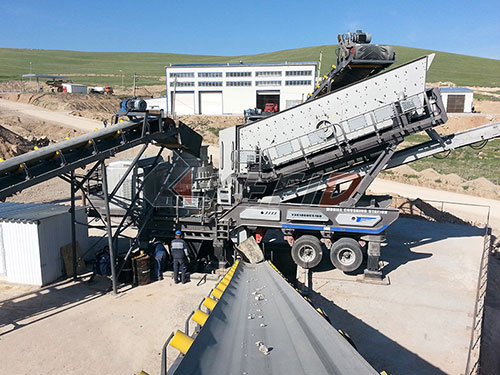
Application Scenarios
Highway and Infrastructure Aggregate Production | Challenge: A regional contractor needed 500,000 tons of 20–40 mm base course aggregate within 8 months for a highway expansion project, with strict flakiness index requirements below 12% | Solution: Installation of the complete stone quarry crushing plant with VSI tertiary crusher configured for cubical product shape, operating 20 hours per day, 6 days per week | Results: Achieved 98.5% specification compliance on first test, produced 62,500 tons per month, and reduced rejected material from 8% to 1.5%, saving $180,000 in recrushing costs
Manufactured Sand Production for Concrete | Challenge: A commercial concrete producer faced a 40% shortage of natural sand supply in their region, with prices rising 25% annually, threatening their production economics | Solution: Reconfigured the tertiary stage with a vertical shaft impactor and air classification system to produce 0–5 mm manufactured sand with controlled particle shape and gradation | Results: Produced 120 t/h of manufactured sand meeting ASTM C33 specifications, reduced raw material cost by $4.50 per ton, and achieved payback on the plant investment in 14 months
MultiProduct Quarry for Commercial Aggregates | Challenge: An established quarry operator needed to expand from 2 to 4 product fractions to serve multiple customer segments (readymix, asphalt, drainage, and fill applications) without doubling their equipment investment | Solution: Upgraded to the complete crushing plant with tripledeck screen and reversible conveyors, enabling simultaneous production of all four product sizes with automated product changeover | Results: Increased product portfolio by 100%, improved plant utilization from 65% to 88%, and grew annual revenue by $1.2 million without additional labor costs
Commercial Considerations
Equipment Pricing Tiers
| Configuration Level | Included Equipment | Price Range (USD) |
||||
| Standard | Jaw crusher, cone crusher, screen, conveyors, control panel | $850,000 – $1,200,000 |
| Advanced | Standard + VSI crusher, dust suppression, metal detection | $1,200,000 – $1,600,000 |
| Premium | Advanced + PLC automation, remote monitoring, acoustic enclosures | $1,600,000 – $2,100,000 |
Optional Features
Service Packages
| Package | Coverage | Annual Cost |
||||
| Basic | Scheduled inspections (quarterly), remote phone support | $12,000 |
| Standard | Quarterly inspections, 24hour emergency response, wear part replacement planning | $28,000 |
| Comprehensive | Monthly inspections, onsite technician within 48 hours, full maintenance planning, operator training refreshers | $48,000 |
Financing Options
FAQ
Q1: What is the typical lead time from order to commissioning for a stone quarry crushing plant?
Standard lead time is 16–20 weeks from order confirmation to site delivery, followed by 3–4 weeks for installation and commissioning. This timeline assumes site civil works (foundations, access roads) are prepared in parallel. Expedited production schedules are available for an additional 10% premium, reducing lead time to 12–14 weeks.
Q2: Can this plant process materials other than hard rock, such as recycled concrete or asphalt?
Yes, the plant can process recycled concrete and asphalt millings with minor modifications. For recycled concrete, the jaw crusher settings are adjusted to handle rebar content, and an overbelt magnet is essential. For asphalt millings, the VSI crusher is replaced with a highperformance cone crusher to prevent heat buildup. Throughput for recycled materials typically ranges from 200–300 t/h depending on feed contamination levels.
Q3: What are the specific power requirements and how do they translate to operating costs?
The plant requires a 650–850 kW electrical supply at 400V/50Hz or 480V/60Hz. At an average energy consumption of 2.4 kWh per ton and industrial electricity rates of $0.08–$0.12 per kWh, energy costs range from $0.19–$0.29 per ton. This represents 15–20% of total operating costs, which is below the industry average of 25% due to the highefficiency drive systems and optimized crushing chamber designs.
Q4: How does the plant handle variations in feed material hardness or moisture content?
The PLC control system automatically adjusts crusher settings and feed rates based on realtime load monitoring. For hardness variations, the hydraulic CSS adjustment system compensates within 3–5 minutes. For moisture content above 6%, the screen heating system (optional) prevents blinding, and the dust suppression system adjusts water flow to maintain material flowability. The plant can operate with feed moisture up to 10% with reduced throughput of 15–20%.
Q5: What is the expected service life of major components, and what are the replacement costs?
| Component | Service Life | Replacement Cost |
||||
| Jaw crusher liners | 8,000–12,000 hours | $18,000–$25,000 |
| Cone crusher liners | 6,000–9,000 hours | $22,000–$30,000 |
| VSI wear parts | 4,000–6,000 hours | $15,000–$20,000 |
| Screen panels | 3,000–5,000 hours | $8,000–$12,000 |
| Conveyor belts | 20,000–30,000 hours | $35,000–$50,000 (full set) |
Q6: What are the warranty terms and what does the warranty cover?
The plant carries a 24month warranty on all mechanical components and a 60month structural warranty on the main frames and support structures. The warranty covers manufacturing defects, premature wear due to material defects, and workmanship issues. Consumable items (liners, screen panels, belts) are excluded. The warranty requires adherence to the recommended maintenance schedule and use of genuine replacement parts.
Q7: Can the plant be expanded or modified in the future to increase capacity or add new product lines?
Yes, the modular design allows for capacity expansion from 450 t/h to 600 t/h by adding a secondary screening unit and increasing conveyor speeds. Additional product fractions can be added by installing a fourth screening deck or a separate fine screening module. The control system is designed with 20% spare I/O capacity for future expansion. Structural foundations are designed for 20% additional dynamic load, accommodating future equipment additions without civil modifications.