
Stone Quarry Crushing Plant Companies Quote
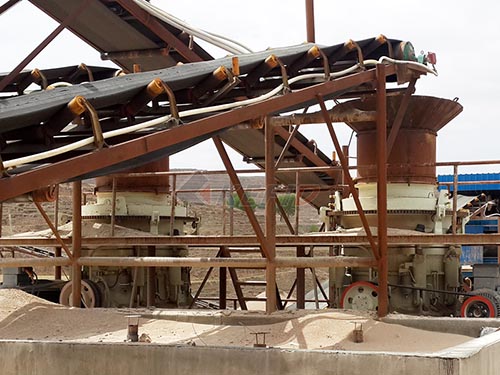

Stone Quarry Crushing Plant Companies Quote: Engineering Your Aggregate Production for Maximum ROI
The Operational Challenge: Where Profit Disappears in Quarry Operations
Every ton of aggregate you produce carries hidden costs that erode margins before the material ever reaches the weighbridge. Industry data indicates that inefficient crushing circuits account for 12–18% higher energy consumption per ton compared to optimized configurations. Downtime from unplanned maintenance in a typical 500 TPH quarry operation costs approximately $8,000–$12,000 per hour in lost production and fixed overhead absorption. Furthermore, inconsistent product gradation leads to 5–8% material rejection at screening stages, directly impacting your ability to meet strict specification requirements for concrete and asphalt applications.
Your screening efficiency, crusher wear life, and conveyor reliability are not isolated metrics—they compound into your cost per ton. Are your current crushing plant specifications aligned with your feed material characteristics, or are you overcrushing to compensate for equipment limitations? Can your plant maintain consistent output during peak demand seasons without sacrificing product quality? The answer to these questions determines whether your quarry operates at a 15% margin or a 25% margin.
Product Overview: Complete Crushing and Screening Solutions for Hard Rock Applications
A stone quarry crushing plant is an integrated processing system designed to convert blasted rock into graded aggregate products. The typical workflow encompasses primary crushing, secondary crushing, screening, and material handling stages, each engineered to address specific reduction ratios and product specifications.
Operational Workflow:
1. Feed Hopper and Feeder System: Vibrating grizzly feeders receive raw material (typically 0–800mm blasted rock) and remove fines (0–40mm) before the primary crusher, reducing wear and improving overall efficiency.
2. Primary Crushing Stage: Jaw crushers or impact crushers reduce material to 100–250mm, achieving reduction ratios of 4:1 to 6:1 depending on feed characteristics.
3. Secondary/Tertiary Crushing: Cone crushers or vertical shaft impactors further reduce material to 0–40mm, with closedcircuit configurations ensuring consistent product sizing.
4. Screening and Classification: Multideck vibrating screens separate material into commercial fractions (e.g., 0–5mm, 5–10mm, 10–20mm, 20–40mm).
5. Conveying and Stockpiling: Radial stackers and transfer conveyors route finished products to stockpiles or directly to loadout bins.
Application Scope: This configuration suits mediumtolarge quarries processing granite, basalt, limestone, and river gravel with feed capacities from 200 to 1,000 TPH. Limitations include reduced efficiency with highly abrasive materials (above 30% silica content) and the requirement for adequate water supply if wet screening is specified.
Core Features: Engineering Specifications That Translate to Operational Gains
HighCapacity Primary Jaw Crusher | Technical Basis: Deep crushing chamber with optimized toggle plate geometry | Operational Benefit: Handles feed sizes up to 800mm with reduced bridging and consistent throughput | ROI Impact: 8–12% higher primary throughput compared to conventional designs, reducing cycle times for haul trucks
Automated ClosedSide Setting (CSS) Adjustment | Technical Basis: Hydraulic CSS adjustment with position sensors enabling realtime gap control | Operational Benefit: Your operators can adjust product size in under 2 minutes without manual intervention, maintaining specification compliance | ROI Impact: Eliminates 30–45 minutes of downtime per adjustment, saving approximately $4,500 per week in a 500 TPH operation
Modular Screen Decks with QuickChange Systems | Technical Basis: Polyurethane and wire mesh screen media with wedgelock tensioning systems | Operational Benefit: Screen deck changeover completed in 4 hours versus 12 hours for conventional systems, increasing plant availability | ROI Impact: Recovers 16 additional production hours per month, equivalent to 8,000 tons of additional output
Integrated Dust Suppression System | Technical Basis: Water spray nozzles with atomized misting at transfer points and crusher discharge | Operational Benefit: Achieves 85–90% dust suppression efficiency, supporting environmental compliance and operator health | ROI Impact: Avoids potential regulatory fines of $10,000–$50,000 per violation and reduces equipment wear from abrasive dust ingress
WearResistant Liner Materials | Technical Basis: 18% manganese steel (Mn18Cr2) for jaw and cone crusher liners with optimized heat treatment | Operational Benefit: Extends liner life by 20–30% in abrasive applications, reducing replacement frequency | ROI Impact: Lowers wear parts cost per ton from $0.18 to $0.14, saving approximately $20,000 annually for a 500,000ton operation
PLCBased Control System with Remote Monitoring | Technical Basis: Programmable logic controller with SCADA interface and cellular connectivity | Operational Benefit: Your plant manager monitors production metrics, alarm conditions, and maintenance schedules from any location | ROI Impact: Reduces diagnostic time by 60% and enables predictive maintenance, cutting unplanned downtime by 15–20%
HeavyDuty Conveyor System | Technical Basis: CEMA Drated idlers with 10mm belt thickness and vulcanized splicing | Operational Benefit: Handles 500–1,000 TPH material flows with reduced spillage and belt tracking issues | ROI Impact: Decreases conveyorrelated downtime by 25% and reduces cleanup labor costs by 30%
Competitive Advantages: Quantified Performance Comparison
| Performance Metric | Industry Standard | Stone Quarry Crushing Plant Solution | Advantage (% Improvement) |
|||||
| Energy Consumption (kWh/ton) | 0.75 – 0.85 | 0.62 – 0.70 | 12–18% reduction |
| Product Fines Generation (<0.075mm) | 12–15% | 8–10% | 25–33% reduction |
| Plant Availability (%) | 85–88% | 92–95% | 7–8% improvement |
| Wear Parts Cost (USD/ton) | $0.18 – $0.22 | $0.14 – $0.17 | 18–22% reduction |
| Changeover Time (screen decks) | 12 hours | 4 hours | 66% reduction |
| Operator Requirement (per shift) | 3–4 personnel | 2–3 personnel | 25% reduction |
| Product Specification Compliance | 92–95% | 98–99% | 3–7% improvement |
Technical Specifications: Standard Configuration Parameters
| Parameter | Specification |
|||
| Feed Capacity | 200 – 1,000 TPH (depending on configuration) |
| Max Feed Size | 800mm (primary), 250mm (secondary) |
| Product Range | 0–5mm, 5–10mm, 10–20mm, 20–40mm (adjustable) |
| Installed Power | 350 – 1,200 kW (total plant) |
| Primary Crusher | Jaw crusher: 1,000×800mm to 1,500×1,200mm feed opening |
| Secondary Crusher | Cone crusher: 200–400 HP, CSS range 6–50mm |
| Screen Configuration | 2–3 decks, 1.8m × 6.0m to 2.4m × 7.3m |
| Conveyor Width | 800mm – 1,400mm |
| Conveyor Speed | 1.5 – 3.5 m/s |
| Material Specifications | Carbon steel (S355JR) for structural components; Mn18Cr2 for wear liners |
| Operating Temperature Range | 10°C to +45°C (standard); 30°C to +45°C (cold climate option) |
| Noise Level | ≤85 dB(A) at 1m distance (with optional acoustic enclosures) |
| Dust Emission | ≤50 mg/Nm³ (with integrated suppression system) |
| Total Plant Weight | 180 – 650 tons (depending on configuration) |
| Footprint | 2,500 – 6,000 m² (including stockpile areas) |
Application Scenarios: Documented Field Performance
Hard Rock Quarry – Granite Processing | Challenge: High silica content (35–40%) causing rapid wear on crusher liners and screens, resulting in 45minute daily maintenance stops and wear part replacement every 6 weeks | Solution: Implemented stone quarry crushing plant with Mn18Cr2 liners, optimized CSS settings, and polyurethane screen media | Results: Wear part life extended to 9 weeks (50% improvement), maintenance downtime reduced to 20 minutes daily, and overall plant availability increased from 86% to 93%. Annual wear parts cost reduced by $45,000.
Limestone Quarry – Cement Raw Material Production | Challenge: Inconsistent product gradation (25% oversize material) causing downstream raw mill inefficiency and increased energy consumption | Solution: Deployed closedcircuit crushing configuration with automated CSS adjustment and tripledeck screening | Results: Product specification compliance improved from 92% to 98.5%, raw mill throughput increased by 8%, and specific energy consumption decreased by 0.4 kWh/ton. Payback period achieved in 14 months.
River Gravel Processing – Construction Aggregate Supply | Challenge: Seasonal demand peaks requiring 20% production increase during summer months, but existing plant could not maintain output without overtime labor costs | Solution: Upgraded to highercapacity stone quarry crushing plant with modular screen decks and enhanced conveyor system | Results: Achieved 22% production increase during peak season without additional staffing, reduced overtime costs by $18,000 per month, and maintained product quality throughout highthroughput periods.
Commercial Considerations: Investment Structure and Options
Equipment Pricing Tiers (Indicative, ExWorks):
| Configuration | Capacity Range | Price Range (USD) |
||||
| Standard Plant (Jaw + Cone + Screens) | 200–350 TPH | $850,000 – $1,400,000 |
| HighCapacity Plant (Larger Crushers + Additional Screens) | 350–600 TPH | $1,400,000 – $2,200,000 |
| Turnkey Solution (Includes Feeders, Conveyors, Control System) | 600–1,000 TPH | $2,200,000 – $3,500,000 |
Optional Features:
- Cold climate package (heated screens, insulated control room): +8–12% of base price
- Advanced dust collection system (baghouse filtration): +5–8% of base price
- Remote monitoring and predictive maintenance package: +3–5% of base price
- Extended warranty (3 years vs. standard 1 year): +2–4% of base price
- Basic Package: Commissioning support (2 weeks onsite), operator training (5 days), 12month warranty
- Standard Package: Includes Basic plus quarterly preventive maintenance visits, 24/7 phone support, and wear parts inventory management
- Premium Package: Includes Standard plus full maintenance outsourcing, guaranteed availability (95%), and performance benchmarking reports
- Equipment leasing with 3–5 year terms and purchase option at residual value
- Vendor financing with 10–20% down payment and 2–5 year repayment schedule
- Operating lease structures that transfer equipment ownership at end of term
- Performancebased financing where payments correlate with achieved production levels
Service Packages:
Financing Options:
Frequently Asked Questions
Q1: What is the typical lead time for a stone quarry crushing plant from order to commissioning?
Standard configurations require 12–16 weeks for manufacturing and assembly, followed by 3–4 weeks for site installation and commissioning. Turnkey projects with civil works may extend to 20–24 weeks total. Expedited delivery options are available for standardized configurations with a 6–8 week lead time.
Q2: Can the plant be configured to handle multiple feed materials, such as both hard rock and recycled concrete?
Yes, the plant can be equipped with interchangeable crusher settings and screen media to process different feed materials. However, optimal performance requires adjusting CSS parameters and potentially swapping wear liners. For mixedfeed operations, we recommend a dualpurpose configuration with quickchange features, which adds approximately 5–7% to the capital cost.
Q3: What are the minimum site requirements for installation?
You will need a minimum area of 2,500 m² for the plant footprint, with additional space for stockpiles and vehicle maneuvering. Foundation requirements include reinforced concrete pads for crushers and screens, with loadbearing capacity of at least 5 tons/m². Access roads must accommodate 40ton delivery vehicles, and a minimum 500 kVA electrical supply is required for standard configurations.
Q4: How does the automated control system integrate with existing site management software?
The PLCbased control system supports standard communication protocols including Modbus TCP/IP, Profibus, and OPCUA. This allows integration with most enterprise resource planning (ERP) systems and site management platforms. Our engineering team provides API documentation and integration support as part of the commissioning package.
Q5: What training is provided for operators and maintenance personnel?
The standard package includes 5 days of onsite operator training covering plant operation, safety procedures, and basic troubleshooting. For maintenance personnel, we offer an additional 3day technical training module on wear part replacement, lubrication schedules, and predictive maintenance techniques. Refresher training is available annually at additional cost.
Q6: What is the expected service life of the plant, and what major components require periodic replacement?
The structural components and main crusher housings are designed for 15–20 years of service life under normal operating conditions. Wear parts (crusher liners, screen media, conveyor belts) require replacement based on material abrasiveness—typically every 3–6 months for liners, 6–12 months for screen media, and 2–3 years for conveyor belts. A comprehensive maintenance schedule is provided during commissioning.
Q7: How does the plant perform in highaltitude or extreme temperature environments?
Standard configurations operate reliably up to 3,000 meters altitude without derating. Above this elevation, we recommend the highaltitude package, which includes adjusted motor power ratings and enhanced cooling systems. For extreme cold climates (below 10°C), the cold climate package includes heated screen decks, insulated control rooms, and coldresistant conveyor belting. Field installations in the Canadian Rockies and Norwegian fjords demonstrate reliable operation at 30°C with appropriate specifications.