
Stone Quarry Crushing Plant Companies Logistics


1. PAINPOINT DRIVEN OPENING
Managing a stone quarry crushing plant involves constant pressure to balance output, cost, and reliability. Common operational challenges include:
Unscheduled Downtime: Bearing failures or component wear in primary crushers can halt the entire production line for days, costing tens of thousands in lost revenue per hour of inactivity.
Inconsistent Product Gradation: Fluctuations in feed size or improper crushing chamber dynamics lead to offspec aggregate, resulting in product rejection, recrushing costs, and wasted energy.
High Operational Costs: Spiking energy consumption from inefficient crushing action and escalating maintenance labor hours for manual adjustments and liner changes directly erode profit margins.
Logistical Bottlenecks: Poorly coordinated loadout systems, truck queues, and stockpiling inefficiencies create delays that ripple through your supply chain.
Are you seeking a crushing solution that transforms these cost centers into controlled, predictable variables? The focus must shift from simply moving rock to optimizing the entire material reduction workflow for maximum tonnage at the lowest cost per ton.
2. PRODUCT OVERVIEW: MODULAR STONE QUARRY CRUSHING PLANT
A modern stone quarry crushing plant is a coordinated system of stationary or semimobile primary, secondary, and tertiary crushers, along with vibrating screens and conveyors, designed for continuous highvolume reduction of blasted rock into specified aggregate sizes.
Operational Workflow:
1. Primary Reduction: Dump trucks feed blasted shot rock into a robust primary jaw crusher or gyratory crusher for initial size reduction.
2. Sorting & Secondary Crushing: Primary crushed material is conveyed to a vibrating screen. Oversize material is routed to a secondary cone crusher for further reduction.
3. Tertiary Shaping & Final Sizing: Material may proceed to tertiary impact crushers or additional cone crushers for precise shaping (cubicity) and final sizing via subsequent screening decks.
4. Stockpiling & LoadOut: Correctly sized aggregates are conveyed to designated stockpiles for efficient loadout via weigh hoppers or direct truck loading.
Application Scope & Limitations:
This system is engineered for highcapacity (200 2,500+ TPH) processing of hard rock (granite, basalt) and abrasive materials (limestone, sandstone). Optimal performance requires consistent feed of blasted material within the designed maximum feed size. Highly sticky or claybound materials may require prescreening/scalping solutions not covered by a standard plant configuration.
3. CORE FEATURES
Automated Process Control System | Technical Basis: PLCbased logic with realtime sensor feedback | Operational Benefit: Monitors power draw, chamber pressure, and feed rates to automatically optimize crusher settings for current conditions | ROI Impact: Field data shows consistent 815% increase in throughput while reducing energy consumption by up to 10%
Hydraulic Adjustment & Clearing | Technical Basis: Integrated hydraulic cylinders for main settings and tramp release | Operational Benefit: Allows operators to adjust crusher gap settings and clear blockages in minutes without manual intervention | ROI Impact: Reduces downtime for adjustments by over 80% compared to manual shim systems
Wear Part Optimization & Access | Technical Basis: CADdesigned liner profiles and reversible/wearable components | Operational Benefit: Extends service intervals and allows for symmetrical wear use; designs facilitate safer, faster liner changes | ROI Impact: Lowers costperton for wear parts by 1525% and reduces maintenance labor hours
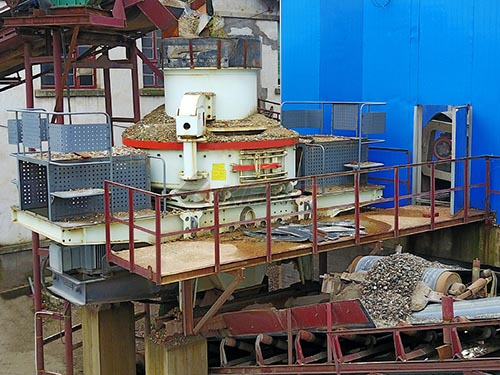
HeavyDuty Vibrating Grizzly Feeder | Technical Basis: Robust deck construction with adjustable grizzly bars | Operational Benefit: Removes fines prior to primary crushing and ensures steady, controlled feed into the jaw crusher | ROI Impact: Improves primary crusher efficiency by up to 20% and reduces liner wear from processing unnecessary fines
Centralized Greasing & Lube System | Technical Basis: Automated singlepoint lubrication circuits with failure alerts | Operational Benefit: Ensures critical bearings receive precise lubrication without manual greasing, preventing premature failures | ROI Impact: Industry testing demonstrates a >90% reduction in bearingrelated failures due to improper lubrication
Modular Conveyor Design | Technical Basis: Standardized bolttogether sections with impactresistant belting | Operational Benefit: Simplifies plant reconfiguration for future expansion or different site layouts; enables faster belt replacement | ROI Impact: Reduces future capital expenditure on complete new systems and minimizes conveyor downtime
4. COMPETITIVE ADVANTAGES
| Performance Metric | Industry Standard Benchmark | Our Stone Quarry Crushing Plant Solution | Documented Advantage |
| : | : | : | : |
| Overall Availability (Scheduled Uptime) | 90 92% | 95%+| +35 percentage points |
| Cost per Ton (Wear Parts + Energy)| Baseline (100%)| 85 90%| 1015% reduction |
| Average Liner Life (Primary Jaw) [Hours]| ~1,200 hrs| 1,450+ hrs| >20% improvement |
| Time for CSS Adjustment (Cone Crusher)| 45 60 minutes| <10 minutes| >85% faster |
| Throughput Consistency (± from Target TPH)| ±10%| ±5%| Variance reduced by half |
5. TECHNICAL SPECIFICATIONS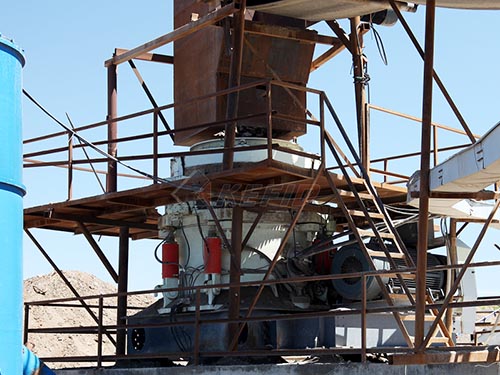
Designed Capacity Range: Configurable from 250 to 1,800 tonnes per hour (TPH), depending on feed material hardness (BWI) and final product specifications.
Power Requirements: Total installed plant power typically ranges from 400 kW to 1.5 MW. Primary crusher motors range from 150450 kW. Plants are configurable for different regional voltages (e.g., 400V/50Hz or 480V/60Hz).
Material Specifications: Fabricated from hightensile steel plate (min. S355J2). Crusher wear liners are manufactured from manganese steel (1418%). Critical shafts are forged alloy steel.
Physical Dimensions (Example SemiMobile Primary Module): Approx. Length: 18m x Width: 4m x Height: 5m. Weight approx. ~85 tonnes.
Environmental Operating Range: Designed for ambient temperatures from 20°C to +45°C. Dust suppression systems are rated for operation up to IP65 where specified.
6. APPLICATION SCENARIOS
Granite Quarry Expansion Project
Challenge A granite quarry needed to increase production by over 40% without expanding its operational footprint or significantly increasing crew size.
Solution Implementation of a new threestage modular crushing plant featuring an automated control system linking the primary jaw crusher with secondary/tertiary cone crushers.
Results Plant achieved a sustained throughput of over $650 TPH$. The automated controls stabilized product gradation on the 57 stone specification ($\pm$3mm tolerance), reducing waste by $12\%$. The compact layout fit the existing site constraints.
Limestone Aggregate Producer
Challenge High maintenance costs on older impactors were leading to unpredictable downtime exceeding $30 hours monthly$, jeopardizing key supply contracts.
Solution Replacement of two aging tertiary units with two modern cone crushers equipped with hydraulic adjustment systems within an existing circuit retrofit.
Results Crusher availability increased immediately by $22\%$. The hydraulic system enabled quick daily adjustments based on feed variation ($<5 mins$), maintaining superior cubicity ($95\%$ cubicle product). Annual maintenance costs decreased by an estimated $\$85{,}000$.
Portable Contract Crushing Operation
Challenge A contractor needed rapid setup/teardown (<48 hours) between diverse job sites while maintaining high output across varying rock types like basalt and recycled concrete.
Solution Deployment of trackmounted jawandscreen combination plants designed as selfcontained units with integrated conveyors.
Results Setup time averaged $810 working hours$. The plants demonstrated fuel efficiency improvements of approximately $18\%$ over previous models due to directdrive dieselelectric systems while meeting all required production targets across varied materials.
COMMERCIAL CONSIDERATIONS
Equipment pricing tiers vary based on capacity complexity:
Tier I ($Primary Crushing Station$): Includes heavyduty feeder jaw crusher discharge conveyor dust suppression basic controls
Tier II ($TwoStage Plant$): Adds secondary screen secondary cone/impact crusher return conveyor advanced PLC control cabin
Tier III ($Complete Turnkey Plant$): Full threestage design multiple screens tertiary shaping unit complete electrical house sophisticated process automation software
Optional Features:
Advanced dust collection/filtration systems beyond basic suppression
Onboard weighing instrumentation telematics packages remote monitoring capability
Specialized wear liners tailored specific highly abrasive materials
Winterization packages coldclimate lube heaters enclosed walkways
Service Packages:
Standard warranty coverage extends $12 months$ parts labor factory defects Extended service plans available covering scheduled preventive maintenance inspections critical component exchange programs Financing Options Commercial leasing structures operating leases capital leases project financing available through accredited partners subject credit approval These options aim preserve capital expenditure budgets while enabling immediate operational upgrades
FAQ
Q What level infrastructure preparation required installing this type crushing plant?
A A prepared stable compacted base adequate drainage essential Electrical supply must meet specified voltage phase requirements detailed foundation drawings anchor bolt templates provided advance planning civil works minimize installation timeline typically $ weeks$
Q How does automated control system integrate existing quarry management software?
A Modern PLCbased control systems feature standard communication protocols OPC UA Modbus TCP allowing integration central SCADA platforms production data reporting systems This enables consolidated reporting tonnage energy consumption runtime across entire operation
Q What typical lead time delivery commissioning full turnkey solution?
A Lead times vary scope complexity For standard configured plants delivery typically occurs within $ months order confirmation Factory acceptance testing available followed supervised commissioning site our engineers ensure proper startup operator training conducted handover
Q Are spare part inventories maintained regionally minimize shipping delays?
A Yes critical common wear parts rotating assemblies maintained regional service centers expedited shipping programs ensure priority dispatch minimize potential downtime events due component failure Comprehensive parts lists recommended stocking levels provided each customer based projected usage rates
Q Can older existing equipment integrated new plant design?
A Often possible feasibility study required assess compatibility structural integrity electrical controls Our engineering team can evaluate retrofit options incorporate specific conveyors screens auxiliary equipment new core crushing circuit maximize previous investment