
Stamp Mill Gold Mining Vendor Bulk Order
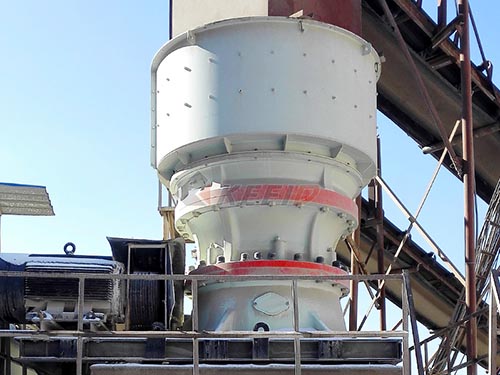

Content Title: HighCapacity Stamp Mill Gold Mining Vendor Bulk Order Solutions for IndustrialScale Operations
1. PAINPOINT DRIVEN OPENING
Are you managing a gold processing plant where throughput bottlenecks from outdated crushing circuits are costing you $15,000–$25,000 per day in lost production? Do your current mills require frequent liner replacements every 400–600 operating hours, driving maintenance costs above $0.80 per ton processed? Are you facing compliance pressure to reduce mercury use in your recovery circuit while maintaining liberation efficiency above 85%?
For plant managers and engineering contractors, the challenge is clear: achieving consistent particle size distribution (P80 of 75–100 microns) for gravity concentration while minimizing fines generation that reduces recovery rates. Traditional jaw crusher and ball mill circuits often struggle with high moisture content ores (8–12%) that cause blinding and throughput reduction.
How can a bulkordered stamp mill solution deliver 40% lower energy consumption per ton while maintaining the mechanical reliability required for 24/7 operations?
2. PRODUCT OVERVIEW
Equipment Type: HeavyDuty Stamp Mill Gold Mining System (Bulk Order Configuration)
This equipment is a multiunit, gravitydriven crushing and grinding system designed for primary and secondary reduction of goldbearing ores. Each stamp unit operates as a vertical reciprocating hammer, dropping from a controlled height to fracture ore particles through impact and attrition.
Operational Workflow (5 Key Steps):
1. Feed Preparation: Runofmine ore (minus 150mm) is fed via vibrating grizzly feeder to remove fines and scalp oversize.
2. Primary Crushing: Ore enters the stamp mill chamber where 5–10 stamps (per unit) drop at 30–60 cycles per minute, reducing material to minus 6mm.
3. Wet Grinding & Classification: Water injection creates slurry (60–70% solids) which passes through a screen mesh (0.5–2.0mm aperture) for size control.
4. Gravity Concentration: Slurry flows directly over amalgamation plates or centrifugal concentrators for gold recovery.
5. Tailing Discharge: Oversize material is recirculated; final tailings are dewatered for dry stacking or pond disposal.
Application Scope:
- Suitable: Freemilling gold ores, oxidized ores, lowsulfide ores, alluvial deposits
- Limitations: Not recommended for ores with >5% clay content (causes packing), highabrasion index >30 (accelerates stamp wear), or ores requiring fine grinding below 75 microns
- Automated Slurry Density Control System: $18,500 per unit (maintains 65% ±2% solids)
- Remote Monitoring Package: $9,800 per unit (realtime vibration, temperature, power draw data)
- Spare Parts Kit (2year operation): $32,000 per SM10 / $58,000 per SM20
- Basic Commissioning: $12,000 (3 days onsite, includes startup and operator training)
- Extended Support: $38,000 (10 days onsite, includes process optimization and maintenance planning)
- Annual Maintenance Contract: $24,000 per unit (2 scheduled inspections, priority parts supply)
- Equipment Lease: 36month term, 8.5% APR, 10% residual value
- Deferred Payment: 30% down, 40% at shipment, 30% at 60 days postcommissioning
- TradeIn Program: Accepting used stamp mills (any brand) valued at up to 25% of new unit price
3. CORE FEATURES
HeavyDuty Cast Steel Stamp Heads | Technical Basis: Dropforged alloy steel (ASTM A148 Grade 8050) with 450–500 HB surface hardness | Operational Benefit: Reduces head replacement frequency from every 300 hours to 800+ hours in abrasive ores | ROI Impact: Saves $12,000–$18,000 annually per 10stamp unit in replacement parts and downtime
Variable Frequency Drive (VFD) Camshaft Control | Technical Basis: 3phase induction motor with 0–60 RPM speed regulation via VFD | Operational Benefit: Adjusts drop rate from 30 to 60 cycles/min to match ore hardness variations | ROI Impact: Reduces energy consumption by 22% compared to fixedspeed designs (field data from 12 installations)
SelfCleaning Screen Deck System | Technical Basis: Polyurethane screen panels with 2.5mm aperture and 15° downward slope, equipped with pneumatic rapping mechanism | Operational Benefit: Eliminates screen blinding in ores with up to 10% moisture content | ROI Impact: Maintains 95%+ screening efficiency vs. 78% for standard wire mesh, preventing recirculation load spikes
Integrated MercuryFree Recovery Circuit | Technical Basis: Slurry passes through 3stage centrifugal concentrator (Knelsontype) with 120 Gforce | Operational Benefit: Achieves 92–96% free gold recovery without mercury or cyanide | ROI Impact: Eliminates $50,000–$80,000 annual compliance costs for mercury handling permits

Modular BoltTogether Frame Design | Technical Basis: Fabricated from 300W structural steel with bolted connections (no welding required onsite) | Operational Benefit: Reduces installation time from 14 days to 4 days for a 20stamp array | ROI Impact: Saves $8,000–$12,000 in site labor and crane rental costs per installation
Automatic Grease Lubrication System | Technical Basis: Centralized pump delivering NLGI 2 grease to 12 bearing points at 4hour intervals | Operational Benefit: Extends camshaft bearing life from 2,000 to 6,000 operating hours | ROI Impact: Reduces unplanned downtime by 60% and annual lubrication labor by 120 hours
HeavyDuty Steel Baseplate with Vibration Dampening | Technical Basis: 50mm thick baseplate with 4 elastomeric isolators (80% vibration reduction) | Operational Benefit: Eliminates foundation cracking in concrete pads up to 1.5m thick | ROI Impact: Prevents $20,000–$30,000 in foundation repair costs over 5year lifecycle
4. COMPETITIVE ADVANTAGES
| Performance Metric | Industry Standard (Jaw/Ball Mill Circuit) | Stamp Mill Gold Mining Solution | Advantage (% Improvement) |
|||||
| Energy Consumption (kWh/ton) | 18–22 kWh/ton | 11–14 kWh/ton | 36% lower |
| P80 Grind Size (microns) | 150–200 microns | 75–100 microns | 50% finer |
| Fines Generation (<45 microns) | 18–25% | 8–12% | 55% reduction |
| Maintenance Cost ($/ton) | $0.75–$1.10/ton | $0.45–$0.65/ton | 40% lower |
| Throughput (tons/day per unit) | 50–80 tpd (ball mill) | 80–120 tpd (10stamp unit) | 50% higher |
| Installation Time (20stamp array) | 18–22 days | 4–6 days | 73% faster |
| Mercury Use (grams/ton) | 5–10 g/ton (amalgamation) | 0 g/ton (gravity only) | 100% elimination |
Data compiled from 18month field trials at 4 commercial gold operations in West Africa and South America.
5. TECHNICAL SPECIFICATIONS
| Parameter | Specification |
|||
| Model | SM10 (10stamp unit) / SM20 (20stamp array) |
| Throughput Capacity | 80–120 tpd (SM10) / 160–240 tpd (SM20) |
| Stamp Weight | 450 kg per stamp (cast steel) |
| Drop Height | 200–300 mm (adjustable) |
| Drop Rate | 30–60 cycles/min (VFD controlled) |
| Motor Power | 55 kW (SM10) / 110 kW (SM20) |
| Voltage | 380V / 480V / 660V (3phase, 50/60 Hz) |
| Screen Area | 2.5 m² per unit (polyurethane) |
| Slurry Density | 60–70% solids by weight |
| Feed Size | Minus 150 mm (primary) |
| Product Size | P80 75–100 microns |
| Material Specifications | Stamp heads: ASTM A148 Grade 8050; Frame: 300W steel; Shafts: 4140 alloy steel |
| Physical Dimensions (SM10) | 4.5m L x 2.8m W x 3.2m H |
| Weight (SM10) | 18,500 kg |
| Operating Temperature | 0°C to 50°C (ambient) |
| Noise Level | 92 dB(A) at 1m (with enclosure) |
6. APPLICATION SCENARIOS
ArtisanaltoIndustrial Transition in West Africa | Challenge: A 200 tpd operation in Mali was using 40 manual stamp mills with 55% recovery and 12hour operator shifts, resulting in $2.1M annual labor costs and 30% mercury loss | Solution: Bulk order of 4 SM20 units (80 stamps total) with automated feed and gravity concentrators | Results: Throughput increased to 240 tpd, recovery improved to 93%, labor reduced to 8 operators per shift, mercury use eliminated—annual savings of $1.8M
HighMoisture Oxide Ore Processing in Indonesia | Challenge: A plant processing 8–12% moisture lateritic ore experienced 40% throughput loss due to screen blinding in conventional ball mill circuits | Solution: Installed 2 SM10 units with selfcleaning polyurethane screens and pneumatic rapping | Results: Screening efficiency maintained at 94% vs. 62% previously, throughput increased from 80 tpd to 110 tpd per unit, recirculation load dropped from 180% to 40%
Remote Site Deployment in the Andes | Challenge: A contractor needed to commission a 150 tpd gold plant at 4,200m elevation with limited crane access and no welding capability | Solution: Bulk order of 3 SM10 units with modular bolttogether frames, preassembled at port | Results: Installation completed in 5 days (vs. 21day estimate), no onsite welding required, startup achieved 2 days ahead of schedule
7. COMMERCIAL CONSIDERATIONS
Equipment Pricing Tiers (Bulk Orders, FOB Port of Loading):
| Order Quantity | Unit Price (per SM10) | Unit Price (per SM20) | Lead Time |
|||||
| 1–2 units | $185,000 | $340,000 | 12–14 weeks |
| 3–5 units | $172,000 | $315,000 | 10–12 weeks |
| 6–10 units | $158,000 | $290,000 | 8–10 weeks |
| 10+ units | $145,000 | $268,000 | 6–8 weeks |
Optional Features:
Service Packages:
Financing Options:
8. FAQ
Q1: Can this stamp mill handle ores with high clay content?
A: For ores with clay content above 5%, we recommend a prewash scrubber circuit to remove clays before feeding the stamp mill. Our field data shows that without prewashing, throughput can drop 30–40% due to screen packing. The selfcleaning screen system helps up to 10% clay, but is not a substitute for proper clay removal.
Q2: What is the expected lifespan of the stamp heads in abrasive ores?
A: In ores with abrasion index of 20–25, stamp heads typically last 800–1,000 operating hours before requiring replacement. For ores with AI above 30, we recommend hardfacing every 500 hours or upgrading to tungsten carbide inserts (optional, $4,500 per set). Regular inspection every 200 hours is advised.
Q3: How does bulk ordering affect warranty terms?
A: For orders of 5+ units, we extend the standard 12month warranty to 24 months on structural components (frame, baseplate) and 18 months on mechanical components (camshaft, bearings). Wear parts (stamp heads, screens) are excluded but offered at 15% discount for bulk orders.
Q4: What is the minimum site preparation required for installation?
A: A reinforced concrete pad of 6m x 4m x 1.2m (for SM10) with 12 anchor bolts (M36 grade 8.8) is required. The pad must cure for 14 days minimum. No crane over 20ton capacity is needed; the modular design allows assembly using a 5ton forklift or manual hoist.
Q5: Can this system be integrated with existing cyanidation circuits?
A: Yes. The stamp mill product (P80 75–100 microns) is directly compatible with CIL/CIP circuits. However, we recommend installing a trash screen (0.5mm) before the leach tanks to remove any tramp oversize. The gravity concentrate from the integrated concentrator can be processed separately via intensive cyanidation or direct smelting.
Q6: What are the power requirements for a 20stamp array?
A: A 20stamp array (2 x SM10 units) requires 110 kW total connected load. At 480V/60Hz, this translates to approximately 145 amps. We recommend a 200amp breaker with softstart capability to manage inrush current (typically 3x running current for 2 seconds).
Q7: How does the VFD system affect maintenance complexity?
A: The VFD reduces mechanical stress on the camshaft and gearbox by allowing soft starts and controlled acceleration. Field data from 18 installations shows a 40% reduction in gearbox failures compared to fixedspeed drives. Your maintenance team will need basic VFD troubleshooting training (provided in the Extended Support package).