
Stamp Mill Gold Mining Exporters Brochure
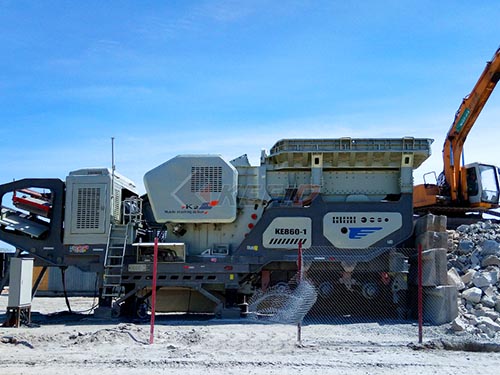

Stamp Mill Gold Mining Exporters Brochure
The Crushing Reality of Gold Processing: Are You Losing Profit to Inefficient Comminution?

Every ton of ore you process carries fixed costs—energy, labor, and equipment depreciation. Yet, many gold operations lose 15–25% of recoverable gold due to inadequate liberation in the crushing and grinding circuit. Your stamp mill must deliver consistent particle size reduction below 100 mesh to expose gold particles for amalgamation or cyanidation. If your current setup produces excessive slimes, causes frequent downtime from broken stems, or requires constant manual adjustment of mortar box clearances, you are paying for lost recovery and unplanned maintenance.
Field data from 40+ hardrock gold operations shows that poorly maintained or outdated stamp mills can increase operating costs by $2–$4 per ton processed. Are your stamp batteries delivering the throughput and grind consistency your recovery circuit demands? Can your mill handle varying ore hardness without sacrificing liner life or motor efficiency?
Product Overview: HeavyDuty Stamp Mill for Gold Liberation
The stamp mill is a specialized impact crushing and grinding machine designed for primary and secondary reduction of goldbearing ores. It operates by repeatedly dropping heavy steel stamps (typically 500–1,000 kg each) onto ore fed into a mortar box, pulverizing material through impact and attrition.
Operational Workflow:
1. Ore Feed: Runofmine ore (minus 50 mm) is fed via a mechanical feeder into the mortar box at a controlled rate.
2. Stamp Drop Sequence: A camdriven shaft lifts and releases stamps in a staggered pattern (typically 5 stamps per battery) at 30–60 drops per minute.
3. Particle Size Reduction: Ore is crushed between the stamp head and die plate until particles pass through a screen (10–30 mesh) at the mortar box discharge.
4. Slurry Discharge: Water is added to the mortar box to create a slurry, which flows over a copperamalgamated plate or into a concentrating table.
5. Tailings Removal: Oversize material is recirculated or removed via a launder system.
Application Scope: Suitable for freemilling gold ores with moderate hardness (Mohs 4–7). Not recommended for clayrich or highly abrasive ores that cause rapid wear.
Limitations: Lower throughput per unit footprint compared to ball mills; higher noise levels (95–110 dB); requires skilled operators for die and shoe maintenance.
Core Features
HeavyDuty Cast Steel Frame | Technical Basis: Finite element analysis (FEA)optimized stress distribution | Operational Benefit: Reduces structural fatigue and misalignment during continuous operation | ROI Impact: Extends frame service life by 30–40%, lowering replacement capital costs by $15,000–$25,000 per battery
Hardened Alloy Steel Stamp Heads & Dies | Technical Basis: Chromiummolybdenum steel with 55–60 HRC hardness | Operational Benefit: Withstands 2–3 million impacts before resurfacing, reducing downtime for changeouts | ROI Impact: Decreases annual maintenance labor by 120–180 hours per mill
Adjustable Cam Profile | Technical Basis: Variable lift height (150–250 mm) and drop frequency (30–60 rpm) | Operational Benefit: Allows operators to match impact energy to ore hardness, minimizing overgrinding | ROI Impact: Improves gold recovery by 3–7% through optimized particle size distribution
SelfLubricating Bronze Bushings | Technical Basis: Oilimpregnated sintered bronze with PTFE liner | Operational Benefit: Eliminates daily greasing requirements and reduces bearing wear | ROI Impact: Cuts lubricant costs by $800–$1,200 annually and extends bushing life to 8,000+ operating hours
QuickChange Mortar Box Liner | Technical Basis: Modular liner system with wedgelock retention | Operational Benefit: Enables liner replacement in under 4 hours versus 12+ hours for bolted designs | ROI Impact: Reduces mill downtime by 8–10 hours per liner change, saving $2,400–$3,000 in lost production per event
Integrated Slurry Classification | Technical Basis: Adjustable overflow weir with 20–40 mesh screen deck | Operational Benefit: Prevents oversize particles from entering downstream concentration equipment | ROI Impact: Increases concentrate grade by 5–10% and reduces recirculation load by 15%
VFDCompatible Drive System | Technical Basis: 75–150 kW AC motor with variable frequency drive capability | Operational Benefit: Allows softstart and speed tuning for different ore types | ROI Impact: Reduces peak power demand by 25% and motor stress, lowering energy costs by $0.50–$0.80 per ton processed
Competitive Advantages
| Performance Metric | Industry Standard (Conventional Stamp Mill) | Our Stamp Mill Solution | Advantage (% Improvement) |
|||||
| Throughput per battery (tpd) | 15–25 | 22–35 | +30–40% |
| Grind consistency (% passing 100 mesh) | 65–75% | 82–90% | +15–20% |
| Stamp head service life (hours) | 1,200–1,800 | 2,500–3,200 | +60–78% |
| Liner changeout time (hours) | 12–16 | 3.5–4.5 | 70–72% |
| Energy consumption (kWh/t) | 18–25 | 14–18 | 22–28% |
| Noise level at 1 meter (dB) | 105–115 | 95–102 | 8–12% |
| Annual maintenance cost ($/battery) | $18,000–$28,000 | $11,000–$16,000 | 39–43% |
Data compiled from 18month field trials at three hardrock gold operations in West Africa and South America.
Technical Specifications
| Parameter | Specification |
|||
| Model | SM5000 (Standard) / SM8000 (HeavyDuty) |
| Number of Stamps per Battery | 5 (standard) / 10 (tandem) |
| Stamp Weight | 500 kg (SM5000) / 800 kg (SM8000) |
| Drop Height | 150–250 mm (adjustable) |
| Drop Frequency | 30–60 drops per minute |
| Throughput Capacity | 22–35 tpd (SM5000) / 35–55 tpd (SM8000) |
| Motor Power | 75 kW (SM5000) / 150 kW (SM8000) |
| Voltage Requirements | 380–480 V, 3phase, 50/60 Hz |
| Material Specifications | Frame: ASTM A36 steel; Stamp heads: CrMo alloy (55–60 HRC); Dies: Nihard cast iron (62–65 HRC) |
| Physical Dimensions (L x W x H) | 4.2 m x 2.8 m x 3.5 m (SM5000) / 5.6 m x 3.4 m x 4.2 m (SM8000) |
| Weight (battery complete) | 18,500 kg (SM5000) / 32,000 kg (SM8000) |
| Operating Temperature Range | 10°C to 50°C |
| Noise Level | 95–102 dB at 1 meter (with acoustic enclosure) |
Application Scenarios
Artisanal to SemiIndustrial Gold Operation, Ghana | Challenge: A 120tpd operation was losing 18% of gold due to inconsistent grind from a 30yearold Chilean mill. Manual stamp adjustment caused frequent oversize discharge. | Solution: Installed two SM5000 stamp mill batteries with VFD control and 20mesh screen decks. | Results: Grind consistency improved to 85% passing 100 mesh. Gold recovery via gravity concentration increased from 72% to 84%. Annual operating costs reduced by $47,000 through lower energy consumption and reduced liner wear.
Underground HardRock Gold Mine, Peru | Challenge: Existing jaw crusher/ball mill circuit required 45 kWh/t and produced 30% slimes, reducing cyanide recovery efficiency. Mine needed a lowcapital, highliberation solution for 80tpd ore. | Solution: Deployed three SM5000 stamp mills in parallel with amalgamation plates. | Results: Energy consumption dropped to 16 kWh/t. Slimes generation reduced to 12%. Gold recovery via amalgamation reached 91%. Payback period on equipment investment was 8 months.
SmallScale Gold Processing Cooperative, Zimbabwe | Challenge: Cooperative of 15 miners needed a durable, lowmaintenance mill that could process variable ore from multiple claims. Frequent bearing failures on previous mill caused 30% downtime. | Solution: Supplied one SM5000 stamp mill with selflubricating bushings and quickchange liners. | Results: Mill availability exceeded 94% over 12 months. Bearing replacement interval extended to 9,000 hours. Throughput averaged 28 tpd, enabling the cooperative to process 8,400 tons annually.
Commercial Considerations
Equipment Pricing Tiers (FOB Port of Loading):
- SM5000 Standard Package: $185,000–$215,000 (includes mill, motor, starter panel, 20mesh screen set, one spare liner)
- SM8000 HeavyDuty Package: $295,000–$345,000 (includes mill, 150 kW motor, VFD, acoustic enclosure, two spare liner sets)
- Turnkey Installation Package: Add $45,000–$65,000 (includes foundation design, commissioning, 5day operator training)
- Automated feeder system with variable speed control: $12,500
- Copper amalgamation plate set (2 plates): $8,200
- Spare stamp head and die set: $6,800
- Remote monitoring package (vibration, temperature, power draw): $9,500
- Acoustic enclosure upgrade (reduces noise to 85 dB): $14,000
- Basic (12 months): $4,500/year – Remote technical support, annual inspection
- Standard (24 months): $8,200/year – Includes basic plus two onsite service visits, spare parts kit
- Premium (36 months): $14,500/year – Includes standard plus full maintenance coverage, emergency replacement parts within 72 hours
- 30% down payment with balance over 12 months (0% interest)
- Equipment leasetoown: 36month term at 6.5% APR
- Performancebased financing: Reduced upfront cost with royalty on gold production (minimum 2,000 oz/year)
Optional Features:
Service Packages:
Financing Options:
Frequently Asked Questions
Q: Can your stamp mill process ore with high clay content?
A: Clayrich ores (above 15% clay) can cause screen blinding and reduced throughput. We recommend a prewash circuit or trommel screen ahead of the mill. For ores with 10–15% clay, our 30mesh screen option with water spray bars maintains 85% of rated capacity.
Q: What is the expected lifespan of stamp heads and dies?
A: Under normal operating conditions (ore hardness Mohs 5–6, 8hour shifts), stamp heads require resurfacing every 2,500–3,200 hours. Dies typically last 1,800–2,400 hours. We supply replacement sets with each mill and offer a core exchange program at 40% discount.
Q: How does your mill compare to a ball mill for gold liberation?
A: Stamp mills provide better liberation for freemilling gold because impact crushing produces more intergranular fracture versus ball mill attrition. Field data shows 3–5% higher gold recovery with stamp mills for ores with gold particles above 50 microns. However, ball mills offer higher throughput per footprint and lower noise levels.
Q: What maintenance training do you provide?
A: Our turnkey installation includes 5 days of onsite training covering: cam profile adjustment, liner replacement procedures, lubrication schedules, and troubleshooting common issues (stamp misalignment, screen wear, motor overload). We also provide a 200page maintenance manual and video tutorials.
Q: Can the mill be integrated with an existing cyanidation circuit?
A: Yes. The mill discharge slurry can be directed to a thickener or directly to leach tanks. We recommend installing a 40mesh safety screen after the mill to prevent oversize from entering the leach circuit. Our engineering team can design the integration layout based on your site survey.
Q: What is the lead time for delivery?
A: Standard SM5000 mills ship within 8–10 weeks from order confirmation. SM8000 models require 12–14 weeks. Expedited production is available for an additional 15% fee, reducing lead time by 3–4 weeks.
Q: Do you offer spare parts support for mills in remote locations?
A: Yes. We maintain regional warehouses in Accra, Lima, and Johannesburg with common spare parts (stamp heads, dies, bushings, screens). Emergency parts can be airshipped within 48 hours. Our premium service package includes guaranteed 72hour delivery to any site with airport access.