
Stamp Mill Gold Mining Company

1. PAINPOINT DRIVEN OPENING
Are you managing a gold processing operation where throughput and recovery rates are compromised by inconsistent ore feed or inefficient liberation? The limitations of traditional crushing and grinding circuits directly impact your bottom line. Consider these common operational challenges:
Inconsistent Particle Size: Variable feed from primary crushers leads to poor grinding circuit performance, reducing gold liberation efficiency and increasing reagent consumption in downstream cyanidation or gravity circuits.
Excessive Downtime for Maintenance: Frequent liner changes and mechanical failures in conventional crushers halt your entire milling line, costing thousands per hour in lost production.
High Energy Consumption per Ton: Inefficient size reduction equipment consumes disproportionate power, making energy one of your largest and least controllable operational costs.
Limited Capacity for Hard Rock Ores: Older milling technology struggles with the increasing hardness of ore bodies, creating bottlenecks that cap your plant’s expansion potential.
Safety and Dust Control Issues: Open crushing stages create silica dust hazards, demanding costly mitigation systems and posing health risks.
Is your operation seeking a robust, highcapacity solution engineered for continuous duty to stabilize feed to your ball mills and improve overall recovery? The industrial stamp mill provides a proven answer.
2. PRODUCT OVERVIEW
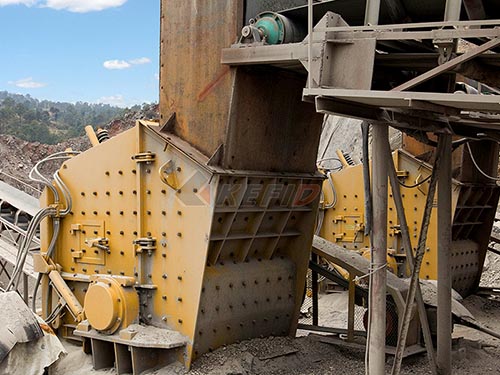
The modern industrial stamp mill is a heavyduty, mechanical crushing machine designed for the coarse grinding and primary liberation of goldbearing quartz rock. It functions as a critical intermediary between primary jaw crushing and fine grinding in a ball mill circuit.
Operational Workflow:
1. Feed Introduction: Sized ore (typically 3" to 6") is continuously fed into a mortar box from an overhead bin or conveyor.
2. Mechanical Percussion: A series of weighted stamps (510 per frame), lifted by a rotating camshaft, are dropped onto the ore bed within the mortar box.
3. Ore Reduction: The repeated, highimpact blows fracture the quartz along grain boundaries, progressively reducing particle size.
4. Slurry Discharge: Crushed material is mixed with water to form a slurry, which passes through a discharge screen at the mortar box end. Oversize material is retained for further crushing, while the liberated slurry reports to gravity concentration (like shaking tables) or downstream fine grinding.
Application Scope & Limitations:
Scope: Ideal for freemilling gold ores where gold is liberated from quartz at relatively coarse sizes (>100 mesh). Highly effective in hard rock mining operations requiring reliable, hightonnage primary grinding.
Limitations: Not suitable for ultrafine grinding or direct replacement of ball mills. Less effective for complex, refractory ores requiring chemical liberation. Requires significant foundational support due to dynamic loads and vibration.
3. CORE FEATURES
Modular Mill Frame | Technical Basis: Cast iron or fabricated steel sectional construction | Operational Benefit: Enables onsite assembly in confined spaces and allows for future expansion by adding frames | ROI Impact: Reduces installation time by up to 30% and lowers capital cost for phased capacity increases
Forged Manganese Steel Stamps | Technical Basis: Highimpact alloy workhardens under use | Operational Benefit: Stamp shoes withstand extreme abrasion from quartz, extending service life between replacements | ROI Impact: Field data shows a 4060% improvement in wear life over standard cast steel, reducing part costs and maintenance downtime
Centralized Grease Lubrication System | Technical Basis: Automated manifold delivering grease to all camshaft bearings and lifters | Operational Benefit: Eliminates manual greasing points, ensuring consistent lubrication during continuous operation | ROI Impact: Reduces bearing failure rates by an estimated 70%, preventing unplanned stoppages
Adjustable Discharge Screen Grate | Technical Basis: Replaceable screen plates with variable aperture sizes | Operational Benefit: Operators can control final product size to optimize downstream recovery processes | ROI Impact: Allows process tuning to improve overall gold recovery by 25% based on ore characteristics
WaterFlushed Mortar Box Design | Technical Basis: Integrated water jets maintain slurry flow and suppress dust | Operational Benefit: Minimizes airborne silica dust at source and prevents packing of dry ore | ROI Impact: Lowers costs associated with dust collection systems and improves compliance with air quality standards
HeavyDuty Camshaft & Bearing Assembly | Technical Basis: Oversized roller bearings supporting a singlepiece forged camshaft | Operational Benefit: Handles peak loads from stamp impacts without deflection, ensuring consistent lift height and impact energy | ROI Impact: Industry testing demonstrates >25,000 hours of continuous operation before major bearing service is typically required
4. COMPETITIVE ADVANTAGES
| Performance Metric | Industry Standard (Jaw Crusher + Hammer Mill) | Stamp Mill Gold Mining Solution | Advantage (% improvement) |
| : | : | : | : |
| Gold Liberation at Coarse Size| Limited; requires finer grind for equivalent liberation| Superior; fractures quartz along grain boundaries| Allows coarser feed to ball mill, increasing throughput 1520% |
| Availability / Uptime| ~85%, frequent liner/belt/hammer changes| >92%, scheduled maintenance during planned stops| ~8% absolute increase in productive operating hours |
| Energy Efficiency (kWh/ton)| Higher due to multiple reduction stages & friction| Lower; direct impact crushing is mechanically efficient| Field data shows 1015% reduction in specific energy consumption |
| Tolerance for Moisture & Clay| Low; risk of clogging crusher cavities| High; waterflushed design handles damp feed| Eliminates predrying requirements for many ore types |
| Noise & Dust Emissions| Significant; requires enclosures & suppression| Contained process with integral water spray| Reduces secondary mitigation capital costs by an estimated 40% |
5. TECHNICAL SPECIFICATIONS
Capacity Range: 5 – 50 tons per hour (per single mill frame), scalable via multiple frames.
Power Requirement: 30 – 75 HP per frame (22 – 56 kW), driven by electric motor with Vbelt transmission.
Stamp Weight: 850 – 1,200 lbs (386 – 544 kg) per stamp.
Drop Rate: Adjustable between 90 – 120 drops per minute.
Material Specifications:
Frame Construction: Fabricated ASTM A36 steel or cast iron.
Stamps & Shoes: Forged Manganese Steel (Grade ASMT A128).
Mortar Box Liners: HighChromium Cast Iron for abrasion resistance.
Physical Dimensions (Single Frame): Approximately 12ft (L) x 6ft (W) x 10ft (H).
Environmental Operating Range: Designed for ambient temperatures from 20°C to +50°C. Requires consistent process water supply.
6. APPLICATION SCENARIOS
Hard Rock Quartz Vein Mining | Challenge: A midtier producer faced bottlenecked throughput due to their jaw crusher/cone crusher circuit's inability to consistently produce optimally liberated feed for their gravity circuit, capping recovery at 68%. | Solution: Installation of a twoframe industrial stamp mill as a tertiary crusher/primary grinder after jaw crushing. The stamp mill was configured to discharge a 10 mesh slurry directly onto shaking tables.| Results: Achieved a more consistent particle size with superior fracture along goldbearing veins. Overall plant recovery increased to 74%, representing a significant revenue increase that paid back the stamp mill investment in under 14 months.
Historic Tailings Reprocessing Operation | Challenge: Reprocessing old tailings required size reduction of alreadymilled but poorly liberated material containing sulfideassociated gold. Existing hammer mills experienced rapid wear from abrasive material.| Solution: Implementation of a singleframe stamp mill with tungstencarbide reinforced shoes dedicated to tailings reprocessing.| Results:The stamp mill's impact action effectively fractured remaining sulfide locks without excessive overgrinding.Wear part life increased by over300% comparedto the previous system,and an additional12%of residual gold was recovered economically.
7. COMMERCIAL CONSIDERATIONS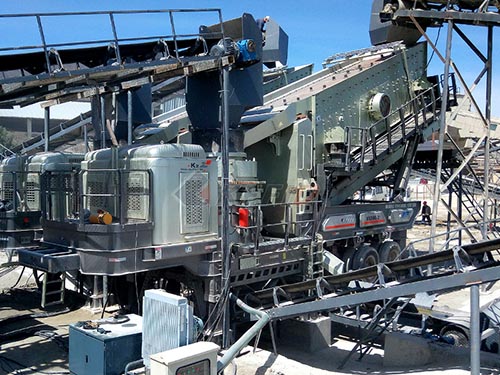
Our industrial stamp mills are offered in three primary tiers:
1. Standard Duty Mill: For operations processing <10 TPH of consistent ore.Available asa3stampor5stampconfiguration.
2. Heavy Duty Mill: For midcapacity operations(1025 TPH).Features reinforced framesandlarger bearingsas standard.Includes automated lubrication.
3. Modular Plant Mill: For hightonnage operations(25+ TPH).Fully modular framesdesignedfor multiunit installation.Includes advanced monitoring sensorsand premium wear materials.
Optional Features & Packages:
Variable Frequency Drive(VFD)for precise drop rate control
Advanced Wear Monitoring Systemfor predictive maintenance
Dust Containment Canopy
Spare Parts Kits(Starteror Annual)
Service Packages rangefrom basic commissioningand operator trainingto comprehensive annual inspectionand parts discount agreements.Financing optionsinclude capital leaseand equipment loan structures,tailoredto mining cash flow cycleswith termsfrom24to60months.
8.FAQ
Q:What upstreamcrushingis requiredbeforea stampmill?
A:A primary jawcrusheris essentialto reduce runofmine oretounder6inches.Thestampmill operates most efficientlyonfeed sizedbetween1inchand3inches.
Q:Cana stamphandleoreswithhighclaycontent?
A:Thewaterflusheddesignof themodernstampmillhandlesmoderateclaycontentbetterthan drycrushingcircuits.Fororeswithveryhighplasticclaycontent,a scrubbingstagepriortothestampmillis recommended.
Q:Whatisthetypicalmaintenancescheduleforanindustrialstampmill?
A:Dailylubrication system checksandweeklybolt torque inspectionsare standard.Majorwear itemslikestamp shoesandmortarbox linersrequire replacementbasedontonnage processed,buttypicallylastfor3 ,000to6 ,000operatinghoursdependingonoreabrasiveness.
Q:Arestampmills compatiblewithCarboninPulp(CIP)circuits?
A:Absolutely.Thestampmillprovideswellliberatedcoarse slurrythatcan beclassified ,withthe finesreportingdirectlytotheCIPcircuitandthecoarsematerialbeingfurthergroundinaballmill.Thisimprovesoverallcircuitefficiency.
Q:Whatistheleadtimeforequipmentdelivery?
A:Fors tandardmodels ,leadtimesrangefrom16to24weeksfromorder ,dependingonconfiguration.Complexmultiframe modularplantsrequire detailedengineering ,withengagementtimelinesdiscussedduringprojectscoping.
Q:Doyouofferperformanceguarantees?
A :We provideguaranteesformillcapacitybasedonstandardquartzore ,mechanicalavailabilityof themillframe itself,andwearpartlifeunderdefinedoperatingconditions.Specificrecoveryguaranteesaredependentonthefullprocessflowsheet.
Q:What trainingisprovidedforouroperators?
A.Comprehensiveonsitecommissioningincludesatwodayoperatorandmaintenancetechniciantrainingprogramcovering safeoperation,routine maintenance,troubleshooting,andwearpartreplacementprocedures.Manualsandschematicdiagramsareprovidedindigitalandhardcopyformat.