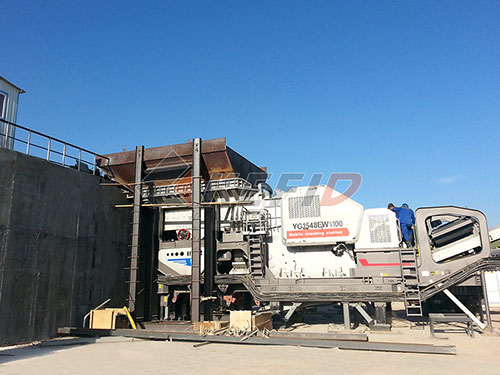
Smart Crushing
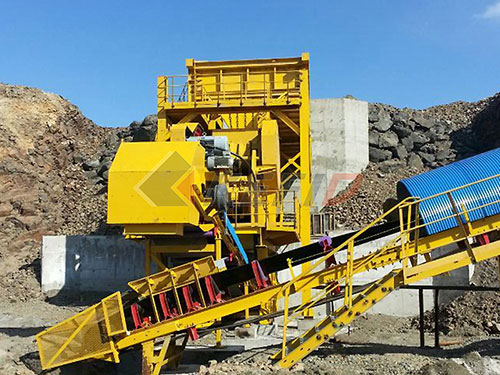

Smart Crushing: Revolutionizing Mineral Processing Through Intelligence and Automation
The relentless demand for raw materials fuels an industry constantly seeking efficiency gains: mineral processing. At its heart lies crushing – the fundamental act of reducing large rocks into smaller fragments suitable for further treatment or direct use. For decades, this process relied heavily on brute force mechanics and operator intuition. However, a transformative wave is sweeping through quarries and mines worldwide – Smart Crushing. This isn't merely incremental improvement; it represents a paradigm shift towards intelligent systems that optimize performance, enhance safety, minimize waste, and maximize profitability through data-driven decision-making.
Beyond Hammers and Anvils: The Essence of Smart Crushing
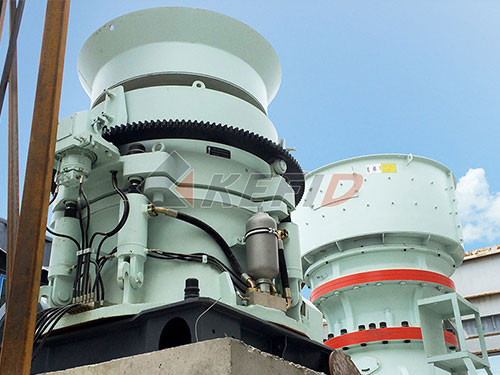
Smart Crushing transcends traditional mechanical pulverization by integrating layers of sophisticated technology:
1. Ubiquitous Sensing: Modern crushing plants are instrumented with a dense network of sensors far beyond basic amp meters:
Vibration & Acoustic Analysis: High-frequency accelerometers detect minute changes in bearing health, gear mesh patterns, structural integrity issues (like loose liners), or even abnormal material flow impacting wear parts long before catastrophic failure.
Thermal Imaging: Infrared cameras monitor critical components (bearings, motors), electrical connections for hotspots indicating friction problems or impending electrical faults.
Load Cells & Pressure Transducers: Provide real-time measurements of forces within crushers (e.g., hydraulic pressure in cone crushers), enabling precise control over power draw and product size distribution.
Laser Scanners & Vision Systems: Monitor feed size distribution at the primary crusher feed hopper using 3D laser scanners or advanced cameras equipped with particle analysis software. Downstream cameras can continuously assess product size on conveyor belts.
Position Sensors: Track mantle position in cone crushers or jaw plate position accurately for closed-side setting control.
2. Real-Time Data Acquisition & Integration: Sensor data streams are captured continuously via robust Industrial Internet of Things (IIoT) platforms using edge computing devices located near equipment for rapid local processing before transmitting relevant information securely to central systems.
3. Advanced Process Control & Automation Logic: This is where intelligence truly manifests:
Closed-Loop Crusher Control: Systems dynamically adjust crusher parameters like Closed Side Setting (CSS), eccentric speed (in cones), rotor speed/tip speed (in impactors), based on real-time feedback from downstream product size analysis sensors and upstream feed characteristics detected by scanners/cameras.