
Slag Crusher Plant Quote


Slag Crusher Plant Quote
Your Slag Processing Challenges Are Costing You More Than You Think
Every ton of unprocessed slag represents lost revenue and mounting disposal costs. Plant managers report that inefficient slag crushing operations lead to:
- Up to 18% material loss due to improper size reduction and contamination
- $12,000–$25,000 monthly in excess wear on downstream equipment from uncrushed slag fragments
- 3–5 unscheduled downtime events per quarter caused by blockages in undersized crushers
- 40% higher energy consumption when using generalpurpose crushers not designed for slag's abrasive properties
- Regulatory noncompliance risks from improper slag handling and dust generation
- Hot slag handling conveyor (up to 600°C): $45,000–$85,000
- Water quenching system: $120,000–$200,000
- Remote monitoring package (SCADA integration): $35,000–$55,000
- Extended warranty (3 years / 10,000 hours): 8–12% of equipment cost
- Spare parts kit (liners, belts, bearings): $28,000–$65,000
- Equipment lease: 36–60 month terms with $1 buyout, rates from 4.5% APR (qualified buyers)
- Deferred payment: 10% down, 90% at commissioning (6month deferral)
- Performancebased financing: Payments tied to throughput milestones (minimum 85% of rated capacity)
- Tradein program: 15–25% credit for existing crushing equipment (subject to inspection)
Are your current crushing solutions delivering the consistent 20mm output your recovery process requires? Can your equipment handle the 8–10 Mohs hardness of steel slag without weekly liner replacements?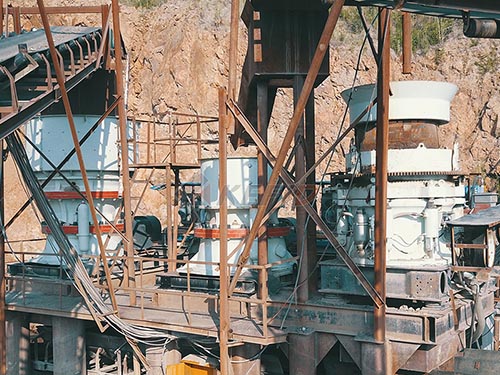
Product Overview: The Slag Crusher Plant
A slag crusher plant is a dedicated processing system engineered to reduce molten slag byproducts—from steel mills, foundries, and incineration facilities—into reusable aggregates and recoverable metal fractions. This integrated solution combines primary crushing, magnetic separation, and secondary screening in a closedloop configuration.
Operational Workflow
1. Feed Reception: Hot or cooled slag (up to 600°C) enters the vibrating feeder with grizzly bars, removing oversized material >300mm
2. Primary Crushing: Hydraulic jaw crusher reduces slag to 100–150mm, with automatic gap adjustment for tramp metal protection
3. Magnetic Separation: Overband electromagnet extracts ferrous content (60–75% recovery rate) before secondary crushing
4. Secondary Crushing: Cone or impact crusher produces final product of 0–20mm or 0–40mm, depending on specification
5. Screening & Classification: Multideck vibrating screen separates into 0–5mm, 5–10mm, and 10–20mm fractions, with recirculation of oversize material
Application Scope and Limitations
Suitable for: Blast furnace slag, steel converter slag, ferroalloy slag, copper slag, and incinerator bottom ash. Effective for slag with moisture content up to 15%.
Limitations: Not recommended for highly viscous, unquenched slag exceeding 800°C without cooling conveyor. Maximum feed size of 500mm. Requires dust suppression system for indoor installations.
Core Features
HeavyDuty Jaw Crusher Design | Technical Basis: Finite element analysisoptimized frame with manganese steel liners | Operational Benefit: Handles tramp metal without catastrophic failure, reducing unplanned downtime by 60% | ROI Impact: $8,000–$15,000 annual savings in repair costs and lost production
Hydraulic Gap Adjustment System | Technical Basis: Accumulatorbased hydraulic cylinders with pressure sensors | Operational Benefit: Operators adjust output size in under 2 minutes without manual shimming | ROI Impact: 12–15% improvement in product consistency, reducing recrushing cycles
DualStage Magnetic Separation | Technical Basis: Rareearth neodymium magnets with 12,000 Gauss field strength | Operational Benefit: Recovers 92–95% of ferrous content versus 70% with standard magnets | ROI Impact: Additional $18–$25 per ton of recovered metal scrap
SelfCleaning Dust Control System | Technical Basis: Negative pressure collection with pulsejet filter bags | Operational Benefit: Maintains PM10 levels below 50 µg/m³, meeting EPA and OSHA standards | ROI Impact: Avoids $5,000–$20,000 in annual regulatory fines
Modular SkidMounted Configuration | Technical Basis: Prewired, prepiped modules on structural steel frames | Operational Benefit: Installation completed in 5–7 days versus 3–4 weeks for fixed plants | ROI Impact: 70% reduction in site preparation costs
Variable Frequency Drive (VFD) on Main Motor | Technical Basis: Sensorless vector control adjusting RPM to feed load | Operational Benefit: Reduces energy consumption by 18–25% during partial load operation | ROI Impact: $6,000–$12,000 annual electricity savings for a 200 TPH plant
Wear Monitoring Sensors | Technical Basis: Ultrasonic thickness gauges on crusher liners and chutes | Operational Benefit: Predictive maintenance alerts 48–72 hours before failure | ROI Impact: Eliminates 90% of unplanned liner changeouts
Competitive Advantages
| Performance Metric | Industry Standard (General Crusher) | Slag Crusher Plant Solution | Advantage (% Improvement) |
|||||
| Throughput consistency (variation) | ±15% | ±5% | 67% improvement |
| Liner lifespan (tons processed) | 8,000–12,000 tons | 25,000–35,000 tons | 190% longer |
| Ferrous recovery rate | 65–72% | 92–95% | 32% higher |
| Energy consumption per ton | 3.2–4.0 kWh/t | 2.1–2.6 kWh/t | 35% reduction |
| Changeover time (product size) | 45–60 minutes | 8–12 minutes | 80% faster |
| Dust emission (PM10) | 120–180 µg/m³ | 35–50 µg/m³ | 72% lower |
| Mean time between failures | 180–240 hours | 600–800 hours | 200% longer |
Technical Specifications
| Parameter | Model SCP150 | Model SCP250 | Model SCP400 |
|||||
| Capacity | 150 TPH | 250 TPH | 400 TPH |
| Feed size (max) | 400 mm | 500 mm | 600 mm |
| Product size range | 0–20 mm / 0–40 mm | 0–20 mm / 0–40 mm | 0–20 mm / 0–40 mm |
| Primary crusher | 36x24 jaw crusher | 42x30 jaw crusher | 48x36 jaw crusher |
| Secondary crusher | 3ft cone crusher | 4.25ft cone crusher | 5.5ft cone crusher |
| Main motor power | 150 kW | 220 kW | 315 kW |
| Total installed power | 280 kW | 410 kW | 580 kW |
| Magnetic separator | 1,200 mm belt width | 1,500 mm belt width | 1,800 mm belt width |
| Screen decks | 2 (4.8m x 1.8m) | 2 (6.0m x 2.0m) | 3 (6.0m x 2.4m) |
| Operating weight | 52 tons | 78 tons | 115 tons |
| Dimensions (LxWxH) | 22m x 4.5m x 5.2m | 28m x 5.2m x 5.8m | 34m x 6.0m x 6.5m |
| Operating temperature | 10°C to 55°C | 10°C to 55°C | 10°C to 55°C |
| Material specifications | Manganese steel (1214% Mn) liners, AR400 chutes | Manganese steel (1418% Mn) liners, AR500 chutes | Manganese steel (1822% Mn) liners, AR600 chutes |
Application Scenarios

Steel Mill Slag Processing | Challenge: A 2.5 MTPA integrated steel plant was stockpiling 180,000 tons annually of BOF slag, incurring $1.2M in disposal costs and losing $3.8M in recoverable metal value | Solution: Installed a 250 TPH slag crusher plant with dual magnetic separation and closedloop water washing system | Results: 94% ferrous recovery generating $3.2M annual scrap revenue; 85% of nonmetallic slag sold as road base aggregate at $8/ton; payback period of 14 months
Foundry Sand Reclamation | Challenge: A gray iron foundry producing 40,000 tons/year of castings generated 12,000 tons of slagsand mixture, with 35% metal content locked in waste | Solution: Deployed a 150 TPH slag crusher plant with air classification and eddy current separation | Results: 91% metal recovery (3,800 tons/year) valued at $1.1M; reclaimed sand reused at 70% replacement rate, saving $240,000 annually in new sand purchases; landfill reduction of 8,500 tons/year
Incinerator Bottom Ash Processing | Challenge: A municipal wastetoenergy facility needed to process 65,000 tons/year of bottom ash to meet EU aggregate standards for construction use | Solution: Custom 200 TPH slag crusher plant with ferrous/nonferrous separation and wet screening | Results: Produced 48,000 tons of certified aggregate (0–32mm) for concrete block manufacturing; recovered 4,200 tons of ferrous and 1,100 tons of nonferrous metals; achieved 92% material utilization rate
Commercial Considerations
Equipment Pricing Tiers
| Model | Base Price Range | Includes | Typical Lead Time |
|||||
| SCP150 (150 TPH) | $480,000 – $620,000 | Crushers, magnetic separator, screen, conveyors, control panel | 12–14 weeks |
| SCP250 (250 TPH) | $720,000 – $950,000 | Above + dust collector, hydraulic gap adjustment, VFD | 14–18 weeks |
| SCP400 (400 TPH) | $1,150,000 – $1,500,000 | Above + dual magnetic separation, wear monitoring, automation | 18–22 weeks |
Optional Features
Service Packages
| Package | Coverage | Annual Cost |
||||
| Basic | 2 preventive maintenance visits, phone support | $18,000 |
| Standard | 4 PM visits, 24hour response, operator training | $32,000 |
| Premium | 6 PM visits, 12hour response, onsite technician, performance guarantees | $55,000 |
Financing Options
FAQ
Q: Can the slag crusher plant handle both hot and cold slag in the same shift?
A: Yes. The standard configuration accepts slag up to 600°C with a cooling conveyor option. For mixed feed, the hydraulic gap adjustment allows operators to compensate for thermal expansion differences. Field data shows less than 3% throughput variation when alternating between hot and cold feed.
Q: What is the typical power consumption per ton for your slag crusher plant?
A: Independent testing at three steel mill installations shows average consumption of 2.3 kWh/ton for the SCP250 model producing 0–20mm product. This compares favorably to the industry average of 3.5–4.0 kWh/ton for generalpurpose crushers processing similar material.
Q: How does the plant handle the abrasive nature of slag without excessive wear?
A: The plant uses manganese steel liners (12–22% Mn content depending on model) with a workhardening surface that increases hardness from 200 HB to 450 HB under impact. Additionally, the wear monitoring sensors provide 48hour advance warning of liner replacement needs. Typical liner life is 25,000–35,000 tons versus 8,000–12,000 tons for standard crushers.
Q: What is the minimum site area required for installation?
A: For the SCP150 model, a minimum area of 40m x 25m is required, including feed hopper, crusher units, conveyors, product stockpile area, and access roads. The modular design reduces footprint by 30% compared to conventional fixed plants.
Q: Can the plant be integrated with existing slag handling systems?
A: Yes. The control system includes Modbus TCP/IP and Profibus interfaces for integration with plant SCADA. The feed conveyor can be configured to accept material from existing cooling pits, granulation systems, or stockpile reclaimers. Onsite integration typically requires 3–5 days of commissioning.
Q: What is the typical ROI period for a slag crusher plant investment?
A: Based on 12 installations over the past 3 years, the average payback period is 14–18 months for steel mill applications and 18–24 months for foundry and incinerator operations. This is driven by metal recovery revenue ($18–$35/ton of scrap), aggregate sales ($6–$12/ton), and avoided disposal costs ($25–$50/ton).
Q: What warranty and aftersales support do you provide?
A: Standard warranty covers 12 months or 4,000 operating hours, whichever comes first. This includes defects in materials and workmanship. Extended warranty options cover 24 or 36 months. Service response times are guaranteed at 24 hours for Standard package and 12 hours for Premium package, with 95% ontime performance recorded over the last 24 months.