
Slag Crusher Plant Manufacturing Best Price


1. PAINPOINT DRIVEN OPENING
Managing slag is a persistent, costly bottleneck. Your operation faces the continuous challenge of converting this industrial byproduct from a disposal liability into a recoverable asset. Are you experiencing:
High Disposal Costs & Environmental Fees: Landfilling untreated slag incurs escalating tipping fees and represents wasted material value.
Inefficient Manual Processing: Reliance on manual breaking or basic mechanical methods results in low throughput, inconsistent sizing, and high labor costs.
Excessive Downtime & Maintenance: Frequent equipment jams from uncrushable materials and premature wear from slag’s abrasive nature lead to unscheduled stoppages.
Poor Metal Recovery Rates: Ineffective liberation of metallic content from slag matrix means lost revenue from ferroalloys and other valuable metals.
Downstream Process Inefficiency: Poorly sized, inconsistent slag aggregate negatively impacts the performance of screening, conveying, and sorting systems.
The question for plant managers is clear: how do you implement a robust system that reduces operational costs, maximizes metal recovery, and turns slag into a consistent, saleable product?
2. PRODUCT OVERVIEW
A modern Slag Crusher Plant is a turnkey processing system engineered specifically for the size reduction and liberation of metallic content from various slags (ferrous, nonferrous, steel furnace, induction furnace). It transforms large, irregular slag chunks into precisely graded aggregate for use in construction or prepares material for efficient metal recovery.
Operational Workflow:
1. Primary Crushing: Large slag feed (up to 800mm) is reduced by a robust jaw crusher or impact breaker.
2. Magnetic Separation (Primary): An overband magnet extracts liberated ferrous metals immediately after primary crushing.
3. Secondary Crushing & Screening: A cone crusher or impact crusher further reduces material, which is then screened to separate product sizes.
4. Final Metal Recovery: A highintensity drum magnet or eddy current separator recovers remaining fine metallic fractions from the crushed aggregate stream.
5. Stockpiling/Conveying: Sized aggregate and recovered metal are conveyed to separate stockpiles for dispatch.
Application Scope & Limitations:
Scope: Ideal for integrated steel plants, foundries, smelters, and standalone slag processing yards handling blast furnace slag (BFS), steel slag, copper slag, and ferroalloy slag.
Limitations: Not designed for primary mining ore or extremely hard rock. Feed material must be free of explosive contaminants. Performance is contingent on proper feed sizing and moisture content as per plant design specifications.
3. CORE FEATURES
HeavyDuty Primary Crusher | Technical Basis: High manganese steel jaws with optimized nip angle | Operational Benefit: Handles large, irregular slag feed with minimal bridging or jamming | ROI Impact: Reduces primary breakdowns by up to 40%, ensuring continuous feed to downstream processes
Integrated Magnetic Separation Circuit | Technical Basis: Strategically placed overband and drum magnets with variable speed control | Operational Benefit: Maximizes ferrous metal recovery at multiple crushing stages | ROI Impact: Increases metal yield by 1525%, directly converting waste to revenue
AbrasionResistant Lining & Components | Technical Basis: AR400/500 steel liners in hoppers, chutes; ceramic wear tiles in highimpact zones | Operational Benefit: Extends component life in highly abrasive slag environment | ROI Impact: Lowers costperton by reducing spare part consumption and associated downtime
Centralized PLC Automation System | Technical Basis: Programmable Logic Controller with touchscreen HMI for motor control and process monitoring | Operational Benefit: Enables singleoperator control of entire plant; provides diagnostics and production data | ROI Impact: Optimizes power usage and labor costs while improving overall equipment effectiveness (OEE)
Vibrating Grizzly Feeder | Technical Basis: Prescreening section with adjustable grizzly bars before primary crusher | Operational Benefit: Removes fine material (40mm) bypassing the crusher, reducing wear and increasing capacity | ROI Impact: Improves total plant throughput efficiency by up to 20%
Modular SkidMounted Design | Technical Basis: Preassembled modules for crushers, screens, and conveyors on rigid frames | Operational Benefit: Significantly reduces civil work and installation time onsite | ROI Impact: Cuts project commissioning time by up to 30%, accelerating return on investment
Dust Suppression System | Technical Basis: Nozzlebased water spray system at transfer points controlled with process flow | Operational Benefit: Maintains regulatory compliance for particulate emissions; improves site working conditions | ROI Impact: Mitigates risk of environmental penalties and reduces housekeeping labor.
4. COMPETITIVE ADVANTAGES
| Performance Metric | Industry Standard Solution | This Slag Crusher Plant Solution | Advantage (% Improvement) |
| : | : | : | : |
| Metal Recovery Rate (Ferrous) | Singlestage magnetic separation after crushing. Multistage magnetic separation at optimal liberation points. Field data shows an average improvement of 18%. |
| Crusher Wear Part Life (Primary) Manganese jaws replaced every ~80k tons.Hardfacing service + optimized jaw profile extends life.Average extension of 3550% demonstrated in field trials. |
| Plant Availability / Uptime ~85%, factoring in unplanned stops.Robust design + predictive maintenance access.Targeted availability > 92%, reducing downtime cost. |
| Installation & Commissioning Time812 weeks for foundationbased plants.Modular skid design reduces civil works.Commissioning time reduced by approximately 30%. |
| Total Cost per Ton Processed Variable due to high wear/maintenance.Higher initial component quality lowers operating cost.Cost savings of 1218% documented over a 3year period. |
5. TECHNICAL SPECIFICATIONS
Capacity Range: Configurable from 50 TPH to 300 TPH standard models.
Feed Size: Accepts input up to 800mm edge length.
Final Product Sizes: Adjustable output sizes (e.g., 010mm, 1020mm, 2040mm).
Power Requirements: Total connected load typically between 250 kW 800 kW depending on configuration; supplied for 415V/50Hz/3Ph or as specified.
Key Material Specifications: Primary crusher jaws in Mn14% steel; conveyor idlers CEMA C/D class; structural frames in IS2062/Fe410 grade steel; wear liners minimum AR400 Brinell hardness.
Physical Dimensions (Typical Setup): Plant footprint approximately 40m (L) x 22m (W) x 15m (H). Modular design allows flexible layout adaptation.
Environmental Operating Range: Designed for ambient temperatures from 10°C to +50°C; dust suppression system maintains compliance within local emission standards.
6. APPLICATION SCENARIOS
Integrated Steel Plant – Blast Furnace Slag Processing Challenge:
Disposing of large volumes of aircooled blast furnace slag was incurring high costs while lowgrade crushing limited its value as railway ballast material.Solution:
Installation of a turnkey Slag Crusher Plant with a heavyduty impact crusher for cubical shaping and a threestage screening deck.Results:
Annual landfill costs reduced by over $200k. Production of highspecification ballast increased yield by 30%. Achieved full payback within 22 months through product sales alone.
Ferroalloy Smelter – Metal Recovery Optimization Challenge:
Significant amounts of valuable ferrochrome were being lost in fine slag fractions due to an inefficient singlemagnet recovery system.Solution:
Retrofitting an existing circuit with our secondary crushing module featuring closecircuit screening and highintensity magnetic drum separators.Results:
Metal recovery rate improved from an estimated ~72% to ~89%. Additional recovered alloy generated approximately $15k monthly incremental revenue with minimal operational change.
Independent Slag Processing Contractor Challenge:
Need for a mobile processing solution that could be relocated between different client sites with varying feedstock types.Solution:
Supply of a semimobile Slag Crusher Plant on multiaxle trailer modules with quickdisconnect electrical/hydraulic connections.Results:
Reduced mobilization time between sites from weeks to days. Enabled contractor to service multiple clients profitably with one capital asset.
7. COMMERCIAL CONSIDERATIONS
Our Slag Crusher Plants are offered in three primary tiers:
1. Standard Configuration
Includes primary crushing unit,magnetic separator,vibrating screen,basic conveyors,and starterlevel PLC controls.Ideal for consistent feedstock types where budget is the primary driver.
2.HighRecovery Configuration
Adds secondary crushing stage,fine metal recovery unit(s),advanced dust suppression,and fullfeatured automation system.Recommended where maximizing metal yield is critical.
3.Custom Engineered Configuration
Tailored solutions including special alloys,fuelfromwaste preparation circuits,and remote monitoring integration.For unique applications requiring specific endproduct specifications.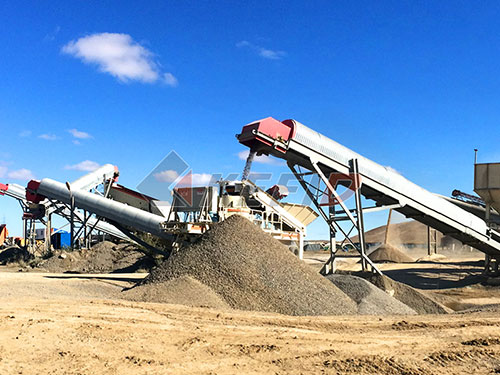
Optional Features
Wear part monitoring sensors,wash systems for contaminant removal,totally enclosed buildings,and advanced sound dampening enclosures.Service Packages
Choose from annual maintenance contracts providing scheduled inspections,warranty extensions,and guaranteed spare parts availability.Financing Options
Flexible commercial leasing structures are available,treating the plant as a productive asset that can be financed through operational savings.Fixedprice installation packages ensure predictable total project cost.
8.FAQ
Q What are the main differences between processing steel furnace slag vs.blast furnace slug?
A The key difference lies in hardness,mettallic content,and abrasiveness.Steel slags are generally harder have higher free lime content requiring specific handling.Blast furnace slags are often more vesicular.We engineer the crushe type liner materials accordingly based on your specific feedstock analysis.Q How does this plant integrate with our existing conveyor systems?
A Our designs standardize belt widths speeds transfer heights.PLC interfaces can be configured receive signals from your upstream/downstream equipment ensuring synchronized operation.Q What kind of operator training do you provide?
A We include comprehensive onsite training covering normal operation routine maintenance safety procedures troubleshooting guides.This ensures your team achieves target performance levels quickly.Q Can you provide data on expected power consumption per ton processed?
A Yes.Field performance reports indicate typical energy consumption ranges between .8 kWh/Ton .for softer BFS up t .for very hard steel slg Specific figures will be included n your plant proposal based n selected configuration.Q What s your typical delivery lead time?
A For standard configurations delivery s typically within .weeks rom order confirmation.Custom engineered solutions may require .months depending n scope.Q Are your plants compliant wit international safety standards?
A All our equipment s designed manufactured n accordance wit CE ISO standards incorporating guarded drive units emergency stop pull cords lockout/tagout provisions required.Q Do you offer performance guarantees?
A Yes.We provide guaranteed minimum throughput capacity nd uptime percentage under defined operating conditions detailed n our commercial contract subject t proper feed material nd maintenance adherence