
Slag Crusher Plant Importer Competitive Price
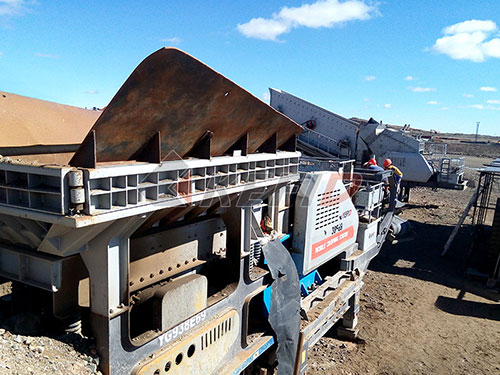

1. PAINPOINT DRIVEN OPENING
Managing slag is a persistent bottleneck with tangible costs. Are you facing these operational challenges?
Low Throughput & High Downtime: Inefficient or undersized crushing circuits create a backlog, delaying material handling and tying up valuable site space. Every hour of crusher downtime impacts downstream processing revenue.
Excessive Wear & Maintenance Costs: Slag’s abrasive nature rapidly degrades standard crusher components, leading to frequent liner changes, unplanned maintenance stops, and soaring spare parts expenditure.
Unreliable Size Reduction: Inconsistent feed size and variable slag hardness can cause plugging, poor discharge gradation, and product that fails to meet specification for resale or further processing.
High Operational Complexity: Plants requiring multiple stages of prescreening, manual breaking, or secondary crushing add labor costs and points of failure.
The core question for plant managers is this: how do you achieve consistent, highvolume slag reduction with predictable operating costs and minimal disruption? The answer lies in a purposeengineered slag crusher plant.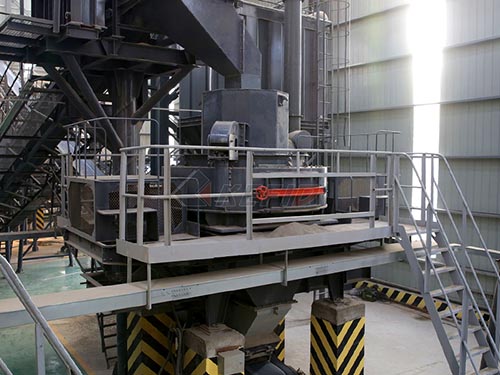
2. PRODUCT OVERVIEW
A slag crusher plant is a stationary or semimobile integrated processing system designed specifically for the primary and secondary reduction of metallurgical slag (blast furnace, steel furnace). It transforms large, irregular slag chunks into a precisely graded aggregate for use in construction, road base, or as a feedstock for further metal recovery.
Operational Workflow:
1. Feed & PreScreening: Runoffurnace slag is fed via loader into a hopper, often with a grizzly section to bypass subsize material directly to the discharge conveyor.
2. Primary Crushing: A heavyduty jaw crusher or impact breaker applies compressive force to break down large slabs (often up to 1m+) into manageable fragments.
3. Material Transfer & Secondary Crushing: A network of belt conveyors transports material to a secondary cone crusher or impactor for final size refinement.
4. Sizing & Stockpiling: The crushed product passes over vibrating screens to separate it into specified grades (e.g., 05mm, 520mm, 2040mm), which are then stockpiled via radial or stacker conveyors.
Application Scope & Limitations:
Scope: Ideal for integrated steel plants, smelters, scrap yards, and dedicated slag processing facilities handling ferrous and nonferrous slags.
Limitations: Not designed for primary rock mining or extremely highmoisture materials without preconditioning. Feed size must be compatible with the primary crusher’s inlet dimensions.
3. CORE FEATURES
HeavyDuty Primary Crusher | Technical Basis: Robust manganese steel jaws/liners with optimized nip angle | Operational Benefit: Handles extreme shock loads from irregular slag feed without failure; reduces bridging | ROI Impact: Higher uptime and lower risk of catastrophic damage versus modified quarry crushers.
AbrasionResistant Conveying System | Technical Basis: Impact beds at loading points; SBR/antitear conveyor belting; hardened alloy pulley lagging | Operational Benefit: Dramatically reduces belt wear and puncturerelated stoppages | ROI Impact: Field data shows a 4060% increase in belt service life, cutting replacement costs and labor.
Integrated Scalping & Bypass | Technical Basis: Grizzly feeder or vibrating prescreen section before primary crusher | Operational Benefit: Removes fines and subsize material from the crushing circuit, increasing effective capacity | ROI Impact: Prevents crusher overload and reduces energy consumption per ton of processed material.
Centralized PLC Control System | Technical Basis: Automated startup/shutdown sequences with load monitoring and fault diagnostics | Operational Benefit: Enables operation by one person from a control cabin; provides clear alerts for maintenance triggers | ROI Impact: Reduces labor requirements and allows for predictive maintenance scheduling to avoid unplanned downtime.
Modular Structural Design | Technical Basis: Bolttogether heavy steel sections on prepared foundation | Operational Benefit: Faster installation and commissioning compared to weldedsite builds; allows for future reconfiguration or relocation | ROI Impact: Cuts civil engineering costs and gets the plant operational weeks sooner.
Deduced Dust Suppression System | Technical Basis: Strategically placed spray nozzles with solenoid valves tied to conveyor operation | Operational Benefit: Effectively controls dust at transfer points without overwetting the product | ROI Impact: Ensures compliance with site environmental standards and protects worker health and machinery.
4. COMPETITIVE ADVANTAGES
| Performance Metric | Industry Standard (Modified Quarry Plant) | Our Slag Crusher Plant Solution | Advantage (% Improvement) |
| : | : | : | : |
| Liner/Wear Part Life (Primary) | 6090 days under severe duty | 120180 days under severe duty | +100% improvement |
| System Availability (Uptime) | ~8085%, frequent minor stoppages| Target >92%, designed for reliability| +812% absolute increase |
| Tons Processed per KWh| Varies widely; often inefficient| Optimized circuit reduces recrush| Up to 15% energy saving |
| Desired Product Yield| Often requires recrushing of oversize| Accurate sizing via tuned screen decks| Yield improvement of 510% |
5. TECHNICAL SPECIFICATIONS
Capacity Range: Configurable from 50 TPH to over 300 TPH nominal throughput.
Power Requirements: Total installed power typically between 150 kW 450 kW depending on configuration; supplied for 400V/50Hz or other industrial standards.
Material Specifications: Crusher liners in Mn18Cr2/Mn22Cr2 steel; structural frames in S355JR grade steel; abrasionresistant steel (AR400) at critical wear points.
Physical Dimensions (Example 150 TPH Plant): Approximate footprint of 35m (L) x 18m (W); height ~12m. Custom layouts available.
Environmental Operating Range: Designed for ambient temperatures from 20°C to +45°C; dust suppression system rated for effective operation up to 80% relative humidity.
6. APPLICATION SCENARIOS
Integrated Steel Plant Slag Yard Recycling
Challenge: A major mill faced chronic bottlenecks in clearing aircooled blast furnace slag. Their existing setup caused excessive conveyor belt damage and produced inconsistent aggregate sizes rejected by their concrete block manufacturing customer.
Solution: Implementation of a turnkey slag crusher plant featuring an impact primary crusher for slab breaking and a secondary cone crusher closedcircuit with a tripledeck screen.
Results: Throughput increased by 140%. Product gradation met specification consistently (>95% yield). Belt replacement costs fell by an estimated $25,000 annually due to the redesigned transfer points.
Independent Slag Processing Contractor
Challenge: A contractor needed a mobile solution to process slag piles at multiple disused industrial sites. They required quick setup/teardown without sacrificing durability against abrasive material.
Solution: A semimobile skidmounted slag crusher plant with wheelmounted jaw crusher module and tracked screening module connected by extensible conveyors.
Results: Site deployment time reduced from weeks to days. The plant maintained an availability rate above 90% across three different site contracts, enabling the contractor to fulfill volumebased agreements reliably.
7. COMMERCIAL CONSIDERATIONS
Pricing Tiers: Investment scales with capacity and robustness.
Standard Duty: For lowervolume (<100TPH), less abrasive slags.
Heavy Duty: Our most common specification for highvolume ferrous slag processing (>150TPH).
Turnkey Project: Includes civil works guidance, installation supervision, commissioning, and operator training.
Optional Features: Metal detection/magnetic separation modules postcrushing; automated lubrication systems; remote monitoring telematics; sound enclosures.
Service Packages: Tiered annual maintenance contracts are available covering scheduled inspections, priority spare parts supply discounts (typically 1020%), and technical support access.
Financing Options: We work with equipment financing partners to offer leasetoown plans or commercial loans tailored to capital expenditure cycles.
8. FAQ
1. Is your plant compatible with our existing feed system (e.g., excavator/dump truck)?
Yes. Hopper dimensions and heights are engineered based on your specific feeding equipment during the design phase to ensure efficient loading without modification.
2. What is the expected operational manpower requirement?
A welldesigned PLCcontrolled plant can be operated effectively by one control room operator per shift for normal running conditions.
3. How do you ensure wear part compatibility? Are they readily available?
We use industrystandard metric dimensions where possible (e.g., common jaw crusher models). All critical wear parts are stocked in our regional warehouses with guaranteed availability under service contracts.
4. What is the typical delivery lead time?
For standard configured plants after final design approval lead times range from XX weeks depending on complexity
5 Can we process wet or clinkerheavy slag?
The standard design handles aircooled denseslag optimally For very wet materials we recommend design modifications such as steeper hoppers screen deck heating elements which can be quoted as part of initial project scoping
6 What warranty is provided?
We offer X months warranty on all machinery against manufacturing defects Extended warranties are available through our service packages
7 Do you provide performance guarantees?
Yes we provide guaranteed minimum throughput capacity based on agreed feed material specifications as part of our turnkey project contracts