
Sand Gravel Mining Suppliers Specification


1. PAINPOINT DRIVEN OPENING
Managing a sand and gravel operation means contending with persistent, costly inefficiencies. Are you facing these common challenges?
High Downtime from Wear: Constant abrasion from silica sand and aggregate leads to premature failure of pumps, liners, and screens, resulting in unplanned stoppages for replacement.
Inconsistent Product Gradation: Inefficient screening or classification yields offspec material, reducing the percentage of premium, indemand products and increasing waste stockpiles.
Excessive Water & Power Consumption: Inefficient washing, dewatering, and material handling systems inflate utility costs—a primary operational expense that directly erodes profit margins.
High Labor & Maintenance Costs: Equipment requiring frequent manual adjustment, constant monitoring for blockages, or complex maintenance routines increases your operational overhead and safety exposure.
Lost Revenue from Fines: Poorly designed recovery systems fail to capture marketable fine sand fractions, washing valuable product into settling ponds.
The central question for plant managers is this: how can you specify equipment that directly targets these pain points to improve availability, control grading, and reduce cost per ton?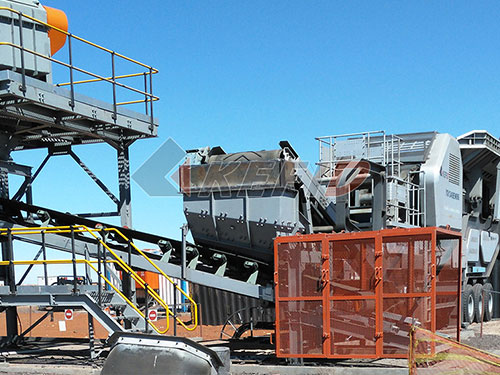
2. PRODUCT OVERVIEW: HIGHCAPACITY AGGREGATE SCREENS
This product category covers heavyduty vibrating screens engineered for the primary sizing, scalping, and fine separation of sand and gravel. Designed for continuous duty in harsh environments, they are a critical node in determining plant throughput and product quality.
Operational Workflow:
1. Feed & Distribution: Runofmine or crushed feed is evenly distributed across the full width of the screen box via a dedicated feeder or spreader conveyor.
2. Stratification & Separation: Highfrequency vibration stratifies material, forcing smaller particles down to the screen media while larger particles convey across the deck surface.
3. Sizing & Discharge: Sized fractions pass through designated screen decks (e.g., top deck: +1”, middle deck: 1/4” to 1”, bottom deck: 1/4”) and are discharged into separate chutes or onto product stockpiling conveyors.
Application Scope: Ideal for hightonnage quarry applications processing natural sand & gravel or crushed stone. Suitable for dry screening or as part of a wet washing circuit.
Limitations: Not designed for sticky, highclay material without prescreening or washing attachments. Maximum feed size is limited by box design and deck punch plate specifications.
3. CORE FEATURES
Modular Deck System | Technical Basis: Boltin panel design with multiple media options (wire cloth, polyurethane, rubber) | Operational Benefit: Operators can change panel types or sizes in sections to adapt to deposit changes or product specs without full deck replacement. | ROI Impact: Reduces media change downtime by up to 40% and allows precise media selection to optimize wear life vs. open area.
DualVibration Mechanism | Technical Basis: Two synchronized counterrotating eccentric shafts generating a linear stroke | Operational Benefit: Provides positive material conveyance with minimal plugging or blinding, maintaining rated capacity even with damp feed material. | ROI Impact: Ensures consistent throughput (tons/hour), protecting downstream process stability and overall plant yield.
Sealed Bearing Cartridge Assembly | Technical Basis: Prelubricated, labyrinthsealed bearing units mounted external to the screen body | Operational Benefit: Isolates critical drive components from dust and water ingress; enables bearing changeout without dismantling the vibrator assembly. | ROI Impact: Extends bearing service life by 23x versus standard designs and reduces mean time to repair (MTTR) by over 60%.
SubResonant Drive Tuning | Technical Basis: Drive system operates below the natural frequency of the springsupported screen frame | Operational Benefit: Dramatically reduces dynamic loads transferred to the support structure during startup and shutdown cycles. | ROI Impact: Eliminates the need for massive reinforced concrete foundations; allows installation on steel support structures, reducing civil costs by approximately 25%.
QuickRelease Tensioning System | Technical Basis: Hydraulic or mechanical wedgebased system for screen cloth tensioning | Operational Benefit: Enables singleoperator tensioning or replacement of screen media in under 30 minutes per panel. | ROI Impact: Directly addresses labor cost containment and increases plant availability during routine maintenance windows.
4. COMPETITIVE ADVANTAGES
| Performance Metric | Industry Standard | HighCapacity Aggregate Screen Solution | Advantage (% improvement) |
| : | : | : | : |
| Screen Media Change Time (Full Deck) | 812 hours (crew of 3) | 46 hours (crew of 2) | ~50% faster |
| Bearing Mean Time Between Failure (MTBF) | 8,000 10,000 hours | 18,000 22,000 hours | ~120% longer life |
| Power Consumption per Ton Processed| Baseline (100%)| Optimized stroke & mass dynamics reduces draw by ~15%| 15% more efficient |
| NearSize Material Accuracy (0.5 aperture)| ~85% efficiency| Patented ball tray/deck cleaning maintains >92% efficiency| ~8% more premium product |
| Structural Load Transmitted to Base| Baseline (100%)| Subresonant tuning reduces dynamic load by ~70%| 70% less force |
_(Field data based on comparative analysis of similar duty cycles.)_
5. TECHNICAL SPECIFICATIONS
Capacity Rating: Modeldependent; ranges from 500 TPH to over 2,500 TPH of sand & gravel feed.
Power Requirements: Dualdrive motors from 30 HP to 100 HP total (480V/60Hz/3Ph standard). Variable Frequency Drive (VFD) optional for stroke/timing adjustment.
Material Specifications: Side plates constructed from hightensile AR400 steel; Deck frames from reinforced carbon steel; Optional corrosionresistant coatings for saline or highhumidity environments.
Physical Dimensions (Typical): Singledeck units from \(10' x \(5'\) up to tripledeck units at \(20' x \(8'\). Weight ranges from ~12k lbs to over 45k lbs.
Environmental Operating Range: Designed for ambient temperatures from 20°C (4°F) to +50°C (122°F). Dusttight enclosures available; washdown systems standard on wet screening models.
6. APPLICATION SCENARIOS
[Commercial Sand Producer – Midwest USA] Challenge: A major producer needed higher throughput on their 30140 specialty sands but faced chronic blinding on fine mesh screens during humid periods.Solution: Implementation of our highcapacity aggregate screens equipped with polyurethane modular decks featuring integrated ball trays.Results: Screen blinding was eliminated entirely through continuous selfcleaning action. Production of inspec fine sands increased by an average of 18%, while unscheduled downtime events related to screening fell by over 90%.
[Large Aggregate Quarry – Southeast Asia] Challenge: The existing screening plant created significant structural vibration issues on its elevated steel platform foundation.Solution: Replacement with our subresonant tuned aggregate screens designed specifically for steel structure mounting.Results: Measured vibration at the support beams was reduced by over twothirds (22 mm/s). This allowed safe expansion of processing lines on existing infrastructure without costly reinforcement.
[Integrated C&D Recycling Operation – Europe] Challenge: Processing recycled concrete aggregate caused extreme wear on traditional wire cloth screens.Solution: Installation using our modular deck system fitted with specialized abrasionresistant rubber panels.Results: Screen panel service life increased from an average of three weeks up to fourteen weeks per set—a fourfold improvement—drastically cutting consumable costs.
7. COMMERCIAL CONSIDERATIONS
Our specification process is structured around your required capacity:
Tier I (Standard Duty, <800 TPH): Base models ideal for steadystate operations processing consistent material profiles.
Optional Features: Basic spray bars
Service Package: Parts warranty + recommended spare parts kit
Tier II (Heavy Duty, <1600 TPH): Enhanced models featuring upgraded bearings
Optional Features: VFD controls
Service Package: Extended warranty
Tier III (Extreme Duty, <2500+ TPH): Fully configured systems including subresonant tuning
Optional Features: Full automation interface packages
Service Package: Onsite commissioning supervision
Financing options include capital lease agreements tailored around seasonal cash flow cycles common in aggregate production.
FAQ
What is your typical lead time?
Lead times vary based on model complexity but typically range between [XY] weeks upon receipt of order.
Can this equipment be integrated into my existing plant layout?
Yes; our engineering team provides detailed installation drawings based on your site plan.
What is your warranty policy?
We offer a standard [X]year warranty covering all structural components against manufacturing defects
Do you provide performance guarantees?
Yes; we guarantee rated throughput capacity when processing feed material within agreedupon specifications
What training do you provide?
We include comprehensive operator training during commissioning