
Sand Gravel Mining Supplier Customization
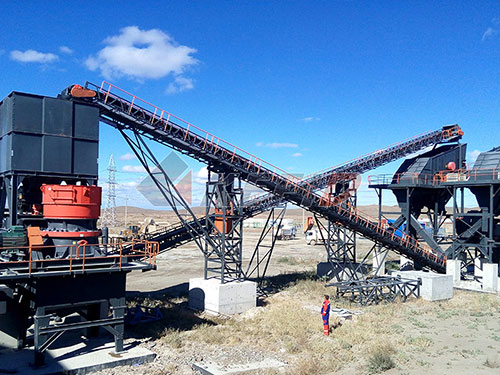

Optimizing Sand & Gravel Production: Addressing Your Core Operational Challenges
Are you facing persistent bottlenecks in your aggregate processing line? For plant managers and engineering contractors, the efficiency of your sand gravel mining supplier operations directly dictates profitability. Common pain points include inconsistent feed material degrading final spec product yield, excessive wear on components from abrasive particulates leading to unplanned downtime, and rising energy costs consuming operational margins. How do you maintain throughput when faced with variable deposit geology? Can your equipment withstand 24/7 seasonal demand without costly failures? Is your system optimized to maximize recovery of inspec material and minimize waste? The right processing equipment is not just a purchase; it’s a strategic decision impacting your daily tonnage, maintenance budget, and longterm site viability.
Product Overview: Modular Sand Classification and Washing Plants

Our engineered sand gravel mining supplier solutions center on modular classification and washing systems designed to separate, clean, and dewater sand and fine aggregates after primary crushing. The operational workflow is streamlined for integration into existing circuits:
1. Feed & Distribution: Slurry from a scrubber or screen undersize is evenly distributed to the classification unit.
2. Hydraulic Classification: Using controlled upward current water, particles are separated by size and specific gravity.
3. Fine Material Recovery: Ultrafines (75µm) are captured via a hydrocyclone or sieve bend system.
4. Dewatering & Stockpiling: Classified sand is dewatered on a vibrating screen or dewatering tower to a conveyable moisture content.
These systems are applicable for natural sand deposits, crushed stone sand (manufactured sand), and gravel pit operations. Limitations include a requirement for a consistent water supply and are typically not standalone units, requiring integration with upstream crushing and screening.
Core Features: Engineered for Reliability and ROI
Our sand gravel mining supplier plant features are designed with operational realities in mind.
Patented Rake Mechanism | Technical Basis: Continuous rake movement in settling zone | Operational Benefit: Prevents sand buildup and eliminates dead zones for consistent underflow density | ROI Impact: Reduces flushing downtime by up to 70% and stabilizes product moisture content.
AbrasionResistant Liner System | Technical Basis: Highchrome alloy or polyurethane liners in critical wear zones | Operational Benefit: Extends service life in highsilica applications, reducing replacement frequency | ROI Impact: Lowers costperton for wear components by an average of 40% versus standard materials.
Variable Speed Drive Pump | Technical Basis: VFDcontrolled slurry feed pump | Operational Benefit: Operators can finetune feed rate and pressure to match realtime feed material changes | ROI Impact: Optimizes power consumption and improves classification efficiency for better yield control.
Integrated Cyclone Cluster | Technical Basis: Bank of smalldiameter hydrocyclones for fine recovery | Operational Benefit: Recovers highvalue fine sand (+75µm) from waste streams, increasing overall product volume | ROI Impact: Field data shows a 38% increase in saleable sand yield, directly boosting revenue.
LowProfile Dewatering Screen | Technical Basis: HighGforce linear motion vibrating screen with urethane panels | Operational Benefit: Achieves conveyable product at 912% moisture content without thermal drying | ROI Impact: Eliminates fuel costs associated with rotary dryers, reducing operating expense significantly.
Competitive Advantages: Measurable Performance Gains
| Performance Metric | Industry Standard | Our Sand Classification Plant | Advantage (% Improvement) |
| : | : | : | : |
| Wear Life (HighSilica Sand)| 800 1,200 hours | 1,800 2,400 hours | +100% |
| Product Moisture Consistency| ±3% variance | ±1% variance | +67% Consistency |
| Fine Recovery Efficiency (+75µm)| ~85% recovery rate| 9295% recovery rate| +10% Recovery |
| Specific Power Consumption| Baseline (100%)| Measured at ~87% of baseline| 13% Energy Use |
| Footprint per TPH Capacity| Baseline (100%)| Approximately 80% of baseline| 20% Space Required |
Technical Specifications
Capacity Range: Models from 50 to 500 tons per hour (TPH) of solids feed.
Power Requirements: Plant dependent; typical range from 45 kW (for smaller units) to 250 kW (for full systems including pumps).
Material Specifications: Critical wear components constructed with Trellex MB rubber or Duratray® polyurethane. Structural steel is ASTM A36, primed and painted with industrial epoxy coating.
Physical Dimensions (Model CWS200): Length: 12m, Width: 4.5m, Height: 6m. Modular design allows for sectional transport.
Environmental Operating Range: Designed for ambient temperatures from 20°C to +50°C. Dusttitled electrics standard.
Application Scenarios
Crushed Stone Sand (Manufactured Sand) Producer
Challenge: A granite quarry producing manufactured sand struggled with excessive fines (75µm) creating outofspec product and high dust levels. Their existing system wasted saleable material in the settling pond.
Solution: Implementation of a fines recovery plant featuring our integrated cyclone cluster system attached to the main washing plant.
Results: Recovery of an additional ~25 TPH of inspec concrete sand from the waste stream. This increased total saleable output by approximately $15%, while simultaneously reducing pond maintenance costs.
Alluvial River Deposit Operation
Challenge: Variable clay content in the deposit caused frequent blinding of screens and inconsistent grading, leading to high wash water consumption as operators overcompensated.
Solution: Installation of a modular log washer upfront paired with our classification system equipped with the variable speed drive pump for precise control.
Results: Claybound agglomerates were effectively broken down before classification. The adjustable system allowed operators to maintain spec during deposit shifts, reducing water consumption by an estimated $20$and eliminating two daily screen cleaning shutdowns.
Commercial Considerations
Our role as your dedicated industrial equipment partner extends beyond the initial quote.
Equipment Pricing Tiers:
Tier I (Standard Plant): Includes core classifier,fines recovery cyclone,and basic dewatering screen.Capexfocused solution.
Tier II (Enhanced Package): Adds VFD drives on all motors,polyurethane liner upgrade,and automated control panel with PLC monitoring.Optimized for OPEX savings.
Tier III (Full System): Incorporates integrated feeding mechanism,lubrication system,and advanced instrumentation package.Turnkeyready solution.
Optional features include remote monitoring telematics,dust encapsulation covers,and spare part starter kits.Service packages range from annual inspection plans to fullsite operationandmaintenance contracts.Financing options include capital lease agreements,tradein programs for existing equipment,and projectspecific financing through our partners.
Frequently Asked Questions
1. Is this equipment compatible with my existing crushing circuit?
Yes.The modular design allows us to engineer connection points—feed chutes,surge hoppers,and slurry lines—to integrate with most OEM's primary washing screens or attrition cells.Site layout drawings are required for detailed engineering.
2.What is the typical installation timeline?
For a standard model,the onsite installation period ranges from $10$to $15$working days.This assumes prepared foundations.All structural components are preassembled at our facility prior to shipment.
3.How does this impact my water recycling requirements?
By efficiently removing fines before they enter your settling pond,the system significantly reduces pond silt loading.This can extend pond life between cleanouts.Field reports indicate some sites have reduced fresh water makeup volume by up to $30\%$.
4.What are the commercial terms available?
We offer ExWorks,FOB Port,and Delivered pricing.Standard payment terms involve progress payments tied to major manufacturing milestones.Payment schedules can be structured around project cash flow requirements upon credit approval.
5.What training is provided for our operators?
A comprehensive training program is included.It consists of classroom instruction on principles of hydraulic classification followed by handson operational training during commissioning.We also provide detailed maintenance manuals specific to your installed configuration