
Quarry Ballast Crushing Equipment Vendors Discount
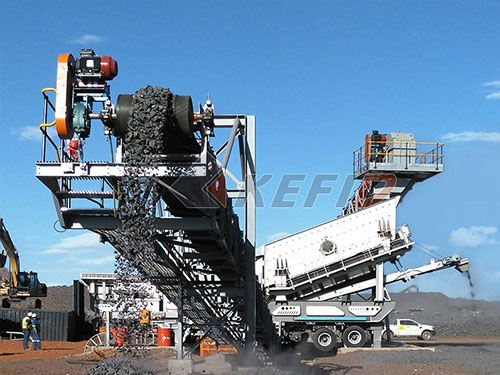

Quarry Ballast Crushing Equipment Vendors Discount: Maximizing ROI on HighVolume Rail Ballast Production
Your Operational Challenges in Ballast Crushing
Quarry operators producing rail ballast face a specific set of pressures that directly impact your bottom line. Material waste from oversize and undersize fractions can reach 1522% of total throughput, representing thousands of tons of lost revenue annually. Crusher wear part replacement costs for abrasive granite and basalt ballast materials typically consume 812% of operating budgets. Downtime from unscheduled maintenance on poorly matched equipment averages 1418 days per year, costing midsize operations $180,000$350,000 in lost production. Inconsistent particle shape—specifically flakiness index exceeding 25%—leads to rejected shipments and contract penalties. Energy consumption per ton in conventional jawcone circuits runs 3.24.1 kWh/t, a figure that directly erodes margins in competitive bidding environments.
Are your current crushing solutions delivering the consistent 31.550mm gradation with <15% flakiness that railway specifications demand? Can your equipment vendor provide the discount structures that make capital investment viable at today's aggregate prices?
Product Overview: Quarry Ballast Crushing Equipment
This equipment category encompasses specialized impact and compression crushers designed specifically for producing railway ballast from hard rock quarries. The operational workflow follows five key stages:
1. Primary reduction – Jaw or gyratory crushers reduce runofquarry material to 200300mm
2. Secondary shaping – Cone crushers or horizontal shaft impactors reduce to 60100mm while beginning particle shaping
3. Tertiary ballast production – Vertical shaft impactors (VSI) or specialized cone crushers with extra coarse chambers produce the 31.550mm target fraction
4. Screening and recirculation – Multideck screens separate ballast, with oversize returning to tertiary stage
5. Washing and stockpiling – Optional wet processing removes fines below 4mm
Application scope: Hard rock quarries producing 200,0001,500,000 tons annually for mainline rail, metro, and heavyhaul railway ballast. Limitations: Not suitable for soft sedimentary rock (limestone below 80MPa UCS), nor for operations requiring <5% fines content without additional washing equipment.
Core Features
HeavyDuty Rotor Assembly | Technical Basis: Highinertia rotor with tungsten carbide wear tips | Operational Benefit: Maintains consistent particle shape across 8,00012,000 operating hours between tip replacement | ROI Impact: Reduces annual wear part costs by 1825% compared to standard manganese steel configurations
Hydraulic CSS Adjustment | Technical Basis: Remote hydraulic cylinder positioning with digital position feedback | Operational Benefit: Allows gradation changes in under 3 minutes without mechanical shimming | ROI Impact: Eliminates 68 hours monthly of manual adjustment downtime, recovering $12,000$18,000 in production per shift
Cascade Feed System | Technical Basis: Variablespeed belt feeder distributing material across rotor width | Operational Benefit: Reduces rotor imbalance and vibration by 40%, extending bearing life | ROI Impact: Bearing replacement intervals extend from 4,000 to 7,500 hours, saving $8,500$14,000 per replacement event
DualMode Crushing Chamber | Technical Basis: Interchangeable anvil ring and rockbox configurations | Operational Benefit: Switch between maximum reduction ratio (anvil) and lowest wear cost (rockbox) based on feed conditions | ROI Impact: Optimizes wear cost per ton from $0.18$0.35 depending on abrasivity, versus fixedchamber designs at $0.28$0.45

Integrated Lubrication Monitoring | Technical Basis: Realtime oil analysis with particulate and moisture sensors | Operational Benefit: Alerts operators to bearing wear 200400 hours before failure | ROI Impact: Prevents catastrophic failures costing $45,000$85,000 in repairs and 35 days downtime
Modular Skid Mounting | Technical Basis: Preengineered steel skid with vibration isolation | Operational Benefit: Reduces installation time by 60% versus concrete foundations | ROI Impact: Site preparation costs drop from $120,000$180,000 to $45,000$70,000
Variable Frequency Drive (VFD) | Technical Basis: 480V/690V VFD with regenerative braking | Operational Benefit: Matches crusher speed to feed rate, reducing energy consumption at partial loads | ROI Impact: Energy savings of 1218% annually, equating to $22,000$38,000 per 500,000 tons processed
Competitive Advantages
| Performance Metric | Industry Standard (JawCone Circuit) | Quarry Ballast Crushing Equipment Solution | Advantage (% Improvement) |
|||||
| Flakiness Index (target 31.550mm) | 2228% | 1216% | 4055% reduction in reject material |
| Wear Cost per Ton (granite, 150MPa) | $0.32$0.48 | $0.22$0.31 | 2835% lower consumable costs |
| Energy Consumption (kWh/t) | 3.84.5 | 2.93.4 | 2024% energy efficiency gain |
| Product Yield (ballast fraction) | 6270% | 7482% | 1217% higher usable output |
| Changeover Time (gradation shift) | 4590 minutes | 25 minutes | 9396% faster adjustments |
| Mean Time Between Failures (hours) | 1,2001,800 | 2,4003,200 | 5078% longer operational intervals |
| Installed Cost per Ton Capacity | $18$28 | $14$20 | 2228% lower capital requirement |
Technical Specifications
| Parameter | Value Range |
|||
| Throughput Capacity | 150650 tons/hour (depending on feed size and material hardness) |
| Feed Size Maximum | 80120mm (tertiary stage); 250350mm (secondary stage) |
| Product Size Range | 31.550mm (ballast); adjustable from 2063mm |
| Motor Power | 250600 kW (VSI); 200450 kW (cone crusher) |
| Rotor Diameter | 8401,270 mm (VSI models) |
| Crusher Weight | 18,00052,000 kg (depending on model) |
| Installation Footprint | 8.5m x 5.2m to 14.0m x 7.5m (including service access) |
| Operating Temperature Range | 20°C to +45°C (with coldweather lubrication package available) |
| Material Specifications | UCS 80320 MPa; SiO2 content up to 75%; abrasivity index <0.65 |
| Electrical Requirements | 480V/3ph/60Hz or 690V/3ph/50Hz; VFD compatible |
Application Scenarios
Mainline Railway Ballast Production – Western Australia Iron Ore Rail Network | Challenge: Producing 1.2 million tons of ballast annually from banded iron formation (UCS 280320 MPa) with <12% flakiness requirement. Existing cone crusher circuit yielded 1822% flakiness and 68% ballast fraction yield. | Solution: Installation of two 450 kW VSI crushers with cascade feed and anvil ring configuration, operating in closed circuit with 31.5mm and 50mm screens. | Results: Flakiness reduced to 11.4% average; ballast yield increased to 79%; wear cost dropped from $0.52/ton to $0.34/ton; annual savings of $216,000 in consumables and $340,000 in reduced reject handling.
Metro Tunnel Ballast – Urban Rail Project, Southeast Asia | Challenge: Limited site footprint (12m x 18m) with noise restrictions below 85 dB at 50m. Required 85,000 tons of 31.550mm ballast in 14 months. | Solution: Modular skidmounted VSI with sound enclosure and VFD control, processing precrushed 60mm feed from mobile primary. | Results: Completed 91,000 tons in 13 months; noise levels at 79 dB; installation completed in 11 days versus 28 days for conventional foundation; total project cost 18% below budget.
HeavyHaul Ballast Replacement – North American Class 1 Railroad | Challenge: Replacing 450,000 tons of deteriorated ballast annually across 200mile corridor. Required consistent gradation with 95% fractured faces. | Solution: Dual tertiary cone crushers with extra coarse chambers and hydraulic CSS adjustment, feeding tripledeck screens with recirculation. | Results: Fines content maintained at 5.26.8%; fractured faces at 97%; equipment availability 96.8% over 18 months; vendor discount structure reduced capital cost by 14% through volume commitment.
Commercial Considerations
Equipment Pricing Tiers (based on 2024 market data for complete tertiary ballast crushing systems):
- Standard Package (250350 tph VSI): $420,000$580,000
- Enhanced Package (350500 tph VSI with VFD and lubrication monitoring): $680,000$920,000
- Premium Package (500650 tph dualdrive VSI with full automation): $1,100,000$1,550,000
- Turnkey Installation (including conveyors, screens, electrical, and commissioning): $1,800,000$3,200,000
- Coldweather package (heated lubrication, insulated panels): $28,000$45,000
- Remote monitoring and diagnostics system: $12,000$18,000
- Extended warranty (5 years/15,000 hours): 812% of equipment cost
- Wear parts inventory package (12month supply): $65,000$110,000
- Basic (annual inspection, phone support): $8,500/year
- Standard (quarterly inspection, 48hour parts guarantee): $22,000/year
- Premium (monthly inspection, 24hour onsite response, wear parts management): $48,000/year
- Equipment lease (3660 months): 4.57.2% APR (based on credit tier)
- Deferred payment (first payment at 6 months): 0.51.0% rate premium
- Volume discount program: 815% off list price for 3+ unit purchases or $2M+ annual commitment
- Tradein allowance: 1530% of original purchase price for competitive equipment (model and condition dependent)
- Early order discount (90+ days before delivery): 35%
- Cash payment discount: 2% net 30
- Volume commitment (annual minimum tonnage): 512% rebate at yearend
- Reference site discount (allow site visits): 47% on next purchase
Optional Features:
Service Packages:
Financing Options:

Vendor Discount Structures:
FAQ
Q: Can this equipment process recycled railway ballast (spent ballast with fouling)?
A: Yes, with modifications. The VSI configuration can handle recycled ballast up to 15% fouling content (fines and organic material). However, a prescreen to remove material below 20mm is recommended to reduce wear costs. Field data shows wear cost increases of 1825% when processing recycled versus virgin material.
Q: What discount percentage can I expect for a singleunit purchase versus a fleet order?
A: Singleunit discounts typically range 38% from list price. Fleet orders (3+ units) qualify for 1015% discounts. Volume commitment programs offering 512% annual rebates require minimum 500,000 tons processed per year per unit.
Q: How does the equipment perform with highsilica quartzite (SiO2 >70%)?
A: Industry testing demonstrates acceptable performance with wear costs increasing 3045% compared to granite. The tungsten carbide rotor tips in this equipment show 2.3x longer life than standard chromeiron options in quartzite applications. Expect tip replacement at 5,0007,000 hours versus 10,00014,000 hours in granite.
Q: What is the typical lead time for delivery, and are expedited options available?
A: Standard lead time is 1824 weeks from order. Expedited delivery (1214 weeks) is available at 58% premium. Turnkey installations add 610 weeks for site preparation and commissioning.
Q: Does the discount structure apply to wear parts and consumables, or only capital equipment?
A: Volume discounts apply to both capital equipment and wear parts. Typical wear parts discounts: 58% for annual contracts over $100,000; 1015% for contracts over $250,000. Some vendors offer bundled pricing where capital equipment discount increases with a 3year wear parts commitment.
Q: What is the minimum throughput for economic operation of this ballast crushing equipment?
A: Economic viability begins at 150,000 tons annual production for a single unit. Below this threshold, mobile or rental equipment may be more costeffective. At 200,000+ tons annually, the capital investment typically achieves payback within 1824 months based on wear cost savings alone.
Q: Can the equipment be integrated with existing primary and secondary crushers from other manufacturers?
A: Yes. The modular design includes adjustable feed chutes and conveyor interfaces compatible with standard 3660 inch belt widths. Electrical integration requires a control system interface (Modbus or Profibus) which is included. Installation costs for retrofit applications average 1525% higher than greenfield installations due to alignment and structural modifications.