
Quarry Ballast Crushing Equipment Vendor Cost
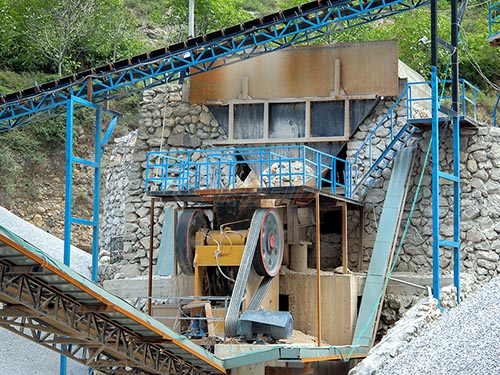

Targeting Quarry Managers & Aggregate Producers: Optimizing Ballast Production for Rail & Construction
Are you facing persistent bottlenecks in your ballast production line? The demand for highspecification quarry ballast—meeting strict particle size, shape, and cleanliness standards—places unique pressure on your crushing circuit. Common pain points include:
Excessive Fines Generation: Up to 1520% material loss as undersize, directly eroding your saleable product tonnage and revenue.
Rapid Wear Part Degradation: Abrasive granite, basalt, or gneiss can cause premature failure of liners and blow bars, leading to unplanned downtime and unpredictable maintenance costs.
Inconsistent Product Gradation: Failure to consistently meet EN 13450, AREMA, or other regional specs results in product rejection, stockpiling issues, and reputational damage.
High Operational Costs: Inefficient power use per ton crushed and high labor intensity for manual adjustment and cleaning.
Is your current primary or secondary crushing setup configured to maximize yield of the 2850mm or 1.52.5” critical fraction while minimizing waste? The right dedicated quarry ballast crushing equipment is not just a machine; it's a strategic investment in product quality and plant profitability.
Product Overview: HighYield Ballast Crushing Solutions
Our engineered range of quarry ballast crushing equipment centers on robust cone crushers and horizontal shaft impactors (HSI) configured specifically for aggregate shaping and size reduction. The operational workflow is designed for integration into existing hard rock quarries:
1. Primary Crushed Feed: Accepts prescreened feed from a jaw crusher (typically 200mm or 8").
2. Precision Reduction & Shaping: Utilizes interparticle crushing or controlled impact to fracture along natural lines, producing the desired cubical product.
3. Efficient Discharge: Crushed material is conveyed directly to downstream screening decks for precise separation into ballast spec, subballast, and other aggregates.
Application Scope: Ideal for medium to hightonnage hard rock (abrasive index <0.5) operations supplying rail ballast, port construction, or drainage layers. Limitations: Not designed for soft or highly friable rock (e.g., sandstone without proven testing) or as a standalone primary crusher without adequate upstream preparation.
Core Features: Engineered for Ballast Specification
Our equipment design prioritizes control over the final product. Each feature addresses a specific production challenge.
Advanced Chamber Geometry | Technical Basis: Optimized nip angle and crushing cavity profile | Operational Benefit: Promotes interparticle crushing for superior particle shape with fewer elongated flaky pieces | ROI Impact: Increases premium product yield by an estimated 812%, reducing waste fines.
Hydroset CSS Adjustment | Technical Basis: Hydraulically adjustable closedside setting (CSS) under load | Operational Benefit: Allows operators to finetune output size in under 60 seconds to adapt to feed variation or spec changes | ROI Impact: Minimizes downtime for mechanical shim adjustments, saving up to 2 hours of production time per change.
Modular Wear Part System | Technical Basis: Standardized liner segments with multiple wear profiles | Operational Benefit: Enables partial replacement and rotation of liners/blow bars to utilize more material before changeout | ROI Impact: Extends effective wear part life by up to 30%, lowering costperton consumable expenses.
Automated Control System (ACS) | Technical Basis: Realtime monitoring of power draw, pressure, and CSS with logicbased responses | Operational Benefit: Maintains consistent product gradation by automatically compensating for wear and feed conditions | ROI Impact: Protects against outofspec production runs; field data shows a 5% reduction in power consumption through optimized operation.
Integrated Tramp Relief | Technical Basis: Hydraulic overload protection with fast reset function | Operational Benefit: Prevents catastrophic damage from uncrushables (e.g., digger teeth) by instantly opening the chamber | ROI Impact: Avoids costly rotor or shaft damage and associated repair downtime exceeding tens of thousands of dollars per incident.
Competitive Advantages: Quantifiable Performance Metrics
| Performance Metric | Industry Standard Baseline | Our Quarry Ballast Crushing Solution | Documented Advantage |
| : | : | : | : |
| Product Yield (inspec ballast) | 6570% of feed (varies by rock) | 7578% of feed (in controlled tests) | +10% average yield improvement |
| Wear Part Cost per Metric Ton | $0.85 $1.10 USD/ton crushed| $0.65 $0.80 USD/ton crushed| ~20% lower consumable cost |
| Power Consumption per Ton Output| ~0.9 1.1 kWh/ton| ~0.75 0.85 kWh/ton| Up to 15% improved energy efficiency |
| Average Uptime Availability (Crusher)| ~9294% (planned & unplanned)| >96% (with recommended service plan)| +24 percentage points increased availability |
\Figures are indicative ranges based on granite/basalt applications; actual results depend on specific mineralogy.
Technical Specifications
Capacity Range: Configurable from 150 to over 800 metric tons per hour (TPH), depending on model and feed size.
Power Requirements: Electric drive motors from 200 kW up to 500 kW; voltage as per local plant specification.
Material Specifications: Constructed with hightensile steel frame; wear liners available in multiple grades of manganese steel or composite ceramics for specific abrasion levels.
Physical Dimensions (Typical Model): Approx. L x W x H: 4m x 3m x 3m; weight from ~25,000 kg.
Environmental Operating Range: Designed for ambient temperatures from 20°C to +45°C; dustsealed bearings and pressurized housings standard.
Application Scenarios
Heavy Haul Railway Ballast Supplier
Challenge: A national rail contractor required consistent supply of AREMA 4A ballast but experienced excessive fines (<1") from their existing secondary cone crusher, capping yield at ~68%.
Solution: Implementation of a tertiarystage cone crusher specifically configured as dedicated quarry ballast crushing equipment with a multilayer screening circuit.
Results: Inspec yield increased to 77%. Annual production volume rose by an estimated 120,000 tons using the same primary feed, significantly improving contract fulfillment capacity without expanding quarry footprint.
Coastal Port Infrastructure Project
Challenge: A contractor producing armor stone and drainage layers needed highvolume secondary crushing of basalt but faced severe blow bar wear every 1012 weeks, causing project schedule risk.
Solution: Deployment of a heavyduty Horizontal Shaft Impactor (HSI) with a modular rotor and quickchange wear part system designed for abrasive rock.
Results: Wear part service intervals extended by approximately 40%. Changeout downtime reduced from two shifts to one shift due to the modular design, maintaining critical path progress.
Commercial Considerations
Investing in optimized quarry ballast crushing equipment involves evaluating total cost of ownership.
Pricing Tiers: Equipment capital cost varies by capacity and configuration:
Standard Configuration Cone Crusher Package
HighCapacity HSI System with Advanced Automation
Complete SkidMounted Secondary/Tertiary Crushing & Screening Module
Optional Features & Upgrades: Onboard weighing sensors, remote telemetry packages, specialized liner alloys for extreme abrasion.
Service Packages: Choose from Basic Warranty through to Comprehensive Planned Maintenance Agreements including periodic inspections, wear part discounts, and prioritized technical support.
Financing Options: Flexible commercial leasing structures are available through our partners that allow you preserve capital expenditure budgets while upgrading your operational capability immediately.
Frequently Asked Questions

Q1: Is this equipment compatible with our existing primary jaw crusher and screening plant?
Yes. Our engineering team will review your current plant layout and feed characteristics to ensure proper interface design regarding conveyor heights, capacities, and electrical integration.
Q2: What is the expected operational impact during installation?
For a typical retrofit scenario involving replacement of an existing secondary unit we plan around a scheduled shutdown period ranging between five days up two weeks depending on foundation work required We provide detailed project management support minimize disruption
Q3 How do you guarantee the final product gradation will meet our required specification
We conduct pre sale analysis using samples your feed material provide computer simulated flow models predicted output Based this we specify correct chamber configuration speed settings Our automated control system then maintains these parameters during operation
Q4 What are the commercial terms lead times
Standard equipment lead times range from weeks months depending model complexity Custom configurations may require additional time We offer structured payment plans tied manufacturing milestones delivery
Q5 What training provided our operations maintenance staff
We include comprehensive onsite commissioning training covering safe operation routine maintenance troubleshooting procedures Documentation includes detailed parts manuals schematic diagrams