
Quarry Ballast Crushing Equipment Suppliers Catalog
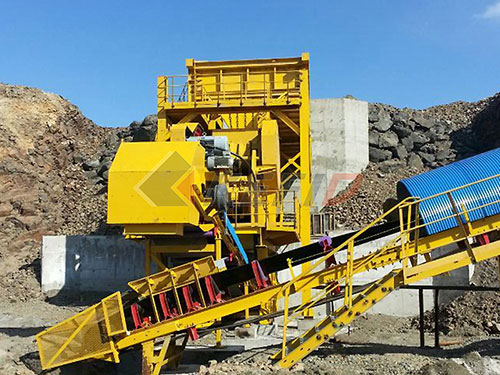

Targeting Quarry Managers & Aggregate Producers: The HighCost Challenges of Ballast Production
Producing consistent, specificationgrade railway ballast is a critical yet demanding operation. Inefficient crushing directly impacts your bottom line through excessive wear costs, unscheduled downtime, and rejected loads. Are you facing these persistent challenges?
High Abrasion Costs: Are your crusher wear parts consuming your profit margin? The extreme abrasiveness of granite, basalt, and trap rock leads to frequent liner changes, halting production for maintenance.
Cubicity & Gradation Failures: Does a significant portion of your output fail to meet the strict particle shape and size specifications (e.g., AREMA, RFQ) for ballast? Poor cubicity leads to settlement and reduced track stability, resulting in product rejection and wasted capacity.
Unscheduled Downtime: Is your production schedule constantly interrupted by equipment failures or blockages? Inconsistent feed or unsuitable crushing stages create bottlenecks that delay entire projects.
High Energy Consumption per Ton: Are your power costs per ton of final product higher than industry benchmarks? Inefficient crushing circuits with improper chamber designs or speed settings waste significant energy.
Dust & Noise Compliance: Are you managing increasing regulatory pressure and community concerns over dust emissions and noise levels from your crushing operations?
Optimizing your primary and secondary crushing stages is not just about throughput—it's about producing more inspec tonnage at a lower cost per ton.
Product Overview: HeavyDuty Quarry Ballast Crushing Solutions
Our engineered range of primary jaw crushers and secondary cone crushers is specifically configured for highvolume production of railway ballast. This equipment transforms blasted quarry rock into precisely graded, highintegrity aggregate.
Operational Workflow:
1. Primary Reduction: Blasted rock (typically 750mm) is fed into a heavyduty jaw crusher, reducing it to a manageable 250mm product.
2. Secondary Crushing & Shaping: The primary crushed material is conveyed to a highperformance cone crusher operating in a closed circuit with a screening deck. This stage is critical for achieving the required cubicity and final sizing.
3. Sizing & Separation: Oversize material from the screen is recirculated back to the cone crusher for further reduction, while inspec material (e.g., 50mm25mm) is directed to the ballast stockpile.
Application Scope: Ideal for processing hard, abrasive igneous and metamorphic rock (Granite, Basalt, Gneiss) into railway ballast, construction aggregate, and riprap. Not recommended for soft or nonabrasive sedimentary rock where impact crushers may be more suitable.
Core Features: Engineered for Ballast Profitability
HeavyDuty Chamber Design | Technical Basis: Optimized kinematics & high inertia | Operational Benefit: Consistent production of interlocking, cubic particles that meet AREMA 4A/5A specifications | ROI Impact: Reduces product rejection by up to 15%, maximizing saleable output.
Wear Part Metallurgy | Technical Basis: Austenitic Manganese Steel with ceramic inserts in highwear zones | Operational Benefit: Extends operational campaigns between liner changes in highly abrasive conditions | ROI Impact: Field data shows a 2035% reduction in costperton for wear parts compared to standard alloys.
Automated Setting Regulation (ASR) System | Technical Basis: Hydraulic adjustment with realtime CSS monitoring | Operational Benefit: Allows operators to maintain precise discharge settings remotely for consistent gradation; enables quick clearing of blockages | ROI Impact: Minimizes downtime for adjustments by an average of 30 minutes per shift.
Direct Drive & Variable Crusher Speed | Technical Basis: Hightorque motor directly coupled to crushing mechanism | Operational Benefit: Improved energy efficiency and precise control over particle shape; eliminates losses from Vbelt drives | ROI Impact: Industry testing demonstrates up to 10% lower energy consumption per ton of final product.
Integrated Dust Suppression & Attenuation | Technical Basis: Preplumbed spray nozzles at feed points and acoustic damping panels | Operational Benefit: Simplifies compliance with environmental regulations regarding particulate matter and noise pollution | ROI Impact: Reduces risk of operational delays due to noncompliance and minimizes community relations issues.
Competitive Advantages

| Performance Metric | Industry Standard Baseline | Our Quarry Ballast Crushing Solution | Documented Advantage |
| : | : | : | : |
| Wear Life (Abrasive Rock) | 450,000 – 550,000 tons per set (cone mantles) | 600,000 – 750,000 tons per set (cone mantles)| +25% Improvement |
| Product Cubicity Ratio (92% of final product passing screenshape test| +8% Improvement |
| Power Consumption (kWh/ton) Secondary Crushing Stage)| ~0.9 – 1.1 kWh/ton| ~0.8 – 0.95 kWh/ton| Up to 15% Improvement|
| Mean Time Between Failure (MTBF)| ~1,200 hours| >1,500 hours| +25% Improvement |
Technical Specifications
Primary Jaw Crusher Range: Feed opening from 1200mm x 800mm up to 1500mm x 1200mm.
Secondary Cone Crusher Range: Nominal capacity from 350 TPH up to 900 TPH of finished 40mm product.
Power Requirements: Motors from 200 kW up to 375 kW; designed for standard industrial voltage (400V/6.6kV).
Material Specifications: Constructed from highgrade steel plate; main shafts are forged alloy steel; bearings are heavyduty spherical roller type.
Physical Dimensions (Example Cone Crusher): Approx. length 4.2m x width 3.5m x height 4.8m (varies by model).
Environmental Operating Range: Designed for ambient temperatures from 20°C to +45°C; dust and weatherprotected electrical components.
Application Scenarios
[Case Study] Granite Quarry Supplying National Rail Project
Challenge: A major quarry’s existing cone crushers produced excessive flaky material (>18%), leading to regular rejection of ballast loads at the project site. Frequent mantle changes caused over 100 hours of annual downtime.
Solution: Implementation of a tertiaryconfigured cone crusher with our proprietary chamber design focused on particle shaping.
Results: Flakiness index reduced to under 8%. Wear part life increased by 30%. The site reported zero load rejections over the subsequent six months.
[Case Study] Basalt Quarry Facing Rising Operational Costs
Challenge: Escalating energy costs and manual adjustment routines made costperton unpredictable. Dust emissions were also nearing regulatory limits.
Solution: Installation of a directdrive cone crusher with ASR automation and integrated dust suppression manifold.
Results: Energy consumption fell by 11%. Automated adjustments reclaimed an estimated 250 operator hours annually. Dust levels at the property boundary were reduced by 60%.
Commercial Considerations
Equipment Pricing Tiers:
Tiered based on capacity and configuration:
1. Standard Duty Configuration
2.HighPerformance Configuration
3.Turnkey Modular Plant Skid
Optional features include advanced condition monitoring sensors
Service packages range from basic preventive maintenance plans
Financing options include operating leases
Frequently Asked Questions
What if my feed material varies in hardness?
Our cone crushers feature hydraulic adjustment systems that allow operators
How quickly can wear parts be replaced?
Our designs prioritize serviceability
Can this equipment integrate with my existing screening plant?
Yes our units are engineered with standard discharge heights
What does the typical installation timeline look like?
For a standalone secondary crushing unit installation requires approximately
What financing structures are available?
We offer several commercial models including capital purchase finance lease