
Quarry Ballast Crushing Equipment Oem Factory Sample
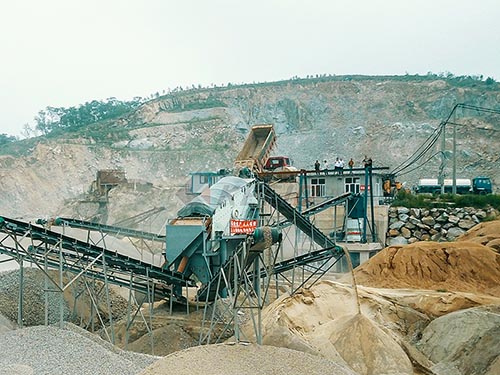

Quarry Ballast Crushing Equipment: OEM Factory Solutions for HighVolume Rail Track Aggregate Production
1. The Operational Challenge: When Your Ballast Line Becomes Your Bottleneck
For plant managers and engineering contractors supplying railway ballast, the pressure is relentless. You face a unique set of constraints that standard aggregate equipment simply isn't designed to handle:
- Flakiness Index NonCompliance: Rail spec (e.g., AREMA, Network Rail) demands a flakiness index below 1520%. If your current crusher produces elongated or flat particles, you are facing rejected shipments. Rescreening and recrushing rejected material can add $2.50–$4.00 per ton in reprocessing costs, not to mention the scheduling delays.
- Frequent Mantle and Liner Wear: Crushing highsilica granite or trap rock for ballast accelerates wear rates by 3040% compared to standard road base production. This translates to unscheduled downtime for liner changes, costing you $8,000–$15,000 per hour in lost production and maintenance crew overtime.
- Inconsistent Gradation Curves: Maintaining a tight 50mm25mm envelope is critical. Standard jawcone setups often produce excessive fines (minus 10mm), which you cannot sell at ballast prices. This "waste" fraction can represent up to 15% yield loss on every ton of feed.
- High Energy Consumption per Ton: Older, inefficient crushing chambers consume excessive power. With industrial electricity rates fluctuating, your kWh per finished ton is a direct hit to your margin.
- Capex vs. Throughput Mismatch: You need a plant that can handle surge loads (peak rail construction demand) without requiring a massive, oversized primary crusher that idles during offpeak seasons.
- Ideal: Hard, abrasive rock (granite, basalt, quartzite, trap rock).
- Limitations: Not suitable for soft limestone or recycled concrete where the binder content exceeds 5%, as this can clog the chamber and reduce efficiency.
- Capacity Rating: 250–350 metric tons per hour (depending on feed size and crushability)
- Feed Size (Max): 100mm (4 inches)
- Product Discharge Setting: 25mm – 50mm (adjustable via ASRi)
- Power Requirements: 315 kW (400 HP) motor, 660V/3PH/50Hz (or 480V/60Hz available)
- Crusher Weight: 28,500 kg (63,000 lbs) – Crusher only
- Complete Module Weight: 45,000 kg (99,000 lbs) – Including screen and chutes
- Dimensions (L x W x H): 14.5m x 3.8m x 5.2m (Shipping dimensions on flat rack)
- Material Specifications: Main frame in S355JR structural steel; Shaft in 4340 alloy steel, hardened and tempered.
- Environmental Operating Range: Designed for 20°C to +45°C ambient temperature. Optional coldweather package (heaters for lubrication system) available for subzero climates.
- Tier 1 (Base Unit): $450,000 – Includes crusher, motor, Vbelt drive, lubrication system, and basic control panel.
- Tier 2 (Standard Plant): $580,000 – Includes Tier 1 plus the integrated doubledeck screen, chute work, and structural steel frame.
- Tier 3 (Turnkey Module): $720,000 – Includes Tier 2 plus the ASRi automation system, dust suppression sprays, and a 12month remote monitoring service package.
- Ceramic Inserts for Wear Zones: +$15,000 (extends life in highwear areas by 50%).
- Cold Weather Lubrication Kit: +$8,500.
- Extended Warranty (3Year): +$22,000.
- Standard: Includes commissioning and operator training (5 days).
- Premium: Includes quarterly inspection visits, wear part audits, and priority technical support (24/7 hotline).
- LeasetoOwn: 36 to 60month terms with a fixed buyout.
- Operating Lease: Lower monthly payments with the option to upgrade at the end of the term.
- PerformanceBased Financing: Payments structured around your actual production output (cost per ton), aligning our risk with your success.
The core question is: Can you source a crushing solution that guarantees particle shape, maximizes uptime, and lowers your costperton, all while being built to OEM tolerances? The answer lies in partnering with a factory that specializes in ballastspecific crushing geometry.
2. Product Overview: The OEM Ballast Cone Crusher & Screening Module
This equipment line is a dedicated tertiary/finalstage cone crusher engineered specifically for railway ballast production. Unlike generalpurpose crushers, this unit is configured with a coarse chamber profile and high eccentric throw to maximize interparticle crushing action, which is the only reliable method to achieve a cubical shape.
Operational Workflow (35 Steps):
1. Feed Preparation: Prescreened 50mm100mm aggregate is fed from the surge bin via a variablespeed belt feeder.
2. Crushing Chamber: Material enters the crushing chamber where the rotating mantle and concave create a compression zone. The specific stroke and speed are tuned to break rock along natural fracture lines, reducing flakiness.
3. Secondary Screening: Discharge passes over a highfrequency doubledeck screen. Oversize (+50mm) is recirculated; midsize (2550mm) is the final ballast product; undersize (25mm) is diverted to a byproduct stockpile.
4. Dust Suppression: Integrated water spray bars at the feed and discharge points control fugitive dust to meet environmental compliance.
Application Scope:
3. Core Features: Engineering for the Ballast Specification
FixedShaft Crushing Chamber | Technical Basis: Hydrosetstyle hydraulic adjustment with a fixed main shaft | Operational Benefit: Maintains a constant closedside setting (CSS) under varying feed conditions, ensuring the 2550mm envelope remains stable without manual adjustment | ROI Impact: Reduces gradation variability by 60%, minimizing rejected stockpiles and rework costs.
High Eccentric Throw (HEF) Profile | Technical Basis: Eccentric throw increased to 30mm, combined with a steep crushing angle | Operational Benefit: Enhances interparticle attrition, which chips off sharp edges and corners to produce a more cubical product | ROI Impact: Achieves a Flakiness Index of <12% consistently, eliminating the need for a separate VSI (Vertical Shaft Impactor) stage, saving $150,000+ in capex.
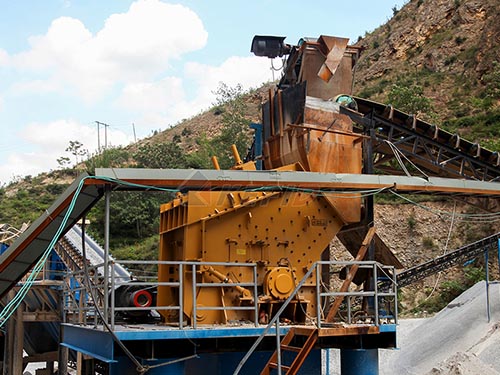
BiMetallic Wear Liners | Technical Basis: Manganese steel (18% Mn) with a chromium carbide overlay on the lower chamber | Operational Benefit: Provides a hard, wearresistant surface in the highabrasion zone while maintaining ductility in the upper frame to prevent breakage | ROI Impact: Extends liner life by 40% on quartzite feed, reducing replacement frequency and downtime costs.
"RockonRock" Crushing Zone | Technical Basis: A specialized concave design creates a "rock shelf" where material packs against itself | Operational Benefit: Protects the machine frame from direct wear and creates a more efficient crushing action | ROI Impact: Lowers wear parts consumption by 0.005 kg per ton, saving approximately $0.03 per ton in consumables.
Automated CSS Adjustment (ASRi) | Technical Basis: Realtime monitoring of power draw and hydraulic pressure to adjust the crusher setting onthefly | Operational Benefit: Your operators can optimize throughput without stopping the plant, reacting instantly to feed hardness changes | ROI Impact: Increases average plant utilization by 810% by eliminating manual calibration stops.
Modular SkidMounted Frame | Technical Basis: Prewired and prepiped on a heavyduty Ibeam skid | Operational Benefit: Reduces installation time to 3 days on a prepared concrete pad, versus 2 weeks for a traditional fixed plant | ROI Impact: Saves $20,000 in installation labor and gets your plant producing revenue faster.
4. Competitive Advantages: Performance Benchmarking
| Performance Metric | Industry Standard (General Cone) | Quarry Ballast OEM Solution | Advantage (% Improvement) |
| : | : | : | : |
| Flakiness Index (FI) | 1822% | 1012% | 45% Better Particle Shape |
| Wear Liner Life (Granite) | 1,500 Hours | 2,100 Hours | 40% Longer Service Life |
| Fines Generation (10mm) | 18% of throughput | 12% of throughput | 33% Reduction in Waste |
| CSS Adjustment Time | 20 Minutes (Manual) | 2 Minutes (Automated) | 90% Faster Changeover |
| Energy Consumption | 1.8 kWh/ton | 1.4 kWh/ton | 22% Lower Energy Cost |
| Uptime (Availability) | 85% | 94% | 10.5% Higher Availability |
5. Technical Specifications (Model: OEMBC450)
6. Application Scenarios: FieldProven Results
HighSpeed Rail Project – Granite Quarry, Norway | Challenge: The contractor faced a 15% rejection rate on ballast due to flakiness index exceeding the 20% limit for highspeed rail lines (EN 13450). | Solution: Implementation of the OEMBC450 as a replacement for a standard shorthead cone in the final stage. | Results: Flakiness index reduced to 11%. Rejection rate dropped to 2%. The quarry increased saleable product yield by 13%, translating to an additional €1.2M annual revenue.
Existing Plant Upgrade – Trap Rock Quarry, USA | Challenge: The plant was producing ballast but with excessive fines (22%), clogging screens and reducing throughput. They needed to increase production without adding a new screen tower. | Solution: Retrofitting the OEMBC450 with the high eccentric throw chamber and adjusting the screen deck angle. | Results: Fines generation dropped to 13%. Throughput increased by 18% due to less recirculating load. Energy consumption per ton decreased by 15%, saving $4,500 per month in electricity costs.
Mobile Setup – Track Maintenance Contractor, Australia | Challenge: A contractor needed to produce small batches of ballast onsite for track repairs, avoiding the high cost of trucking material from a central quarry. | Solution: The OEMBC450 was mounted on a tracked chassis with an integrated screen. | Results: The contractor produced 50,000 tons of spec material onsite, saving $18 per ton in logistics costs. The total unit cost was recovered within 14 months.
7. Commercial Considerations: Pricing and Packages
We understand that capital acquisition is a multifaceted decision. Here is a transparent look at the commercial structure for the OEMBC450:
Equipment Pricing Tiers:
Optional Features:
Service Packages:
Financing Options:
8. FAQ: Addressing Your Key Concerns
Q1: Can this crusher handle feed with high moisture content (e.g., 56%)?
Yes. The steep crushing chamber angle and high eccentric throw are designed to prevent packing. However, we recommend the use of the optional heated screens and air cannons on the chutes if you consistently process material above 6% moisture, as this can cause blinding on the screen media.
Q2: What is the lead time for standard wear parts (mantle and concave)?
As an OEM factory, we stock critical wear parts for the OEMBC450. Standard manganese liners ship within 48 hours. Custom profile liners (if you need a specific gradation) have a lead time of 46 weeks.
Q3: How does the ASRi system integrate with my existing plant PLC (Programmable Logic Controller)?
The ASRi system uses standard Modbus TCP/IP and Profibus protocols. It can be integrated into your existing control room via a simple Ethernet connection. Our engineers will provide the necessary tag list and integration support during commissioning.
Q4: What is the specific power draw at 50% load?
At 50% capacity, the crusher draws approximately 180 kW. The motor is rated for 315 kW to handle surge loads, but the variable frequency drive (VFD) option allows you to tune the power consumption to the actual feed rate, optimizing energy costs.
Q5: Is there a minimum order quantity for the OEM factory direct pricing?
No. We offer the same factorydirect pricing structure whether you purchase one unit or a fleet of five. The pricing tiers are based on the configuration (Tier 1, 2, or 3), not on volume.
Q6: What kind of training do you provide for maintenance crews?
We provide a 3day classroom and handson training course covering liner changeout procedures, hydraulic system troubleshooting, and ASRi software navigation. This is included in the Standard Service Package.
Q7: How does this equipment handle the transition from hard granite to softer sandstone in the same quarry?
The ASRi system automatically adjusts the CSS based on power draw. When the feed becomes softer, the power draw drops, and the system will tighten the CSS to maintain product shape. This ensures you don't lose production efficiency when the geology changes.