
Professional Stone Crusher Plant Customization


1. PAINPOINT DRIVEN OPENING
Are you managing a crushing operation where inconsistent feed material, unplanned downtime, and rising operational costs are eroding your project margins? Common industry challenges include:
Unscheduled Stoppages: Frequent mechanical failures and liner changes can halt your entire production line, costing thousands per hour in lost output and labor.
Inconsistent Product Gradation: Fluctuations in feed size or hardness lead to offspec aggregate, causing rejections and forcing reprocessing.
High Operational Expenditure: Soaring energy consumption, excessive wear part costs, and high maintenance labor hours directly impact your bottom line.
Inflexible Configuration: Static plants cannot adapt to changing project requirements or feed materials, limiting your operational agility and contract bidding potential.
Space and Logistics Constraints: Designing an efficient flow within a confined site or for a mobile contract requires precise engineering to avoid costly reworks.
Is there a solution that transforms these fixed costs into variable, manageable efficiencies? The answer lies in a professionally engineered and customized stone crusher plant.
2. PRODUCT OVERVIEW
A professional stone crusher plant is a fully integrated material processing system engineered for the continuous reduction of rock, ore, or demolition concrete into specified aggregate sizes. It is not merely an assembly of machinery but a coordinated circuit designed for a specific duty.
Operational Workflow:
1. Primary Size Reduction: Runofquarry material is fed into a primary crusher (e.g., jaw or gyratory) for initial breaking.
2. Material Handling & Screening: Crushed material is conveyed to vibrating screens which separate it into desired size fractions.
3. Secondary/Tertiary Crushing: Oversize material is routed to secondary (e.g., cone or impact crusher) or tertiary crushers for further refinement.
4. Stockpiling & Reclaim: Correctly sized aggregates are conveyed to designated stockpiles for loadout or downstream processing.
Application Scope & Limitations:
This solution is engineered for medium to hightonnage commercial quarrying, mining, and largescale construction projects. Its effectiveness is contingent on a thorough analysis of feed material characteristics (abrasion index, silica content, moisture), required final product specifications, and sitespecific constraints. It is not typically suited for very smallscale or highly mobile applications where standalone mobile crushers may be more appropriate.
3. CORE FEATURES
Modular Plant Design | Technical Basis: Preengineered, skidmounted sections with standardized interfaces | Operational Benefit: Significantly reduces installation time and civil work costs by up to 40%. Enables future reconfiguration or expansion. | ROI Impact: Faster timetorevenue and lower capital expenditure on site preparation.
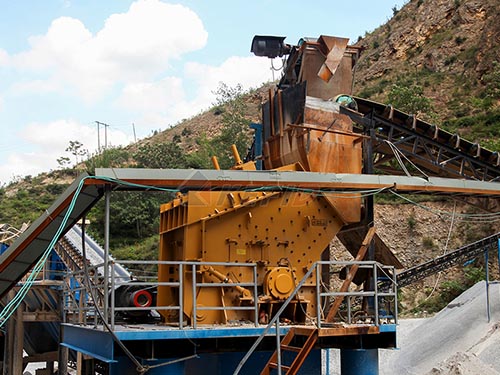
Intelligent Process Control System | Technical Basis: PLCbased automation with load management and cavity level monitoring | Operational Benefit: Maintains optimal crusher loading for consistent product gradation and prevents chokefeeding or runempty conditions that cause wear. | ROI Impact: Field data shows improvements in energy efficiency (812%) and reduction in offspec product (>15%).
HeavyDuty Component Selection | Technical Basis: Utilization of premiumgrade bearings, hydraulic components, and structural steel specified for cyclical loading | Operational Benefit: Increases mean time between failures (MTBF), directly addressing your challenge of unscheduled downtime. | ROI Impact: Reduces maintenance labor costs and lowers lifetime cost of ownership despite a potentially higher initial investment.
Centralized Greasing & Dust Suppression | Technical Basis: Automated lubrication circuits and strategically placed spray nozzles integrated into plant design | Operational Benefit: Your operators benefit from safer, cleaner manual intervention points and ensured bearing protection. | ROI Impact: Extends component service life by up to 30% and ensures compliance with site environmental health standards.
Optimized Flow Geometry | Technical Basis: CFD analysis of material transfer points to minimize impact angles and velocity | Operational Benefit: Reduces belt wear, spillage, and dust generation at transfer points by ensuring centered loading. | ROI Impact: Cuts ongoing conveyor maintenance costs and wear part replacement frequency.
4. COMPETITIVE ADVANTAGES
| Performance Metric | Industry Standard (Fixed Plant) | Customized Stone Crusher Plant Solution | Advantage (% Improvement) |
| : | : | : | : |
| Plant Installation Time| 812 Weeks (foundation curing + erection) | 35 Weeks (skid placement & connection) | ~60% Faster |
| Energy per Ton Crushed| Baseline (100%) | Optimized drives & load management control | 812% Reduction |
| Wear Part Life (Mn14 Liners)| Based on generic design for average rock type| Life optimized by chamber geometry & kinematics for your rock type| 1525% Extension |
| Product Gradation Consistency| ±10% variation common due to manual control/feed variance| ±5% variation achieved via automated setting adjustment & feed regulation| 50% Improvement in Consistency |
5. TECHNICAL SPECIFICATIONS
Capacity Range: Configurable from 150 TPH to 800+ TPH nominal throughput.
Primary Crusher Options: Jaw Crusher (Feed size up to 1200mm), Primary Impact Crusher, or Gyratory Crusher.
Secondary/Tertiary Options: Cone Crushers (for abrasive rock), Horizontal Shaft Impactors (for softer rock/asphalt recycling).
Power Requirements: Total installed power typically ranges from 350 kW to 900 kW depending on configuration; designed for mains grid or heavyduty generator set connection.
Material Specifications: Highabrasion resistant steel at all critical wear points; structural steelwork compliant with international standards (e.g., ISO 8528).
Physical Dimensions: Modular skid designs tailored to site layout; transportable via standard flatbed trailers.
Environmental Operating Range: Designed for ambient temperatures from 20°C to +50°C; dust emission control systems achieve <10 mg/Nm³ with optional addons.
6. APPLICATION SCENARIOS
Granite Quarry Expansion Project
Challenge: A quarry needed to increase production by 40% but had limited space for plant expansion within the existing pit boundary. The existing linear plant layout could not be extended.
Solution: A customized stone crusher plant was designed with a vertical stacking layout on modular skids—primary crushing at the lower level feeding via inclined conveyors to secondary screening stacked above—fitting into the original footprint.
Results: Achieved the target throughput increase without requiring additional land acquisition or major civil works; project payback period was reduced by an estimated 18 months due to lower civil costs.
MultiSite Contracting Company
Challenge: A contractor winning varied projects needed processing solutions for both hard limestone and recycled concrete but could not justify two dedicated static plants due to capital constraints.
Solution: A semimobile customized stone crusher plant was supplied on heavyduty multiaxle trailers with quickdisconnect utilities modules.
Results: The company can now mobilize a fullcapacity plant between sites within days instead of weeks using standard heavy haulage equipment; this flexibility has allowed them to bid successfully on two additional major projects annually.
7. COMMERCIAL CONSIDERATIONS
Our professional stone crusher plants are offered in structured tiers:
1. Standard Configuration Tier: Preengineered modular designs based on proven layouts for common materials like limestone/mediumhard rock). Includes base automation.
2. Engineered Customization Tier: Full application review leading to custom flow sheet design; selection of specific crusher models/chamber options; advanced process control integration.
3. Full Circuit Tier: Turnkey supply including primary feeding unit(s), crushing/screening core, full conveying circuit with stockpile conveyors/radial stackers.
Optional features include advanced dust suppression cannons, tramp metal detection systems with autoreject capability,
and remote telematics monitoring packages that provide operational data dashboards.
We offer comprehensive service agreements covering scheduled maintenance inspections,
wear part supply programs with guaranteed pricing,
and priority technical support available through multiple channels including direct video assistance
for troubleshooting purposes when required by our clients’ teams onsite during operations periods worldwide
Financing options are available through our partners including equipment leasing structures
and rentaltopurchase programs designed specifically
for capitalintensive industrial machinery investments
8.FAQ
Q1 – How do you ensure the proposed stone crusher plant will handle our specific rock type?
A1 – Our engineering process requires a sample of your feed material for laboratory testing
(abrasiveness compressive strength work index)
The results directly inform the selection of crusher chamber designs liner metallurgy
and machine configurations ensuring performance targets are met
Q2 – What is the typical lead time from order placement until commissioning?
A2 – For standard configuration tiers lead time averages between sixteen(16)
and twentyfour(24) weeks depending on component sourcing schedules
Custom engineered solutions typically require an additional eight(8)
to twelve(12) weeks frontend engineering period prior manufacturing commencement
Q3 – Can we integrate existing equipment we own into the new customized plant?
A3 – Yes subject to a thorough condition assessment
and compatibility review with the new system’s design parameters
Our engineers can design transfer points control interfaces accordingly
Q4 – What training is provided for our operational staff?
A4 – We provide comprehensive onsite training covering normal operation procedures startup/shutdown sequences routine maintenance tasks basic troubleshooting techniques as well as detailed system manuals prior handover completion
Q5 – How does customization affect longterm parts availability?
A5 – We utilize core components from established OEM suppliers ensuring global parts availability even decades later while any custom fabricated structural items are documented thoroughly within asbuilt drawings stored digitally guaranteeing future reproducibility if needed after many years service life span has been reached requiring replacement fabrication possible locally if desired by client’s own workshop facilities following provided specifications exactly