
Private Label Stone Quarry Crushing Plant Vendors


1. PAINPOINT DRIVEN OPENING
Managing a private label stone quarry operation demands consistent output and predictable margins. Yet, many plant managers and engineering contractors face persistent challenges that erode profitability. Are you experiencing:
Inconsistent Aggregate Quality: Fluctuations in final product size and shape, leading to rejected loads and diminished brand reputation for your private label.
Unscheduled Downtime: Frequent mechanical failures in the crushing circuit, causing production halts that cost thousands per hour in lost revenue and idle labor.
High Operational Costs: Excessive wear part consumption and inefficient power use per ton of processed material, directly cutting into your perton profit.
Inflexible Production: Difficulty in quickly adjusting crusher settings to switch between different aggregate specifications for various contracts or market demands.
Scalability Constraints: A crushing plant that cannot efficiently adapt to increased reserve development or new contract volumes without a complete system overhaul.
If these operational hurdles sound familiar, the specification of your core crushing equipment requires reevaluation. The right private label stone quarry crushing plant is not just machinery; it is the foundation of your operational reliability and commercial success.
2. PRODUCT OVERVIEW
A Private Label Stone Quarry Crushing Plant is a fully engineered, stationary or semimobile rock processing system designed to be branded and sold under your company’s name. It transforms blasted quarry rock into precisely graded aggregates (e.g., base material, chips, dust) for construction, road building, and concrete production.
Operational Workflow:
1. Primary Reduction: Dumpfed primary jaw crusher reduces large shot rock (up to 1000mm) to a manageable size (150250mm).
2. Secondary Crushing & Screening: Cone crushers further reduce material, which is then screened via vibrating screens to separate sized products.
3. Tertiary/Quaternary Shaping: Additional crushers (e.g., cone or impact) refine aggregate shape and produce finer specifications.
4. Material Handling: A network of conveyors transfers material between stages and to final stockpiles.
5. Control & Optimization: Centralized PLCbased control systems monitor and adjust operations for optimal flow and product quality.
Application Scope & Limitations:
Scope: Ideal for medium to largescale quarry operators producing aggregates for commercial sale under their own brand. Effective for processing granite, limestone, basalt, and other abrasive aggregates.
Limitations: Not designed for very smallscale or portable "pitrun" operations. Maximum feed size and abrasiveness are defined by the selected primary crusher model. Site requires adequate planning permissions and infrastructure for installation.
3. CORE FEATURES
Modular Plant Design | Technical Basis: Preengineered, skidmounted sections with standardized interfaces | Operational Benefit: Significantly reduces onsite installation time and civil work costs by up to 40%. Enables future reconfiguration or expansion. | ROI Impact: Faster commissioning accelerates revenue generation; modularity protects capital investment against future process changes.
Advanced Crushing Chamber Geometry | Technical Basis: Computermodeled chamber profiles based on feed material analysis | Operational Benefit: Optimizes compression crushing action, yielding a higher percentage of inspec, cubical product on the first pass. Reduces recirculating load. | ROI Impact: Increases saleable product yield per ton of raw feed by 515%, while lowering wear costs associated with overcrushing.
Centralized Automated Control System (CACS) | Technical Basis: PLC with humanmachine interface (HMI) providing realtime telemetry and control logic | Operational Benefit: Allows singleoperator monitoring and adjustment of feeder rates, crusher settings, and conveyor speeds for peak efficiency. Provides fault diagnostics. | ROI Impact: Optimizes power draw per ton crushed (kWh/t) by 812% and reduces labor requirements for circuit supervision.
HeavyDuty Component Specification | Technical Basis: Use of forged alloy steel main shafts, spherical roller bearings, and heavyduty frames exceeding standard duty ratings | Operational Benefit: Provides exceptional durability under continuous highload conditions common in quarrying, extending mean time between failures (MTBF). | ROI Impact: Lowers lifetime cost of ownership through extended service intervals; minimizes catastrophic failure risk that causes prolonged downtime.
Integrated Dust Suppression & Noise Abatement | Technical Basis: Strategically placed spray nozzles at transfer points and acoustic enclosures on key drives | Operational Benefit: Meets or exceeds regional environmental compliance standards for particulate emissions (PM10/PM2.5) and noise pollution directly at source.| ROI Impact: Avoids regulatory fines and work stoppages; improves community relations essential for quarry license renewals.
Comprehensive Maintenance Access Design | Technical Basis: Walkin platforms, hydraulic setting adjustment for crushers, and easyaccess service points designed into layout| Operational Benefit: Enables safer routine inspections, liner changes, and maintenance tasks performed more quickly by your crew.| ROI Impact: Reduces planned maintenance downtime by an average of 30% as observed in field data; enhances technician safety.
4. COMPETITIVE ADVANTAGES
| Performance Metric | Industry Standard Solution | Private Label Crushing Plant Solution | Advantage (% Improvement) |
| : | : | : | : |
| Availability (Uptime) | ~8588% (planned/unplanned stops) |>92% through robust design & CACS prognostics| +58% more productive hours annually |
| Wear Cost per Ton Processed| Baseline (100%)| Reduced via optimized chambers & materials| 15% to 25% |
| Power Efficiency (kWh/Ton)| Baseline (100%)| Improved via loadsensing controls & efficient drives| 8% to 12% |
| Product Yield (% InSpec)| ~8590% on first pass |>9395% via chamber optimization & screening layout| +5% increase in premium product |
| Setup/Reconfiguration Time| Weeks for structural work| Days due to modular skid design| 60% to 70% time reduction |
5.TECHNICAL SPECIFICATIONS
Capacity Range: Configurable from 200 to over 800 tons per hour (TPH), depending on feed material hardness (e.g., granite vs limestone) and final product mix.
Power Requirements: Total connected load typically from 400 kW to 1.2 MW; supplied via heavyduty industrial switchgear with power factor correction.
Material Specifications: Fabricated from ASTM A36/A572 steel; liners available in manganese steel (14%18%), T400/500 abrasionresistant steel, or OEMequivalent alloys.
Primary Crusher Feed Opening: Options from 900mm x 600mm up to 1500mm x 1300mm jaw crusher dimensions.
Physical Dimensions (Typical Layout): Footprint approximately 40m L x 25m W x 15m H; varies with configuration.
Environmental Operating Range: Designed for ambient temperatures from 20°C to +45°C; dust protection rating standard at IP65 for electrical components.
6\. APPLICATION SCENARIOS
Granite Quarry Expansion Project
Challenge: A regional producer needed to double output under their established brand but had limited space for plant expansion within the existing pit boundary.
Solution: Implementation of a compact tertiary crushing circuit module featuring a highspeed cone crusher configured specifically for chip production alongside existing infrastructure.
Results: Achieved a 95% increase in total plant output without expanding the primary circuit footprint. The consistent chip quality strengthened their private label's market position.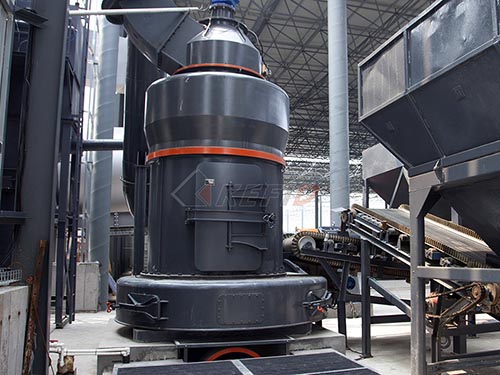
Limestone Aggregate Producer
Challenge: High wear costs from abrasive silica content were eroding margins on county road contracts requiring specific gradations.
Solution:A complete primarytotertiary private label plant was specified with chambers optimized for limestone but built with upgraded liner alloys at critical wear points.
Results:Feld data shows wear part life increased by an average of22%, reducing cost per ton by18%. The automated control system also ensured consistent gradation compliance across all shifts
7\. COMMERCIAL CONSIDERATIONS
Pricing is structured around plant capacity capability core equipment selection,and levelof automation
Tier1(200350TPH):Includes robust jaw cone crushers basic screeningand conveyors idealfor establishinga newprivate labelproduct line
Tier2(350600TPH):Adds advanced automation(CACS) heavier duty componentsand optional shapingcrushersfor premium aggregateproduction
Tier3(600+TPH):Fully customizedcircuitswith multiple crushing stages high capacity screensand comprehensive dustcontrol systems
Optional Features:
Advanced predictive monitoring sensors extendedwear packages alternative dust suppression(fogcannon systems)
Service Packages:
Standard warranty(12months parts& labor)
Extended service agreements covering scheduled maintenanceand priority support
On site operator training programs
Financing:
Equipment leasing structures operating lease agreementsand project financing solutionsare availableto aligncapital expenditurewith projectcash flow
8\. FAQ
Q:What levelof customizationis possiblefor myprivate labelbranding?
A Full branding integrationis standard This includes paint schemes control system HMI graphics structuralsteel etchingand comprehensive documentation bearingyour company identityand manuals
Q How do you ensure technical compatibilitywith our existingquarry equipmentfeeders screensconveyors)?
A Our engineering team conducts a pre design review requiringyour existing equipment specificationsand site layout diagrams Interface points conveyor speeds control protocols are all engineeredfor seamless integration minimizing retrofit costs
Q Whatisthe typical implementationtimelinefrom orderto commissioning?
A For standard modular designs deliveryis typically1824 weeks followingdesign approval Commissioningand stabilizationrequire an additional24 weeks dependingon site readiness Complexitycan affectthis schedule which willbe detailedin your project plan
Q Can this plantbe relocatedifour quarry reservesare depletedor we win anew contractat adifferent site?
A Yes The modular skidded designis fundamentallyrelocatable Dismantling relocation andrecommissioningcostsand timelinesare significantlylower than thosefor traditional concrete founded plants providinglong term asset flexibility
Q What kindof operational trainingis providedfor our crew?
A We provide comprehensive onsite training covering normal operation startupshutdown procedures routine maintenance troubleshootingand safetyprotocols specifictoyour configuredplant Trainingis conductedwith bothyour managementand operations personnel