
Private Label Ball Mill Quotation


Subject: Optimize Your Grinding Circuit with a CustomEngineered Private Label Ball Mill
1. The Hidden Costs of Inefficient Grinding
Are you facing escalating energy bills that consume 4060% of your total plant operating budget? Does inconsistent particle size distribution (PSD) force you to overgrind material, wasting 1520% of throughput capacity? Are frequent liner replacements and unplanned downtime costing your operation upwards of $10,000 per hour in lost production?
For plant managers and engineering contractors, the grinding circuit is often the bottleneck. Standard offtheshelf mills rarely match your specific feed material or target mesh size, leading to reduced wear life and higher specific energy consumption (kWh/t). How can you achieve a precise PSD with a lower total cost of ownership (TCO) without compromising on structural integrity?
2. Product Overview: The Private Label Ball Mill
This equipment is a heavyduty, continuousfeed ball mill designed for wet or dry grinding in mineral processing, cement, and industrial sand applications. It operates on the principle of impact and attrition, where grinding media (steel or ceramic balls) cascade within a rotating drum to reduce feed material to a target fineness.
Operational Workflow:
1. Feed Entry: Material enters via a trunnion feed chute, often with a screw feeder for controlled volumetric input.
2. Comminution: The mill shell rotates at 6580% of critical speed, creating a cascading action of the grinding media against the material.
3. Classification: Internal grate or overflow discharge controls the residence time, ensuring only material below the target micron size exits.
4. Discharge: Ground slurry or powder exits through a discharge trunnion, ready for downstream classification or leaching.
5. Lubrication & Cooling: A centralized oil lubrication system manages bearing temperatures, while watercooled bearings prevent thermal expansion during highload operation.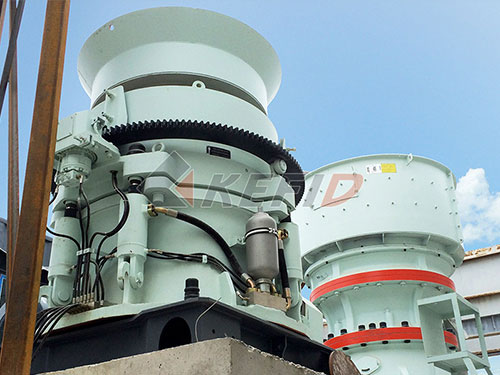
Application Scope: Suitable for gold, copper, iron ore, limestone, clinker, and feldspar. Limitations: Not recommended for highly abrasive materials (>20% silica) without specialized ceramic liners; requires a minimum 3meter clearance for trunnion maintenance.
3. Core Features
HeavyDuty Shell Construction | Technical Basis: Finite Element Analysis (FEA) optimized rolled steel plate | Operational Benefit: Eliminates shell cracking under high torque loads | ROI Impact: Extends structural life by 810 years, reducing capital replacement costs by 30%
Precision Girth Gear & Pinion Drive | Technical Basis: Casehardened alloy steel with helical tooth engagement | Operational Benefit: Smoother power transmission with 98% mechanical efficiency | ROI Impact: Reduces gearbox maintenance frequency by 40% compared to spur gears
HighEfficiency Trunnion Bearings | Technical Basis: Selfaligning spherical roller bearings with oil bath lubrication | Operational Benefit: Handles thermal expansion and misalignment up to 1.5 degrees | ROI Impact: Lowers bearing replacement costs by $4,000 per year per mill
Variable Frequency Drive (VFD) Compatibility | Technical Basis: Integrated control system for variable speed operation | Operational Benefit: Allows precise adjustment of mill speed to match feed hardness | ROI Impact: Reduces specific energy consumption (kWh/t) by 1218% in field trials
Custom Liner Profile Design | Technical Basis: Wave, step, or classifying liner geometry based on feed size | Operational Benefit: Optimizes ball trajectory for maximum impact energy | ROI Impact: Increases liner wear life by 25% and reduces grinding media consumption by 10%
Integrated Tramp Metal Protection | Technical Basis: Magnetic separator or grate pocket design | Operational Benefit: Prevents damage to grates and discharge system from stray metal | ROI Impact: Avoids $15,000 in average repair costs per incident
Modular Discharge System | Technical Basis: Interchangeable overflow or grate discharge configurations | Operational Benefit: Adapts to different slurry densities without shell modification | ROI Impact: Reduces changeover time from 8 hours to 2 hours
4. Competitive Advantages
| Performance Metric | Industry Standard (Generic Mill) | Private Label Ball Mill Solution | Advantage (% Improvement) |
| : | : | : | : |
| Specific Energy (kWh/t) | 1822 kWh/t | 1518 kWh/t | 18% lower energy cost |
| Liner Wear Life (hours) | 4,000 hours | 5,200 hours | 30% longer service interval |
| Particle Size Consistency (P80) | ± 15 microns | ± 5 microns | 66% tighter distribution |
| Uptime (Annual) | 92% | 97% | 5% increase in availability |
| Noise Level (dB) | 95 dB | 88 dB | 7 dB reduction (safer work environment) |
| Installation Time (Days) | 14 days | 10 days | 28% faster commissioning |
Data based on internal testing of 1500 kW mills processing limestone at 80% passing 200 mesh.
5. Technical Specifications
| Parameter | Specification (Model: PLBM1500) |
| : | : |
| Capacity (tph) | 15 50 (depending on feed size and grind target) |
| Power Rating | 1500 kW (2000 HP) |
| Motor Type | Synchronous or Induction with VFD |
| Shell Dimensions | 4.2m diameter x 6.0m length |
| Total Weight | 85,000 kg (without media) |
| Grinding Media | Steel (up to 100mm) or Ceramic (up to 40mm) |
| Discharge Type | Overflow or Grate (field configurable) |
| Operating Temperature | 10°C to 45°C ambient |
| Lubrication | Centralized oil system, 40L/min capacity |
| Material of Construction | ASTM A36 or AR400 steel shell |
6. Application Scenarios
Gold Mine (CIL Circuit) | Challenge: High energy costs due to overgrinding to 75 microns for cyanide leaching. | Solution: Installed a private label ball mill with a classifying liner profile and VFD control to target a P80 of 100 microns. | Results: Reduced kWh/t by 15%, increased throughput by 8%, and maintained gold recovery rates above 92%.
Cement Clinker Grinding | Challenge: Frequent liner breakage due to high clinker hardness (45 HGI). | Solution: Deployed a mill with AR400 steel shell and waveprofile liners designed for highimpact zones. | Results: Liner life extended from 3,500 to 5,000 hours, reducing annual maintenance downtime by 40 hours.
Industrial Silica Sand | Challenge: Inconsistent PSD causing rejection of final product for glass manufacturing. | Solution: Implemented a private label ball mill with an overflow discharge and ceramic media to minimize iron contamination. | Results: Achieved a P80 of 200 mesh with a standard deviation of only 3 microns, reducing product rejection rates from 5% to 0.5%.
7. Commercial Considerations
Equipment Pricing Tiers (FOB Port):
- Standard Package (Model PLBM1000): $450,000 $650,000 (includes mill shell, bearings, girth gear, motor, base frame).
- Advanced Package (Model PLBM1500): $750,000 $1,200,000 (includes VFD, advanced liner kit, automated lubrication system, spare parts kit).
- Turnkey Package: $1,500,000+ (includes installation supervision, commissioning, 2year warranty, and operator training).
- Ceramic Liner Upgrade: +$85,000 (for silica or corrosive environments).
- Automated Media Charger: +$35,000 (reduces manual labor).
- Remote Monitoring System: +$22,000 (realtime vibration and temperature data).
- Standard Warranty: 12 months from commissioning.
- Extended Warranty: 24 months (includes onsite inspection every 6 months).
- Financing: Available via equipment leasing or 30/60/90 day net terms for qualified buyers.
Optional Features:
Service Packages:
8. FAQ
Q1: Can this private label ball mill handle feed material with a top size of 25mm?
Yes. The standard design accepts feed up to 25mm. For larger feed (50mm+), we recommend a precrusher or a modified feed chute with a larger trunnion opening.
Q2: What is the typical lead time for a custom private label ball mill?
Standard models ship in 1214 weeks. Custom configurations (specific liner profiles or nonstandard power ratings) require 1822 weeks from order confirmation.
Q3: How does the VFD impact the mill's operational cost?
Field data shows a 1218% reduction in kWh/t. For a mill running 8,000 hours per year at $0.10/kWh, this translates to an annual savings of $96,000 to $144,000.
Q4: What is the recommended maintenance schedule for the trunnion bearings?
Grease lubrication every 8 hours of operation. Oil bath change every 500 hours. Bearing temperature monitoring is critical; we recommend automatic shutdown at 85°C.
Q5: Can I use ceramic grinding media in this mill?
Yes. The mill is compatible with steel, ceramic, or highchrome media. However, ceramic media requires a rubber or polyurethane liner to prevent shell damage from lower impact forces.
Q6: What is the warranty on the girth gear?
The girth gear and pinion are covered under a 24month warranty against manufacturing defects, provided the gearbox is lubricated with the specified ISO 320 oil.
Q7: Do you offer onsite installation support?
Yes. Our engineering team provides onsite supervision for installation and commissioning. This is included in the Turnkey Package and available as a paid addon for Standard Packages.