
Premium Stone Crusher Plant Procurement
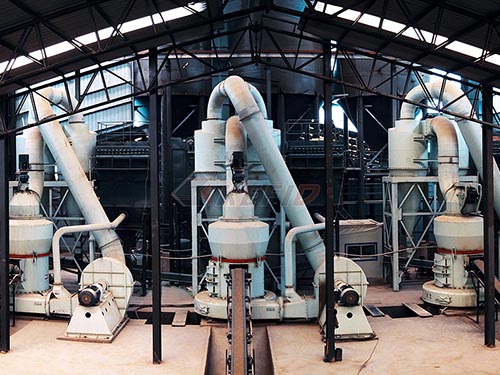

Premium Stone Crusher Plant Procurement: Engineering Resilience for Demanding Aggregate Production
1. PAINPOINT DRIVEN OPENING
Your aggregate production faces relentless pressure. Are your operational challenges eroding profitability? Consider the direct costs of:
Unscheduled Downtime: Bearing failures or component wear halting your entire crushing line, costing thousands per hour in lost production and idle labor.
Inconsistent Product Yield: Poor gradation control and excessive fines generation, reducing the volume of highvalue specification material and increasing waste.
High Operational Costs: Spiking energy consumption from inefficient crushing action and escalating maintenance expenses from premature part replacements.
Rigid Plant Configuration: Inability to adapt to changing feed material or product requirements without significant capital investment and reengineering.
Is your current stone crusher plant a source of constant management and a bottleneck to growth? The solution lies not just in a machine, but in a holistically engineered system designed for total cost of ownership.
2. PRODUCT OVERVIEW: PREMIUM STONE CRUSHER PLANT
A Premium Stone Crusher Plant is a fully integrated, stationary or semimobile crushing and screening system engineered for highvolume, continuous production of aggregates for construction, road building, and mining applications. It transforms blasted rock into precisely graded specifications.
Operational Workflow:
1. Primary Crushing: Large feed material (up to 1000mm) is reduced by a robust jaw or gyratory crusher.
2. Secondary & Tertiary Crushing: Cone or impact crushers further reduce material size, shaping the aggregate and improving cubicity.
3. Screening & Classification: Vibrating screens separate crushed material into defined product fractions (e.g., base course, chips, sand).
4. Material Handling: A network of conveyors transfers material between stages and to final stockpiles.
5. Control & Optimization: A centralized automation system monitors and adjusts plant parameters for peak performance.
Application Scope & Limitations:
Scope: Ideal for hightonnage quarry operations, large infrastructure projects requiring onsite aggregate production, and dedicated aggregate mining.
Limitations: Not designed for smallscale, intermittent use or highly mobile applications better served by mobile crushers. Requires foundational civil works and significant initial capital investment.
3. CORE FEATURES
Advanced Crushing Chamber Design | Technical Basis: Computermodeled kinematics and wear part geometry | Operational Benefit: Optimized nip angle and stroke deliver higher reduction ratios with lower energy input per ton | ROI Impact: Reduces power costs by up to 15% while increasing throughput.
Intelligent Process Automation System | Technical Basis: PLC with realtime sensor feedback (power draw, pressure, level) | Operational Benefit: Automatically regulates feed rates and crusher settings to prevent overloads and maintain optimal cavity levels | ROI Impact: Maximizes yield of inspec product by an average of 8% and protects machinery from damage.
HeavyDuty Component Construction | Technical Basis: Highgrade alloy steel castings (e.g., Manganese liners), forged main shafts on roller bearings | Operational Benefit: Withstands extreme shock loads and abrasive wear, extending service intervals by 23x | ROI Impact: Lowers costperton for wear parts and reduces frequency of major interventions.
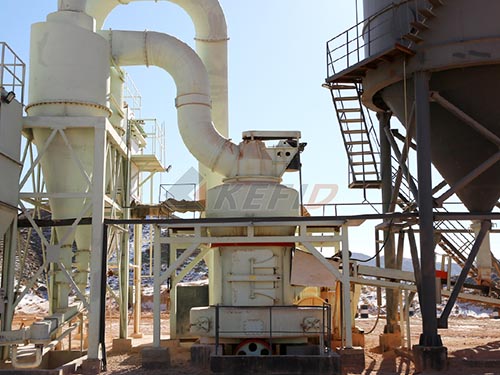
Modular Plant Architecture | Technical Basis: Preengineered, bolttogether modules for crushers, screens, and conveyors | Operational Benefit: Enables faster installation (<20% reduction in commissioning time) and future reconfiguration or expansion | ROI Impact: Accelerates timetorevenue and protects longterm asset flexibility.
Integrated Dust Suppression & Noise Abatement | Technical Basis: Encapsulated transfer points with spray systems and acoustic dampening panels | Operational Benefit: Maintains regulatory compliance for particulate emissions (PM10/PM2.5) and reduces community noise impact | ROI Impact: Minimizes risk of work stoppages due to environmental noncompliance fines.
Centralized Greasing & Lube System | Technical Basis: Automated singlepoint lubrication with blockage monitoring | Operational Benefit: Ensures critical bearings receive correct lubrication without manual intervention, eliminating a primary failure point | ROI Impact: Directly contributes to >95% mechanical availability rates.
4. COMPETITIVE ADVANTAGES
| Performance Metric | Industry Standard Benchmark | Premium Stone Crusher Plant Solution | Documented Advantage |
| : | : | : | : |
| Mechanical Availability (Scheduled Hours) | 88 92% | 95 97%+ | +5% to +9% |
| Cost per Ton (Wear Parts) Baseline = 100| Index = 100| Index = 70 85| Reduction of 1530% |
| Specific Energy Consumption (kWh/ton)| Varies by rock type| Optimized chamber & drive design| Reduction of 1018% |
| Yield of Premium Product Fractions| Dependent on raw feed| Intelligent automation & screening setup| Increase of 510% |
| Mean Time Between Major Overhauls (Hours)| ~8,000 12,000 hrs| ~14,000 18,000 hrs| Increase of +4050% |
5. TECHNICAL SPECIFICATIONS
Design Capacity Range: From 200 tons per hour (TPH) to over 1,500 TPH configurations.
Primary Crusher Options: Jaw Crusher (Feed size up to ~1m), Primary Gyratory Crusher (Feed size up to ~1.5m).
Drive Power Requirements: Total installed plant power typically ranges from 400 kW to over 1.5 MW; designed for connection to mains grid or largescale generator sets.
Material Specifications: Mainframe constructed from stressrelieved steel plate; Wear liners in premium manganese steel (14%,18%,22% Mn) or composite alloys; Shafts manufactured from hightensile forged steel.
Physical Dimensions: Highly variable based on capacity; A typical 500 TPH plant footprint may exceed 50m x 30m including stockpile areas.
Environmental Operating Range: Designed for ambient temperatures from 20°C to +45°C; Dust protection standard to IP65 on electrical components; Can be equipped with coldclimate packages (heated lube systems).
6. APPLICATION SCENARIOS
Granite Quarry Expansion Project
Challenge: A large granite quarry needed to increase production by 40% but was constrained by an aging plant with poor cubicity yield (<65%) for highvalue asphalt chips.
Solution: Implementation of a new premium stone crusher plant featuring multistage compression crushing (jaw + cone + cone) with specialized chamber geometries for shaping.
Results: Plant throughput increased by the targeted >40%. Product cubicity improved to >85%, significantly increasing the market value of output. Energy consumption per ton decreased by approximately12%.
LargeScale Infrastructure Contractor
Challenge: A contractor on a remote highway project faced volatile feed material hardness and needed consistent product gradation across multiple sections without constant manual adjustment.
Solution: Deployment of a semimobile premium stone crusher plant equipped with an intelligent automation system that adjusts crusher parameters based on realtime power draw.
Results: Reduced the need for operator intervention by over70%. Maintained specification compliance on >98%of produced material despite variable feedstocks,saving an estimated15 daysin project schedule versus manual methods.
7.COMMERCIAL CONSIDERATIONS FOR STONE CRUSHER PLANT PROCUREMENT
Pricing is projectspecific but generally follows these tiers:
Base Configuration Tier ($2M$5M): Includes primary crusher,basic secondary stage,screening,and essential conveyors.Focuses on core functionalityfor standard materials like limestone.
Optimized Performance Tier ($5M$10M): Incorporates tertiary crushingfor superior shaping,intelligent automation,dust suppression,and more robust componentry.Recommendedfor abrasive materials(granite,trap rock)andhighvolume operations.
Turnkey Project Tier ($10M+): Fully engineered solution including civil works design,factory preassemblyof modules,sophisticated control rooms,and extended commissioning support.
Optional features include automated metal detection/removal systems,washing modules,mobile crawlermounted primary units,and remote telematics monitoring packages.Service packages rangefrom basic preventive maintenance plans(parts+labor)to comprehensive performance contracts guaranteeing uptimeand costperton metrics.Financing options typically include capital lease agreements,tailored rentaltoown structures,and project financing through industrial equipment lenders.
FAQ
Q1:What levelof electrical infrastructureis requiredto operatea premium stonecrusherplant?
A1:A stablehighvoltage supplyis essential.Most plants above300 TPHrequire mediumvoltage connections( e.g.,11kVor higher).Our engineering team provides detailed power demand studiesspecificto your configurationduringthe proposal phase.
Q2:Canyourplantbe integratedwithourexistingprimarycrushersand screens?
A2:System integrationis possiblebut requiresa detailed auditof yourequipment's age ,condition ,andcontrol interfaces.We assess compatibilitybasedon mechanical connections ,material flowbalance ,andcontrol systemcommunicationprotocols .
Q3:Whatisthe typicalinstallationandcommissioningtimeline?
A3:Forsemimodularplants ,onsite installationtypically requires8to14weeksfollowingfoundation readiness.Commissioningandperformance testingaddanadditional2to4weeks.Turnkeyprojects have longer timelines incorporatingcivilworks .
Q4:Doyouofferperformanceguaranteesonthe finalproductgradation?
A4 :Yes .Basedon comprehensive testingof your representativefeed samplesin our laboratory ,we provideguaranteed throughputcapacityandproductgradationenvelopesforthe specifiedwearpartlife .Theseare formalizedinthe contract .
Q5:Whatisthe expectedlifespanofthemainstructuralcomponents?
A5:The mainframe ,baseframes ,andsupportstructures are designedfora minimumservice lifeof25+yearsundernormaloperatingconditions .Strategicwearcomponentslike linersandrollerelements haveservice livesdefinedin operatinghours .
Q6:Aretrainingprogramsprovidedforouroperatorsandmaintenancestaff?
A6 :Comprehensive trainingis included .It coverssafe operational procedures ,dailychecks ,basic troubleshooting ,wearpartreplacementprotocols ,anduseofthe automationsystem .TrainingoccursbothatFAT(Factory Acceptance Test)andduringonsite commissioning .
Q7:Whatare themostcommonfinancingstructuresusedforprocurement?
A7 :The majorityof commercial buyersoptforeithercapital leaseswitha purchaseoptionat termendor tailoredrental agreements thatconvertto ownershipaftera fixedperiod .We workwithspecializedindustrial financiersto providefixedratequotes alignedwithyourcapitalbudgetcycle .