
Premium Quarry Ballast Crushing Equipment Distributor
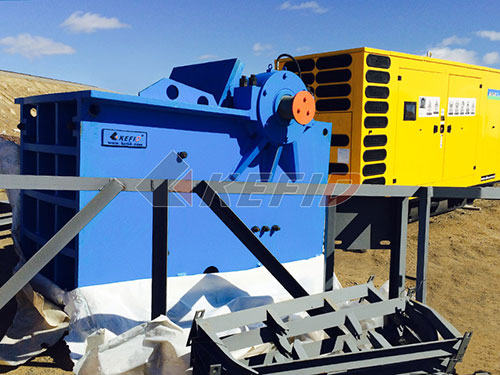

1. PAINPOINT DRIVEN OPENING
Are you managing a quarry ballast operation where inconsistent product shape, excessive fines generation, and unplanned maintenance are eroding your margins? The production of highspecification railway ballast demands precision and reliability that conventional crushing stages often fail to deliver. Common challenges include:
Poor Flakiness & Elongation Index: Producing cubical aggregate that meets stringent rail network specifications (e.g., EN 13450) is difficult, leading to product rejection and wasted throughput.
High Wear Part Costs & Downtime: Abrasive igneous rock (granite, basalt) rapidly degrades crusher liners and mantles, causing frequent, costly shutdowns for replacement.
Inefficient Capacity Utilization: Bottlenecks in the tertiary or quaternary crushing stage limit total plant output, failing to capitalize on primary feed capacity.
Excessive Fines Generation: Overcrushing material not only wastes saleable product but also creates handling and environmental dust control issues.
How do you increase yield of premium, specificationcompliant ballast while controlling operational costs and maximizing equipment uptime? The solution lies in selecting the right tertiary crushing technology.
2. PRODUCT OVERVIEW
The VSI (Vertical Shaft Impactor) Crusher is the engineered solution for premium quarry ballast production. This equipment transforms precrushed aggregate from secondary crushers into precisely shaped, cubical endproduct required for railway ballast.
Operational Workflow:
1. Feed Introduction: Prescreened, 40mm feed material from secondary crushing is centrally fed into the rotor.
2. Acceleration & Impact: The highspeed rotor accelerates material and discharges it into a robust crushing chamber lined with anvils or rock shelves.
3. RockonRock / RockonIron Crushing: Particles are fractured either through collisions with other particles (rockonrock for less abrasive stone) or against stationary anvils (rockoniron for highly abrasive stone).
4. Product Sizing Control: The final product size and shape are precisely controlled by adjusting rotor speed, feed rate, and the cascade of material within the chamber.
5. Discharge & Screening: Crushed material is discharged onto a sizing screen circuit in a closed loop to ensure specification compliance.
Application Scope & Limitations:
Scope: Ideal for tertiary and quaternary crushing stages; producing cubical aggregate for highspecification ballast, concrete asphalt chippings, and manufactured sand.
Limitations: Not suitable for primary crushing of large feed size. Optimal feed size is typically under 50mm. Requires consistent feed distribution and rate for peak performance.
3. CORE FEATURES
Rotor & Drive System | Technical Basis: Hightipspeed centrifugal acceleration | Operational Benefit: Generates highenergy impacts for effective fracture along natural grain lines, producing superior particle shape. | ROI Impact: Increases premium product yield by up to 25% versus conventional cone crushers in ballast applications.
Cascading Feed System | Technical Basis: Controlled multiport feeding creating a dense rock curtain | Operational Benefit: Creates a protective layer of material within the chamber, reducing wear on internal components. | ROI Impact: Extends wear part life by 3050%, directly lowering costpertonne.
Hydraulic Lid Lifter & Adjustment | Technical Basis: Integrated hydraulic system for chamber access and anvil gap setting | Operational Benefit: Enables safe, rapid maintenance and liner changes in under 2 hours. Facilitates quick adjustment for product gradation changes. | ROI Impact: Reduces planned maintenance downtime by up to 70%, increasing annual operational availability.
Advanced Wear Protection | Technical Basis: Interchangeable carbidetipped wear parts and thick steel plating | Operational Benefit: Provides exceptional resistance to abrasion from hard, dense rock types common in ballast quarries. | ROI Impact: Lowers total cost of ownership through predictable wear cycles and reduced part change frequency.
Closed Rotor Design | Technical Basis: Enclosed rotor body with feed tubes | Operational Benefit: Maximizes energy transfer to the rock stream while protecting rotor bearings from dust ingress. | ROI Impact: Enhorses bearing service life exceeding 20,000 hours under normal conditions, preventing catastrophic drive failures.
Vibration Monitoring System | Technical Basis: Integrated sensors detecting abnormal machine dynamics | Operational Benefit: Provides early warning of imbalance or component failure, allowing for scheduled intervention before secondary damage occurs. | ROI Impact: Prevents unplanned stoppages and protects major components from costly damage.
4. COMPETITIVE ADVANTAGES
| Performance Metric | Industry Standard (Cone Crusher) | VSI Crusher Solution For Ballast Production| Advantage (% Improvement) |
| : | : | : | : |
| Product Cubicity (% Cubical Particles) | 6075% (Heavily dependent on liner wear) | 8595% (Consistent throughout liner life)| +20% Minimum |
| Wear Cost per Tonne (Abrasive Rock) $/t| $0.45 $0.65| $0.25 $0.40| ~35% Reduction |
| Fines Generation (4mm fraction)| Higher due to interparticle compression crushing| Lower due to controlled impact fracture| Reduction of 1525% |
| Maintenance Downtime (Annual Hours)| ~120 hours (includes mantle/liner changes)| ~40 hours (utilizing hydraulic systems)| ~67% Reduction |
| Energy Efficiency (kWh per tonne)| ModerateHigh| Optimized; often lower in final shaping stage| Up to 15% Improvement |
5.TECHNICAL SPECIFICATIONS
Model Range Capacity: From 150 tonnes per hour (TPH) to over 800 TPH of finished ballast product.
Power Requirements: Electric motor drives ranging from 315 kW to 630 kW depending on model and duty.
Feed Specifications: Maximum recommended feed size of 45mm; optimal moisture content <4%.
Material Specifications: Engineered for continuous processing of hard abrasive rock with compressive strength up to 350 MPa.
Physical Dimensions / Footprint: Compact design relative to output; typical footprint ranges from ~25m² to ~40m² including motor skid.
Environmental Operating Range: Designed for outdoor siting with operating temperature range from 20°C to +45°C; dusttight enclosures standard.
6. APPLICATION SCENARIOS
Granite Quarry Supplying National Rail Network
Challenge:A major granite quarry's existing cone crushers produced excessive flaky material (>20%), failing contract specifications (<15%) consistently.Wear costs were escalating due to the highly abrasive nature of the stone.Solution:A twinbearing VSI crusher was installed in closed circuit with a sizing screen.The rockonrock configuration was selected after material testing.Results:Flakiness index reduced to an average of12%.Wear part life increased by40%.Plant achieved100%spec compliance,yielding an additional$180,000annually in premiumgrade sales
Basalt Quarry Expanding Production
Challenge:A basalt quarry neededto increase its tertiary stage outputby50%to fulfilla new longterm ballast contract without expanding its primarycrushingcircuit.Solution:A highcapacityVSIcrusherwitha closedrotor design replaced two aging tertiary cone crushers.The installation utilizedthe existingfeed conveyor infrastructure.Results:Tertiarystage throughput increasedby60%,exceedingthe target.The improvedcubicalshape reducedscreen blinding,increasingoverall screening efficiencyby18%.The projectpayback periodwas under14months
7.COMMERCIAL CONSIDERATIONS
Equipment pricing is tiered based on capacity,drive power,and configuration options:
• Standard Tier(150300TPH):Robust unitsfor singleshift operationswith manualadjustment features
• Performance Tier(300600TPH):Fully automated systems withhydraulic adjustments,advanced monitoring,and premiumwear materials
• HighCapacity Tier(600+TPH):Dualdrive,heavyduty stationsfor24/7operationsin largescale quarries
Optional Features:
• Automatedgreasing systems
• Remote monitoringand diagnostics portal
• Specializedrotor tip designsfor specificrock types
• Noiseabatement enclosures
Service Packages:
Comprehensive support plansare available covering scheduledmaintenance,wear part supply programs atfixedcostpertonne rates,and priority technical support
Financing Options:
Flexible capital solutionsinclude equipment leasing,rentaltoown programs,and project financingtailoredto CAPEXbudgets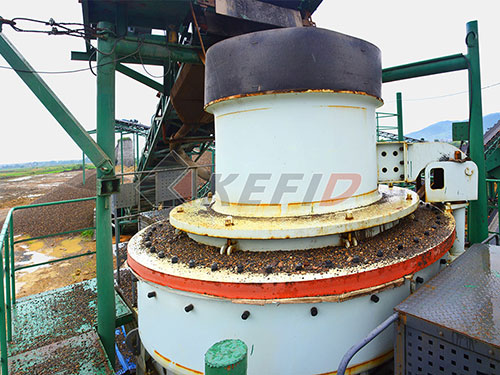
8.FAQ
Q:What existing plant infrastructureis requiredto integrateaVSIcrusherforballastproduction?
A:The system requiresa stablefeedofprecrushedmaterial(typically40mm),adequately sizedconveyorsforfeedand discharge,andaclosedcircuit screening loop.Product sizingis controlledatthe screennotthecrusher discharge
Q:Whatisthe typical operational impacton myplant'spower consumption?
A Field data shows thatwhile VSIs operateat highspeed their efficient directdrive systemand impactcrushing principleoften resultin lower overall energyconsumptionper tonneof finishedspecproduct comparedtocompressionbased crushersinthe final shaping stage
Q How doI managewear parts inventoryand cost predictability?
A We offer guaranteedwear part lifecalculationsbasedonyour specificrock analysis coupledwith fixedprice supply agreements This converts variablecostsintoa predictableoperating expense simplifyingbudgeting
Q Are these machines suitablefor processingwet or sticky materials?
A VSIs perform bestwith feedmaterial containingless than4 moisture Stickyclayboundmaterial can causebuildup inthe chamber For such applications apron feederprescreeningor scalpingis recommendedprior tocrusherfeed
Q What commercial termsare standardfor deliveryand commissioning?
A Supply typicallyincludesFOBpricing withengineering support Commissioningis conductedby factorytrained technicians Standardtermsincludeperformance testingagainstagreed throughputand product specification guarantees