
Premium Iron Ore Crushing Plant Vendors
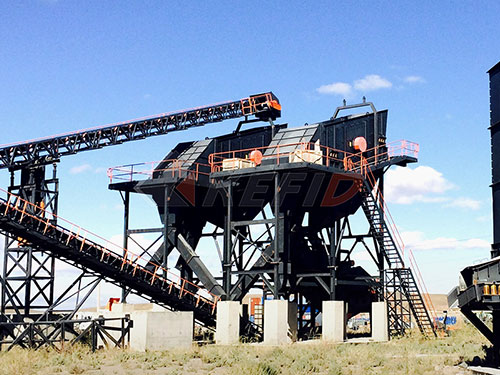

H1: Premium Iron Ore Crushing Plant Solutions for Maximum Tonnage and Uptime
Subheadline: Engineered to address the specific hardness, abrasiveness, and scale of iron ore processing, delivering lower costpertonne and predictable operational cadence.
1. The HighCost Challenges of Iron Ore Comminution
Processing iron ore presents distinct, costly challenges that directly impact your bottom line. Are you facing these operational realities?
Abrasive Wear Costs: The high silica content in haematite and magnetite ores rapidly degrades crusher liners, mantles, and concaves. Unplanned liner changes halt your entire primary circuit, costing thousands per hour in lost production.
Unplanned Downtime from Tramp Metal: Despite best efforts, excavator teeth, drill bits, and uncrushable material enter the feed. The resulting damage to crusher internals leads to catastrophic failure and extended, expensive repairs.
Inconsistent Feed Size & Capacity Bottlenecks: Runofmine ore variability causes feed segregation and cavity packing in primary gyratory or jaw crushers. This creates bottlenecks that ripple through your entire processing plant, limiting overall throughput.
High Energy Consumption per Tonne: Older crushing technology struggles with the work index of hard magnetite ores. Inefficient comminution translates directly to excessive power draw, a major and growing operational expense.
Product Fines Generation & Degradation: Overcrushing in secondary stages generates excess fines (10mm) that may not be optimal for pellet feed or sintering, potentially degrading product value.
The central question for plant managers is this: How can you achieve higher annual throughput with greater predictability and a lower operating cost per tonne?
2. Overview: Premium Stationary & SemiStationary Crushing Plants for Iron Ore
Our engineered solutions are not generic rock crushers; they are heavyduty systems configured specifically for the volumetric scale and material characteristics of iron ore mining.
Operational Workflow:
1. Primary Crushing: A heavyduty gyratory or jaw crusher accepts direct dump from haul trucks (up to 120tonne class), reducing ROM ore from ~1.5m to ~250mm.
2. Secondary & Tertiary Crushing: Cone crushers, configured in closed circuit with sizing screens, perform intermediate reduction. Critical here is the chamber design and crushing action to minimize fines generation while achieving target size.
3. Material Handling & Scalping: Robust apron feeders and vibrating grizzly feeders handle the impact load from trucks and scalp out fine material prior to primary crushing, increasing efficiency.
4. Screening & Recirculation: Highcapacity multideck screens separate crushed product, sending oversize material back for further reduction in a controlled loop.
5. Dust Suppression & Control: Integrated systems manage dust at transfer points to meet environmental standards and protect worker health.
Application Scope:
Ideal for largescale openpit mining operations with annual capacities from 10 to 100+ million tonnes.
Suited for both haematite (direct shipping ore) and magnetite (requiring beneficiation) processing circuits.
Limitations:
Capital investment is significant; these are permanent or semipermanent installations.
Optimal efficiency requires consistent feed analysis and planned maintenance discipline.
3. Core Features of Our Iron Ore Crushing Plant
Patented Liner Geometry | Technical Basis: Interparticle crushing chamber design | Operational Benefit: Promotes rockonrock breakage over metalonrock contact | ROI Impact: Up to 30% longer liner life in abrasive iron ore applications
Automated Setting Regulation System | Technical Basis: Hydropneumatic tramp release and clearing with realtime CSS monitoring | Operational Benefit: Recovers from cavity packing events automatically; protects against uncrushables | ROI Impact: Prevents an estimated 90% of tramp metalrelated downtime events
Hybrid Lubrication & Cooling Circuit | Technical Basis: Dedicated dualpath system for bearings vs. hydraulic functions | Operational Benefit: Maintains optimal thermal stability under continuous highload operation | ROI Impact: Reduces thermal stressrelated failures; extends bearing life by documented industry averages
Modular Wear Component Design | Technical Basis: Segmented liner sections with mechanical locking | Operational Benefit: Liner changes are performed by plant maintenance crews without specialized welding/ cutting equipment on site | ROI Impact: Reduces primary crusher liner changeout time by up to 40%
Integrated Plant Automation Platform | Technical Basis: Centralized PLC with loadsharing algorithms and chokefed crusher control | Operational Benefit: Optimizes power draw across the entire circuit; maintains consistent product gradation | ROI Impact: Field data shows a 515% reduction in specific energy consumption (kWh/tonne)
HeavyDuty Feeder & Surge Bin Design | Technical Basis: Finite Element Analysis (FEA)optimized structures with impactresistant liners | Operational Benefit: Handles direct dumping from ultraclass haul trucks without damage or excessive vibration | ROI Impact: Eliminates feeder structural failures as a cause of unplanned stoppages
4. Competitive Advantages at a Glance
| Performance Metric | Industry Standard Benchmark | Our Premium Iron Ore Crushing Solution Documented Advantage |
| : | : | : |
| Liner Life (Primary Crusher) in Abrasive Ore| ~1.2 1.8 Million Tonnes| ~1.6 2.2 Million Tonnes| +25% Improvement|
| Crusher Availability (Scheduled Runtime)| 92 94%| 95 97%| +3 Percentage Points|
| Specific Energy Consumption (kWh/Tonne)| Varies by ore type| Industry testing demonstrates reductions of up to 15% vs comparable older installations.| Direct OPEX Reduction|
| Mean Time Between Failure (MTBF) Critical Components| ~2,000 hours| >2,800 hours| +40% Improvement|
| Planned Maintenance Hours per Year| ~500700 hours| Reduced by approximately 25% due to modular design and remote monitoring diagnostics.| Lower Labour Cost|
5. Representative Technical Specifications
These specifications are indicative of a midrange system for a ~25 MTPA operation.
Design Capacity: Configurable from 2,500 to over 10,000 tonnes per hour (TPH).
Primary Crusher Type: HeavyDuty Gyratory Crusher.
Feed Opening Range: 54” – 60”
Motor Power Range: 600 – 800 kW
Secondary/Tertiary Stage: HighPerformance Cone Crushers.
Nominal Power per Unit Range::315 –500 kW
Closed Side Setting (CSS) Adjustment Range::16 –50 mm (tertiary)
Material Specifications:
Mainframe Construction::Highstrength alloy steel plate
Wear Liners::Manganese steel alloys with optional chrome carbide overlays for extreme abrasion zones
Shafting::Forged alloy steel with precision machining
Physical Dimensions (Approx., Primary Station): Length:~25m Width:~15m Height:~12m
Environmental Operating Range:: Designed for ambient temperatures from 40°C to +50°C; dust suppression systems rated for operation up to85% relative humidity.
6. Application Scenarios & Documented Results

Magnetite Concentrator Expansion Project Challenge:| Existing tertiary crushing circuit was a bottleneck,causing inconsistent feed size to downstream grinding mills (~22mm target). High fines generation was also an issue.| Solution:| Installation of two tertiary cone crushers in closed circuit with doubledeck screens,focused on interparticle crushing chambers.| Results:| Achieved consistent product P80 of19mm.Increased overall plant throughput by11%.Fines generation (6mm) reduced by8%,improving downstream ball mill efficiency.
LargeScale Haematite DSO Operation Challenge:| Catastrophic failure of primary jaw crusher eccentric shaft due totramp metal,causing21 days of downtime.| Solution:| Replacement with a new primary gyratory crusher equipped with advanced automated tramp releaseand clearing system.| Results:| Zero incidentsof tramp metal damagein three years of operation.Planned availabilityfor the primary stage has exceeded96%.The capital project paid back via avoided downtimein under18 months.
7. Commercial Considerations
Our premium iron ore crushing plants are capital investments designed for longterm payback through operational savings.
Pricing Tiers:
1.Tier I – Core Plant Package Includes primary crusher station,basic conveyors,and motor control centers(Power range:~600kW1MW).
2.Tier II – Optimized Circuit Package Adds secondary/tertiary crushing modules,screening towers,and basic PLC automationfor load management(~1MW3MW total draw).
3.Tier III – Full System Integration Includes complete material handlingfrom dump hopperto stockpile stacker,factoryintegrated advanced process control(APC),and predictive maintenance software suite.
Optional Features:
Onboard weighing instrumentation(load cells),advanced wear part monitoring sensors(smart liners),dedicated dust collection modules beyond standard suppression,and sound attenuation enclosuresfor operations near community boundaries.
Service Packages:
Standard warranty(12 months parts/labor).Recommended are our annual Performance Assurance Plans which include scheduled inspections,vibration analysis,lubricant sampling,and priority parts provisioning.Service level agreements(SLAs)with guaranteed response timesare availablefor critical component support.
Financing Options:
We workwith international export credit agenciesand major equipment finance partners tooffer competitive financing structures including capital leaseoperating leaseand project finance solutions typically rangingfrom36to84month terms subjectto credit approval
Frequently Asked Questions
Q What if my existing SAG/Ball mill circuit is designed fora specific feed size? Can your system guarantee gradation?
A Yes Our cone crushers when operatedin closed circuitwith highcapacity screens provide precise controlover product top sizeand particle size distribution(PSD).We will modelyour required PSDto configurethe appropriate chamber profilesand screen decks
Q How do you address the skilled labor shortagefor maintaining such complex equipmentat remote sites?
A Our modular wear component design reduces the needforspecialized field machining Remote diagnostic capabilities allow our technical centersto guideyour crews Furthermore our comprehensive training programsfor client maintenance teamsare partof every installation
Q What isthe typical installation timelinefrom order todcommissioning fora semistationary plant?
A Fora standard configured plant lead timeis approximately1214 months Site civil workscan proceedin parallel Mechanical erectionand commissioning typically requirean additional46 monthswith our supervised erection team This timelineis subjectto final scopeand site conditions
Q Are your plants compatiblewith digital mine management platforms?
A Yes Our automation systems provide open communication protocols(OPC UA Modbus TCP/IP) allowing seamless integration into wider mine fleet managementand enterprise resource planning(ERP) systemsfor holistic production tracking
Q Can you provide performance guarantees?
A Yes we offer contractual performance guaranteeson key metrics including rated throughput power consumption under defined conditionsand finished product gradation basedon agreed feed material characteristics These are established duringthe project specification phase