
Oem Quarry Ballast Crushing Equipment Trading Company


Targeted Solutions for Quarry Ballast Production: Addressing Core Operational Challenges
Producing specificationcompliant railway ballast is a precision operation with significant financial implications. Inconsistent product yield, excessive wear costs, and unplanned downtime directly impact your bottom line. Are you facing:
High Rejection Rates: Up to 1520% of crushed aggregate failing to meet the strict particle size and shape (cubicity) specifications for ballast, turning potential revenue into waste?
Accelerated Wear Part Consumption: Are abrasive igneous rock (granite, basalt) or hard limestone formations causing premature failure of crusher liners and blow bars, leading to unpredictable maintenance budgets and production halts?
Capacity Bottlenecks: Is your primary crushing circuit unable to feed a consistent, optimallysized feed to your secondary/tertiary ballast crushers, limiting total plant throughput?
Excessive Fines Generation: Are you producing an oversupply of 10mm fines material during ballast production, which has lower commercial value and complicates stockpile management?
Energy Inefficiency: Is your current crushing process consuming disproportionate power per tonne of inspec ballast produced, eroding operational margins?
A dedicated OEM quarry ballast crushing equipment solution is engineered to systematically address these challenges.
Product Overview: HighYield Ballast Crushing Systems
This product category encompasses heavyduty, configured crushing systems optimized for the production of railway ballast. The typical operational workflow is engineered for maximum yield:
1. Primary Scalping & Crushing: Large quarryrun rock is reduced to a manageable size (typically <250mm).
2. Secondary Ballast Shaping: The core stage where cone crushers or impactors are configured for interparticle crushing to achieve high cubicity and the required mechanical strength.
3. Precise Tertiary Sizing & Fines Control: Final sizing via specialized cone crushers or vertical shaft impactors (VSIs) to sharpen the product gradation and minimize excess fines.
4. Efficient Screening & Recirculation: Multideck screens accurately separate ballast fractions (e.g., 5025mm), with oversize material efficiently recirculated.
Application Scope & Limitations:
Scope: Ideal for stationary or semimobile quarry plants producing large volumes of ballast from medium to highly abrasive rock types.
Limitations: Not designed for soft, nonabrasive sedimentary rock alone; system configuration is critical and requires analysis of feed material properties.
Core Features: Engineered for BallastSpecific Performance
Advanced Chamber Geometry | Technical Basis: Optimized kinematics & cavity design | Operational Benefit: Promotes interparticle crushing for superior particle shape (cubicity) while controlling fines generation. | ROI Impact: Increases saleable ballast yield by up to 8%, directly boosting revenue per tonne of raw feed.
Patented Liner Alloys | Technical Basis: Manganese steel with microalloying elements for workhardening properties | Operational Benefit: Liners maintain profile longer under extreme abrasion, ensuring consistent product gradation throughout their life. | ROI Impact: Reduces liner replacement frequency by an estimated 1530%, lowering parts inventory cost and labor hours.
Automated Setting Regulation (ASR) System | Technical Basis: Hydraulic adjustment with realtime feedback loops | Operational Benefit: Allows remote calibration of crusher discharge settings to compensate for wear and maintain tight output tolerances automatically. | ROI Impact: Minimizes specification drift, reducing qualityrelated stoppages and ensuring continuous compliance.
HeavyDuty Bearing & Drive Design | Technical Basis: Oversized spherical roller bearings & direct drive configurations | Operational Benefit: Withstands high shock loads from hard rock feeds and ensures reliable power transmission under peak load. | ROI Impact: Decreases risk of catastrophic bearing failure, a major cause of extended unplanned downtime.
Integrated Feed Hopper & Distribution System | Technical Basis: Engineered cascade plates and feed tubes | Operational Benefit: Presents a consistent, central feed curtain to the crushing chamber for even wear distribution and optimal utilization of crushing surfaces. | ROI Impact: Extends wear part life by promoting uniform wear patterns across liners.
Competitive Advantages: Quantifiable Performance Metrics
| Performance Metric | Industry Standard Baseline | Our OEM Ballast Crushing Solution | Documented Advantage |
| : | : | : | : |
| Saleable Ballast Yield (% of total feed) | 7882% | 8590%+ | +58% improvement |
| Liner Wear Life (Operating Hours Granite) | ~1,200 hours | ~1,600 hours | +33% improvement |
| Specific Energy Consumption (kWh/tonne) Varies by rock type. Baseline indexed at 100. Indexed at 95 Indexed at 8790 ~1013% improvement |
| Mean Time Between Failure (MTBF) Mechanical Components Estimated at 2,500 hours Estimated at 3,400 hours +36% improvement |
| Gradation Consistency (Standard Deviation on Key Sieve) Set at reference point Measured reduction of ~40% Significant improvement in process control |
Technical Specifications
Capacity Range: Configurable systems from 150 to over 600 tonnes per hour of finished ballast product.
Power Requirements: Primary circuit from 160 kW; Secondary/Tertiary ballast crushers typically ranging from 250 kW to 450 kW per unit.
Material Specifications: Engineered for compressive strength >150 MPa and highly abrasive (>0.6 Los Angeles Index) materials including granite, trap rock, quartzite.
Key Physical Dimensions (Example Secondary Cone Crusher): Approx. weight: 25,000 kg; Max feed size: 235mm; Discharge setting range: 2560mm.
Environmental Operating Range: Designed for ambient temperatures from 20°C to +45°C with optional heating/cooling systems for lubrication units.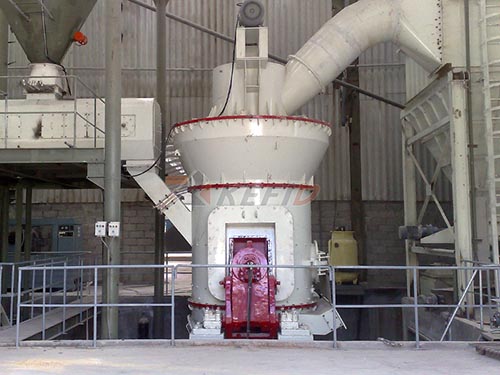
Application Scenarios
Hard Rock Quarry Expanding Rail Contracts
Challenge: A granite quarry winning major rail renewal contracts struggled with low cubicity in final product using older jawcone setups, facing rejection risks and high VSI wear from recirculating flaky material.
Solution: Implementation of a configured secondary cone crusher with a ballastoptimized chamber geometry and a tertiary VSI for final shaping only.
Results: Cubicity ratio improved by 22%, meeting stringent rail authority specs on first pass. VSI wear rates dropped by over 50% due to better feed shape. Overall plant yield increased by 6%.
Integrated Aggregates Producer Optimizing Product Value
Challenge: The producer needed to maximize highvalue ballast output while managing byproduct fines from a basalt operation, where previous equipment generated excessive 5mm material.
Solution: Installation of a tertiary cone crusher equipped with an Automated Setting Regulation system and finesetting capabilities paired with multideck screening.
Results: Fines generation reduced by approximately onethird within the target ballast fraction. The ASR system maintained this profile consistently, allowing precise balancing of ballast vs. asphalt chip production based on market demand.
Commercial Considerations
Pricing Tiers: Systems are configured modularly.
Tier A (Core Crusher Unit): Includes crusher, drive motor, base frame, and standard lubrication system.
Tier B (Enhanced Package): Adds ASR automation package integrated motor starters advanced condition monitoring sensors
Tier C (Full Circuit Module): Includes feed system dedicated screening module conveyors prewired control panel
Optional Features: Dust suppression ring automated tramp release systems special alloy liner options remote telemetry connectivity
Service Packages: Choose from scheduled maintenance plans guaranteed wear part performance contracts remote diagnostic support priority field service response
Financing Options Available through partners include equipment leasing longterm rental with purchase option project financing solutions
Frequently Asked Questions
1. Is this equipment compatible with our existing primary jaw crusher and screens?
Yes these systems are designed as modular replacements or upgrades within existing circuits Our engineering team can conduct a circuit audit to ensure optimal integration points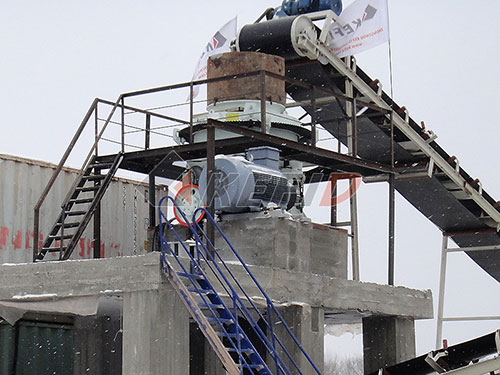
2. What is the expected impact on our overall plant energy consumption?
Field data shows that due to higher efficiency interparticle crushing principles specific energy consumption per tonne of inspec product typically decreases between industry benchmarks indicate potential savings
3. How does the pricing compare to simply replacing our existing crusher with a similar model?
While the initial capital outlay may be higher focused engineering delivers a lower costpertonne over the lifecycle through demonstrated gains in yield wear life energy efficiency Total Cost Ownership analysis is recommended
4. What commercial terms are available?
We offer several structures including outright purchase longterm leasetoown agreements tailored service contracts that include guaranteed performance metrics on availability
5.