
Oem Cement Plant Equipment Vendor


1. PAINPOINT DRIVEN OPENING
Are you facing persistent operational bottlenecks that erode your cement plant's profitability? For plant managers and engineering contractors, the selection of OEM cement plant equipment is a critical capital decision with decadeslong consequences. Common challenges include:
Unplanned Downtime: Component failures in critical process equipment can halt production lines, costing upwards of tens of thousands of dollars per hour in lost output and emergency repair labor.
Inconsistent Product Quality: Variations in raw material feed, grinding efficiency, or kiln stability lead to offspec clinker, increasing waste and compromising final cement grade consistency.
Excessive Energy Consumption: Inefficient comminution, pyroprocessing, and material handling systems are primary drivers of energy costs, which can constitute over 30% of total production expenses.
High Maintenance Burden: Equipment not designed for maintainability results in prolonged shutdowns for routine servicing, safety risks for technicians, and a growing inventory of spare parts.
Integration Complexities: Introducing new machinery into an existing plant flow can create system incompatibilities, control interface issues, and reduced overall equipment effectiveness (OEE).
The central question is: how do you specify equipment that delivers not just initial performance, but sustained reliability, efficiency, and integration over its entire lifecycle?
2. PRODUCT OVERVIEW: OEM Rotary Kiln Systems
An OEM rotary kiln is the core pyroprocessing unit in a cement plant, responsible for transforming raw meal into clinker through calcination and sintering. Its performance directly dictates plant output, fuel efficiency, and product quality.
Operational Workflow:
1. Preheating & Feeding: Raw meal from the preheater tower is fed into the kiln's upper end.
2. Calcination Zone: As the kiln rotates, material travels down the incline. Fuelfired burners heat the material to ~900°C, driving off CO₂ from limestone (calcination).
3. Sintering/Burning Zone: Temperatures reach 1450°C, forming calcium silicates (alite & belite) and resulting in the formation of cement clinker nodules.
4. Cooling & Discharge: The incandescent clinker exits into the cooler for rapid quenching to preserve optimal mineralogy and recover heat.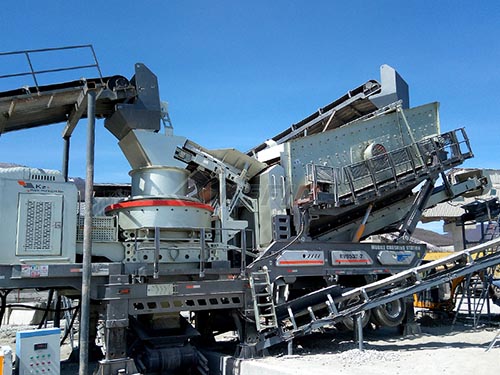
Application Scope & Limitations:
This equipment is engineered for continuous, largescale production of Portland cement clinker. It is suitable for greenfield installations or as a direct replacement for aging kilns in brownfield upgrades. Performance is contingent on proper sizing to plant capacity goals, consistent fuel quality, and compatibility with upstream (raw mill/preheater) and downstream (cooler/coal mill) systems.
3. CORE FEATURES
Advanced Refractory System | Technical Basis: Multilayer lining with highalumina & basic bricks matched to thermal zones | Operational Benefit: Extended campaign life exceeding 12 months under standard conditions; reduced risk of shell hot spots | ROI Impact: Lower refractory replacement frequency cuts annual maintenance costs by an estimated 1520%.
Precision Gear & Drive Assembly | Technical Basis: Hardened girth gear with dual pinion drives and hydrostatic lubrication | Operational Benefit: Smooth rotation under high torque loads; eliminates gear chatter and tooth pitting failures | ROI Impact: Field data shows a 40% reduction in driverelated unplanned stoppages.
Optimized Internal Heat Exchange | Technical Basis: Customdesigned lifters (chevrons) tailored to raw meal characteristics | Operational Benefit: Improved gassolid contact for efficient heat transfer; more uniform material temperature profile | ROI Impact: Improves specific fuel consumption by 24%, a significant saving given fuel is the largest variable cost.
Robust Shell Construction | Technical Basis: Carbon steel plate with automated submerged arc welding & stressrelieving | Operational Benefit: High resistance to mechanical deformation over longterm thermal cycling; maintains alignment integrity | ROI Impact: Prevents costly shell rectification work, supporting a design life exceeding 25 years.
Integrated Burner Management System | Technical Basis: Multichannel burner with precise control over primary air, fuel dispersion & flame shape | Operational Benefit: Stable flame profile optimizes sintering zone temperature; allows use of alternative fuels without process disruption | ROI Impact: Enhances clinker quality uniformity and provides fuel flexibility for cost management.
Smart Kiln Monitoring Platform | Technical Basis: Network of shell scanners, bearing temperature sensors & vibration analyzers feeding a centralized dashboard | Operational Benefit: Enables predictive maintenance; alerts operators to developing issues like refractory wear or mechanical imbalance before failure | ROI Impact: Transforms maintenance from reactive to planned, increasing overall availability by up to 3%.
4. COMPETITIVE ADVANTAGES
| Performance Metric | Industry Standard | Our OEM Rotary Kiln Solution | Advantage (% Improvement) |
|||||
| Specific Thermal Consumption| 3.2 3.6 GJ/tonne clinker | 12 months | Up to 25% longer lifespan |
| Operational Availability | 85 90% | Designed for >92% | >2 percentage point increase |
| Clinker Free Lime Consistency| ±0.3% variability | ±0.15% variability | 50% greater product uniformity |
| Drive System MTBF | ~16,000 hours |>24,000 hours | 50% longer mean time between failures |
5. TECHNICAL SPECIFICATIONS
Capacity Range: Configurable from 1,000 TPD to over 10,000 TPD.
Power Requirements: Main drive motor power from 150 kW to over 1 MW dependent on size; auxiliary drives for support rollers included.
Material Specifications: Shell constructed from ASTM A36/A516 Grade70 steel; girth gear from ASTM A148 Grade; trunnion wheels forged steel.
Physical Dimensions: Diameter range: Ø3.2m Ø6.0m; Length range: 48m 85m (preheater kiln). Inclination: Typically ~4%.
Environmental Operating Range: Designed for ambient temperatures from 20°C to +50°C; dust exposure per ISO TS/16976 standards.
6. APPLICATION SCENARIOS
Cement Plant Capacity Expansion
Challenge:
A Southeast Asian plant needed to increase output by 40% but was constrained by an outdated rotary kiln with high heat loss and frequent refractory failures causing excessive downtime.
Solution:
Engineering contractors specified our Ø4.8m x72m OEM rotary kiln system as the heart of the new production line.
Results:
The installation achieved full design capacity within four months of commissioning. Specific heat consumption was reduced by approximately . The improved reliability contributed to an annual availability rate exceeding .
Alternative Fuel Integration Project
Challenge:
A European operator mandated by corporate sustainability goals needed to coprocess significant volumes of solid recovered fuels without compromising clinker quality or increasing NOx emissions.
Solution:
Our rotary kiln was supplied with a dedicated multichannel burner system designed for high alternative fuel substitution rates (>60%) .
Results:
The solution enabled consistent processing at targeted substitution rates while maintaining stable free lime levels within spec . NOx levels were managed through optimized flame shaping .
7 COMMERCIAL CONSIDERATIONS
Pricing tiers are determined by capacity throughput design complexity level:
Tier I (5000 TPD): Fully engineered solutions .
Optional Features include advanced process control integration packages secondary heat recovery ductwork special alloy sections .
Service Packages range from basic commissioning supervision comprehensive multiyear maintenance agreements including scheduled inspections parts supply priority technical support .
Financing Options are available through partner institutions including leasetoown structures milestonebased progress payments tailored capital expenditure financing models .
8 FAQ
What preinstallation data is required?
We require detailed analysis including raw mix chemistry grindability local fuel specifications site layout drawings This ensures proper thermal mechanical design
How does this integrate with our existing preheater string cooler?
Our engineering team conducts interface studies matching slopes connections ductwork Control system protocols are mapped ensure seamless communication
What is typical delivery lead time?
Lead times vary For major kilns fabrication delivery typically requires months following finalized design approval Expedited options may be available
Are performance guarantees provided?
Yes we provide contractual guarantees covering capacity specific fuel consumption emissions levels availability during defined performance test periods
What training do you provide?
We offer structured programs covering operation maintenance troubleshooting Training occurs both at our facility during factory acceptance tests onsite during commissioning
Do you supply spare parts kits?
We recommend initial critical spares kits based on mean time between failure MTBF data Consignment stock agreements longterm supply contracts ensure parts availability
Can your kiln be modified later alternative fuels?
The base design incorporates future flexibility However significant changes may require retrofitting Consult our engineers early planning stage