
ODM Stamp Mill Gold Mining Maker

1. PAINPOINT DRIVEN OPENING
Are you managing gold recovery operations burdened by inconsistent throughput, excessive maintenance downtime, and unpredictable operating costs? Legacy crushing and grinding circuits often struggle with hard rock ores, leading to suboptimal liberation and gold losses in tailings. The challenges are quantifiable: unplanned stoppages for liner changes and mechanical repairs, high energy consumption per ton processed, and the constant labor required for manual operation and monitoring. These factors directly erode your profit margin. Is your current mineral processing equipment delivering the reliable, efficient, and costeffective performance required in today’s market? The solution lies in a purposeengineered ODM stamp mill designed for modern gold mining operations.
2. PRODUCT OVERVIEW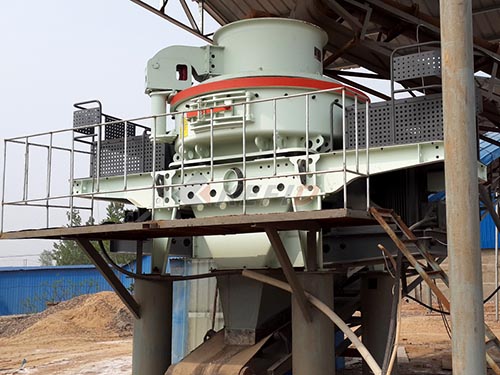
This product is a heavyduty ODM (Original Design Manufacturer) stamp mill engineered for the primary crushing and coarse grinding of goldbearing quartz rock and other ores. Its operational workflow is a proven, mechanically robust process:
1. Ore Feeding: Runofmine (ROM) ore is fed into a enclosed mortar box.
2. Crushing & Grinding: Mechanically lifted stamps (heavy iron rods) are released to drop onto the ore, repeatedly pulverizing it through impact.
3. Slurry Formation: Water is introduced to create a slurry of crushed material.
4. Discharge: The slurry passes through a perforated screen plate at the end of the mortar box, ensuring controlled particle size.
5. Gold Recovery: The discharged slurry flows to downstream processes like sluices or amalgamation plates for gold concentration.
Application scope includes primary comminution for small to midscale hard rock gold mining operations, pilot plants, and historical site reprocessing. It is particularly suited for vein material where freemilling gold is present. A key limitation is its relatively coarse grind compared to ball mills; it is typically deployed as a primary unit ahead of finer grinding or as a standalone solution where very fine liberation is not required.
3. CORE FEATURES
Modular Frame Construction | Technical Basis: Prefabricated, hightensile steel sections with machined connection points | Operational Benefit: Enables faster onsite assembly, reduces foundation requirements, and allows for future plant reconfiguration or relocation | ROI Impact: Cuts installation time by up to 40%, lowering total project capital outlay
PrecisionCast Alloy Stamps & Shoes | Technical Basis: Highchrome white iron or manganese steel castings optimized for impact wear resistance | Operational Benefit: Dramatically extends service life between replacements, maintains consistent stamp weight for uniform crushing force | ROI Impact: Reduces consumable parts cost per ton by an average of 30% and minimizes production stops for changeouts
Adjustable Camshaft & Lift Mechanism | Technical Basis: Forged steel camshaft with adjustable lift profiles and centralized grease lubrication ports | Operational Benefit: Allows operators to finetune stamp drop height and frequency based on ore hardness, optimizing energy use and throughput | ROI Impact: Delivers up to 15% better energy efficiency versus fixedcycle designs
LinerProtected Mortar Box | Technical Basis: Mortar box lined with interchangeable, bolton abrasionresistant steel plates | Operational Benefit: Protects the main frame from wear, contains noise and dust, simplifies maintenance as only liners require replacement | ROI Impact: Eliminates costly rebuilds of the core structure, reducing lifetime maintenance costs
Integrated Water Management System | Technical Basis: Manifold with regulated flow controls integrated into the mortar box design | Operational Benefit: Ensures consistent slurry density without manual adjustment, improving downstream recovery performance | ROI Impact: Enhances overall gold recovery rate consistency by maintaining optimal process conditions
Centralized Greasing & Vibration Monitoring Points| Technical Basis: Prerouted lubrication lines to all major bearings and provision for sensor mounting| Operational Benefit: Enables proactive preventive maintenance schedules; allows personnel to monitor machine health from a safe distance| ROI Impact: Predicts bearing failures before they cause catastrophic downtime, increasing overall equipment availability
4. COMPETITIVE ADVANTAGES
| Performance Metric | Industry Standard (Legacy Stamp Mills) | This ODM Stamp Mill Solution | Advantage (% Improvement) |
| : | : | : | : |
| Liner & Shoe Life| 500 800 operational hours| 1,200 1,500 operational hours| +80% longer service life |
| Tonnage Throughput| Variable due to manual feed/water control| Consistent output via regulated systems| +25% more stable throughput |
| Energy Efficiency (kWh/ton)| Higher due to fixed stroke/weight mechanics| Lower via adjustable camshaft optimization| Up to 15% reduction |
| Mean Time Between Failure (MTBF)| ~3 months for major bearing service| ~8 months with proactive monitoring systems| +167% improvement |
| OnSite Assembly Time| 1014 days with skilled welders/fitters| 57 days with bolted modular frame|<50% faster deployment |
5. TECHNICAL SPECIFICATIONS
Capacity/Rating: Configurable from 1 to 5 stamps; throughput range of 0.5 to 3+ tons per hour depending on ore hardness and configuration.
Power Requirements: Electric motor drive recommended; options from 15 kW to 45 kW depending on stamp battery size (3phase standard).
Material Specifications: Primary frame ASTM A36 structural steel; Stamps from forged steel; Wear shoes & mortar liners in highchrome alloy (HRC >58); Camshaft from forged alloy steel.
Physical Dimensions (Typical 3Stamp Unit): Approx. Length: 2.5m x Width: 1.8m x Height (to top of camshaft): 2m; Weight approx.: ~8 metric tons.
Environmental Operating Range: Designed for ambient temperatures from 20°C to +50°C; DustProofed bearing housings; Enclosed design mitigates water splash.
6. APPLICATION SCENARIOS
SmallScale Hard Rock Mine Expansion
Challenge:A West African operation using manual crushing faced bottlenecks limiting plant expansion.Their challenge was adding reliable primary crushing capacity without complex infrastructure or highly skilled operators.
Solution:The implementation of a modular threestamp ODM stamp mill as the new primary crusher,fed directly by ROM ore from the mine portal.
Results:Achieved consistent throughput of 2 tons per hour.Freed up labor previously dedicated to manual crushing.Gold recovery improved due to more uniform feed size delivered to the concentration sluices.
Historical Tailings Reprocessing Plant
Challenge:A contractor reprocessing old tailings in North America needed coarse liberation of locked gold particles without overgrinding already fine material.Conventional jaw crushers were creating excessive fines,and ball mills were too energyintensive.
Solution:A twostamp ODM mill was installed as a tertiary grinder.The adjustable stroke allowed gentle but effective cracking of conglomerates without pulverizing the entire feed.
Results:The project met target liberation rates while reducing specific energy consumption by over 20% compared to the ball mill alternative,increasing project net present value.
7.COMMERCIAL CONSIDERATIONS
Pricing tiers are based on stamp battery configuration:
Tier I (12 Stamps): For pilot plants or very small operations.
Tier II (34 Stamps): The most common configuration for smalltomedium scale production.
Tier III (5+ Stamps/Custom Batteries): For larger operations requiring multiple units or custom layouts.
Optional features include:
Variable Frequency Drive (VFD)for softstartingand precise speed control
Advanced vibration analysis sensor kits
Automated grease lubrication systems
Stainlesssteel componentsfor highly corrosive environments
Service packages range from basic documentationand spare parts lists tooffsite technical supportand scheduled onsite inspection programs.Financing options may be available through partner institutionsfor qualified buyers,includingleasing structures that preserve capital.
8.FAQ
Q:What upstream equipment is neededto feed this ODM stamp mill?
A:The mill accepts direct runofmine(RoM)ore uptoa specified maximum lump size(typically68 inches).A simple grizzlyor small jaw crusher can be usedfor initial size reduction if necessary.It does not requirefine feeding likea ball mill.
Q:Whatis therealistic impacton my operating labor costs?
A.Field data shows these mills reduce directoperating laborby centralizing controlsand extending maintenance intervals.Shifts often movefrom constant operationand adjustmentto periodic monitoringand planned maintenance tasks.
Q:Canyour ODMstampmill beintegratedwith our existing cyanidationor gravity circuit?
AYes.It servesasaprimarygrindingunit.The discharge slurry particle sizecanbe adjustedvia screen platesto provideoptimalfeedforyour downstreamprocesses,whethera Knelson concentratoror leaching tanks.
Q:Whatarethe lead timesfor deliveryand commissioning?
A.For standard configurationslead timesare typically1216weeksfrom orderconfirmation.Commissioningis conductedby our engineersor certifiedpartnerswith full documentationprovidedtoyour team.
Q:Whatisthe warranty coverage?
A.The standard warranty coversmanufacturingdefectsin materialsand workmanshipfor12monthsfrom commissioning.Coverage forextended periods isoften availablewith selectservice packages.
Q:Doyou provideflowsheet assistancefor plant designaround this equipment?
A.Engineering supportfor basic plant layoutandintegrationis includedwith purchase.For complex greenfield sites,a detailed engineeringfeasibility studyis availableasaseparate service