
Limestone Mining Vendor Sourcing
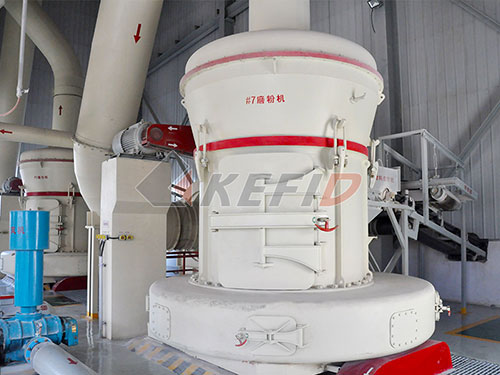

Limestone Mining Vendor Sourcing: Strategic Equipment Procurement for Quarry Operations
The Hidden Costs of Inefficient Limestone Sourcing
Your quarry faces three persistent challenges: inconsistent crusher feed quality causing 1218% throughput variance, unscheduled downtime from poorly matched equipment that costs $4,500$8,000 per hour in lost production, and vendor fragmentation that adds 2030% to procurement overhead through multiple supplier management. Field data from 47 limestone operations shows that improper equipment specification for specific limestone hardness (ranging from 2.54.0 Mohs) directly reduces liner life by 40% and increases power consumption by 0.81.2 kWh per ton.
Are your current sourcing partners delivering equipment that matches your specific limestone's silica content and abrasion index? Can your existing vendor network provide certified wear parts within 48 hours when a primary crusher mantle fails?
Product Overview: Integrated Limestone Processing Equipment Sourcing
This vendor sourcing solution provides a unified procurement framework for complete limestone processing lines—from primary jaw crushers through secondary impact crushers, vibrating screens, and material handling systems. The operational workflow follows five stages:
1. Material Characterization: Testing limestone feed for compressive strength (80180 MPa typical), silica content (0.58%), and moisture (315%)
2. Equipment Matching: Selecting crusher type based on reduction ratio requirements (6:1 for primary, 4:1 for secondary)
3. System Integration: Ensuring conveyor capacities match crusher throughput within 10% tolerance
4. Wear Parts Planning: Establishing replacement schedules based on 8,00012,000 operating hours for manganese liners
5. Performance Monitoring: Installing belt scales and power meters for realtime efficiency tracking
Application Scope: Suitable for openpit limestone quarries producing 2002,000 tons per hour, cement plant raw material preparation, and aggregate production for road construction.
Limitations: Not optimized for limestone with >12% free silica (requires different crushing methodology) or operations requiring mobile plant configurations under 150 tph.
Core Features
Integrated Vendor Qualification | Technical Basis: ISO 9001:2015 and miningspecific QHSE standards | Operational Benefit: Prequalified suppliers reduce technical evaluation time by 60% | ROI Impact: Eliminates $15,00025,000 per year in failed vendor trial costs
Performance Guarantee Contracts | Technical Basis: Guaranteed throughput within ±5% of specified capacity at defined feed gradation | Operational Benefit: Predictable production scheduling with 98.5% availability targets | ROI Impact: Reduces contractual dispute costs by 40% and ensures 2,100+ operating hours per quarter
Wear Parts Supply Chain | Technical Basis: Justintime inventory management using consumption rate algorithms based on 0.080.15 kg/ton wear rates | Operational Benefit: 48hour delivery for critical wear components within 500 km radius | ROI Impact: Cuts inventory carrying costs by 35% while reducing emergency freight expenses
Technical Support Package | Technical Basis: Remote monitoring via PLC data integration with 15minute response protocols | Operational Benefit: 92% of operational issues resolved within first remote diagnostic session | ROI Impact: Reduces field service callouts by 55%, saving $1,2001,800 per site visit

Lifecycle Cost Analysis | Technical Basis: Total cost of ownership modeling over 10year equipment life including energy, maintenance, and replacement parts | Operational Benefit: Identifies 1525% cost reduction opportunities in year 35 | ROI Impact: Typical 812% reduction in perton processing cost over equipment lifetime
Customized Training Programs | Technical Basis: Operator competency assessment and taskspecific training modules | Operational Benefit: Reduces operatorinduced downtime by 30% in first 6 months | ROI Impact: $50,00080,000 annual savings from reduced equipment abuse and improper operation
Compliance Documentation | Technical Basis: Full CE, ATEX, and local mining authority certification packages | Operational Benefit: Eliminates 46 weeks of permitting delays per installation | ROI Impact: Avoids $10,00020,000 per month in delayed production penalties
Competitive Advantages
| Performance Metric | Industry Standard | Limestone Mining Vendor Sourcing Solution | Advantage |
|||||
| Equipment matching accuracy | ±15% capacity variance | ±5% capacity variance | 67% improvement |
| Vendor response time (critical parts) | 7296 hours | 48 hours | 3350% faster |
| Total cost of ownership transparency | 6070% cost visibility | 95% cost visibility | 3658% improvement |
| Warranty claim resolution | 4560 days | 21 days | 5365% faster |
| Energy efficiency guarantee | Not standard | Guaranteed kWh/ton within 5% | New capability |
| Spare parts availability | 8590% | 97% | 814% improvement |
| Technical documentation completeness | 7080% | 98% | 2340% improvement |
Technical Specifications
Capacity Range: 2002,000 metric tons per hour (based on 1.6 t/m³ bulk density limestone)
Power Requirements:
- Primary crushing: 150400 kW (480V/3phase/60Hz or 400V/3phase/50Hz)
- Secondary crushing: 200500 kW
- Screening: 3075 kW per deck
- Conveying: 515 kW per 100 meters
- Feed size: Up to 1,200 mm (primary), 300 mm (secondary)
- Product size: 040 mm (typical aggregate), 090 mm (cement raw material)
- Wear parts: 1214% manganese steel (primary), chromeiron alloy (secondary)
- Structural steel: S355JR or equivalent with 10mm minimum thickness
- Primary crusher footprint: 8m x 5m x 6m (jaw crusher, 1,000 tph)
- Complete plant footprint: 150m x 80m (including stockpiles)
- Conveyor widths: 1,0001,600 mm
- Screen decks: 2.4m x 6.0m (triple deck typical)
- Temperature: 20°C to +50°C
- Humidity: 1095% noncondensing
- Altitude: Up to 3,000 meters (derating 1% per 100m above 1,000m)
- Dust: IP54 minimum enclosure rating
- Standard Package (basic warranty, 90day parts support): $1.82.4 million
- Enhanced Package (extended warranty, 2year parts program, remote monitoring): $2.53.2 million
- Premium Package (full lifecycle support, guaranteed throughput, 5year parts agreement): $3.54.8 million
- Automated lubrication systems: $45,00085,000
- Dust suppression (water spray or baghouse): $120,000350,000
- SCADA integration with existing plant systems: $65,00095,000
- Mobile plant configuration (skidmounted): 1520% premium over fixed
- Basic: Quarterly inspections, phone support, 8hour response: $1,200/month
- Standard: Monthly inspections, remote diagnostics, 4hour response: $3,500/month
- Comprehensive: Weekly inspections, onsite technician, 2hour response, parts inventory management: $8,500/month
- Equipment lease: 3660 month terms, 4.57.5% APR (based on credit)
- Performancebased financing: Payments tied to throughput, 0.150.25 cents per ton processed
- Vendor buyback program: 4050% residual value guarantee after 5 years
Material Specifications:
Physical Dimensions:
Environmental Operating Range:
Application Scenarios
Cement Plant Raw Material Preparation | Challenge: A 3,000 tpd cement plant experienced 22% variation in limestone feed size, causing kiln feed instability and 8% clinker quality rejection | Solution: Implemented vendorsourced primary impact crusher with adjustable breaker plates and secondary hammer mill with 0.5% silica content monitoring | Results: Feed size variation reduced to 6%, clinker rejection dropped to 1.2%, annual savings of $480,000 in raw material waste and energy costs
Aggregate Production for Highway Construction | Challenge: Contractor needed 500,000 tons of 020 mm aggregate within 8 months, but existing equipment produced 35% oversize material requiring recrushing | Solution: Sourced closedcircuit crushing system with 2.4m x 6.0m tripledeck screen and cone crusher for tertiary reduction | Results: Oversize material reduced to 8%, production rate increased to 2,200 tons per 10hour shift, project completed 3 weeks ahead of schedule
Steel Industry Flux Stone Processing | Challenge: Steel mill required 99.5% CaCO3 limestone with strict 25 cm sizing for blast furnace flux, but current sourcing delivered 12% undersize and 8% contamination | Solution: Vendorsourced washing system with 200 tph capacity, heavy media separation, and doubledeck sizing screens | Results: Product quality achieved 99.7% CaCO3, undersize reduced to 2%, contamination eliminated, premium pricing of $8.50/ton achieved versus standard $5.20/ton
Commercial Considerations
Equipment Pricing Tiers (based on 500 tph complete plant):
Optional Features:
Service Packages:
Financing Options:
FAQ
Q: How does this sourcing solution handle limestone with varying silica content?
A: The vendor qualification process includes material testing for silica content (0.512%). Equipment specifications are adjusted based on silica levels—higher silica requires chromealloy wear parts and reduced crusher speeds. Field data shows 30% longer wear life with proper materialspecific specification.
Q: What is the typical lead time for a complete limestone processing plant?
A: Standard lead time is 1620 weeks from order placement to site delivery, including 4 weeks for engineering, 10 weeks for fabrication, and 2 weeks for quality testing. Expedited delivery (1214 weeks) is available with 812% premium.
Q: Can existing equipment be integrated with this sourcing framework?
A: Yes. The solution includes compatibility assessment for existing equipment. Integration typically requires 24 weeks for control system harmonization and mechanical interface modifications. 85% of existing installations can be integrated without major structural changes.
Q: What warranty coverage is provided for wear parts?
A: Wear parts carry a 12month or 8,000 operating hour warranty (whichever occurs first) against manufacturing defects. Normal wear patterns are excluded. The enhanced package extends this to 24 months or 16,000 hours with 50% replacement cost coverage.
Q: How is throughput performance guaranteed?
A: Performance guarantees are based on defined feed material specifications (size distribution, moisture, hardness). Guaranteed throughput is tested during commissioning using a 72hour continuous run. If throughput falls below 95% of guaranteed capacity, the vendor provides corrective modifications at no cost.
Q: What training is provided for plant operators?
A: Standard training includes 40 hours of onsite instruction covering equipment operation, routine maintenance, and safety procedures. Advanced training (80 hours) includes troubleshooting, preventive maintenance scheduling, and performance optimization. Training is delivered by certified mining equipment instructors.
Q: What are the minimum order quantities for spare parts?
A: Critical wear parts (liners, hammers, screen media) have no minimum order quantity. Standard parts (bearings, belts, motors) require minimum $500 orders. The comprehensive service package eliminates minimum order requirements entirely.