
Limestone Mining Assembly Plant Bulk Order
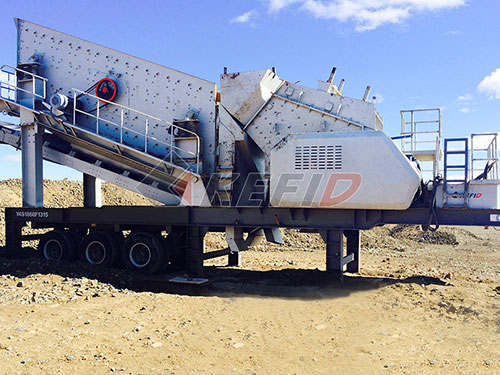

Limestone Mining Assembly Plant Bulk Order: IndustrialGrade Processing Solutions for HighVolume Operations
Operational Challenges in Limestone Processing
Limestone mining operations face persistent bottlenecks that directly impact costperton metrics. Primary crusher downtime averages 1218% annually across the industry, with each unplanned stoppage costing midtolarge operations $8,000$15,000 per hour in lost production. Screening inefficiencies result in 814% product contamination, forcing reprocessing or material rejection. Dust suppression systems consume 1522% of total plant power draw when operating at full capacity. Mobile equipment fleets add $0.45$0.80 per ton in haulage costs when fixed plant infrastructure is undersized or poorly positioned. Assembly plant configurations that don't match ROM (runofmine) characteristics create chronic throughput imbalances—your secondary circuit sits idle while primary crushing backs up, or your screening deck overloads because the jaw setting wasn't optimized for your specific limestone hardness and moisture profile.
These are not abstract concerns. They represent $1.2M$4.5M in annual avoidable costs for a 500,000 TPY limestone operation. The question isn't whether your plant can process material—it's whether your assembly configuration delivers the lowest sustainable cost per saleable ton while maintaining specification compliance.
Product Overview: Limestone Mining Assembly Plant
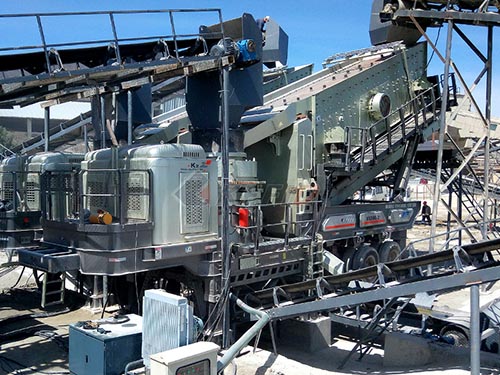
A limestone mining assembly plant is an integrated processing facility designed to reduce ROM limestone from extraction size (typically 6001,200mm) to marketspecified gradations (05mm to 4080mm) through sequential crushing, screening, and material handling stages. The assembly plant configuration determines throughput capacity, product shape, fines generation, and operational cost structure.
Operational Workflow:
1. Primary Crushing Stage – ROM limestone is fed via apron feeder or dump hopper to a primary jaw crusher or impactor, reducing material to 150300mm depending on downstream requirements.
2. Secondary Crushing Stage – Primary crushed material passes to cone or impact crushers for further size reduction to 4080mm, with closedside setting (CSS) controlling product top size.
3. Screening & Classification – Vibrating screens separate material into commercial gradations, with oversize recirculated to secondary or tertiary crushers.
4. Tertiary/Quaternary Reduction – For fine products (05mm, 510mm), VSI or highspeed cone crushers complete the reduction circuit.
5. Material Handling & Stockpiling – Conveyors transport finished products to stockpiles, with dust suppression and weighing systems integrated throughout.
Application Scope: This configuration suits mediumtolarge limestone operations (200,0002,000,000 TPY) producing construction aggregates, agricultural lime, industrial fillers, or cement kiln feed. Limitations include moisture content above 810% (requiring specialized handling), silica content above 15% (accelerated wear), and highly abrasive limestone varieties requiring alloy wear parts.
Core Features
Modular Assembly Configuration | Technical Basis: Preengineered structural modules with standardized connection points | Operational Benefit: Reduces site construction time by 4060% compared to stickbuilt plants | ROI Impact: Lower installation labor cost ($180,000$350,000 savings) and earlier production start
Variable Speed Drive Systems | Technical Basis: VFDcontrolled feeder and crusher drives with PLC integration | Operational Benefit: Matches throughput to downstream capacity, eliminates surge events | ROI Impact: 1218% reduction in specific energy consumption (kWh/ton)
Laminated Safety Glass Control Cabin | Technical Basis: Positivepressure enclosure with HEPA filtration and ergonomic layout | Operational Benefit: Protects operators from silica dust exposure, improves decisionmaking visibility | ROI Impact: Reduced MSHA compliance risk, lower operator turnover
Hydraulic CSS Adjustment | Technical Basis: Hydraulic cylinders with position transducers and automatic calibration | Operational Benefit: Product gradation changes in under 5 minutes vs. 4590 minutes manual | ROI Impact: 812% increase in plant availability for product changeovers
Integrated Dust Suppression | Technical Basis: Highpressure water misting at transfer points with optional baghouse | Operational Benefit: Maintains visible emissions below 10% opacity | ROI Impact: Avoids $25,000$75,000 in potential fines and community complaints
WearLiner Monitoring System | Technical Basis: Ultrasonic thickness sensors on crusher liners and chute liners | Operational Benefit: Predictable maintenance scheduling vs. reactive replacement | ROI Impact: 1520% extension in liner life through datadriven changeout intervals
Centralized Lubrication | Technical Basis: Automated grease distribution to 4060 points with fault alerts | Operational Benefit: Eliminates manual lubrication rounds, reduces bearing failures | ROI Impact: 6070% reduction in unplanned bearingrelated downtime
Competitive Advantages
| Performance Metric | Industry Standard | Limestone Mining Assembly Plant Solution | Advantage (% Improvement) |
|||||
| Throughput (TPH) | 250350 | 400550 | +4560% |
| Energy per Ton (kWh) | 1.82.2 | 1.41.7 | 1822% |
| Product Contamination | 814% | 35% | 6070% |
| Changeover Time (gradation) | 4590 min | 512 min | 8590% |
| Dust Emissions (opacity) | 1525% | <10% | 5060% |
| Availability (%) | 7884% | 9296% | +1218% |
| Maintenance Cost per Ton | $0.28$0.42 | $0.18$0.26 | 3545% |
Technical Specifications
| Parameter | Specification |
|||
| Capacity Range | 200800 TPH (dependent on feed size, hardness, product spec) |
| Primary Crusher Feed Opening | 900 x 1,200mm to 1,300 x 1,600mm |
| Maximum Feed Size | 1,000mm (primary), 300mm (secondary) |
| Product Gradations | 05mm, 510mm, 1020mm, 2040mm, 4080mm (configurable) |
| Total Installed Power | 4501,200 kW (depending on configuration) |
| Voltage | 380480V, 50/60Hz, 3phase |
| Control System | PLC with SCADA interface, Ethernet/IP or Profibus |
| Dust Suppression | 1540 m³/hr water consumption at 710 bar |
| Operating Temperature Range | 20°C to +50°C (with optional coldweather package to 40°C) |
| Noise Level | <85 dB(A) at 1m from enclosure |
| Structural Steel | Hotdip galvanized or epoxycoated per site conditions |
| Conveyor Belt Width | 8001,200mm |
| Stockpile Capacity | 5005,000 tons per product (modular extension available) |
Application Scenarios
Construction Aggregates Producer | Challenge: Existing plant producing 280 TPH with 12% oversize recirculation and 18% downtime during peak season | Solution: 550 TPH limestone mining assembly plant with dual secondary cones and prescreening deck | Results: Throughput increased to 520 TPH, recirculation reduced to 4%, plant availability improved to 94%, cost per ton reduced from $3.85 to $2.60
Cement Plant Kiln Feed | Challenge: Inconsistent chemical composition and 15% moisture content causing kiln instability and high fuel consumption | Solution: Assembly plant with primary impactor, moisturetolerant screening, and homogenization stockpile | Results: Feed variability (LSTD) reduced by 42%, kiln fuel consumption decreased 8.5%, clinker production increased 6.2%
Agricultural Lime Processor | Challenge: High fines generation (28% passing 1mm) reducing product value and creating dust compliance issues | Solution: Assembly plant with VSI in tertiary circuit and closedcircuit screening | Results: Fines reduced to 12%, product value increased $4.20/ton, dust opacity maintained below 8%
Commercial Considerations
Equipment Pricing Tiers:
- Standard Configuration (200350 TPH): $1.2M$2.1M – Single primary, single secondary, twodeck screening
- MidRange Configuration (350550 TPH): $2.3M$3.8M – Dual secondary circuit, threedeck screening, automated controls
- HighCapacity Configuration (550800 TPH): $4.0M$6.5M – Dual primary, triple secondary, fourdeck screening, full automation
- Baghouse dust collection (+$180,000$420,000)
- Cold weather package (40°C operation) (+$95,000$150,000)
- Rail/truck loadout automation (+$220,000$550,000)
- Extended wear liner package (+$45,000$120,000)
- Remote monitoring and diagnostics (+$35,000$75,000)
- Annual maintenance contract: 35% of equipment capital cost
- Wear parts supply agreement: 815% discount on consumables
- Operator training program: $12,000$25,000 per session
- Commissioning and optimization: $45,000$85,000
Optional Features:
Service Packages:
Financing Options: Equipment leasing, renttoown, and productionbased payment structures available for qualified commercial buyers. Typical terms: 2030% down, 3660 month terms at 6.59.5% APR.
FAQ
Q: What limestone hardness and abrasiveness can this assembly plant handle?
A: The standard configuration processes limestone with compressive strength up to 180 MPa and silica content up to 12%. For higher silica (1218%), we specify alloy wear liners and reduced CSS settings. Above 18% silica, we recommend a customized wear protection package.
Q: How does the assembly plant handle wet or sticky limestone?
A: Feed moisture up to 8% is manageable with standard configuration. For 812% moisture, we incorporate heated screens, polymerlined chutes, and reduced screen angles. Above 12% moisture, a rotary breaker or feederbreaker is recommended upstream.
Q: What is the typical lead time for a bulk order?
A: Standard configurations ship in 1620 weeks from order confirmation. Custom configurations require 2432 weeks. Bulk orders (3+ plants) receive prioritized scheduling and can reduce lead time by 1520%.
Q: What infrastructure is required for installation?
A: You will need: reinforced concrete foundation (supplied by others), 3phase power supply at specified voltage, water supply for dust suppression (1540 m³/hr), and access roads for equipment delivery. We provide foundation drawings and installation supervision.
Q: How does the control system integrate with existing plant infrastructure?
A: The PLCbased control system supports Ethernet/IP, Profibus, and Modbus TCP protocols. It can interface with your existing SCADA or historian system. We provide protocol documentation and integration support during commissioning.
Q: What is the warranty and spare parts availability?
A: Standard warranty is 12 months from commissioning or 18 months from shipment, whichever occurs first. Wear parts are excluded. Critical spares are stocked at regional distribution centers with 2448 hour delivery for most items.
Q: Can the assembly plant be relocated if mining operations move?
A: Yes. The modular design allows disassembly and relocation. Typical relocation time is 812 weeks including foundation work. Structural modules are designed for multiple setup cycles with minimal refurbishment.