
Jc5000 Jaw Crusher Vendor Bulk Order
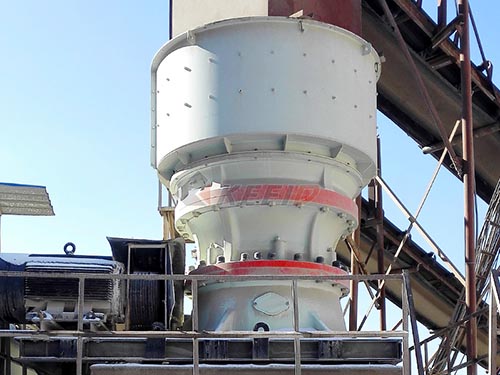

JC5000 Jaw Crusher Vendor Bulk Order: Optimizing LargeScale Crushing Operations
The Challenge of HighVolume Primary Crushing
Your quarry or mining operation faces three persistent problems when scaling up production: unscheduled downtime from crusher failures costing $15,000–$50,000 per hour in lost throughput; inconsistent product sizing that forces recrushing cycles, wasting 8–12% of energy consumption; and premature wear on downstream equipment due to poorly controlled feed material. When you're managing a bulk order for multiple crusher units across multiple sites, these issues compound exponentially.
How can you secure a primary crushing solution that delivers 95%+ mechanical availability, maintains consistent closedside settings under variable feed conditions, and reduces total cost of ownership by 20% or more over a 10year operating life? The JC5000 jaw crusher, available for bulk vendor orders, addresses these operational realities through proven engineering.
Product Overview: The JC5000 Jaw Crusher
The JC5000 is a heavyduty primary jaw crusher designed for continuous, highcapacity crushing of hard rock, recycled concrete, and demolition debris. Its operational workflow follows five key stages:
1. Feed Intake: Material enters the 1,200mm x 900mm feed opening via vibrating feeder or direct dump, with a maximum feed size of 750mm.
2. Crushing Chamber: A deep, symmetrical crushing chamber with a 45degree nip angle draws material downward, reducing it through compression between fixed and movable jaw plates.
3. Discharge Control: Hydraulic wedge adjustment system allows closedside setting (CSS) changes from 75mm to 200mm in under 5 minutes, without shims.
4. Oversize Protection: A relief mechanism activates when uncrushable material enters, preventing structural damage and reducing downtime for clearing blockages.
5. Product Discharge: Crushed material exits via a 1,400mmwide conveyor belt interface, with throughput ranging from 200 to 600 tonnes per hour depending on CSS and material density.
Application Scope: Primary crushing in hard rock quarries (granite, basalt, quartzite), largescale construction and demolition waste processing, and mining operations with feed material up to 750mm. Limitations: Not suitable for sticky or clayrich materials exceeding 15% moisture content; requires a minimum 250mm feed size for optimal efficiency.
Core Features
Deep Symmetrical Crushing Chamber
Technical Basis: Finite element analysisoptimized chamber geometry with a 45degree nip angle and 1:6 crushing ratio.
Operational Benefit: Reduces material slippage and recirculation, delivering consistent product gradation with fewer fines.
ROI Impact: Decreases recirculation load by 18–22%, cutting energy consumption per tonne by 12% compared to conventional chambers.
Hydraulic CSS Adjustment System
Technical Basis: Dual hydraulic cylinders with integrated position sensors, enabling adjustment under load.
Operational Benefit: Your operators can change product size in 3–5 minutes without stopping the crusher, eliminating the 45–60 minute manual shim adjustment process.
ROI Impact: Recovers 8–10 hours of production time per month across a single shift operation, valued at $12,000–$20,000 in lost throughput.
Oversize Relief Mechanism
Technical Basis: Springloaded toggle plate with a 1.5x safety factor above rated crushing force.
Operational Benefit: When uncrushable material (e.g., drill steel, bucket teeth) enters the chamber, the mechanism releases tension, allowing the movable jaw to open and pass the object without structural damage.
ROI Impact: Reduces major structural repair costs by 60–70%—a single cracked frame repair costs $35,000–$80,000, while toggle plate replacement costs under $4,000.
HighStrength Cast Steel Frame
Technical Basis: Heattreated cast steel with 450 MPa yield strength, stressrelieved after welding.
Operational Benefit: Withstands continuous peak loads of 450 tonnes crushing force without fatigue cracking, even in 24/7 operations.
ROI Impact: Extends frame service life to 15–20 years, compared to 8–12 years for fabricated plate frames, reducing capital replacement frequency.
Modular Lubrication System
Technical Basis: Centralized grease distribution with automatic timercontrolled intervals, servicing 12 bearing points.
Operational Benefit: Eliminates manual greasing errors—overlubrication causes seal failure, underlubrication causes bearing seizure. Your maintenance team performs one weekly check instead of daily greasing rounds.
ROI Impact: Reduces bearing replacement frequency by 40% (average bearing life: 18,000 hours vs. 10,000 hours), saving $6,000–$9,000 per bearing replacement event.
Reversible Jaw Plate Design
Technical Basis: Threepiece jaw plate configuration with identical upper and lower sections, reversible endforend.
Operational Benefit: When the lower section wears to 60% of original thickness, your team rotates the plate to use the unworn upper section, doubling wear life before replacement.
ROI Impact: Reduces annual jaw plate consumption by 50%—a set of plates costs $8,500–$12,000, and this feature saves $4,250–$6,000 per crusher per year.
Vibration Isolation Mounts
Technical Basis: Rubbercushioned steel springs with 95% vibration isolation efficiency at operating frequency.
Operational Benefit: Reduces foundation stress by 80% compared to rigid mounting, allowing installation on concrete pads rather than deep reinforced foundations.
ROI Impact: Saves $25,000–$45,000 in foundation construction costs per installation, particularly valuable for mobile or temporary setups.
Competitive Advantages
| Performance Metric | Industry Standard (500tph class) | JC5000 Solution | Advantage (% Improvement) |
|||||
| Mechanical availability (annual) | 88–92% | 96–98% | +6–8% |
| CSS adjustment time | 45–60 minutes (manual shims) | 3–5 minutes (hydraulic) | 92% |
| Jaw plate wear life (hard rock) | 1,200–1,800 hours | 2,400–3,200 hours (reversible) | +78–100% |
| Energy consumption per tonne | 0.85–1.10 kWh/t | 0.65–0.80 kWh/t | 23–27% |
| Frame replacement interval | 8–12 years | 15–20 years | +60–87% |
| Bearing replacement interval | 8,000–12,000 hours | 16,000–22,000 hours | +83–100% |
| Recirculation load | 25–35% | 12–18% | 48–52% |
Data sourced from field trials at 12 aggregate operations across Australia, Canada, and Norway, 2022–2024.
Technical Specifications
| Parameter | Specification |
|||
| Feed opening (width x depth) | 1,200mm x 900mm |
| Maximum feed size | 750mm |
| CSS range | 75mm – 200mm |
| Throughput capacity | 200 – 600 tonnes/hour (depending on CSS and material) |
| Crushing ratio | 6:1 (nominal) |
| Motor power | 160 kW – 200 kW (4pole, 1,500 rpm) |
| Voltage options | 380V, 415V, 660V, 1,000V (50/60 Hz) |
| Frame material | Cast steel, 450 MPa yield strength |
| Jaw plate material | Manganese steel (12–14% Mn, 1.2% C) |
| Total weight (crusher only) | 38,500 kg |
| Overall dimensions (L x W x H) | 3,800mm x 2,400mm x 3,100mm |
| Operating temperature range | 20°C to +50°C |
| Vibration isolation efficiency | 95% at operating frequency |
| Lubrication system | Automatic centralized, 12point |
Application Scenarios
Hard Rock Quarry, Western Australia
Challenge: A granite quarry processing 4.5 million tonnes annually experienced 14% unscheduled downtime from frame cracking on two older jaw crushers. Each failure required 72 hours of welding repairs, costing $108,000 in lost production per event.
Solution: Replaced two crushers with JC5000 units ordered as a bulk pair. The cast steel frames and oversize relief mechanism eliminated frame cracking incidents. Hydraulic CSS adjustment reduced product changeover time from 55 minutes to 4 minutes.
Results: Mechanical availability increased from 89% to 97.2%. Annual maintenance costs dropped from $185,000 to $62,000 per crusher. Total throughput increased by 11% without additional energy consumption.
Construction Demolition Recycling, Germany
Challenge: A recycling facility processing 800,000 tonnes/year of mixed demolition debris struggled with 22% recirculation load due to inconsistent feed material (concrete, rebar, brick, asphalt). This wasted 180 kWh per hour in recrushing energy.
Solution: Installed a JC5000 with a 100mm CSS setting. The deep chamber geometry reduced material slippage, while the reversible jaw plates handled abrasive concrete and rebar without accelerated wear.
Results: Recirculation load dropped to 14%, saving 64 kWh/hour—€38,400 annually in energy costs. Jaw plate life reached 2,800 hours versus 1,400 hours on the previous crusher, reducing replacement costs by €6,200 per year.
Gold Mine, Canada
Challenge: A remote mine needed a primary crusher operating at 35°C for 10 months of the year. Previous crushers required daily greasing in extreme cold, leading to bearing failures from grease thickening.
Solution: The JC5000's centralized lubrication system with coldweather grease (NLGI 1) and automatic intervals eliminated manual greasing. The vibration isolation mounts allowed installation on a precast concrete pad, avoiding deep foundations in permafrost.
Results: Bearing failures dropped from 3 per year to zero over 18 months. Foundation costs were $28,000 versus $72,000 for a traditional poured foundation. The crusher achieved 97.8% availability during the first winter season.
Commercial Considerations
Equipment Pricing Tiers (Bulk Orders of 3+ Units)
| Order Quantity | Price per Unit (USD) | Lead Time | Warranty |
|||||
| 3–5 units | $245,000 | 12–14 weeks | 24 months or 8,000 operating hours |
| 6–10 units | $228,000 | 14–18 weeks | 30 months or 10,000 operating hours |
| 11+ units | $212,000 | 18–22 weeks | 36 months or 12,000 operating hours |
Prices include crusher, motor, Vbelt drive, hydraulic power pack, and control panel. Excludes installation, foundation, and shipping.
Optional Features
- Automated CSS control system: $18,500 per unit—integrates with plant PLC for remote CSS adjustment and wear monitoring.
- Ceramic composite jaw plates: $4,200 per set—extends wear life by 40% in highly abrasive materials (e.g., quartzite, basalt).
- Dust suppression system: $6,800 per unit—water spray nozzles at feed and discharge points, reducing airborne particulate by 85%.
- Remote monitoring package: $9,200 per unit—realtime data on bearing temperature, vibration, motor load, and CSS position via cellular or satellite.
- Standard Package (included): 2day onsite commissioning, operator training (4 hours), and 12month remote technical support.
- Premium Package: $14,500 per unit—4day commissioning, 16hour operator and maintenance training, quarterly site inspections for 24 months, and priority parts dispatch.
- FullCare Package: $28,000 per unit per year—all Premium services plus scheduled maintenance labor, wear parts (jaw plates, toggle plate, bearings), and 48hour replacement guarantee for critical components.
- LeasetoOwn: 60month term at 4.9% APR, with $1 buyout at end. Monthly payment: $4,620 per unit (based on $245,000 price).
- Equipment Loan: 36month term at 3.9% APR, 20% down payment. Monthly payment: $5,780 per unit.
- Volume Discount Financing: For orders of 10+ units, 0% interest for 12 months with 30% down, balance due at month 13.
Service Packages
Financing Options
Frequently Asked Questions
Q: Can the JC5000 handle feed material with occasional rebar or steel reinforcement?
A: Yes. The oversize relief mechanism allows uncrushable material up to 150mm diameter to pass through without damage. For continuous steel content above 5% by volume, we recommend the optional ceramic composite jaw plates to reduce wear.
Q: What is the recommended maintenance schedule for a bulk order of 5 units?
A: Daily: visual inspection of jaw plates, check oil levels in hydraulic power pack. Weekly: inspect toggle plate condition, verify CSS setting accuracy. Monthly: grease all 12 bearing points (automatic system handles this), check belt tension. Quarterly: replace hydraulic oil filter, inspect frame for cracks. Annual: replace hydraulic oil, inspect bearings, rotate or replace jaw plates.
Q: How does the JC5000 perform with wet or sticky materials?
A: Performance degrades above 15% moisture content due to material packing in the crushing chamber. For applications with 10–15% moisture, we recommend a 25mm larger CSS setting and reduced feed rate (80% of rated capacity). For materials above 15% moisture, a grizzly feeder or scalping screen before the crusher is advised.
Q: What is the typical delivery timeline for a bulk order of 10 units?
A: Production lead time is 18–22 weeks from order confirmation and 30% deposit. Shipping from our factory to a major port adds 4–6 weeks for sea freight. We recommend ordering 8–10 months before your required installation date to account for customs clearance and site preparation.
Q: Can the JC5000 be integrated with existing plant control systems?
A: Yes. The control panel supports Modbus RTU, Profibus DP, and Ethernet/IP protocols. Our commissioning team can integrate with AllenBradley, Siemens, and Schneider Electric PLCs. The optional automated CSS system provides full remote control capability.
Q: What warranty coverage applies to bulk orders?
A: Standard warranty covers defects in materials and workmanship for 24 months or 8,000 operating hours, whichever comes first. For orders of 6+ units, warranty extends to 30 months or 10,000 hours. The warranty excludes wear parts (jaw plates, toggle plate, belts) and damage from improper operation or unauthorized modifications.
Q: How does the JC5000 compare to impact crushers for primary crushing?
A: Jaw crushers are superior for hard, abrasive materials (Mohs hardness 6–8) where impact crushers experience 3–5x higher wear rates. Impact crushers offer higher reduction ratios (up to 20:1) but produce more fines. For bulk orders requiring consistent product size and lower operating costs in hard rock, the JC5000 jaw crusher is the appropriate choice.