
Iso Certified Stone Quarry Crushing Plant Design Service
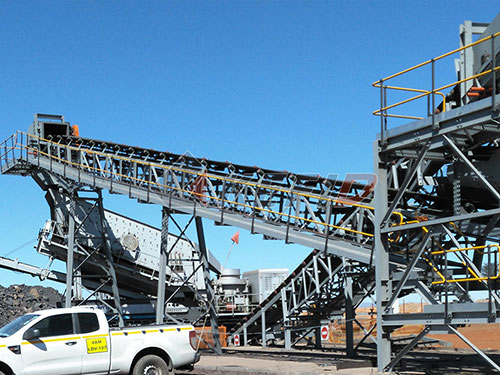

ISOCertified Stone Quarry Crushing Plant Design & Engineering Services
1. PAINPOINT DRIVEN OPENING
Are unpredictable plant availability and escalating costperton metrics eroding your quarry’s profitability? Inconsistent feed, unplanned maintenance, and inefficient material flow directly impact your bottom line. Consider these common operational challenges:
Excessive Downtime: Uncoordinated crusher and screen setups lead to frequent bottlenecks and stoppages, with industry data showing nonproductive time can consume 1520% of scheduled operating hours.
High Operational Costs: Suboptimal plant layouts increase fuel consumption, wear part replacement frequency, and manpower requirements for rehandling material.
Inconsistent Product Yield: Inability to precisely calibrate the crushing circuit results in offspec aggregate, reducing premium product yield and creating surplus waste stockpiles.
Scalability Constraints: A rigid plant design cannot adapt to changing market demands for different aggregate sizes or increased production volumes without major capital reinvestment.
Compliance & Safety Risks: Adhoc modifications can create operational hazards and make consistent adherence to environmental (dust, noise) and safety regulations difficult to maintain.
How do you transition from reactive fixes to predictable, profitable production? The foundation is a professionally engineered stone quarry crushing plant design.
2. PRODUCT OVERVIEW
Our service delivers a complete, ISOcertified engineering package for fixed and semifixed stone quarry crushing plant design. This is not just equipment selection; it is the holistic process of creating an efficient, durable, and profitable material reduction circuit.
Operational Workflow:
1. Site & Geotechnical Analysis: Comprehensive review of feed material characteristics, site topography, and production goals.
2. Process Flow Sheet Development: Engineering of the primary, secondary, tertiary crushing, and screening stages for optimal size reduction.
3. Plant Layout & Material Handling Design: Spatial planning for equipment placement, conveyor routing, and stockpile management to minimize travel and promote smooth flow.
4. Structural & Civil Engineering: Design of foundations, support structures, access platforms, and drainage compliant with loadbearing and safety standards.
5. Electrical & Control System Integration: Planning for power distribution, motor control centers (MCCs), and automated process logic for coordinated operation.
Application Scope: Greenfield quarry development, brownfield plant expansion or modernization projects for granite, limestone, basalt, and other aggregates.
Limitations: Final mechanical installation and commissioning are performed by certified contractors based on the delivered design package.
3. CORE FEATURES
Modular Process Design | Technical Basis: Scalable circuit modeling | Operational Benefit: Enables phased capacity upgrades or product mix changes with minimal disruption | ROI Impact: Protects initial investment by deferring major capital outlays for future expansion
Lifecycle Cost Optimization | Technical Basis: Wear part consumption rate analysis & energy modeling | Operational Benefit: Specifies crusher chambers, liner profiles,and screen media that reduce specific energy (kWh/ton)and consumable costs | ROI Impact: Direct reduction in costperton over the plant's operational lifespan
Advanced Material Flow Simulation | Technical Basis: Discrete Element Method (DEM) software analysis | Operational Benefit: Identifies transfer point chokages,crusher starvation,and dust generation points before construction | ROI Impact: Eliminates costly postbuild modifications; field data shows a typical 812% improvement in overall system throughput efficiency
SafetyIntegrated Layout | Technical Basis: Hazard identification (HAZID) studies & ergonomic spatial planning | Operational Benefit: Creates clear access for maintenance,lowers fall risks,and isolates highnoise areas | ROI Impact: Reduces incidentrelated downtimeand lowers insurance premiums
Dust Suppression & Noise Abatement Engineering | Technical Basis: Canopy design,wet suppression system sizing,and acoustic barrier modeling per MSHA/OSHA guidelines | Operational Benefit: Provides a clear path to consistent regulatory compliance| ROI Impact:Avoids finesand facilitates smoother community relationsand permitting
ISO 9001 Certified Design Process| Technical Basis:Systematic quality management proceduresfor design reviewand verification| Operational Benefit: Ensures calculational accuracy,material specification compliance,and drawing consistency| ROI Impact:Mitigates risk of construction errors that can cause delays averaging 510% of project value
4. COMPETITIVE ADVANTAGES
| Performance Metric | Industry Standard Design Approach | Our ISOCertified Crushing Plant Design Solution | Advantage (% Improvement) |
| : | : | : | : |
| System Availability| ~8082% (estimated) based on common bottlenecks| Target >87% via redundancy planningand optimized maintenance access| +6% to +8% |
| DesigntoBuild Revision Cycles| Average 35 major revision rounds during construction| Average 12 revisions through frontend simulationand detailed modeling| 60% revision time |
| Specific Energy Consumption (kWh/ton)| Baseline set by conventional equipment selection| Optimized through holistic system designand correct motor sizing| Reduction of 1015% |
| Wear Part Life Expectancy (Crusher Liners)| Based on OEM standard ratings| Extended through crusher positioningand feed condition optimization(proper scalping,fines removal)| Increase of 1525% |
5. TECHNICAL SPECIFICATIONS
Design Capacity Range: From 150 tons per hour (TPH) modular plants to 1,500+ TPH largescale stationary installations.
Power Integration: Designs accommodate mediumvoltage (e.g., 4160V) primary crusher drives down to lowvoltage controls; include detailed cable schedulesand load center specifications.
Material Specifications: Structural steel designed per AISC standards; conveyor idlersandsystems rated per CEMA; wear liners specified in AR400or higher grade steel as required.
Physical Layout Footprint: Designs optimize land use; typical primary stationwith surge pileand secondary/tertiary tower may occupy a plot of approximately 80m x 120mfor a mediumcapacity plant,variable based on topography.
Environmental Operating Range: Designs account for ambient temperatures from 20°Cto +45°C,dust particulate matter controlto below10 mg/Nm³,and operational noise attenuationto meet85 dB(A) at the property boundary.
6. APPLICATION SCENARIOS
Granite Quarry Expansion Project
Challenge:A quarry needed to increase production by40% but had limited spacefor expansion.The existing layout caused severe conveyor transfer cloggingandaverage daily downtimeof90 minutes.
Solution:A new stone quarry crushing plant design focused on vertical integrationusing a compact tertiary tower layoutwith highangle conveyors,saving footprint.A centralized PLCcontrolled bypass chute system was engineeredto divert material during jams.
Results:The new layout achievedthe40% capacity targetwithin the existing land lease.Bottleneckrelated downtimedropped by over70%,and product cubicity improveddue to bettercontrolled recirculating load.
Limestone Quarry Modernizationfor Rail Loadout
Challenge:A producer with a dedicated rail spur faced inconsistent loading timesdue to fluctuating final product stockpile levels,causing demurrage fees.The crushing circuit could not reliably produce the required blendof products simultaneously.
Solution:The redesign incorporateda splitcircuit configurationwith dedicated secondary linesfor different product rangesanda largecapacity automated loadout silo system.The stone quarry crushing plant design included advanced level sensorsanda batch loading control system integrated with the crusher PLCs.
Results:Rail car loading cycle timebecame consistent.Rail demurrage fees were eliminated.Product blend accuracy improvedto98%,allowing premium pricing.Fines productionwas also reducedby12%.
7. COMMERCIAL CONSIDERATIONS
Our ISOcertified stone quarry crushing plant design services are offered in structured tiers:
Basic Engineering Package: Includes process flow diagrams(PFDs), preliminary equipment list,and general arrangement(GA) drawings.Suitable for feasibility studiesand budgeting.Ideal for clients with inhouse detailed engineering teams.Pricing is typically projectscoped.
Detailed For Construction (DFC) Package (Most Common): Comprehensive suite including P&IDs,PFDs,GAs,foundation& structural drawings,elementary wiring diagrams,bill of materials(BOM),and civil scope.This is a turnkey design readyfor contractor bidding.Pricing based onplant complexityand throughput capacity.
Owner’s Engineer Service : Fullscope project managementof the design phaseincluding vendor drawing review,factory acceptance test(FAT) supervision,and construction support.Often priced asa percentageof total installed cost(TIC).
Optional features include3D laser scan integrationof existing sites,BIM( Building Information Modeling),andaftersales performance auditing.Service packages cover12month postdesign support.Financing options forengineering servicesare availablethrough partnered financial institutions.
8. FAQ
Q1: How does your stone quarry crushing plant design ensure compatibility with our existing equipment if we are doing a partial upgrade?
A1:The process begins witha thorough auditof your current machinery’s condition,running rates,and remaining lifecycle.We then model its performance within the new proposed circuit.Ournodular approach often allows fora phased integrationwhere new sections interface cleanlywith retained equipment via designed transfer points.
Q2:What is the typical impacton operational staffing requirementswith anewplantdesign?
A2:A welldesignedplant focuseson automationandreliability.It often reduces thenumber offield operatorsrequired formanual checksandemergent issuesby centralizing control.Maintenance staffing needs typically remain similar,but their work becomes more planned/predictable due tobetter access andreduced reactive repairs.
Q3:What commercial termsare standardfor adesign project?
A3We operate ona staged payment schedulealignedwithmilestones(e.g.,contract signing,PFD approval,Issuefor Construction).This manages cash flowfor both parties.Afixedprice contractis establishedbasedon anagreedscope;any subsequent clientinitiated scope changesare managed througha formal change orderprocess.
Q4:Canyour designs accommodatelater additionslike awashing sandscreening circuit?
A4Yes.Scalabilityis acore principle.We identify“future tiein points”inthe initial layout—allocating physical space,piping/electrical conduits,and leaving provisionsin structural load calculations.This significantly lowers future retrofit costsandinconvenience.
Q5How longdoes afull Detailed For Constructiondesign package typically take todeliver?
A5For amediumcomplexitygreenfieldplant(500800 TPH),the timelinefrom initial datacollectionto issuingallconstruction drawingsis typically16to24 weeks.Timelines are confirmed duringthe proposal phasebasedonproject specifics