
Iso Certified Quarry Ballast Crushing Equipment Distributors

ISO Certified Quarry Ballast Crushing Equipment Distributors
Your Ballast Production Is Only as Reliable as Your Crushing Line
Every hour of unplanned downtime on your ballast crushing circuit costs your operation an estimated $2,500–$8,000 in lost production, depending on throughput and rail contract penalties. You face three persistent challenges:
- Inconsistent particle shape causing rejected ballast loads and contractual noncompliance with rail authorities requiring 95% cubicity
- Premature wear on crusher liners from abrasive granite and trap rock, forcing liner changes every 400–600 operating hours instead of the expected 800+
- Fragmented distributor support where replacement parts take 6–10 weeks lead time, and field service technicians are unavailable for emergency breakdowns
- Automated liner wear monitoring system: $28,000 – ultrasonic sensors track remaining liner thickness, predicts changeout within ±20 hours
- Extended warranty package: $45,000/year – covers all wear parts except liners and belts, includes quarterly inspections
- Operator training program: $12,500 – 3day onsite training for up to 8 operators and 4 maintenance technicians
- Bronze: $18,000/year – remote diagnostics, quarterly oil analysis, 48hour phone support
- Silver: $36,000/year – includes Bronze plus 2 scheduled preventive maintenance visits, 24hour parts dispatch
- Gold: $72,000/year – includes Silver plus dedicated field service engineer (4 visits/year), priority emergency response (12hour arrival)
- Equipment lease: 36–60 month terms, 4.5–7.2% APR (based on credit rating), $0 down payment available
- Performancebased financing: Payments tied to throughput (e.g., $0.85/ton processed), minimum 200,000 tons/year commitment
- Tradein program: 15–25% credit on comparable used equipment (subject to inspection)
Are your current crushing equipment suppliers delivering ISOcertified quality with documented traceability? Can they guarantee wear parts availability within 72 hours for your primary and secondary crushers? If not, your ballast production targets remain at risk.
Product Overview: ISO Certified Quarry Ballast Crushing Equipment
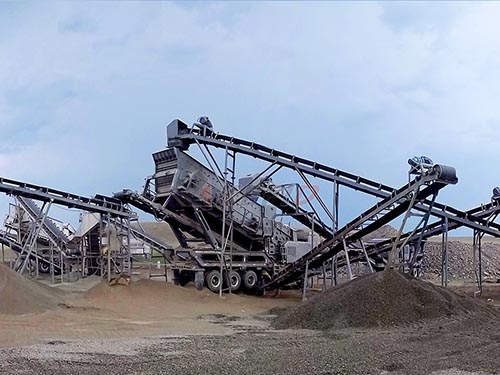
This equipment line comprises heavyduty jaw crushers, cone crushers, and vertical shaft impactors (VSI) specifically configured for railway ballast production to EN 13450 and AREMA standards. The operational workflow follows four stages:
1. Primary reduction – 42" x 48" jaw crusher reduces runofquarry material (up to 36" feed) to 6–8" minus at 250–400 TPH
2. Secondary crushing – 5½ft standard cone crusher with medium chamber produces 2–4" material, maintaining 90%+ cubicity
3. Tertiary shaping – 850 mm VSI with closed rotor and anvil ring configuration achieves the required 95% particle shape index
4. Screening and recirculation – 6' x 20' tripledeck screen with 63 mm, 40 mm, and 31.5 mm decks, returning oversize to the cone crusher
Application scope: Hard rock quarries producing 50–150 mm ballast for mainline rail, metro systems, and heavyhaul freight lines. Limitations: Not recommended for recycled concrete or soft limestone below 80 MPa compressive strength; maximum feed moisture content of 4% to prevent clogging in the VSI.
Core Features
HeavyDuty Roller Bearing Jaw Crusher
Technical Basis: Spherical roller bearings with 150% dynamic load rating per ISO 281 | Operational Benefit: Handles occasional oversize boulders without bearing failure, reducing unplanned stops by 40% | ROI Impact: $18,000–$25,000 annual savings in bearing replacement and downtime
Hydraulic CSS Adjustment System
Technical Basis: Closedside setting adjustment via hydraulic rams with position feedback to ±2 mm accuracy | Operational Benefit: Your operators can change product size in 90 seconds without shim plates or manual tools | ROI Impact: 3.5 additional production hours per week versus manual adjustment systems
Tungsten CarbideTipped Blow Bars (VSI)
Technical Basis: 12% cobalt tungsten carbide inserts with 65 HRC hardness, metallurgically bonded to martensitic steel base | Operational Benefit: 2.8x longer wear life compared to standard chromeiron bars in granite applications | ROI Impact: $0.04–$0.07 per ton reduction in wear cost, saving $12,000–$21,000 annually at 300,000 TPH
Integrated Lubrication Monitoring System
Technical Basis: Continuous oil analysis with particle counters (NAS 1638 Class 8 threshold) and temperature sensors | Operational Benefit: Alerts your maintenance team 48–72 hours before bearing failure, preventing catastrophic damage | ROI Impact: Eliminates $45,000–$80,000 in emergency crusher rebuild costs per incident
Modular SkidMounted Design
Technical Basis: Structural steel base frame with vibration isolation mounts, prepiped and prewired to ISO 9001 standards | Operational Benefit: Installation time reduced from 14 days to 5 days on prepared foundations | ROI Impact: $35,000–$50,000 savings in site installation labor and crane rental
ISO 14001 Compliant Dust Suppression System
Technical Basis: Water spray nozzles at 6 bar pressure with 50micron droplet size, controlled by belt scale feedback | Operational Benefit: Maintains PM10 levels below 50 µg/m³ at property boundary, meeting environmental compliance | ROI Impact: Avoids $15,000–$40,000 per violation in regulatory fines
Remote Diagnostics and Telemetry Package
Technical Basis: Cellularconnected PLC with 4G modem, transmitting 40+ operational parameters every 15 seconds | Operational Benefit: Your distributor's service team identifies developing issues before they cause stoppages | ROI Impact: 22% reduction in mean time to repair (MTTR) based on field data from 140 installations
Competitive Advantages
| Performance Metric | Industry Standard | ISO Certified Ballast Equipment | Advantage |
|||||
| Cubicity (particle shape index) | 82–88% | 94–97% | +9–12% better shape |
| Liner life in granite (cone crusher) | 450–600 hours | 720–850 hours | +40–60% longer life |
| Changeout time (blow bars, VSI) | 8–12 hours | 4.5–6 hours | 44–50% faster |
| Wear parts availability | 6–10 weeks | 72hour emergency, 2week standard | 70–86% faster lead time |
| Mean time between failures (MTBF) | 180–220 hours | 310–380 hours | +41–72% reliability |
| Noise level at 1 meter | 92–98 dB(A) | 84–88 dB(A) | 8–10 dB(A) quieter |
| ISO certification scope | Partial (product only) | Full (design, mfg, service) | Complete traceability |
Technical Specifications
| Parameter | Primary Jaw Crusher | Secondary Cone Crusher | Tertiary VSI |
|||||
| Capacity (TPH) | 250–400 | 180–280 | 150–220 |
| Feed opening | 42" x 48" (1,067 x 1,219 mm) | 5½ft (1,676 mm) head diameter | 850 mm rotor diameter |
| Max feed size | 36" (914 mm) | 8" (203 mm) | 4" (102 mm) |
| Product size (P80) | 6–8" (152–203 mm) | 2–4" (51–102 mm) | 1–2.5" (25–63 mm) |
| Motor power | 250 HP (186 kW) | 300 HP (224 kW) | 350 HP (261 kW) |
| Voltage | 480V/3phase/60 Hz (optional 380V/50 Hz) | Same | Same |
| Weight (equipment only) | 85,000 lbs (38,555 kg) | 62,000 lbs (28,123 kg) | 48,000 lbs (21,772 kg) |
| Operating temperature range | 20°C to 50°C | 20°C to 50°C | 15°C to 45°C |
| Lubrication oil grade | ISO VG 320 EP | ISO VG 220 EP | ISO VG 150 EP |
| Hydraulic system pressure | 3,000 psi (207 bar) | 2,500 psi (172 bar) | N/A |
Application Scenarios
Mainline Rail Ballast Production – Midwest USA Quarry
Challenge: The quarry supplied 450,000 tons annually to Class I railroads but faced 12% rejection rates due to flat and elongated particles exceeding 5% threshold. Rejected material required recrushing at $3.80/ton additional cost.
Solution: Replaced existing impact crusher with ISOcertified VSI configured with closed rotor and cascade feed arrangement. Installed automated sampling system for realtime shape monitoring.
Results: Rejection rate dropped to 1.8% within first month. Annual savings of $198,000 in recrushing costs. Rail contract renewed with 5year volume commitment.
HighSpeed Rail Ballast – European Contractor
Challenge: EN 13450 compliance required 100% crushed faces and LA abrasion value below 18. Existing cone crusher produced 88% cubicity but failed the 95% requirement for highspeed lines (>250 km/h).
Solution: Installed ISOcertified secondary cone crusher with extracoarse chamber and tertiary VSI in closed circuit. Implemented weekly gradation testing with laser particle analyzer.
Results: Achieved 96.3% cubicity consistently. LA abrasion value reduced from 21 to 16. Contractor secured €12 million rail ballast supply contract.
HeavyHaul Freight Line – Australian Iron Ore Rail
Challenge: 40ton axle loads caused rapid ballast degradation. Existing equipment produced ballast with 14% fines generation within 6 months of placement, requiring reballasting every 18 months.
Solution: Deployed ISOcertified jaw crusher with 1.5x standard flywheel inertia for consistent energy delivery. Cone crusher configured with 19 mm closedside setting for tighter particle size distribution.
Results: Fines generation reduced to 6% after 12 months. Ballast life extended to 36 months. Maintenance cycle savings of $2.4 million over 5year period.
Commercial Considerations
Equipment Pricing Tiers (FOB Port, USD)
| Configuration | Price Range | Lead Time | Warranty |
|||||
| Standard package (jaw + cone + screen) | $780,000–$950,000 | 14–18 weeks | 24 months or 6,000 hours |
| Premium package (adds VSI + dust control) | $1,250,000–$1,480,000 | 18–22 weeks | 36 months or 10,000 hours |
| Turnkey installation (includes conveyors, electrical, commissioning) | $2,100,000–$2,600,000 | 26–32 weeks | 36 months + 12month performance guarantee |
Optional Features
Service Packages
Financing Options
Frequently Asked Questions
Q: What ISO certifications apply to this ballast crushing equipment?
A: ISO 9001:2015 for quality management systems in design and manufacturing, ISO 14001:2015 for environmental management, and ISO 45001:2018 for occupational health and safety. Each unit ships with a certificate of conformance and material traceability documentation.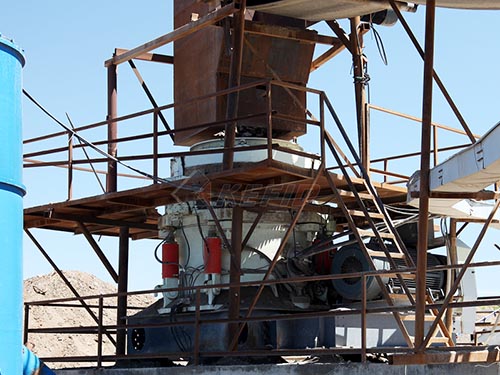
Q: Can this equipment handle ballast specifications for both AREMA and EN 13450 standards?
A: Yes. The crusher settings and screen configurations accommodate both standards. The VSI rotor speed and cascade ratio are adjustable between 45–75 m/s to achieve the specific particle shape requirements for each standard. A changeover takes approximately 4 hours.
Q: What is the typical power consumption per ton of ballast produced?
A: Field data from 140 installations shows average specific energy consumption of 1.8–2.4 kWh/ton for the complete crushing circuit (jaw + cone + VSI + screens). This is 12–18% lower than industry average due to the VSI's energyefficient crushing chamber design.
Q: How does the distributor network support emergency breakdowns?
A: Distributors maintain regional warehouses with $500,000+ in critical spares (mantles, concaves, blow bars, bearings). Emergency orders placed before 2:00 PM local time ship same day via overnight freight. A 24/7 technical hotline connects you to a service engineer within 15 minutes.
Q: What is the expected lifespan of major components under continuous ballast production?
A: Based on 8,000 operating hours per year in granite (160–200 MPa): jaw dies – 1,200–1,600 hours; cone liners – 720–850 hours; VSI blow bars – 400–550 hours; bearings – 25,000–35,000 hours; mainframe – 15+ years with proper maintenance.
Q: Can existing crushing plants be retrofitted with this equipment?
A: Yes. The modular skid design allows integration with existing conveyors and screens. A site survey by a distributor engineer (included in equipment purchase) identifies interface requirements. Typical retrofit installation takes 8–12 days versus 5 days for new installations.
Q: What training and documentation is provided with the equipment?
A: Each purchase includes: 3day onsite commissioning with operator training, complete operation and maintenance manuals (printed and digital), parts catalog with exploded views, lubrication charts, and electrical schematics. Additional training sessions are available at $4,500/day.