
Iso Certified Crushing And Screening Equipment Private Label Manufacturer
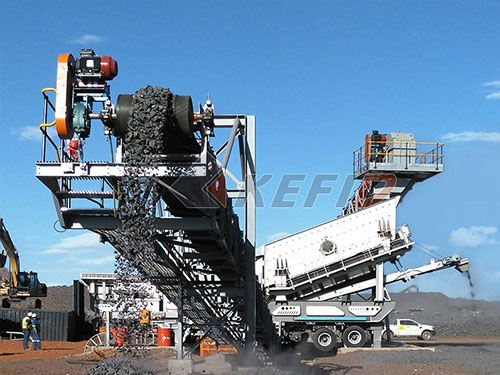

ISO Certified Crushing and Screening Equipment Private Label Manufacturer
The Hidden Cost of Inconsistent Crushing and Screening Output
Your plant's profitability depends on consistent aggregate gradation, yet variability in feed material, wear components, and equipment performance routinely undermines production targets. Industry data indicates that unplanned downtime in crushing and screening circuits costs operators between $5,000 and $15,000 per hour in lost production, depending on throughput capacity and material value. Additionally, offspec product—whether from inconsistent crusher settings or screen media degradation—results in rehandling costs, rejected loads, and contractual penalties that erode margins by 3–7% annually.
Beyond immediate production losses, you face the challenge of maintaining equipment reliability across multiple sites with varying operator skill levels. When your crushing and screening equipment requires frequent maintenance interventions, your maintenance crews are diverted from preventive tasks, creating a cycle of reactive repairs. The question is not whether you need robust equipment—it is whether your current supplier delivers the engineering precision, manufacturing consistency, and operational support required to maintain your competitive position.
Product Overview: Private Label Crushing and Screening Solutions
Our ISOcertified manufacturing facility produces a complete range of crushing and screening equipment available under your private label brand. This includes jaw crushers, cone crushers, horizontal shaft impactors, inclined and horizontal vibrating screens, and complete modular plant systems. Each unit is engineered to integrate into existing processing circuits, whether you operate in hard rock quarrying, sand and gravel extraction, or recycled concrete processing.
The operational workflow for our equipment follows a standardized sequence:
1. Feed Management – Material enters the crusher or screen via a controlled feed system, with optional grizzly or scalping deck to remove fines and oversize.
2. Size Reduction – The crushing chamber applies compression, impact, or attrition forces to reduce material to target specifications, with hydraulic adjustment for closedside settings.
3. Classification – Vibrating screens separate material by particle size using multideck configurations, with adjustable stroke and slope angles.
4. Product Handling – Sized material is discharged to conveyors or stockpiles, with optional recirculation circuits for closedcircuit operation.
5. Monitoring and Control – Integrated sensors and control systems provide realtime data on crusher load, screen efficiency, and wear status.
Application scope includes primary, secondary, and tertiary crushing circuits with throughput capacities from 100 to 800 tonnes per hour. The equipment is suitable for processing hard rock (up to 350 MPa compressive strength), recycled concrete, asphalt millings, and industrial minerals. Limitations include unsuitability for sticky or clayladen materials without appropriate prescreening, and reduced efficiency when processing highly abrasive ores beyond specified wear life parameters.
Core Features
HeavyDuty Fabricated Frames | Technical Basis: Finite Element Analysis (FEA) optimized stress distribution | Operational Benefit: Reduced structural fatigue and frame cracking during highimpact loading | ROI Impact: Extended equipment lifespan by 30–40% compared to nonreinforced designs, reducing capital replacement frequency
HighStroke Vibrating Mechanism | Technical Basis: Fourbearing eccentric shaft assembly with adjustable amplitude | Operational Benefit: Superior stratification and material separation, even with high moisture content or nearsize particles | ROI Impact: Screening efficiency improves by 12–18%, reducing recirculation loads and increasing circuit capacity
Hydraulic CSS Adjustment | Technical Basis: Hydraulic cylinders with accumulator system for tramp iron protection | Operational Benefit: Quick closedside setting changes in under 10 minutes without manual shimming | ROI Impact: Reduces changeover downtime by 45 minutes per adjustment, recovering up to 40 hours of production annually
Modular Wear Component Design | Technical Basis: Interchangeable liners and screen media with standardized mounting systems | Operational Benefit: Simplified maintenance procedures requiring standard tools and minimal specialized training | ROI Impact: Reduces maintenance labor hours by 25% and lowers spare parts inventory requirements by 20%
Integrated Lubrication System | Technical Basis: Recirculating oil system with flow monitoring and temperature sensors | Operational Benefit: Continuous bearing lubrication with automatic shutdown on abnormal conditions | ROI Impact: Prevents catastrophic bearing failures, reducing unplanned downtime costs by up to $50,000 per incident
Dust Suppression Points | Technical Basis: Engineered water spray manifolds at transfer points and crusher discharge | Operational Benefit: Compliance with environmental regulations and improved operator visibility | ROI Impact: Avoids regulatory fines and reduces cleanup labor by 15–20%
Remote Monitoring Capability | Technical Basis: PLCbased control system with optional telemetry package | Operational Benefit: Realtime operational data accessible from centralized control rooms or mobile devices | ROI Impact: Enables predictive maintenance scheduling, reducing downtime by 10–15% through early fault detection
Competitive Advantages
| Performance Metric | Industry Standard | Our Private Label Solution | Advantage (% Improvement) |
|||||
| Crushing Chamber Utilization | 65–70% | 78–82% | 12–17% higher throughput per horsepower |
| Screening Efficiency (at 95% passing spec) | 85–90% | 93–96% | 3–6% more onspec product |
| Mean Time Between Failures (MTBF) | 800–1,200 hours | 1,800–2,400 hours | 50–100% longer operational intervals |
| Maintenance Labor Hours per 1,000 Tons | 4.5–6.0 hours | 2.8–3.5 hours | 38–42% reduction in maintenance effort |
| Energy Consumption per Ton Produced | 0.8–1.2 kWh/t | 0.6–0.9 kWh/t | 25–30% lower energy costs |
| Wear Part Life (manganese steel) | 4,000–6,000 hours | 6,500–8,500 hours | 40–60% extended wear life |
| Setup and Relocation Time | 3–5 days | 1–2 days | 50–60% faster mobilization |
Technical Specifications
Primary Jaw Crusher (Model PJC1200)
| Parameter | Specification |
|||
| Feed Opening | 1,200 × 900 mm |
| Maximum Feed Size | 750 mm |
| Capacity Range | 200–450 tph |
| Closed Side Setting Range | 75–200 mm |
| Motor Power | 132–160 kW |
| Crusher Weight | 42,000 kg |
| Dimensions (L×W×H) | 3,800 × 2,600 × 3,100 mm |
Secondary Cone Crusher (Model SCC450)
| Parameter | Specification |
|||
| Head Diameter | 1,200 mm |
| Maximum Feed Size | 350 mm |
| Capacity Range | 150–350 tph |
| Closed Side Setting Range | 19–50 mm |
| Motor Power | 220–250 kW |
| Crusher Weight | 28,500 kg |
| Dimensions (L×W×H) | 2,900 × 2,400 × 2,700 mm |
Inclined Vibrating Screen (Model IVS2440)
| Parameter | Specification |
|||
| Screen Area | 9.6 m² (2.4 m × 4.0 m) |
| Number of Decks | 2 or 3 |
| Screening Efficiency | 93–96% |
| Amplitude | 8–12 mm |
| Motor Power | 22–30 kW |
| Screen Weight | 12,800 kg |
| Dimensions (L×W×H) | 5,200 × 3,100 × 2,400 mm |
Environmental Operating Range
- Operating Temperature: 20°C to +50°C
- Altitude: Up to 4,000 meters above sea level (derating applies above 2,000 meters)
- Humidity: Up to 95% noncondensing
- Dust Exposure: Designed for outdoor installation in mineral processing environments
- Automation Package: $28,000–$45,000 per unit (includes PLC controls, sensors, and remote monitoring)
- Dust Suppression System: $12,000–$18,000 per unit (includes water manifold, nozzles, and pump)
- Custom Paint and Branding: $8,000–$15,000 per unit (includes private label decals and color matching)
- Extended Warranty: 2–5% of equipment cost per additional year
- Equipment Lease: 36–60 month terms with $1 buyout option, monthly payments starting at 1.8% of equipment value
- Deferred Payment: 10% down payment, 90% balance due at commissioning
- ProductionBased Financing: Payments tied to tonnage produced, minimum monthly commitment required
- TradeIn Program: Credit of 30–50% of original purchase price for older equipment, subject to condition assessment
Application Scenarios
Hard Rock Quarry Operation | Challenge: A granite quarry in Norway experienced premature bearing failures on their existing screens, causing 12 hours of downtime monthly and annual maintenance costs exceeding €180,000 | Solution: Implementation of our IVS2440 inclined screens with highstroke mechanisms and enhanced bearing seals | Results: Bearing life extended from 6 months to 18 months, downtime reduced to 2 hours monthly, and maintenance costs decreased by 62% to €68,000 annually
Recycled Concrete Processing Plant | Challenge: A demolition contractor in Germany needed to produce RA20 recycled aggregate meeting strict quality standards while processing material with high rebar content and variable moisture | Solution: Deployment of our SCC450 cone crusher with hydraulic CSS adjustment and integrated tramp iron relief system | Results: Production increased from 120 tph to 180 tph, rebarrelated downtime eliminated, and product quality consistently met RA20 specifications with 98.5% compliance rate
Sand and Gravel Operation | Challenge: A familyowned aggregate producer in the United States faced rising energy costs and needed to reduce power consumption while maintaining production levels | Solution: Installation of our PJC1200 jaw crusher with optimized crushing chamber geometry and energyefficient motor package | Results: Energy consumption reduced from 1.1 kWh/t to 0.75 kWh/t, annual energy savings of $85,000, and throughput increased by 15% without additional power demand
Commercial Considerations
Equipment Pricing Tiers
| Equipment Category | Entry Level | Standard | Premium |
|||||
| Jaw Crusher (PJC Series) | $185,000–$220,000 | $230,000–$280,000 | $295,000–$350,000 |
| Cone Crusher (SCC Series) | $210,000–$250,000 | $260,000–$320,000 | $335,000–$400,000 |
| Vibrating Screen (IVS Series) | $65,000–$85,000 | $90,000–$115,000 | $120,000–$145,000 |
| Complete Modular Plant | $850,000–$1.2M | $1.3M–$1.8M | $2.0M–$2.8M |
Optional Features
Service Packages
| Package | Coverage | Annual Cost |
||||
| Basic | 2 preventive maintenance visits, phone support | $12,000–$18,000 |
| Standard | 4 preventive maintenance visits, 24hour response, wear part inspection | $25,000–$35,000 |
| Comprehensive | Monthly inspections, onsite technician, guaranteed uptime 95%, all wear parts included | $60,000–$85,000 |
Financing Options
FAQ
Q1: What is the minimum order quantity for private label equipment?

Our private label program accommodates orders starting at 5 units per year. For complete plant systems, the minimum is 2 units annually. We provide dedicated production slots and inventory buffers to support your sales cycles without requiring large capital commitments.
Q2: How does the ISO certification process work for private label equipment?
Our facility maintains ISO 9001:2015 certification for quality management systems. Each unit undergoes the same testing and inspection protocols regardless of branding. We provide full documentation packages, including material certificates, test reports, and CE or other regional compliance documentation as required.
Q3: What is the typical lead time from order to delivery?

Standard equipment lead times range from 12 to 16 weeks, depending on configuration and current production schedule. Complete modular plants require 20 to 24 weeks. We offer expedited production for urgent requirements at a 10–15% premium, with delivery in 8–10 weeks.
Q4: Can you customize equipment for specific applications or regional requirements?
Yes. Our engineering team can modify equipment for specific feed materials, including adjustments to crushing chamber profiles, screen media specifications, and drive configurations. We also accommodate regional electrical standards (50/60 Hz, various voltage levels) and regulatory requirements for safety guards and environmental controls.
Q5: What aftersales support do you provide for private label customers?
We provide comprehensive technical documentation, operator training programs (both onsite and at our facility), and a dedicated support hotline with 24/7 availability. Our service network covers major mining and construction regions, with response times of 24–48 hours for critical issues.
Q6: How do you handle warranty claims and defective equipment?
Our warranty covers manufacturing defects for 24 months or 4,000 operating hours, whichever comes first. Claims are processed within 5 business days, with replacement parts shipped expedited. For critical failures, we dispatch service technicians to assess and resolve issues onsite.
Q7: What is the expected service life of your crushing and screening equipment?
With proper maintenance and operation, our primary crushers have a service life of 15–20 years, secondary crushers 12–15 years, and screens 10–12 years. Major structural components are designed for the full equipment lifespan, with wear parts requiring periodic replacement based on operating conditions.
Q8: Can your equipment be integrated with existing plant control systems?
Yes. Our PLCbased control systems support standard communication protocols including Modbus, Profibus, and Ethernet/IP. We provide open API documentation for integration with thirdparty SCADA systems, and our engineering team can develop custom interfaces for proprietary control platforms.