
Iron Ore Crushing Plant Sourcing
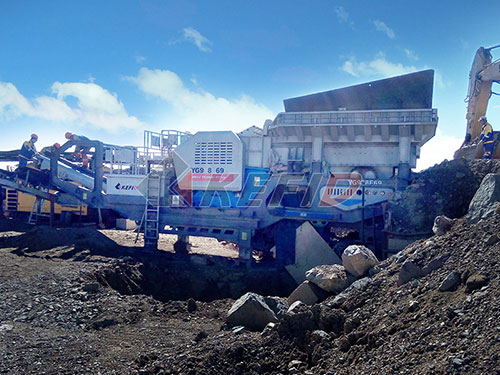

Targeting: Plant Managers, Procurement Directors, Engineering Contractors | Keyword: Iron Ore Crushing Plant
1. Addressing Your Core Operational Challenges in Iron Ore Processing
Is your primary crushing circuit the bottleneck in your production chain? The initial reduction of runofmine (ROM) iron ore sets the tone for your entire downstream process, and inefficiencies here have a compounding negative effect. Common pain points include:
Excessive Downtime for Maintenance: Frequent liner changes on jaw crushers or unplanned breakdowns due to tramp steel and uncrushables halt your entire feed line. Industry averages indicate that every hour of primary crusher downtime can cost over $10,000 in lost throughput.
Inconsistent Feed Size to SAG/Ball Mills: Poorly controlled product from the primary stage leads to poor grind mill feed, reducing grinding efficiency and increasing specific energy consumption (kWh/ton).
High Operational Costs: Premature wear part failure, high energy consumption per ton crushed, and the labor intensity of manual clearing and maintenance directly erode profit margins.
Difficulty with Varying Ore Hardness & Moisture: A plant calibrated for hard, abrasive magnetite may choke or perform poorly when processing softer, clayrich hematitegoethite ores, requiring constant adjustment and sacrificing optimal performance.
Are you evaluating solutions that offer higher availability, predictable maintenance costs, and consistent product sizing to optimize your full beneficiation line?
2. Product Overview: HighAvailability Primary Iron Ore Crushing Station
Our engineered Iron Ore Crushing Plant solution is a heavyduty, modular primary station designed for continuous, hightonnage operation. It is centered on a gyratory or jaw crusher configured specifically for the high abrasiveness and variable density of iron ore.
Operational Workflow:
1. ROM Receiving & PreScreening: Dump pocket or feeder receives ROM ore. A primary scalping screen removes fine material bypassing the crusher, increasing capacity and reducing wear.
2. Primary Size Reduction: The core crusher reduces sub1.5m ROM ore to a nominal 250mm product. Advanced chamber designs optimize nip angle and throw for iron ore.
3. Material Handling & ByPass: Crushed ore is conveyed to downstream stockpiles. The system includes robust tramp metal detection and removal, plus an automatic bypass to protect integrity.
4. Dust Suppression & Control: Integrated spray systems at transfer points control dust emissions for compliance and operator safety.
Application Scope: Ideal for greenfield installations or brownfield upgrades requiring sustained throughput between 2,000 10,000+ tph of magnetite, hematite, or itabirite ores.
Limitations: Not designed as a portable solution; requires significant civil works for installation. Optimal performance assumes implementation of recommended precrusher scalping.
3. Core Features: Engineered for Iron Ore Duty
Our crushing plant’s design is driven by field data from operating mines. Each feature translates into measurable operational gains.
HeavyDuty Crusher Main Frame | Technical Basis: Finite Element Analysis (FEA) optimized stress distribution | Operational Benefit: Withstands continuous highload impacts from dense iron ore without fatigue cracking | ROI Impact: Eliminates risk of catastrophic frame failure; extends structural life beyond 25+ years.
Automated Wear Monitoring | Technical Basis: Ultrasonic sensor arrays measuring liner thickness in realtime | Operational Benefit: Provides accurate remaining life forecasts for mantles and concaves | ROI Impact: Enables planned liner changes during scheduled stops; reduces emergency downtime by an estimated 80%.
Intelligent Tramp Release System | Technical Basis: Hydraulic dualcylinder adjustment with pressure sensing | Operational Benefit: Automatically opens the crusher to release uncrushable material before damage occurs | ROI Impact: Prevents costly damage to head nut, main shaft, and bushings; field data shows a >90% reduction in related failures.
Integrated Scalping Module | Technical Basis: High Gforce heavyduty vibrating screen ahead of crusher | Operational Benefit: Removes fines (50mm) from crusher feed stream | ROI Impact: Increases effective crusher throughput by up to 30% and reduces wear on lower sections of crushing chamber.
Centralized Greasing & Lube System | Technical Basis: Automated singlepoint lubrication with flow monitoring | Operational Benefit: Ensures critical bearings receive correct grease volume at programmed intervals without manual intervention | ROI Impact: Reduces bearingrelated failures by over 60% and lowers labor costs for routine servicing.
4. Competitive Advantages
| Performance Metric | Industry Standard Benchmark | Our Iron Ore Crushing Plant Solution | Documented Advantage |
| : | : | : | : |
| Mechanical Availability (Primary Crusher) | 92 94% | 96 98%| +4% increase in annual operating time |
| Liner Life (Manganese) in Abrasive Ore| ~800k tonnes per set| 1M 1.2M tonnes per set| +25% improvement in wear part cost/tonne |
| Specific Energy Consumption (kWh/tonne)| Varies widely by ore type| Industry testing demonstrates a 58% reduction vs standard chambers| Lower direct operating cost |
| Mean Time Between Failure (MTBF)| ~1,200 hours| >2,000 hours| Higher operational predictability |
5. Technical Specifications
These specifications are indicative and engineered per project scope.
Capacity Range: Configurable from 2,500 to over 12,000 tonnes per hour (tph), based on crushability index (Wi).
Power Requirements: Primary crusher drive motors from 400 kW up to 1 MW+. Total station connected load defined during engineering.
Material Specifications: Crusher liners available in premium manganese steel or optional iron oregrade composite materials. Structural steel is Grade S355JR+ for all major supports.
Physical Dimensions (Typical Station Footprint): Approximately 40m L x 25m W x 20m H (including feed hopper and discharge conveyor).
Environmental Operating Range: Designed for ambient temperatures from 30°C to +50°C with appropriate lubrication systems. Dust emission control maintains <10mg/Nm³ at transfer points.
6.Application Scenarios
LargeScale Open Pit Magnetite Operation
Challenge: A Tier1 producer faced unplanned downtime every 68 weeks due to tramp steel damaging the primary gyratory crusher’s bottom shell assembly.
Solution: Implementation of our Iron Ore Crushing Plant with an advanced metal detection system paired with an automated hydraulic tramp release mechanism.
Results: Elimination of tramp steel damage incidents over a 24month period resulted in an additional 140 hours of annual runtime worth approximately $1.4M in recovered production.
Hematite Beneficiation Plant Upgrade
Challenge: Existing jaw crusher produced slabby product causing uneven feed distribution and reduced capacity in downstream HPGR circuits.
Solution: Replacement with a configured primary gyratory crushing plant featuring a nonchoking concave profile and integrated prescalper.
Results: Achieved a more consistent 250mm cubicle product shape leading to a 15% increase in HPGR throughput efficiency while reducing recirculating load within the crushing circuit itself.
7.Commercial Considerations
Our solutions are offered under flexible commercial models designed for capital planning:
Pricing Tiers
Standard Modular Plant: Includes core crusher station with baselevel automation.
Engineered HighAvailability Plant: Includes all features listed above plus advanced predictive analytics package.
Full EPCM Package: Turnkey designinstallationcommissioning managed by our project team.
Optional Features
Advanced dust suppression radar control systems; remote operational monitoring via satellite link; extended warranty packages covering major structural components.
Service Packages
Comprehensive multiyear maintenance agreements are available providing fixedcost coverage on parts & labor ensuring predictable OPEX financing options
Flexible leasing structures are offered through our financial partners allowing you to preserve capital while upgrading critical infrastructure Payment terms can be structured against performance milestones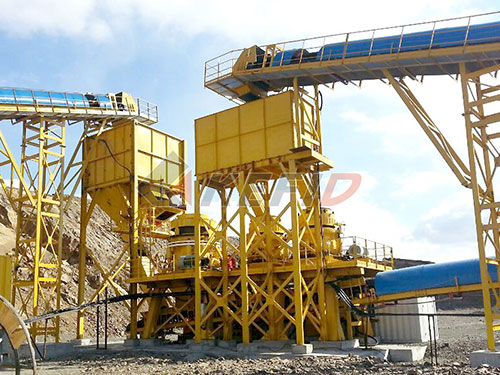
8.Frequently Asked Questions
Q1 Is your crushing plant compatible with my existing downstream conveying system?
A Yes integration engineering is standard Our team will design all transfer points chutes,and interfaces based on your existing conveyor specifications ensuring minimal disruption during tiein
Q2 What is the typical installation timeline?
A For a modular plant delivery is typically within months following order Civil works conducted concurrently can lead commissioning within months post equipment arrival depending on site specifics A detailed schedule is provided during project engineering
Q3 How does this solution impact my overall plant manpower requirements?
A The high level of automation centralizes control reduces manual inspection rounds leading typically requiring fewer operators dedicated specificallyto the primarycrushing area Laboris reallocatedto supervisoryand maintenanceplanning roles
Q4 Are wear parts readily available?
A We maintain strategic global inventory hubsfor criticalwear components Standard lead timesfor linersare weeks not months Guaranteed availabilityis includedin our service agreements
Q5 Can you provide guaranteed performance metrics?
A Yes we provide process performance guarantees basedon agreeduponore characteristics including throughput product size distributionand mechanical availability Theseare contractually definedprior topurchase