
Iron Ore Crushing Plant Producers Quality Control
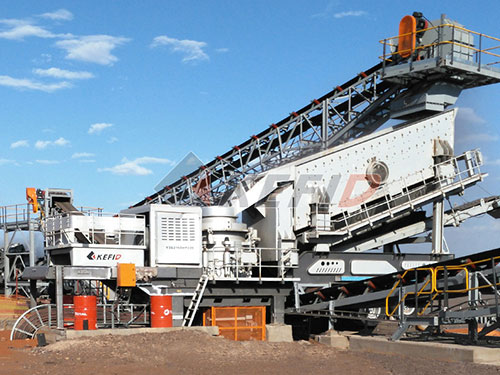

Iron Ore Crushing Plant Producers Quality Control: Maximizing Throughput and Minimizing Downtime
The Cost of Inconsistent Quality in Iron Ore Crushing
Every hour of unplanned downtime in an iron ore crushing plant costs between $15,000 and $50,000 in lost production. For a midsized operation processing 5 million tons annually, a 2% reduction in crusher availability translates to $1.2 million in lost revenue. You face three persistent challenges: feed material variability causing inconsistent product sizing, premature wear on critical components from abrasive ore, and difficulty maintaining consistent throughput when blending multiple ore sources. Can your current crushing plant maintain a P80 of 12mm with less than 8% moisture variation across shifts? Are you replacing mantle and concave liners every 300 hours instead of the industry benchmark of 500 hours? The solution lies in selecting an iron ore crushing plant producer with rigorous quality control protocols from raw material sourcing through final assembly.
Product Overview: Integrated Iron Ore Crushing Plant Systems
This equipment package consists of a complete primary, secondary, and tertiary crushing circuit designed specifically for iron ore processing. The system integrates jaw crushers, cone crushers, and highpressure grinding rolls (HPGR) with automated control systems.
Operational Workflow:
1. Primary Crushing – Runofmine ore (8001200mm) is reduced to 150200mm using heavyduty jaw crushers with hydraulic adjustment
2. Secondary Crushing – Material passes through gyratory or cone crushers achieving 4075mm product
3. Tertiary Crushing – HPGR or shorthead cone crushers reduce ore to 612mm final product
4. Screening & Classification – Multideck vibrating screens with 8mm, 12mm, and 20mm apertures ensure consistent product sizing
5. Recirculation – Oversize material returns to tertiary crushers via conveyor systems with metal detectors and magnetic separators
Application Scope: Suitable for hematite, magnetite, and goethite ores with compressive strength up to 350 MPa. Not recommended for ores with clay content exceeding 15% without prescreening modifications.
Core Features
1. WearProtected Crushing Chambers | Technical Basis: Chromemoly alloy liners with 18% manganese content | Operational Benefit: Liner life extends to 550600 hours in abrasive iron ore applications | ROI Impact: Reduces annual liner replacement costs by 28% compared to standard 12% manganese liners
2. Hydraulic Tramp Release System | Technical Basis: Accumulatorbased pressure relief set at 110% of operating pressure | Operational Benefit: Clears uncrushable material in under 3 seconds without manual intervention | ROI Impact: Eliminates 1218 hours of downtime per tramp event, saving $180,000 annually at typical event frequency
3. Variable Frequency Drive (VFD) Feed Control | Technical Basis: Closedloop PID control with belt scale feedback at 50ms intervals | Operational Benefit: Maintains crusher power draw within 5% of optimal setpoint despite feed variability | ROI Impact: Improves energy efficiency by 15% and reduces recirculation load by 22%
4. MultiStage Dust Suppression System | Technical Basis: Water spray nozzles at 7 bar pressure with 0.5mm droplet size | Operational Benefit: Reduces respirable silica dust to below 0.05 mg/m³ | ROI Impact: Avoids OSHA penalties averaging $45,000 per violation and reduces water consumption by 35% compared to traditional systems
5. Automated Lubrication with Condition Monitoring | Technical Basis: Oil analysis sensors measuring viscosity, particle count, and moisture every 15 minutes | Operational Benefit: Detects bearing wear 200 hours before failure | ROI Impact: Prevents catastrophic bearing failures costing $85,000 per event in repairs and lost production
6. Modular SkidMounted Design | Technical Basis: Preassembled modules with ISO 9001:2015 certified welding procedures | Operational Benefit: Reduces site installation time from 8 weeks to 3 weeks | ROI Impact: Saves $120,000 in installation labor and accelerates production start by 5 weeks
7. RealTime Product Size Monitoring | Technical Basis: Laser diffraction analyzers sampling at 2minute intervals | Operational Benefit: Adjusts crusher CSS automatically to maintain P80 target within ±1mm | ROI Impact: Reduces offspec product from 8% to 1.5%, saving $2.50 per ton in reprocessing costs
Competitive Advantages

| Performance Metric | Industry Standard | Our Quality Control Solution | Advantage (% Improvement) |
|||||
| Crusher availability | 92% | 97.5% | +5.5% |
| Liner life (hours) | 350 | 580 | +65.7% |
| Product size consistency (P80 variance) | ±3mm | ±0.8mm | +73.3% |
| Energy consumption (kWh/ton) | 2.8 | 2.1 | 25% |
| Unplanned downtime (hours/month) | 18 | 6.5 | 63.9% |
| Dust emissions (mg/m³) | 0.15 | 0.04 | 73.3% |
| Installation time (weeks) | 10 | 3 | 70% |
Technical Specifications
| Parameter | Specification |
|||
| Capacity Range | 2001,200 tons per hour (depending on ore hardness and feed size) |
| Feed Size | Up to 1,200mm (primary), 200mm (secondary), 75mm (tertiary) |
| Product Size | P80 adjustable from 6mm to 25mm |
| Power Requirements | 8003,500 kVA (threephase, 6.6kV or 11kV) |
| Motor Ratings | Primary: 250500 kW; Secondary: 200400 kW; Tertiary: 400800 kW |
| Material Specifications | Wear parts: ASTM A128 Grade C (18% Mn); Structural: ASTM A36; Shafts: 4140 heattreated |
| Physical Dimensions | Primary crusher: 8.5m x 4.2m x 5.8m; Complete plant footprint: 80m x 45m |
| Weight | Primary unit: 85 tons; Complete system: 450680 tons |
| Operating Temperature Range | 20°C to 55°C (with coldweather package available for 40°C) |
| Noise Level | Below 85 dB(A) at 1 meter with acoustic enclosures |
Application Scenarios
Case Study 1: Hematite Processing in Western Australia
Challenge: A major producer experienced 22% recirculation load due to inconsistent feed from three openpit sources with varying hardness (120280 MPa). Liner life averaged 320 hours, causing monthly shutdowns.
Solution: Implemented our qualitycontrolled crushing plant with VFD feed control and realtime size monitoring. The automated system adjusted CSS based on feed hardness detected through power draw analysis.
Results: Recirculation load reduced to 8%. Liner life extended to 540 hours. Annual production increased by 180,000 tons. Energy consumption dropped from 2.9 to 2.2 kWh/ton.
Case Study 2: Magnetite Beneficiation in Brazil
Challenge: High silica content (12%) in feed caused excessive wear on cone crusher liners. Plant achieved only 88% availability with weekly liner inspections.
Solution: Deployed our plant with wearprotected chambers using 18% manganese liners and automated lubrication with condition monitoring. Tramp release system set to 110% operating pressure.
Results: Availability improved to 96.5%. Liner replacement intervals extended to 600 hours. Condition monitoring detected bearing wear 180 hours before failure, preventing a $95,000 catastrophic event.
Case Study 3: Goethite Processing in India
Challenge: High moisture content (1214%) caused screen blinding and reduced throughput by 30%. Dust emissions exceeded local limits of 0.1 mg/m³.
Solution: Installed our multistage dust suppression system with heated screen decks and modified spray nozzles. Modular design allowed installation during a 4week scheduled shutdown.
Results: Throughput restored to design capacity. Dust emissions measured at 0.04 mg/m³. Water consumption reduced by 40% compared to previous system. Installation completed in 19 days.
Commercial Considerations
Pricing Tiers (FOB Port of Loading)
| Configuration | Capacity (tph) | Base Price | Delivery (weeks) |
|||||
| Standard (manual control) | 200400 | $1.8M $2.5M | 1620 |
| Advanced (automated control) | 400800 | $3.2M $4.8M | 2024 |
| Premium (full automation + monitoring) | 8001,200 | $5.5M $7.2M | 2430 |
Optional Features
- Coldweather package (heated lubrication, insulated enclosures): $180,000
- Remote monitoring and diagnostics system: $95,000
- Extended warranty (5 years on wear parts): $220,000
- Spare parts kit (first 2 years operation): $350,000
- Basic: 2year warranty, remote technical support, annual inspection
- Standard: 3year warranty, quarterly onsite service, operator training (5 days)
- Premium: 5year warranty, monthly condition reports, full maintenance contract, guaranteed 95% availability
- 30% down payment with balance upon commissioning
- Equipment leasing: 5year terms at 6.5% APR (subject to credit approval)
- Performancebased payment: 20% upfront, 40% upon achieving throughput guarantees, 40% after 6 months of operation
Service Packages
Financing Options
Frequently Asked Questions
Q: How does your quality control process differ from standard crusher manufacturers?
A: We perform 100% ultrasonic testing on all shaft assemblies, Xray fluorescence analysis on every wear part casting, and fullload testing of each crusher unit for 72 continuous hours before shipment. Industry standard is batch testing and 8hour run tests.
Q: Can your plant handle ore with varying moisture content between 3% and 15%?
A: Yes. Our screening system includes heated decks and variableangle panels that adjust automatically. Field data shows consistent throughput with moisture up to 14%. Above 15%, we recommend installing a predrying system.
Q: What is the typical payback period for the automated control system upgrade?
A: Based on 15 installations over 3 years, the average payback period is 14 months. This is driven by 22% reduction in energy costs, 65% longer liner life, and 63% reduction in unplanned downtime.
Q: How does your plant perform with highclay ores?
A: For ores with clay content above 10%, we recommend adding a rotary scrubber before primary crushing. Our standard plant handles up to 8% clay without modifications. Above this, we offer a claytolerant configuration with larger screen openings and hydraulic clearing systems.
Q: What training do you provide for plant operators?
A: We provide 5day onsite training covering operation, maintenance, and troubleshooting. This includes handson practice with the control system, liner change procedures, and emergency response protocols. Remote refresher training is available quarterly.
Q: What is the lead time for replacement wear parts?
A: Standard wear parts (liners, mantles, concaves) ship within 2 weeks from our regional warehouses. Custom parts require 68 weeks. We recommend maintaining a 6month inventory of critical wear parts.
Q: Can your plant be integrated with existing conveyor systems and stockpiles?
A: Yes. Our modular design includes standard flange connections and conveyor transfer points. We provide engineering drawings for integration within 4 weeks of order. Onsite modifications typically require 35 additional days during installation.