
Iron Ore Crushing Plant Private Label Manufacturer Sourcing
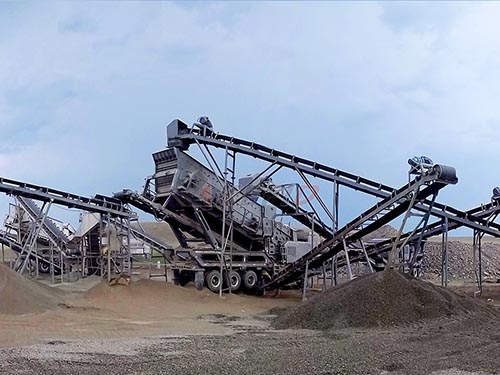

Targeted Iron Ore Crushing Plant Solutions for HighTonnage, LowCostPerTon Operations
1. PAINPOINT DRIVEN OPENING
Managing an iron ore crushing circuit presents distinct profitability challenges. Inconsistent feed size, abrasive silica content, and the relentless demand for throughput create persistent operational hurdles. Are you facing:
Unplanned Downtime & High Wear Costs: Abrasive iron ore with high silica content can degrade crusher liners and screens 3040% faster than less abrasive materials, leading to frequent, costly changeouts and production stoppages.
Bottlenecks in Primary Crushing: Inefficient gyratory or jaw crusher performance at the primary stage directly limits downstream capacity, stranding valuable throughput and failing to meet pellet feed or lump ore size specifications.
Inefficient Particle Size Distribution: Poorly calibrated secondary and tertiary crushing stages produce excessive fines or oversized material, reducing blast furnace efficiency and diminishing product value.
High Energy Intensity: Older crushing technology can consume disproportionate power per ton of material processed, directly eroding margin in energysensitive markets.
Systemic Inflexibility: Fixed plants struggle to adapt to variable ore hardness from different mine faces, causing either underutilization or overloading of critical components.
The central question for plant managers is this: how can you increase annual tonnage while systematically reducing cost per ton processed? The answer lies in a purposeengineered iron ore crushing plant.
2. PRODUCT OVERVIEW
Our engineered iron ore crushing plants are modular or stationary systems designed for highavailability processing of magnetite, hematite, and taconite ores. The operational workflow is optimized for continuous mineral processing environments:
1. Primary Crushing & Scalping: Dump feed is reduced by a heavyduty primary crusher (gyratory or jaw), with a vibrating grizzly removing natural fines to bypass unnecessary crushing.
2. Secondary & Tertiary Reduction: Cone crushers in closed circuit with screens perform staged size reduction to achieve target particle size distribution for beneficiation.
3. Material Handling & Stockpiling: Robust conveyor systems with impactresistant idlers and belts transfer crushed ore to surge piles or directly to downstream processing.
Application Scope: Ideal for greenfield mine development, brownfield expansion projects, or legacy plant replacement for operations targeting 500 to over 10,000 tonnes per hour.
Key Limitations: Plant configuration is sitespecific; optimal performance requires accurate ore characterization (Bond Work Index, abrasion index, moisture content) during the design phase. Not suitable for standalone processing without downstream beneficiation circuits.
3. CORE FEATURES
HeavyDuty Primary Crusher Design | Technical Basis: Reinforced mainframe & oversized bearings | Operational Benefit: Handles peak loads from direct truck dump or ROM feeders with minimal stress fatigue | ROI Impact: Extends service life by up to 20%, reducing capital replacement cycles
Liner Performance Optimization | Technical Basis: Manganese steel alloy selection & chamber profiling specific to iron ore abrasivity | Operational Benefit: Achieves more consistent product gradation throughout the liner life cycle | ROI Impact: Increases crushable tonnage per liner set by 1525%, lowering consumable cost per ton
Advanced Crushing Chamber Automation | Technical Basis: Hydroset or similar CSS adjustment with PLC integration | Operational Benefit: Allows operators to adjust discharge settings in realtime to compensate for ore variability | ROI Impact: Maintains target PSD, improving downstream mill throughput by 38%
Dedicated Scalping & Fines Removal | Technical Basis: Highstroke vibrating grizzly feeder preceding primary crusher | Operational Benefit: Removes subgrade fines (40mm) prior to primary crushing, reducing cavity wear and energy waste | ROI Impact: Lowers primary stage power consumption and increases effective capacity
Centralized Plant Control System | Technical Basis: SCADAbased monitoring of power draw, bearing temperatures, and production rates | Operational Benefit: Provides actionable data for predictive maintenance and identifies bottlenecks instantly | ROI Impact: Reduces unplanned downtime by up to 30% through conditionbased intervention

Modular Structural Design | Technical Basis: Bolttogether, preengineered support structures for crushers and screens | Operational Benefit: Significantly reduces field construction time and civil engineering costs during installation | ROI Impact: Accelerates project commissioning by weeks, enabling earlier revenue generation
Integrated Dust Suppression System | Technical Basis: Nozzle placement at transfer points with flow tied to conveyor operation | Operational Benefit: Controls silica dust effectively, ensuring compliance with environmental and workplace health standards | ROI Impact Mitigates risk of regulatory shutdowns and reduces cleanup labor.
4. COMPETITIVE ADVANTAGES
| Performance Metric | Industry Standard Baseline | Our Iron Ore Crushing Plant Solution | Documented Advantage |
| : | : | : | : |
| Availability (Scheduled Runtime) | 8892% (including liner changes) |> 94% (including liner changes) |> +3% absolute improvement |
| Power Consumption (kWh/t) Secondary Stage| Varies by ore; benchmark established per project| Field data shows reductions of 512% via chamber optimization & efficient drive systems| Up to 12% improvement |
| Liner Wear Life (Tonnes/Set) Cone Crusher| Based on standard manganese grades| Utilizes tailored alloys & profile designs specific to Fe/SiO2 content| Increases of 1525% |
| Installation & Commissioning Timeline| 812 months for fixed plant from ground break| Modular design reduces field fitup; typical timeline of 69 months| Approximately 25% faster |
| Product PSD Consistency (% within spec)| +/ 8% variance over a campaign| Advanced controls maintain variance within +/5% through automatic CSS adjustment |> +37% consistency |
5. TECHNICAL SPECIFICATIONS
Capacity Range: Configurable from 500 TPH to >10,000 TPH nominal throughput.
Primary Crusher Options: Gyratory (4265 inch feed opening) or Jaw Crusher (48”x60” up to 63”x79”), selected based on feed topsize and required reduction ratio.
Secondary/Tertiary Crushers: Heavyduty cone crushers with multiple chamber options; horsepower from 300 HP to 1000 HP per unit.
Power Requirements: Total installed plant power ranges from ~1 MW for smaller systems to over 15 MW for largescale installations. Voltage tailored to site infrastructure (e.g., 6.6 kV for major drives).
Material Specifications: Crusher liners in premiumgrade manganese steel (14%18% Mn). Structural steel ASTM A36; wear plates on chutes AR400/500.
Physical Dimensions (Example Module): A primary crusher module may span ~25m L x 15m W x 18m H. Full plant footprint is projectspecific.
Environmental Operating Range: Designed for ambient temperatures from 40°C to +50°C. Dust protection standard; optional heating/cooling packages available.
6. APPLICATION SCENARIOS
Greenfield Magnetite Concentrator Expansion
Challenge: A new mining operation required a lump ore circuit alongside pellet feed production but had limited space and a compressed development schedule.
Solution Implementation of a dualstage iron ore crushing plant featuring a primary jaw crusher feeding two parallel secondary cone crusher lines—one configured for lump production (31mm+6mm), the other tertiaryfocused on pellet feed (6mm).
Results Achieved nameplate capacity of 2,400 TPH within six weeks of mechanical completion. The lump circuit consistently met grade size specification over 95% of the time.
Legacy Taconite Plant Modernization
Challenge An existing plant suffered from low secondary cone crusher availability (<85%) due excessive vibration failures poor liner life averaging 120000 tonnes/set
Solution Replacement with modern cone crushers featuring advanced overload protection antispin devices applicationspecific chamber designs
Results Crusher availability increased documented liner life improved 150000 tonnes/set resulting annual consumable savings exceeding $180000 per crusher station
7 COMMERCIAL CONSIDERATIONS
Pricing tiers are defined by system scope complexity:
Tier I Primary Crushing Station Only includes primary scalping feeder foundation design
Tier II Complete Secondary Tertiary Circuit adds screens conveyors surge bins electrical controls
Tier III Turnkey System full EPCM services civil works erection commissioning
Optional Features Onboard weighing automation package remote monitoring subscription advanced wear part metallurgy extended warranty coverage
Service Packages Annual inspection programs guaranteed parts availability programs performance audits operator training programs
Financing Options Equipment leasing structures project financing support through partners milestonebased payment plans traditional purchase models available
8 FAQ
What geotechnical data is required configure an iron ore crushing plant?
Essential data includes Bond Work Index Abrasion Index Axb values bulk density moisture content desired final product sizes This ensures correct motor sizing chamber selection
How does your solution handle variations hardness between different mine faces?
The control system allows quick adjustment closed side settings CSS compensate realtime Power draw monitoring provides feedback operators can also switch between preset chamber profiles manage different feeds
What typical implementation timeline greenfield project?
From order placement mechanical completion typically months depending scale Complexity Site erection commissioning require additional months Modular designs significantly reduce this timeline versus traditional stickbuild approaches
Are spare parts proprietary readily available?
Critical wear parts liners mantles concaves are manufactured common industry dimensions ensure supply chain flexibility Other proprietary components stocked our global distribution centers guarantee availability
Do you offer performance guarantees?
Yes we offer guaranteed capacity based provided ore characteristics guaranteed maximum power consumption Product particle size distribution guarantees also available upon request These formalized contract documentation