
Iron Ore Crushing Plant Inspection


1. PAINPOINT DRIVEN OPENING
Managing an iron ore crushing plant presents distinct challenges that directly impact your bottom line. Are you facing:
Unplanned Downtime & High Maintenance Costs: Frequent, unexpected failures of crusher components under extreme abrasive loads lead to costly production halts and excessive spare part inventories.
Inconsistent Throughput & Product Quality: Fluctuations in feed size and hardness can cause chokefeeding or cavitylevel issues, resulting in suboptimal tonnage and offspec product gradation that affects downstream processing.
Excessive Energy Consumption: Inefficient crushing chambers and drive systems not meeting the specific compressive strength of iron ore lead to disproportionately high power costs per tonne processed.
Rapid Wear Part Degradation: The high abrasiveness of magnetite or hematite leads to accelerated liner wear, requiring frequent changeouts that are laborintensive and hazardous.
System Integration Headaches: Ensuring primary, secondary, and tertiary crushing stages work in harmony with screening and material handling is complex, often creating bottlenecks.
The central question for plant managers is: how can you achieve predictable throughput, controlled operating costs, and maximized asset availability in such a demanding environment?
2. PRODUCT OVERVIEW
A modern stationary iron ore crushing plant is a coordinated system of heavyduty machinery engineered to reduce mined ore to a conveyable size for further processing. The operational workflow is a multistage circuit:
1. Primary Crushing: Dump trucks feed runofmine (ROM) ore into a large jaw crusher or gyratory crusher for initial size reduction.
2. Secondary Crushing: The primary crushed product is conveyed to cone crushers for further reduction to a smaller, more uniform size.
3. Screening & Tertiary Crushing: Material is screened; oversize is recirculated through additional cone crushers (tertiary stage) while onspec material proceeds to the next process.
Application Scope: This solution is designed for hightonnage, continuous mining operations processing hard and abrasive iron ores (e.g., banded iron formations). It integrates with existing conveying and beneficiation plants.
Limitations: Stationary plants require significant foundational work and are not suitable for shortlife or satellite deposits where mobile crushing solutions may be more appropriate.
3. CORE FEATURES
Advanced Chamber Geometry | Technical Basis: Optimized nip angle and crushing cavity profile | Operational Benefit: Enforces interparticle compression crushing, maximizing yield of desired product fraction while reducing slabby or flaky output | ROI Impact: Reduces recirculating load by up to 15%, lowering energy costs and wear on downstream equipment.
HeavyDuty Main Frame & Eccentric Assembly | Technical Basis: Highstrength cast steel frame with precisionmachined mounting surfaces; forged alloy steel eccentric | Operational Benefit: Provides unwavering structural integrity under peak loads, ensuring precise alignment of crushing components for consistent performance | ROI Impact: Extends major overhaul intervals by thousands of operating hours, reducing lifetime cost of ownership.
Automated Setting Regulation System (ASRi) | Technical Basis: Realtime hydraulic adjustment and monitoring of the crusher closedside setting (CSS) | Operational Benefit: Allows operators to maintain optimal product size consistently, even as wear parts degrade, without manual intervention | ROI Impact: Improves product consistency by over 20% and increases crusher utilization by automating adjustments.
Liner Life Enhancement Technology | Technical Basis: Wear liner material science (e.g., improved manganese steel alloys) and design allowing rotation/swap of highwear sections | Operational Benefit: Significantly extends service life of mantles, concaves, and jaw plates in highly abrasive iron ore applications | ROI Impact: Cuts liner cost per tonne by up to 30% and reduces the frequency of hazardous liner changeout tasks.
Integrated Condition Monitoring | Technical Basis: Sensor network tracking oil temperature/pressure, power draw, vibration levels, and cavity level | Operational Benefit: Provides predictive maintenance alerts for lubrication systems and bearings, preventing catastrophic failures | ROI Impact: Transforms maintenance from reactive to planned, preventing up to 90% of unplanned stoppages related to mechanical failure.
Centralized Plant Control & Automation Interface | Technical Basis: PLCbased control system with standard communication protocols (OPC UA, Modbus) | Operational Benefit: Enables seamless integration into your existing plant SCADA/DCS for coordinated startup/stop and load management across the entire circuit | ROI Impact: Optimizes overall plant efficiency (OE), allowing fewer operators to manage more processes safely.
4. COMPETITIVE ADVANTAGES
| Performance Metric | Industry Standard Benchmark | Our Iron Ore Crushing Plant Solution | Advantage (% Improvement) |
| : | : | : | : |
| Availability (Scheduled Uptime) | 9294% | 9698% | +4% (+~300 hrs/year) |
| Specific Energy Consumption (kWh/tonne) Varies by ore type. Baseline = 100%| 100% (Baseline)| ~8590%| 1015% Reduction |
| Wear Part Life (Manganese Liners Primary)| Based on specific abrasion index. Baseline = 100%.| 120140%| 2040% Increase |
| Mean Time Between Failure (MTBF) Major Components| ~8,000 hours| >12,000 hours| >50% Increase |
| Product Gradation Consistency (± % passing key sieve)| ±8%| ±4%| 50% Improvement |
5. TECHNICAL SPECIFICATIONS
Capacity Range: Configurable from 2,000 to over 10,000 tonnes per hour (TPH), depending on feed size, hardness (UCS), and required reduction ratio.
Power Requirements: Primary crusher drives typically range from 250 kW to over 800 kW. Total installed plant power varies significantly with scale; detailed load analysis provided per project.
Material Specifications: Fabricated from ASTM A36 steel for structural components. Wear parts utilize premium ZGMn14Cr2 or equivalent modified manganese steel alloys. Shafts are forged from hightensile alloy steel.
Physical Dimensions: A complete plant footprint is projectspecific. A primary gyratory station alone may require a reinforced concrete foundation exceeding 15m x 15m.
Environmental Operating Range: Designed for ambient temperatures from 40°C to +50°C. Dust suppression systems are integral. Enclosures available for extreme climates.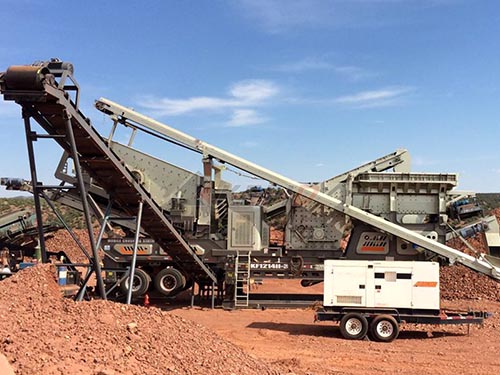
6. APPLICATION SCENARIOS
LargeScale Open Pit Mine – Australia Pilbara Region
Challenge: A tierone miner needed to debottleneck their primary crushing station due to increasing ore hardness variability causing frequent stalls in their old gyratory crusher.
Solution: Implementation of a new primary gyratory crusher with a higher installed power rating (~10%), advanced automation for load management (ASRi), and a heavierduty mainframe.
Results: Throughput increased by an average of 18%. Crusher availability rose from 91% 96%. Power draw became more stable despite harder feed material.
Integrated Mine & Processing Plant – Canada Labrador Trough
Challenge: Excessive fines generation in secondary crushing was reducing the yield of lump ore product—a key revenue driver—and increasing dust handling issues.
Solution: Installation of multicylinder hydraulic cone crushers in the secondary stage specifically tuned for iron ore’s compressive characteristics.
Results: Lump ore (+6mm) yield improved by 7 percentage points. Recirculating load decreased by 22%, reducing energy consumption across the circuit.
7. COMMERCIAL CONSIDERATIONS
Our iron ore crushing plants are offered under flexible commercial models:
Pricing Tiers:
Standard Plant: Preengineered modules offering proven configurations at fixed pricing.
EngineeredtoOrder Plant: Fully customized solutions with sitespecific engineering premiums.
Major Component Upgrades: For retrofitting existing facilities with new crushers or automation systems.
Optional Features & Packages:
Advanced Dust Suppression & Containment System
Premium Ceramic Composite Wear Liners Package
Extended Automation Package with AIpowered performance optimization
Onsite Foundation Design & Supervision Service
Service Packages:
Comprehensive multiyear Performance Contracts guaranteeing availability and costpertonne metrics.
Planned Maintenance Agreements with scheduled inspections and parts discounts.
Remote Diagnostic Support subscriptions providing 24/7 expert oversight via our monitoring portal.
Financing Options:
We collaborate with leading industrial finance institutions offer capital expenditure solutions including equipment leasing longterm rental agreements project financing structures align payments with your operational cash flow
FAQ
1.Q What level of engineering support do you provide during integration with our existing conveying stockpiling systems?
A Our project delivery includes detailed interface engineering We provide comprehensive layout drawings chute designs transfer point specifications control system gateways ensure seamless integration into your current plant infrastructure
2.Q How does your solution address the safety risks associated with wear liner replacement?
A Our designs incorporate mechanical liner backing systems hydraulic setting adjustment remote lubrication monitoring These features drastically reduce the time personnel spend inside the crusher cavity or working manually with heavy tools directly addressing major safety hazards
3.Q Can you guarantee performance metrics like throughput or liner life?
A Yes through our Performance Contract option We conduct detailed site testing analyze your specific ore characteristics then contractually guarantee key metrics such as tonnes per hour availability cost per tonne crushed within defined parameters This shifts risk from you us
4.Q What is the typical delivery lead time for a major primary station?
A For engineeredtoorder primary gyratory stations lead times typically range from months months following finalized design This includes manufacturing testing disassembly shipping Delivery schedules are confirmed early in the project lifecycle
5.Q Are your control systems compatible with major thirdparty PLC SCADA brands?
A Absolutely Our automation platforms use industrystandard communication protocols OPC UA Modbus TCP/IP ensuring compatibility Siemens AllenBradley Schneider Electric other major brands avoiding vendor lockin
6.Q Do you offer training for our operations maintenance teams?
A Yes we provide structured competencybased training programs delivered both at our facilities onsite covering safe operation preventative maintenance procedures troubleshooting specific your installed equipment Knowledge transfer is critical component our handover process
7.Q What financing structures are available beyond direct purchase?
A We facilitate several models including operating leases which keep equipment off your balance sheet fullservice rental agreements inclusive maintenance longterm installment sales Each structure evaluated help optimize your total cost ownership cash flow