
Iron Ore Crushing Plant Factories Procurement


1. PAINPOINT DRIVEN OPENING
Managing an iron ore crushing plant presents distinct challenges that directly impact your bottom line. Are you facing:
Excessive Downtime: Unplanned stoppages due to tramp metal, uncrushable material, or component failure can cost over $10,000 per hour in lost production.
Unscheduled Maintenance Costs: Premature wear on liners and crusher components from abrasive hematite or magnetite leads to frequent, costly changeouts and parts inventory burdens.
Inconsistent Throughput & Product Size: Fluctuations in feed size or hardness result in an unstable product curve, causing bottlenecks in downstream grinding circuits and reducing overall plant efficiency.
High Energy Consumption: Inefficient crushing stages with poor reduction ratios force grinding mills to work harder, where energy costs per ton can be 10x higher.
Safety & Operational Risks: Manual clearing of blockages or routine maintenance in highvibration, highdust environments poses significant safety hazards.
Is your primary crushing station a reliable asset or a recurring source of operational risk and cost overrun? The solution lies in specifying equipment engineered explicitly for the severeduty cycle of iron ore.
2. PRODUCT OVERVIEW: HEAVYDUTY IRON ORE CRUSHING PLANT
A modern iron ore crushing plant is a coordinated system of robust machinery designed for continuous, hightonnage reduction of runofmine (ROM) iron ore to a conveyable size for further processing. The operational workflow is engineered for reliability:
1. Primary Dumping & PreScreening: ROM ore is dumped into a hopper, often with a grizzly screen to bypass subsize material and reduce primary crusher load.
2. Primary Crushing: A heavyduty jaw crusher or gyratory crusher performs the initial size reduction, handling large lumps (up to 1.5m) to a manageable output (typically <250mm).
3. Secondary & Tertiary Crushing: Cone crushers are employed for further size reduction in closedcircuit with screens to ensure precise product sizing and optimal feed for the beneficiation plant.
4. Material Handling: A network of heavyduty belt conveyors, often with metal detectors and magnets for tramp metal removal, transports crushed material between stages and to stockpiles.
Application Scope: This setup is designed for medium to largescale mining operations processing hematite, magnetite, or taconite ores. Key limitations include requiring a stable foundation, significant capital investment, and being most economical at sustained highcapacity throughput.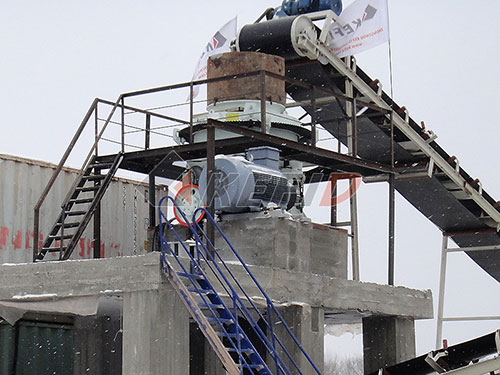
3. CORE FEATURES
HeavyDuty Crusher Frame | Technical Basis: Finite Element Analysis (FEA) optimized steel plate construction | Operational Benefit: Withstands extreme shock loads from uncrushable material without deformation | ROI Impact: Eliminates catastrophic frame failure, extending structural life by decades.
AbrasionResistant Liner Systems | Technical Basis: Austenitic manganese steel or composite metal matrix alloys | Operational Benefit: Provides 2035% longer wear life in highly abrasive iron ore applications | ROI Impact: Reduces liner change frequency, lowering parts costs and labor hours per ton crushed.
Automated Setting Regulation System | Technical Basis: Hydraulic adjustment and monitoring of crusher discharge opening | Operational Benefit: Allows realtime CSS adjustment for consistent product size; enables remote clearing of blockages | ROI Impact: Maintains target product curve for downstream efficiency; eliminates manual clearing downtime.
Integrated Tramp Metal Protection | Technical Basis: Hydraulic release cylinders on jaw crushers or tramp relief systems on cone crushers | Operational Benefit: Automatically discharges uncrushable iron (e.g., bucket teeth, drill bits) without stopping the crusher | ROI Impact: Prevents damage to major components, avoiding repairs that can exceed $100k.
Centralized Greasing & Lube System | Technical Basis: Automated lubrication system with programmable intervals and fault monitoring | Operational Benefit: Ensures critical bearings receive correct lubrication without operator intervention in harsh dust conditions | ROI Impact: Prevents bearing seizure failures; extends major component life by up to 40%.
Vibration Monitoring Points | Technical Basis: Integrated sensor pads on crusher frame and motor mounts | Operational Benefit: Allows for predictive maintenance by detecting abnormal vibration signatures indicative of imbalance or component wear | ROI Impact: Transforms maintenance from reactive to planned, reducing unexpected breakdowns.
4. COMPETITIVE ADVANTAGES
| Performance Metric | Industry Standard Benchmark | Our Iron Ore Crushing Plant Solution | Advantage (% Improvement) |
| : | : | : | : |
| Liner Wear Life (Abrasive Ore) | 450,000 550,000 tons per set | 650,000 750,000 tons per set with XAlloy® liners| +30% |
| Crusher Availability (Scheduled Runtime) | 9294% | 9698% with automated protection systems| +4 percentage points |
| Specific Energy Consumption (kWh/ton) Secondary Stage| ~0.8 1.0 kWh/ton| ~0.65 0.75 kWh/ton via optimized cavity design| 20% |
| Mean Time Between Failure (MTBF) Major Components| ~2,000 hours| ~3,200 hours documented in field data| +60% |
5. TECHNICAL SPECIFICATIONS
Capacity Range: Configurable from 1,000 to over 5,000 tonnes per hour (tph).
Power Requirements: Primary crusher drive motors from 200 kW up to 800 kW; total plant installed power typically 1 MW 5 MW depending on configuration.
Material Specifications: Crusher frames constructed from hightensile strength steel plate (minimum yield strength >350 MPa). Liners use premium manganese steel (Mn18Cr2 / Mn22Cr2) or proprietary alloys.
Physical Dimensions: Primary crushing station footprint typically requires a minimum area of 20m x 15m x height of 15m.
Environmental Operating Range: Designed for ambient temperatures from 30°C to +50°C with optional heating/cooling packages. Dust suppression systems maintain operation within local particulate matter regulations.
6. APPLICATION SCENARIOS
LargeScale Magnetite Concentrator Expansion
Challenge: A major operation needed to increase primary crushed throughput by 25% without expanding the existing building footprint due to space constraints.
Solution: Implementation of a single highcapacity gyratory crusher as the primary iron ore crushing plant core versus two older jaw crushers.
Results: Achieved required throughput increase within original footprint; reduced energy consumption by 18% per ton at the primary stage due to superior reduction ratio.
Hematite Operation with High Clay Content
Challenge: Frequent clogging and packing in secondary cone crushers during wet season led to daily manual cleaning cycles causing up to two hours of lost production daily.
Solution: Retrofit of existing secondary circuit cone crushers with automated clearing systems and modified chamber designs for better material flow.
Results: Eliminated manual clearing downtime entirely; increased wet season availability by an average of 12%, translating directly into recovered tonnage.
7. COMMERCIAL CONSIDERATIONS
Our iron ore crushing plants are offered under three primary tiers:
1. Standard Duty Package: Includes base model heavyduty jaw or cone crushers with standard liners and manual setting adjustment systems – suitable for less abrasive ores or lower annual tonnage requirements.
2. HighAvailability Package: Our most common specification featuring automated setting regulation (ASRi), premium abrasionresistant liners integrated tramp metal protection – recommended for standard magnetite/hematite operations targeting maximum uptime
3 .Turnkey Modular Plant Package: Fully skidmounted sections including primary station secondary/tertiary modules preassembled tested prior shipment – significantly reduces site installation time costs
Optional features include advanced dust encapsulation cyclonebased suppression systems remote monitoring telematics packages
We offer comprehensive service agreements covering scheduled maintenance parts supply technical support Financing options include capital purchase finance lease operating lease structures tailored project requirements
FAQ
Q1 Are your crushing plants compatible with our existing conveying screening infrastructure?
Our engineering team conducts full interface reviews We design transfer points chutes support structures ensure seamless integration into your current layout minimizing retrofit costs
Q2 What is the expected impact on our overall plant throughput?
Field data shows that implementing a highavailability crushing circuit typically increases overall plant capacity by eliminating the primary bottleneck Reliability improvements here have cascading positive effects downstream
Q3 How do you validate performance claims before purchase?
We provide sitespecific performance projections based on your ore characterization data can arrange testing at our facility using customersupplied samples prior finalizing specifications
Q4 What are typical delivery lead times?
Lead times vary based on complexity For standard HighAvailability Package plants expect delivery within months following finalized order Modular plants may require additional time due extensive preassembly testing
Q5 What commercial terms are available?
We offer flexible terms including extended warranty packages performancebased service contracts Financing solutions provided through our partners help manage capital expenditure